In 1872, George Smith recognized something unexpected in cuneiform fragments at the British Museum. A survivor aboard a boat had waited for floodwater to go down, then released birds to see whether dry land was available. A reader of Genesis could recognize the shape of the episode. The names, details and purposes of the story were different. The ancient clay was carrying a version of a Mesopotamian flood story that readers could now compare with Noah’s. It still gives us an opportunity to read two accounts about waters, a boat and survival with greater attention to the details of each.
What you’ll learn
- How a seventh-century BC tablet reached modern readers and what its date actually measures.
- Where the flood account fits within the Epic of Gilgamesh.
- How the release of birds, the sacrifice and the ending compare with Genesis 6–9.
What was found at Nineveh
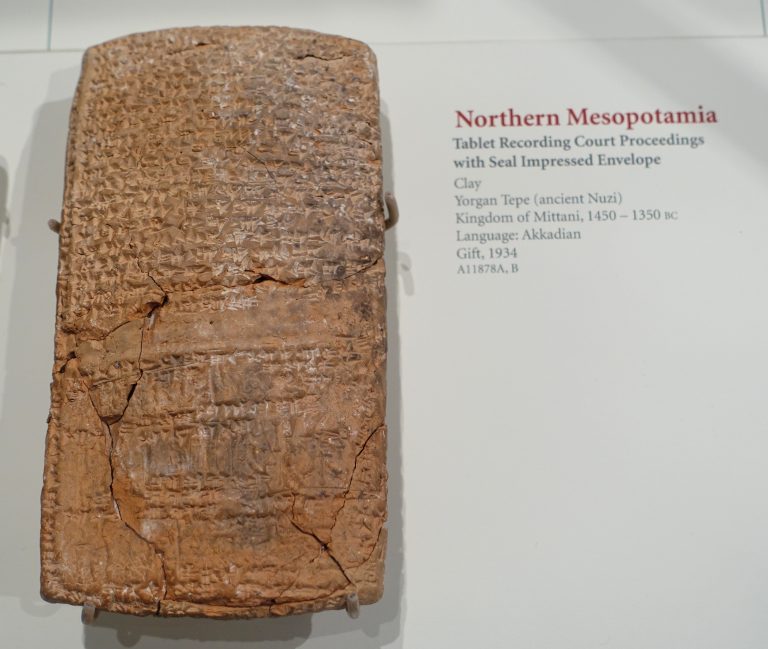
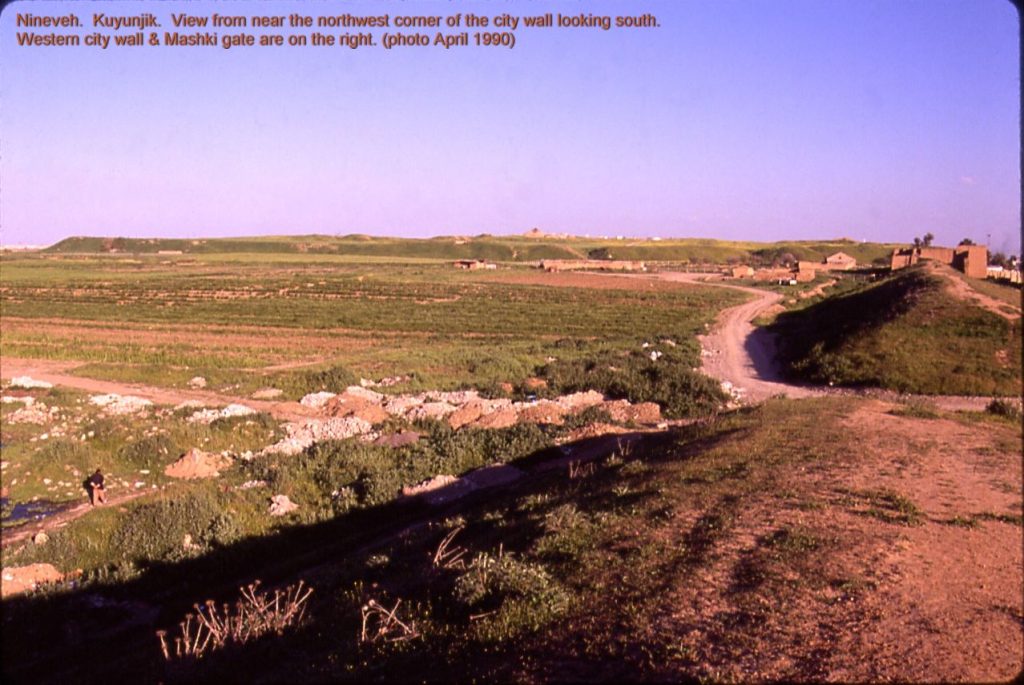
The British Museum calls its object K.3375 the Flood Tablet. The initial in that number belongs to the museum’s Kuyunjik designation, associated with the large mound at Nineveh. On the tablet are tight columns of wedge-shaped signs. The copy is from the seventh century BC and belongs to the mass of material excavated at the Assyrian capital. Thousands of tablets and fragments, including documents and learned texts of many sorts, have been associated with the collections of the Assyrian king Ashurbanipal. The flood story was one of the texts valued and transmitted in the scribal culture the excavations brought to light. British Museum object presentation for K.3375.
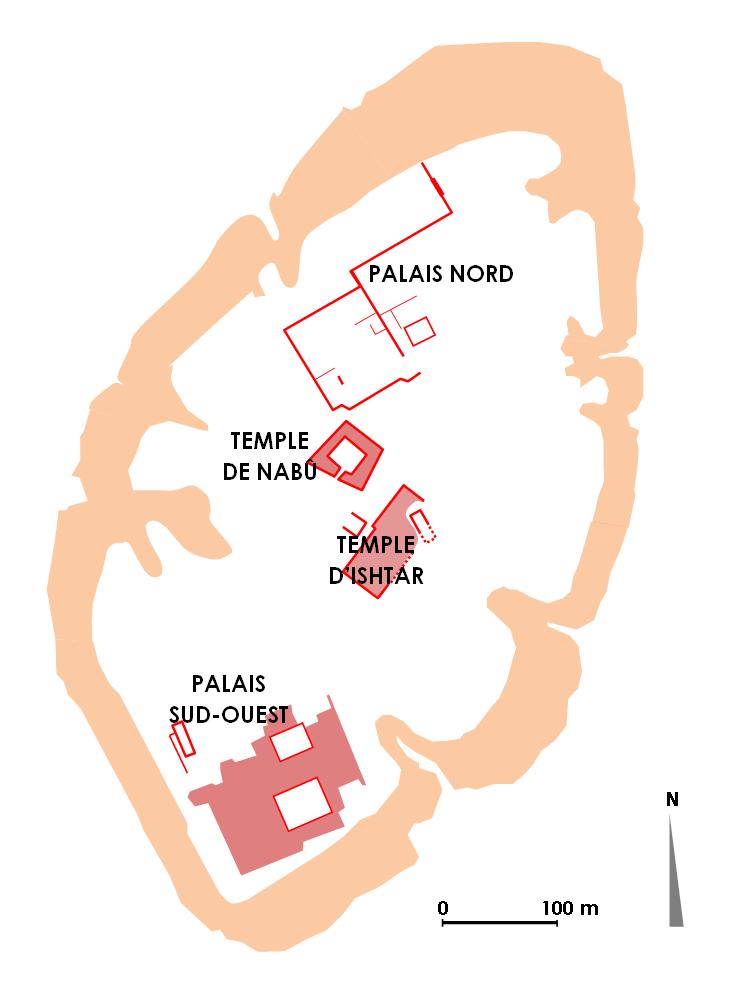
The name Nineveh can summon the story of Jonah or the Assyrian palace reliefs of Lachish. A city could also be a center for collecting copies of older works. The documents found there include the work of scribes who made copies, repaired texts, kept lists and transmitted stories alongside more immediately practical records. Clay could hold a wide range of writing. A literary work in such a collection tells us what was being read and preserved. It takes additional evidence to reconstruct where the story first circulated, how it developed and where an individual copyist found the text on which he worked.
The object’s ancient date and the date of its recognition in London are two different parts of its history. In December 1872 Smith told the Society of Biblical Archaeology about the discovery he had made among the museum’s tablets. He identified the flood account as part of a larger sequence of tablets. The paper is an early witness to the excitement of the reading and to the state of the text as he knew it. Subsequent joining of fragments, publication of other copies and advances in Akkadian changed what scholars could read. Smith’s nineteenth-century spelling for the figure now called Gilgamesh belongs to that earlier stage of history. Smith’s published paper on the flood account.
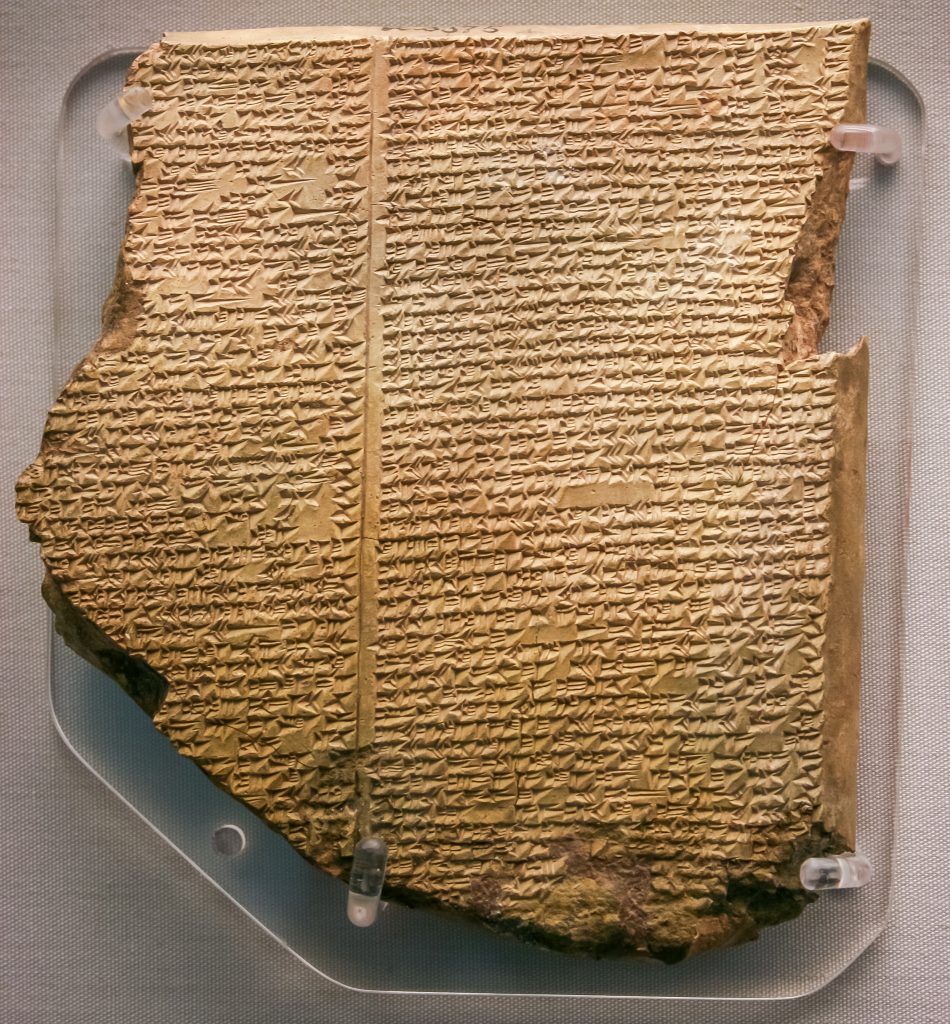
Looking at the wedge marks, remember that cuneiform denotes a way of writing. Scribes used versions of it to set down different languages over many centuries. The flood episode here is written in Akkadian. The names “Assyrian tablet” and “Babylonian epic” can both be relevant because they describe different things. An Assyrian city is the place where this copy was kept. Babylonian literary and linguistic traditions are part of what that copy preserves. Distinguishing writing, language and collection context gives readers a better way to understand why the same object can appear under several headings in a museum or library.
A flood story told to a king
The version students often read is the Standard Babylonian Epic of Gilgamesh. In its eleventh tablet, a survivor sometimes rendered Uta-napishti or Utnapishtim tells Gilgamesh how he came to survive a great flood. Gilgamesh has been confronting death, particularly after losing his companion Enkidu. The tale of a man who received an extraordinary fate belongs to the king’s effort to find out whether he can escape mortality. Reading the account from that point in the epic makes the result for the survivor more intelligible. It also shows why the flood story matters to a larger work concerned with the limits of life. Andrew George’s electronic Babylonian Library edition, Tablet XI.
The story describes a divine decision to flood the world of its characters. The god Ea lets Uta-napishti know how to escape. The man builds a vessel and takes aboard members of his household and living creatures. As the storm ends and the boat comes to rest, he tries the sequence of birds. In a standard modern reading of the tablet he releases a dove, then a swallow, and finally a raven. The first two return after finding no place to settle. The raven finds conditions suitable enough that it does not return. The birds give a person on a boat a way to learn about the world beyond his immediate view.
One complication enriches the comparison. The surviving tablet from Nineveh is only one witness in the study of a text with a long history. Editors compare multiple manuscripts and often identify connections with the older Mesopotamian composition called Atrahasis, which also tells a flood story. Where a translation fills a damaged line from another tablet, a reader may see continuous English even though one particular object is broken. Scholars’ editions reveal which manuscript supports a reading and where restoration is tentative. It is worth spending a moment with that evidence before treating the date of K.3375 as the date of the first version of the epic, or the first Mesopotamian account of a flood. George’s critical edition and cuneiform texts.
The boat and the birds make the comparison easy to begin. The endings show why each author wanted readers to remember the flood.
What happens when you read Genesis beside it
In Genesis 6, the story of Noah begins with the spread of violence and corruption. It says the Lord sees what human beings have done and gives Noah instructions. Noah acts on that warning and brings his family and animals into the ark. The water rises and recedes. After the ark comes to rest, Noah releases a raven and then sends out a dove repeatedly. The dove eventually returns with an olive leaf, an indication that life is reappearing, and on a later release it does not return. The recurrence of a boat, a landing and trial flights in both accounts is specific enough to deserve a deliberate comparison. Genesis 6–9.
- Mark the warnings, the preservation of lives aboard a vessel and the test for dry ground in both narratives.
- Compare the two sequences of birds. Genesis places the raven first and repeats the dove. The Babylonian sequence ends with the raven.
- Read through to the sacrifice and the closing words. The survivors have emerged into different accounts of divine action and the future.
The landing is often given as Mount Nimuš in the Babylonian epic. Genesis uses the mountains of Ararat, a regional reference. The two sequences of birds also work differently. In Genesis, the olive leaf gives the reader a distinct visual sign between the absence of a resting place and the final disappearance of the dove. There is a particular rhythm to the repeated releases. In the epic, the three kinds of bird take the story from unsuccessful flights to the raven’s changed circumstances. The comparison is most useful at this scale. We can name the shared pattern while seeing what each telling emphasizes.
The sacrifices after the waters recede provide another point of comparison. In the epic, several gods react to the aftermath of a disaster decided among them. Uta-napishti and his wife eventually receive a special status and live apart. His exceptional story responds to Gilgamesh’s desire for an answer about his own fate. In Genesis, Noah’s offering is followed by God’s promise and covenant with Noah, his descendants and other living creatures. The rainbow belongs to that promise. The biblical account therefore carries the reader beyond the survival of one family into the continuing order of creation.
Try a final comparison of the time spent on the boat. Each account has a sequence of storm, waiting, reconnaissance and departure, but the numbers and their roles in the stories differ. In the epic, the intensity and end of the storm form a compact part of the survivor’s account to Gilgamesh. Genesis marks stages by days and dates, from the opening of the waters to the time the earth is dry and God tells Noah to come out. The narratives share an interest in how a survivor knows it is safe to leave. Their ways of marking that wait deserve to be read separately.
What a tablet can tell us about a tradition
This is strong evidence that people in the ancient Near East preserved flood traditions with recognizable common details. Establishing precisely how two tellings are related is another task. Possibilities include a chain of literary transmission, older material shared across languages and communities, or some combination of memory and literary adaptation. A manuscript date tells us when a particular copy existed. Establishing what a biblical author had access to would require additional evidence about which versions circulated where, and when. Close resemblances matter, but they do not supply every link in that chain. Reading the known evidence closely is a firmer basis for comparison than inventing a route between two surviving texts.
The object is similarly limited as physical evidence for the flood itself. It is physical evidence for a text copied in cuneiform. Geological traces of floods at ancient settlements belong to a different dataset. They need location, dates, physical deposits and a defensible link to whatever event one is investigating. One Mesopotamian text can tell us that a tradition was transmitted into a literary collection. It cannot date flood deposits in a river valley or identify the vessel of a particular survivor. The distinction makes the tablet no less remarkable. It allows the real discovery to remain visible.
As Christians, we receive Genesis as true and take its account of judgment, mercy and covenant seriously. The comparison lets us see how deliberately that account is shaped. God attends to human violence, gives Noah a command and establishes a covenant reaching far beyond the people who survived in the boat. Genesis leaves the reader with a responsibility toward life and with the sign of God’s promise. Put the tablet’s boat and birds beside Noah’s again. Their kinship as images is one of the striking facts of ancient literature. The biblical ending explains why Genesis keeps returning our attention to the God who remembers and makes a promise.
Sources and further reading
- British Museum, The Flood Tablet, K.3375 — Museum-authored presentation of the ancient object, its collection context and Smith’s identification.
- George Smith, The Chaldean Account of the Deluge — First scholarly presentation, read to the Society of Biblical Archaeology in December 1872.
- Andrew George, electronic Babylonian Library, Gilgamesh Tablet XI — Text and translation of the Standard Babylonian flood episode.
- Andrew George, The Babylonian Gilgamesh Epic — Critical edition, manuscript witnesses and the poem’s history in Babylonian literature.
- Genesis 6–9 — The flood, Noah’s response and the covenant.