A letter kept in Berlin begins with people on an Egyptian island asking for permission to rebuild a temple. They address a Persian governor in Judah, far up the Nile and beyond Egypt. Their request comes from a Jewish community at Elephantine and names the god they worshiped there. They describe the destruction of their temple, the trouble they have had getting help, and the support they want. The document gives us an unusual way to see what life could look like for Jews outside Judah in the time of the Persian Empire. It also invites a close reading of what the Bible says about worship and identity after exile.
What you’ll learn
- Where the Elephantine petition was written and why an official in Judah mattered to its authors.
- What a letter asking for a temple says about the community that wrote it.
- How the papyrus helps us read Ezra and Nehemiah and where its testimony reaches its limits.
An island near Egypt’s southern frontier
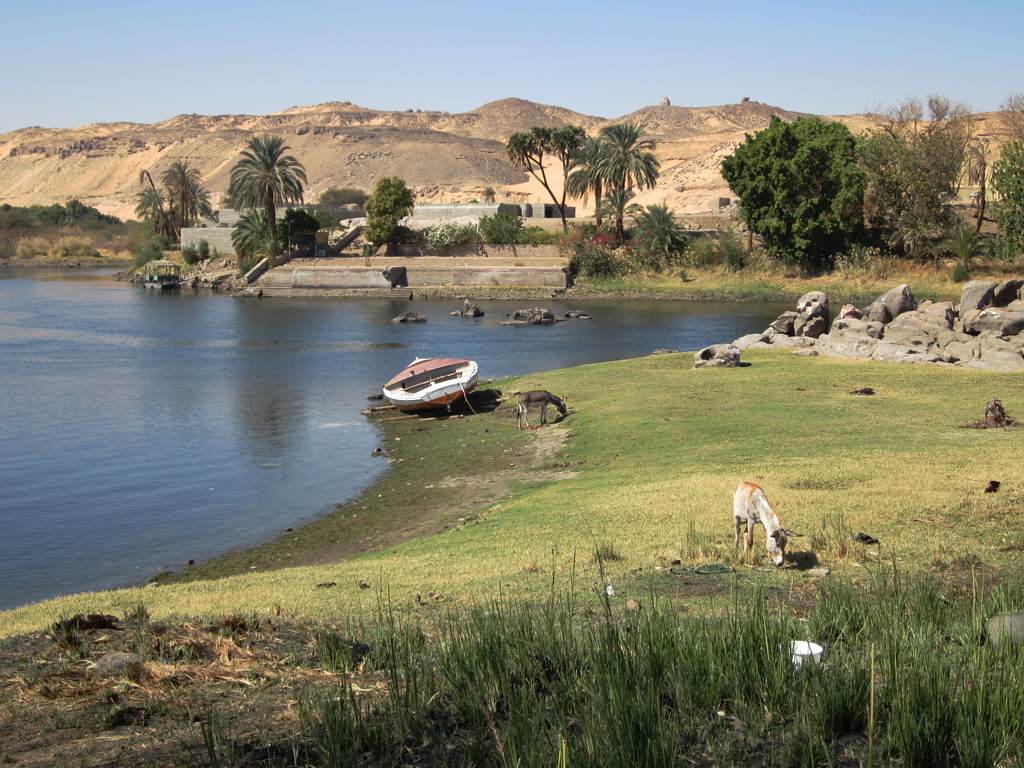
Elephantine lies in the Nile at Aswan, near the First Cataract. This makes it a different setting from the more familiar landscapes around Jerusalem or the Nile Delta. Across periods, the island’s position near a river boundary made it a place for trade, settlements and military activity. In the Persian period a community that included Jews lived at Elephantine. Its surviving written records belong to the world of an empire whose inhabitants and officers could speak, write and travel across very different regions. Viewing the island from the river helps set that history in a place rather than leaving it as a list of names. Egypt’s antiquities ministry on the island’s archaeological setting.
Some of the people were connected with a garrison. That term describes a military presence, but the archive also puts ordinary families, property, contracts and worship into view. People living near one another had to negotiate their relationships with local households, religious institutions and officials. A papyrus from this environment may be a private letter or a record of a legal exchange. The type of document controls what it can tell us. The request for a temple gives one group’s formal account of a crisis within that wider life. It is worth reading it as the work of people asking others to take a specific action.
The petition survives on papyrus
Modern scholarship on Elephantine began to assemble documents from several sources around the turn of the twentieth century. Different texts entered collections through different routes, including excavations. The temple petition pictured here is P 13495 in Berlin. The museum dates it to 407 BC. The writing is in Aramaic, a language widely used for administration and correspondence in the period. The sheet is papyrus, so a modern photograph can show writing next to fibers and losses in the surface. Looking at front and back helps a reader see a physical document with a shape, limits and a history of handling. Berlin collection record for P 13495, including both sides.
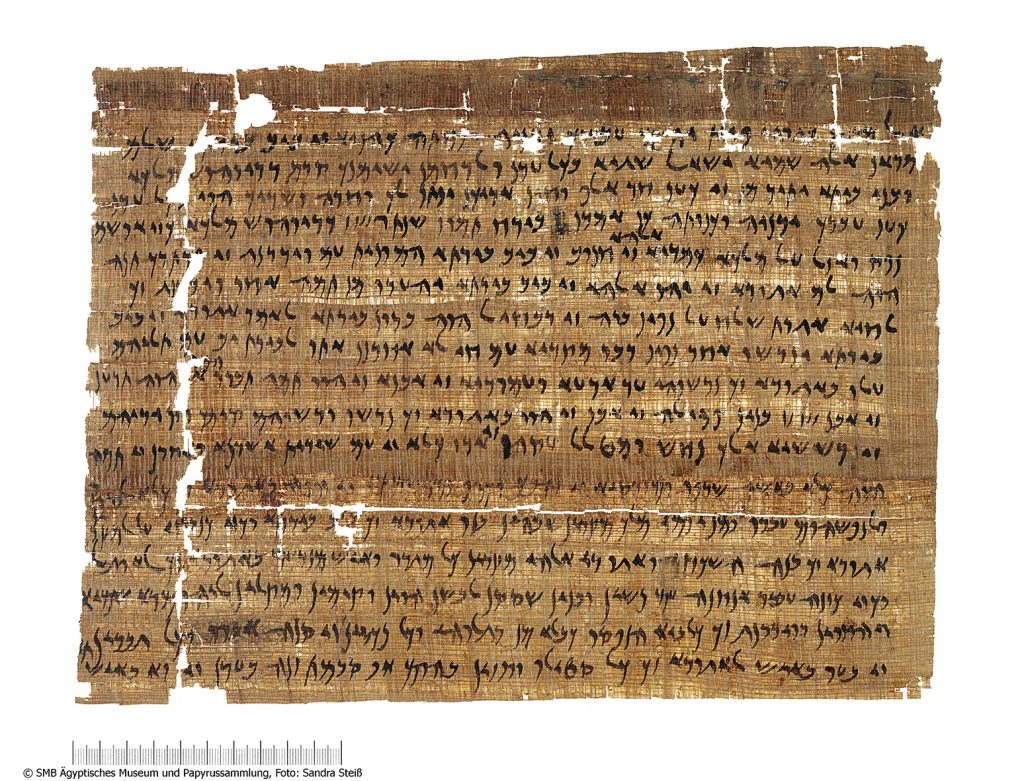
The document’s administrative language is significant. It was possible for the authors to speak about a temple they called their own in terms an official could understand and act upon. The writing also gives editors evidence for local habits of spelling and address. A translation brings the request into the reader’s language. It can make the matter look more continuous than a damaged ancient surface really is. An edition that identifies archival or textual numbers helps keep the translation connected to an individual document. The Berlin inventory number and the designation TAD A4.7 in the modern corpus are two ways of getting back to the same witness. English rendering and information on the petition’s scholarly editions.
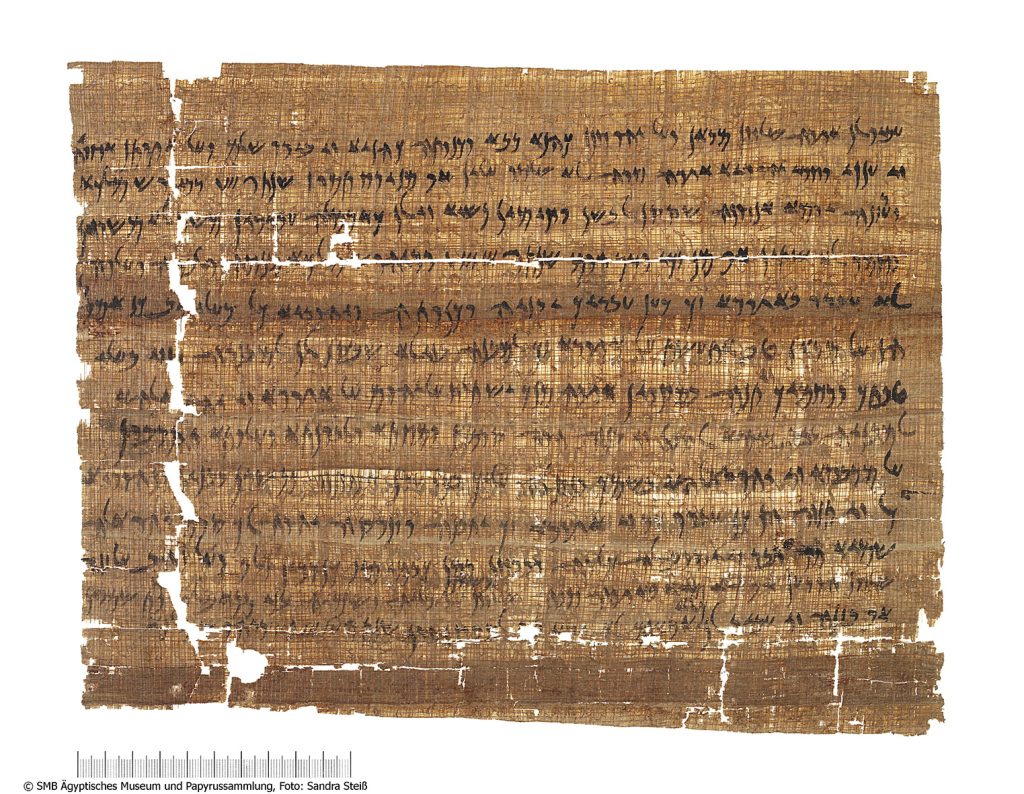
The survival of papyrus at Elephantine gives us a perspective that would be hard to get from building remains by themselves. Walls can show that a room existed and help date its successive uses. A letter can name a sender, record terms used for worship and preserve an account of decisions that affected the community. The material is fragile and survival is uneven. We have a collection of written pieces with particular preserved details. It is possible to learn a great deal from a petition while remaining curious about how the story was told by the people to whom it was sent.
What the writers wanted Bagohi to do
Yedaniah and his fellow petitioners address Bagohi, the governor of Judah. They tell him about a temple to Yahu that they say was destroyed at Elephantine. Their report connects the destruction with local actors, including priests associated with Khnum and personnel of the administration. The events happened, according to the letter, while the satrap Arsames was away. The petition emphasizes the harm the group says it suffered, what it had previously done to secure aid, and the value of restoring its ability to worship. The document records testimony by people seeking redress, including an account of actions they wanted the governor to evaluate. The petition’s account of the destruction and request.
The authors also say that the temple had existed before Cambyses, the Persian king who conquered Egypt. They place their shrine within a longer history to strengthen the request. The claim matters to the makers of the letter because they are asking to restore something they understand as established. It is evidence for how the community remembered its history. Establishing exactly when the temple was built would call for independent chronological and archaeological evidence. The tablet of stone or walls that might be expected in a different kind of discovery are not what supplies this particular claim. Here it comes from the words the petitioners chose.
The petition states what the authors wanted to resume, including several kinds of offerings. Their proposed restoration is concrete rather than general. They want permission to rebuild and to worship in recognizable forms. By directing the letter to an official in Judah, people far from Jerusalem show that Judah still mattered to the ways they sought support or legitimacy. The relevant relationships are broader than Judah alone. The letter also refers to appeals involving people connected with Samaria. Several lines of authority could matter to a local dispute, and how the temple might be restored depended on what those people would allow.
A petition can preserve both what a community says it lost and what it believes will persuade someone with the power to help.
What happened after the request?
The petition can be read beside another text from the same dossier, the short memorandum usually called TAD A4.9. It records support from Bagohi and Delaiah for asking that the temple be rebuilt on its site and for offering incense and meal offerings. Scholars pay attention to how that list differs from the petition, which had also mentioned burnt offerings. A list can help identify what authorities were prepared to support. Its silence on a practice needs careful interpretation. The memorandum gives evidence of a response in the negotiation, while questions about how a reconstruction was carried out belong to what can be established from other records and remains. Berlin’s Elephantine text project, reconstruction memorandum.
- Read when the petition was sent and which earlier events its authors appeal to.
- Identify the office of the person being asked to help, and the action the letter asks of him.
- Compare the request with the memorandum and distinguish permission from evidence of completed rebuilding.
These are useful distinctions far beyond one papyrus. A request written before a decision and a summary of what someone might allow can look like straightforward historical accounts until we ask what they actually accomplish. In the Elephantine papers, the different texts help place the same question about a temple at several points in a negotiation. Reading them together lets us see more of the administration and also recognize where records do not give the next step. The petition’s date tells us that the writers were still appealing for support then. It gives a clear moment in the story, alongside some unanswered questions about the future.
Reading the papyrus beside Ezra and Nehemiah
Ezra describes the rebuilding of the Jerusalem temple with the permission of kings of Persia. The process involved governors, orders and competing appeals. Those are recognizable features of the world of the Elephantine letter. The temple in Egypt and the temple in Jerusalem have their own dates, places and claims. A reader can study the similarities in how local communities addressed imperial power and still follow the purpose of the biblical account on its own terms. In Nehemiah, a man named Sanballat is involved in opposition to work at Jerusalem. A related name and the office of a governor of Samaria in the Elephantine texts make the comparison worth investigating. Names, possible family connections and dates all need to be weighed before identifying two individuals as one. Ezra 5–6 and Nehemiah 4.
The petition also raises a question about the relationship between what people did and what Scripture says God required. Deuteronomy 12 directs Israel’s sacrifices to the place the Lord would choose. The Elephantine community’s claim to a temple of its own is evidence of a historical practice near the southern border of Egypt. Reading the biblical instruction and the actual petition keeps both kinds of evidence before us. Historical documents let us see where practices developed. Scripture gives a Christian reader the account of the Lord’s instructions and their place in the story of his people. The existence of a practice does not settle how it should be evaluated in light of that account. Deuteronomy 12:1–14.
As Christians we read those Scriptures as true, and we can appreciate what this scattered community lets us see. People farther from Jerusalem than most biblical narratives take us still thought deeply about the place where they worshiped, the ties they depended on, and the means they had to pursue a decision. Put the island and Jerusalem on the same map while you read their words. The distance makes the petition remarkable as an act of communication. Its concerns make it one of the most human records of the world in which the biblical books of the Persian period took shape.
Sources and further reading
- Staatliche Museen zu Berlin, papyrus P 13495 — Object date, provenance and photographs of both sides.
- K. C. Hanson, Temple Authorization — Translation of the Elephantine petition with scholarly references.
- Berlin’s Texts and Scripts from Elephantine project — Record for the short reconstruction memorandum.
- Egypt’s Ministry of Tourism and Antiquities, Elephantine — Location and overview of the archaeological site.
- Ezra 5–6 and Nehemiah 4 — Accounts of local administration, opposition and rebuilding in Judah.