Rachel takes her father’s household gods as Jacob’s party leaves. Jacob does not know what she has done, and Laban searches their tents. Genesis lets us see who has the objects and how the search fails. It leaves Rachel’s motive unstated. A tablet published from the region of ancient Nuzi once seemed to supply an obvious explanation. In one adoption agreement, an heir’s rights and the treatment of family gods appeared together. More tablets complicated the comparison. The discovery is a good example of archaeology making a biblical detail more intelligible while the text still leaves room for more than one historical explanation.
What you’ll learn
- Where the Nuzi tablets were found and why early purchases require a different kind of provenance check.
- What an adoption agreement says about inheritance and the family gods.
- Why Genesis gives us a firmer account of Rachel’s action than of the motive for it.
How the tablets came to light
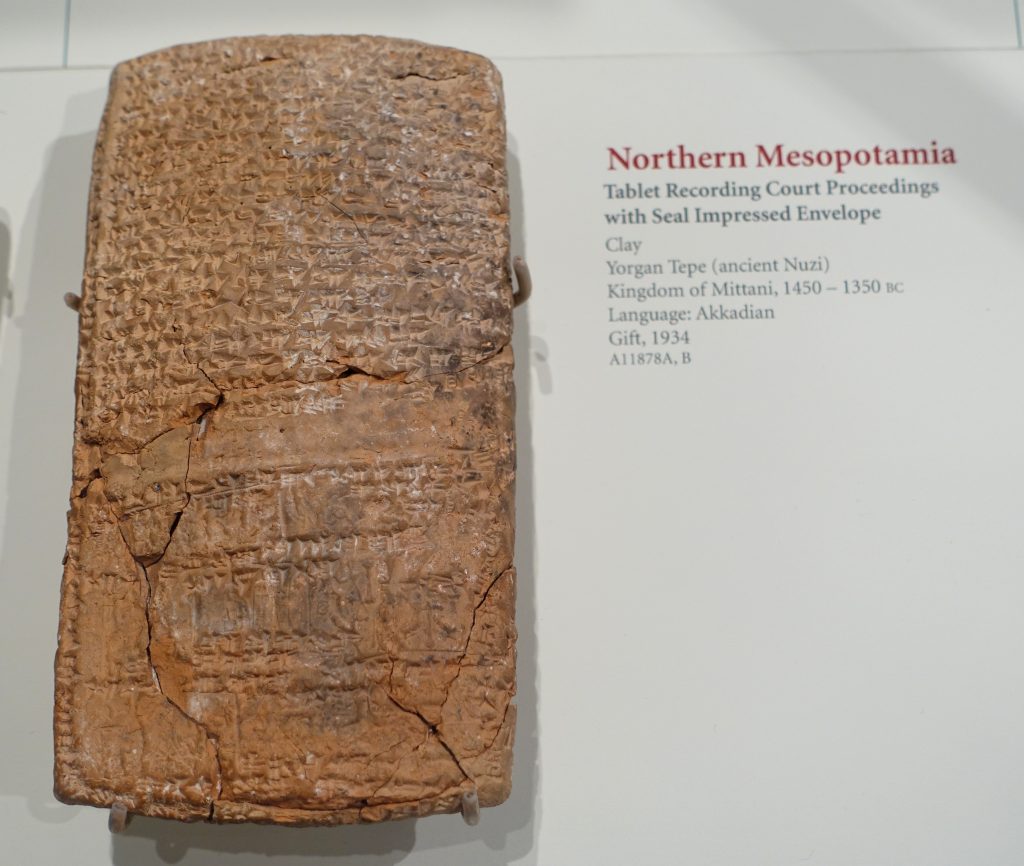
Nuzi lies at Yorghan Tepe, southwest of modern Kirkuk in northern Iraq. Its name appears in written sources from a region whose towns were closely linked with one another. Nuzi had been known in an earlier period as Gasur. The family and legal texts generally brought into comparison with Genesis belong to the Late Bronze Age, especially the fifteenth and fourteenth centuries BC. Some people in the later documents have Hurrian names even though the documents are written in Akkadian. A scholar reads those records as evidence for both a regional society and a practical written language used to make agreements enforceable. Cuneiform Digital Library Initiative’s catalogue of Nuzi editions.
Tablets connected with the Nuzi and Kirkuk region came to museum collections before controlled excavations. The early purchases can preserve ancient texts of high value. They offer fewer answers about the building or layer in which a piece was found. Work at Yorghan Tepe began under Edward Chiera in 1925 and continued in joint American and Iraqi archaeological campaigns into 1931. The Penn Museum holds field records and excavation photographs. Its archive helps distinguish an object someone said came from the region from one recovered in a particular excavated setting. The legal texts need both kinds of attention, to what a tablet says and to how it reached a modern collection. Penn Museum guide to the Nuzi expedition records.
Scholars have continued to identify and publish material from older collections. A 2014 article edited three tablets in the British Museum and compared them with the records from controlled work. The categories include a list of household personnel receiving wool. A document like that opens a different view of household organization from a published contract about a prospective heir. The larger assemblage is one reason to be cautious about turning a single dramatic parallel into a universal custom. What a tablet describes can depend on the type of document, which people it names, and the property or obligation at stake. Research on three previously unrecognized British Museum texts.
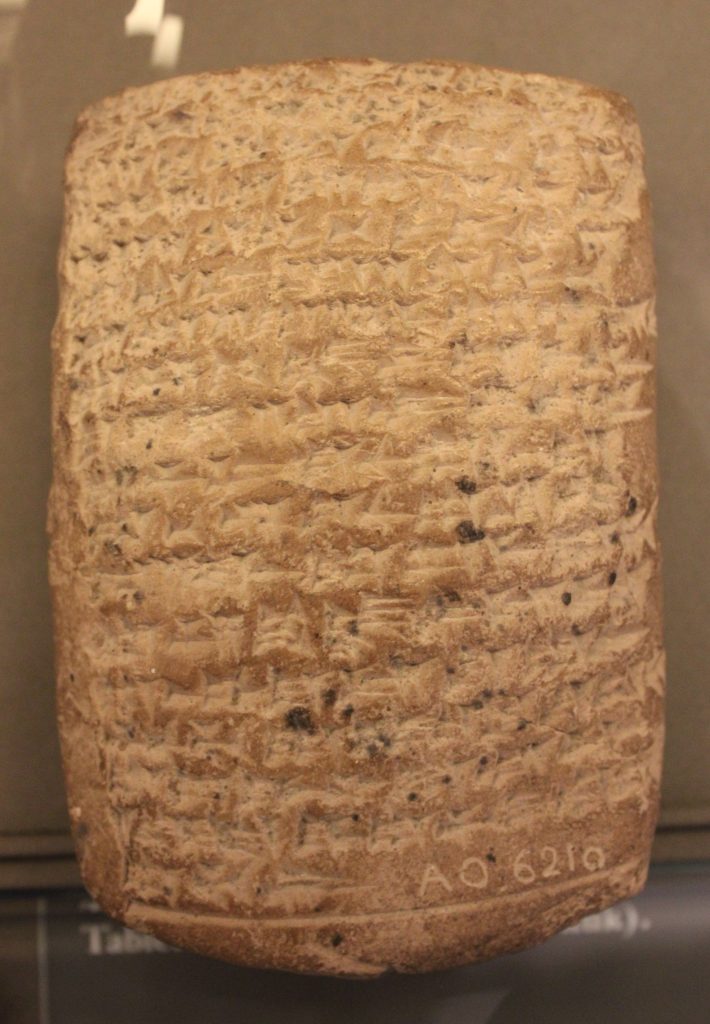
What the law tablets preserve
A legal tablet often tells a reader more about obligations than about a person’s feelings. Someone paid a scribe to put the terms into a form that others could recognize later. The wording had to account for the property, the people entitled to it, and foreseeable changes in a household. That is why the possibility of a later child can appear in detail. It would take another kind of record to show what the adults said to one another in private or how their obligations were actually honored over time. This difference in purpose is worth remembering as we move from a legal tablet to a story about a family in conflict.
The tablet and envelope shown together in the featured image come from an ancient dispute about property. The published version is known as JEN 321. The outer clay could carry impressions made with seals. An archaeologist can examine the clay covering and the tablet as a pair, while a specialist in the language can follow the record of the dispute. The two kinds of work answer related questions. The text names acts and relationships. The physical pieces help show what people did to leave a durable record of their claims. Nuzi’s records include adoption, transfer of land, and court proceedings. A true family adoption and a legal device used to transfer land can share some wording even when their implications differ. Brill catalogue identifying the property proceedings in JEN 321.
A different record, the tablet usually cited as Gadd 51, names Nashwi and Wullu. Nashwi adopts Wullu. The arrangement assigns Wullu obligations to support Nashwi and establishes future rights. It also describes what would happen if Nashwi had a son of his own. A later-born son would have a share in the inheritance as provided, and the family gods would be assigned to him. In the circumstances specified for Wullu as sole heir, he would receive them. The agreement makes the division of property and the allocation of family gods intelligible within one negotiated arrangement. It is important that the text belongs to a contract between particular people. C. J. Gadd’s publication of the Kirkuk tablets.
The fuller legal corpus shows why the distinction matters. Some agreements incorporate a person into the ongoing household and its responsibilities. Other transactions use an adoption formula while sharply limiting access to family property or worship. Comparing a group of documents allows scholars to see what a single legal clause did in that setting. It also helps answer a different issue, whether a person who merely held an object could claim the rights it symbolized. A group of witnesses, records, and named terms had significance in local legal practice. The contract in Gadd 51 states what would happen after a family change. It does not describe a newcomer acquiring a right by secretly taking an image. Maidman’s primary editions and discussion of Nuzi documents as historical evidence.
A contract can show who was meant to receive the family gods. It takes a separate argument to turn physical possession into legal title.
Why Rachel might have taken the household gods
Genesis reports the family conflict before it reveals Rachel’s act. Jacob says he has been badly treated. Rachel and Leah say they no longer have a share in their father’s household and agree to leave. Laban then accuses Jacob of stealing his gods. The sequence helps explain why scholars first saw a parallel with texts about inheritance. E. A. Speiser put the connection into circulation early after the Nuzi discoveries. It gave students of Genesis a concrete document to compare with a detail that the biblical author understood readers could follow without a long explanation. Speiser’s 1937 comparison of Jacob and Laban with the Nuzi tablets.
Moshe Greenberg examined a wider set of Nuzi contracts and challenged the idea that possession by itself entitled the holder to an estate. The published terms show relationships among household authority, family ritual, and succession. The conclusion that Rachel wanted the right to Laban’s property requires more than that association. Laban had sons in the narrative, Jacob was unaware of the theft, and they had set out to go to Canaan. There is no later scene of Jacob producing the images in support of a property claim. Rachel may have been seeking an advantage, taking a household object she valued, or acting for a reason the text does not expand on. Greenberg’s reexamination of the Nuzi comparison.
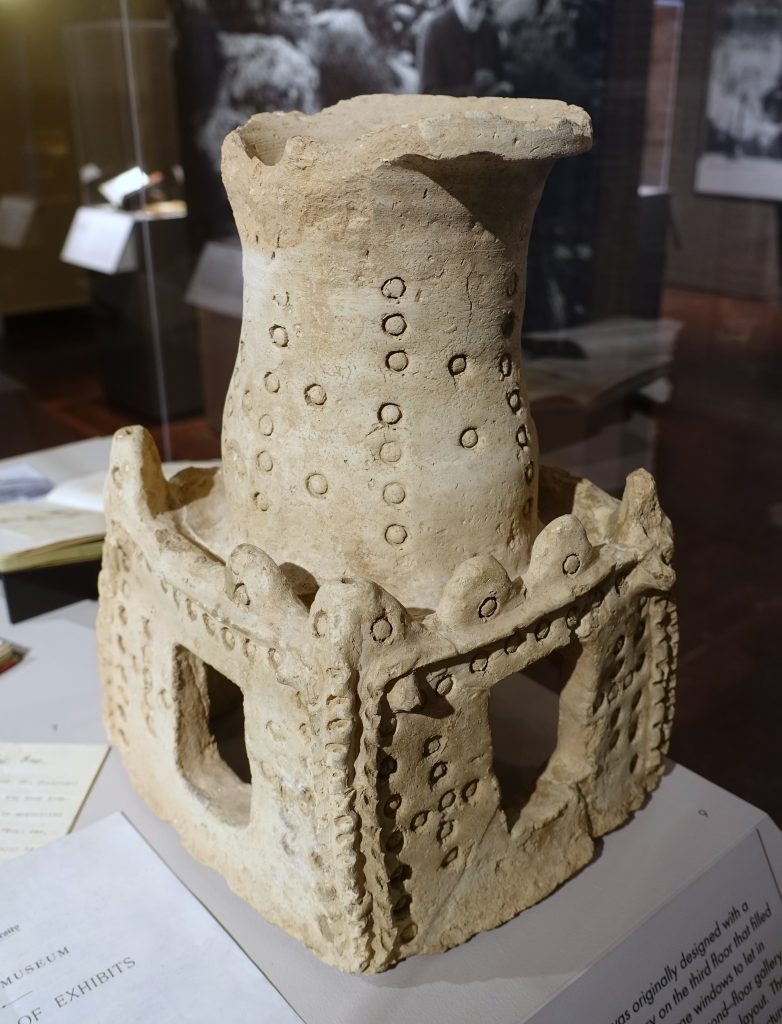
The house-shaped object in the photograph can teach the eyes to recognize a religious item on a very small scale. Its recorded form and location do not make it a picture of the Hebrew teraphim. Genesis calls Laban’s objects his gods and shows Rachel concealing them beneath a camel saddle. Those details give the reader a scale and role for the objects within that story. Reading about the offering stand separately preserves what we can learn from its own excavation. It also avoids basing a biblical object identification on the broad fact that household worship took material form at many sites.
What Scripture asks us to notice
Genesis 15 provides a related example of how such comparisons work. Abraham raises the possibility that someone of his household will be his heir. God answers with a promise about a descendant of his own. Ancient law can illustrate why a household faced a practical question over succession. The biblical passage presents the answer as a promise from the Lord.
Genesis also describes disagreements about marriage and earnings between Jacob and Laban. Comparison studies put these alongside contracts from Nuzi and other ancient places. An apparent parallel should be checked for its dates, place, wording, and purpose. A custom known at more than one date cannot by itself date an entire biblical narrative. A local difference does not make the other record impossible. The best contribution of the tablets is to widen the range of ancient family arrangements a modern reader can imagine and then to ask which details actually line up. Comparative study reassessing the marriage evidence.
For Christians, a central issue in Genesis 31 is who watched over Jacob as he left an uncertain relationship. God directs Jacob to return and warns Laban during the pursuit. Jacob and Laban finally set boundary terms. The account explains that protection in terms of the Lord’s care for the household. Genesis 35 follows with a command to put away foreign gods before going up to Bethel. The two chapters taken together have a more developed account of God’s faithfulness and Jacob’s family obligations than a single comparison about a household object can convey.
The Nuzi discovery remains important because it gives this reading real objects to examine and real family agreements to compare. The cautious conclusion is still substantial. A contract could connect succession, care for an older man, and family worship in a way a modern reader might not expect. The ancient legal context sheds light on why readers have asked about Rachel’s motives since the tablets were first published. Genesis gives us the action within an account of a household that had reason to leave and of a God who made a promise to bring Jacob home. For another early text collection, see the excavated archives at Mari.
Sources and further reading
- Penn Museum Nuzi expedition records — Field dates, participants, and excavation documentation.
- Three Nuzi Texts from the British Museum — Original editions and provenance discussion.
- Tablets from Kirkuk — Bibliographic record of Gadd’s edition, including the adoption comparison.
- The Story of Jacob and Laban — Original influential comparison by Speiser.
- Another Look at Rachel’s Theft of the Teraphim — Reassessment of inheritance, household ritual, and the Nuzi legal texts.
- Nuzi Texts and Their Uses as Historical Evidence — Text editions and historical interpretation.
- Context of Scripture catalogue — Published identification of JEN 321 and other Nuzi legal texts.
- Jacob’s Marriages and Ancient Near East Customs — Comparative reexamination of Biblical and Near Eastern documentation.
- Cuneiform Digital Library Initiative — Institutional catalogue of published Nuzi tablets.