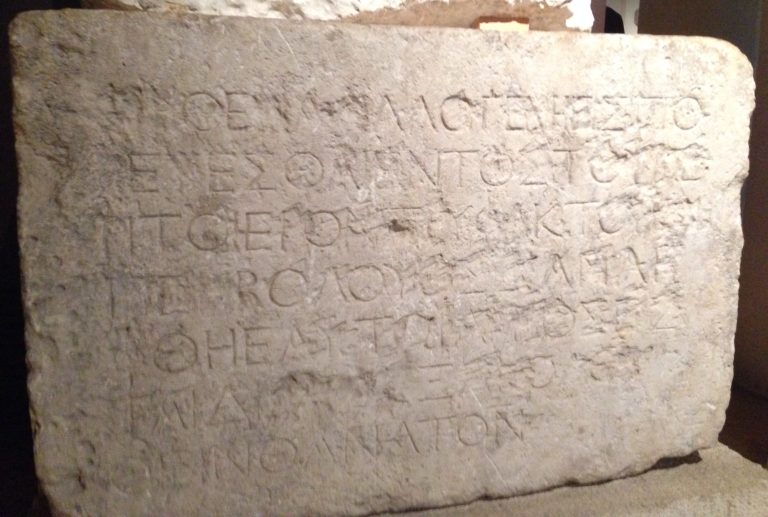
In 1961, a stone bearing part of Pontius Pilate’s name turned up in a stairway at Caesarea Maritima. The early Roman letters belonged to a dedication made while Pilate governed Judaea. The staircase belonged to a later use of the stone. Both observations matter. Put them together and you can trace two chapters in one object’s life. If all you had were a photograph of the letters, you could still study the text. You would have a much harder time knowing what happened to the stone between the day someone cut it and the day it was found. Database of Military Inscriptions and Papyri of Early Roman Palestine, record 371.
The findspot is a record of where someone found an object. Archaeological context adds the relationships that made that location informative. The stone at Caesarea sat in a building as a usable block. A carved stone in Magdala stood in a room where people assembled. An inscription at Siloam was originally cut into the wall of the tunnel it describes. We receive Scripture as true and accurate, and these relationships make it possible to study the world of Scripture at the scale of a room, a staircase, and a passage underground.
What you’ll learn
- Why a site name, an exact findspot, and an object’s later ownership history answer different questions.
- How the Pilate Inscription, the Magdala Stone, and the Siloam Inscription preserve different kinds of context.
- Which details to look for when a museum label or headline describes a major discovery.
Ask three questions about where a find came from
“From Caesarea” tells you the place to look on a regional map. Evocative as that location is, the name leaves open which part of town the object came from and which remains lay around it. An excavation record may go down to the trench, the surface or fill, and the position of the object within it. A measured location can also be compared with a plan or photograph. The questions become more specific as you get closer. Was it against a wall, set into the wall, or lying nearby in material that accumulated after the wall fell? National Park Service, What Is Archeological Context?.
- Findspot. What location did the finder record? A town, building, room, and position inside the room provide increasingly fine detail.
- Archaeological context. Which layers, features, and associated finds give that position meaning?
- Custody history. Where did the object go after discovery and which records document transfers and ownership?
Archaeologists often use provenience for the precise place of an object in a site or deposit. In museum and collections work, provenance often describes the object’s documented history of ownership and custody. Writers sometimes use the terms more broadly. The dependable way to read them is to see which history is actually recorded. A catalogue entry tracing a stone from an excavation to a museum addresses custody. An excavation drawing locating it against the north wall of a room addresses its archaeological position. Together such records help a reader follow the description all the way back to the material evidence.
The place where an object was found can preserve a part of its story that no amount of polishing, photographing, or translating can replace.
What happened to Pilate’s dedication?
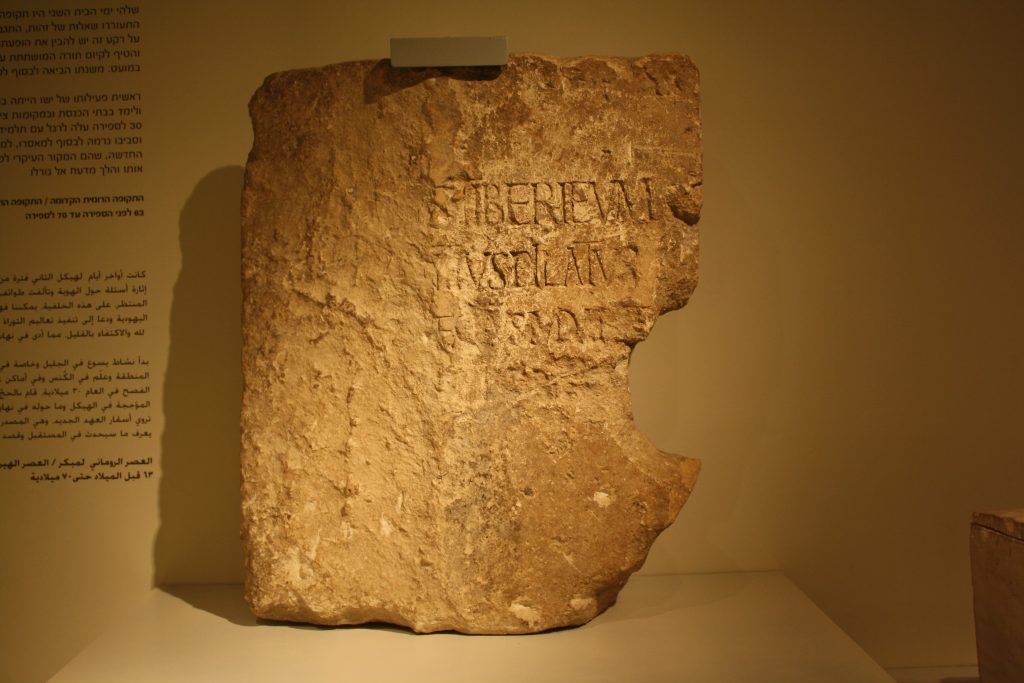
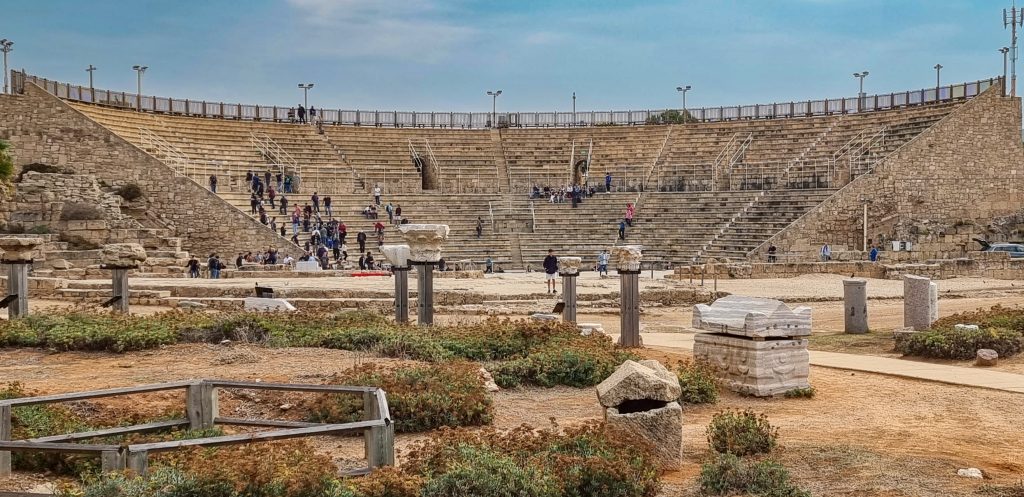
The Pilate Inscription carries the remains of four Latin lines. Scholars can read enough to recognize Pilate as prefect of Judaea and identify the word associated with the dedication to Tiberius. The stone’s survival as part of a stairway gives us a later use in the theater at Caesarea. Moving or recutting a block can remove part of its older inscription, as happened here. The record of the block in the staircase does identify where it ended up. The dedication’s first setting still needs to be inferred from its language and from evidence of other Roman buildings. Latin edition and restorations · Helen Bond on the find and setting.
Both uses belong in the record. If an excavator could date the stairway, that date would be associated with the reuse. The letters were already cut by the time the stone entered the later building. The name and title help date the carving to the earlier Roman administration. This example offers a useful caution about the word “in place.” The slab was observed in place as a stair block and had already moved since serving as a dedication. You can make sense of an object’s position once you ask which part of its life that position documents.
Open Luke 3:1–3 and notice that Luke names the authorities in place as the word of God comes to John in the wilderness. Pilate belongs to that historical frame. The inscription gives an independent local attestation to his name and title. Jesus’ trial in John 18 takes place in Jerusalem, in a different setting from the theater at Caesarea. Scripture and the inscription give the same official roles at different places in the record. Respecting that geography makes the artifact a better witness to the Roman administration in which the events of the Gospels occurred. Luke 3 and John 18.
From an object to the room around it
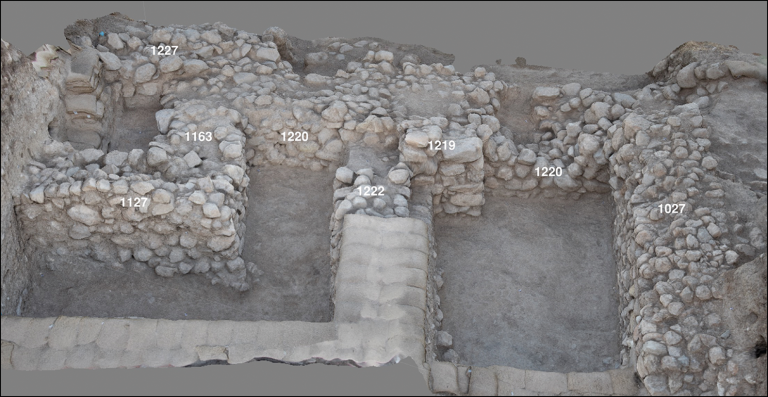
At Magdala, on the shore of the Sea of Galilee, excavators recorded a decorated stone in the main room of a first-century synagogue. In their report they describe its position on a prepared level of small stones. They also describe benches and other features of the room. This arrangement gives researchers grounds for asking what role the carved object might have served during meetings. The same block bought through a market would still have four feet and relief carvings, including a menorah. The relationships between stone, room, and other features would be much harder to establish. Israel Antiquities Authority, Migdal report, Area C and figure 11.
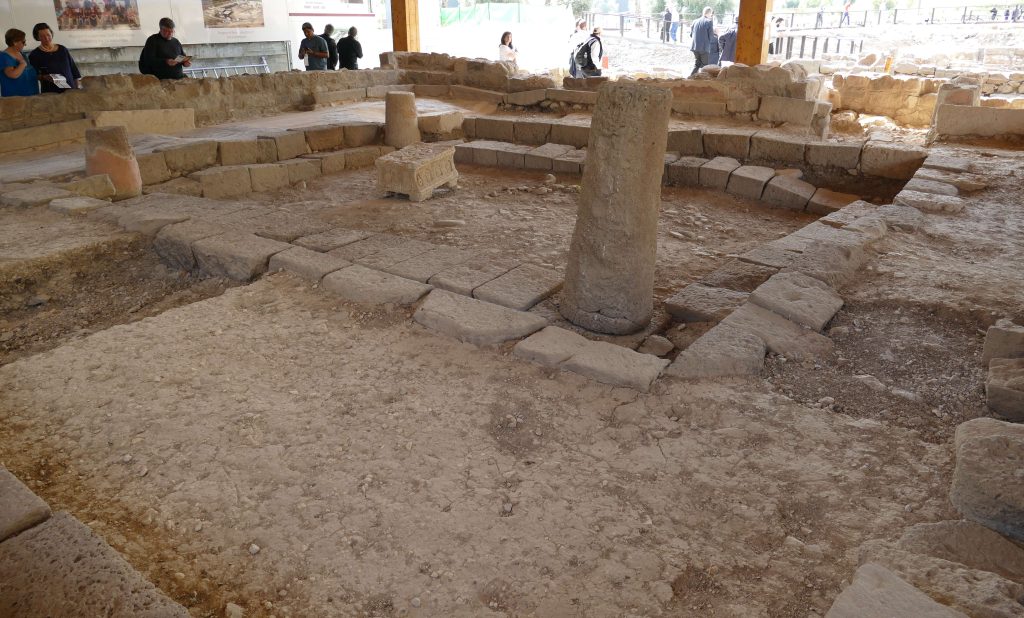
An excavation report gives context even when it leaves the original use open to debate. Scholars have suggested several functions for the Magdala Stone, including use as a low stand for a scroll. The context helps evaluate those proposals. The stone’s height can be considered in the room where people sat or stood, and its location matters when thinking about visibility and movement. Luke 4 records Jesus receiving and reading a scroll in the synagogue at Nazareth. Magdala’s room offers an archaeological parallel for the world of that passage, with its own features and a distinctive history. The Bible supplies the location and actions of the event it describes. Luke 4:14–22.
Another reader might ask whether the carved object was still in its working position when abandoned, or whether someone moved it within the room. Those questions call for evidence beyond the list of finds. A record of the object’s orientation, what lay directly beneath it, and what covered it can help distinguish a position prepared for use from a place where debris later collected. At Magdala the published observations tie the stone closely to a particular room and surface. That sets a useful boundary for interpretation. The excavated setting can narrow the possibilities without choosing between every proposed use of the carved stone.
When the object leaves but its original position is known
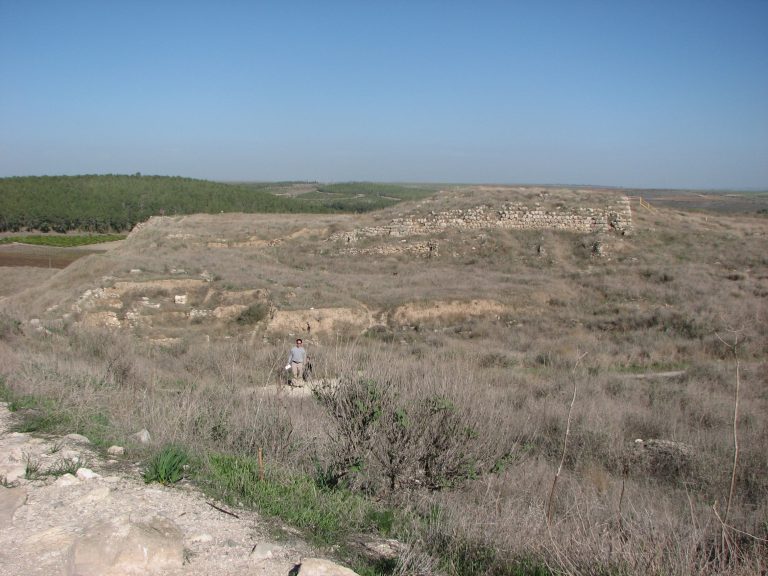
In 1880, the Siloam Inscription was recognized near the southern end of a water tunnel in Jerusalem. Someone had cut the words into the rock face in the tunnel. The text describes workers meeting as they cut through the rock and relates the passage of water. Its relationship to the work is supported by the place where it was first recorded. The inscription was subsequently removed from the rock and is kept in Istanbul. For the reader, the tunnel and the text remain connected by the original documentation, even while the stone bearing the words is housed elsewhere. Rendsburg and Schniedewind, The Siloam Tunnel Inscription.
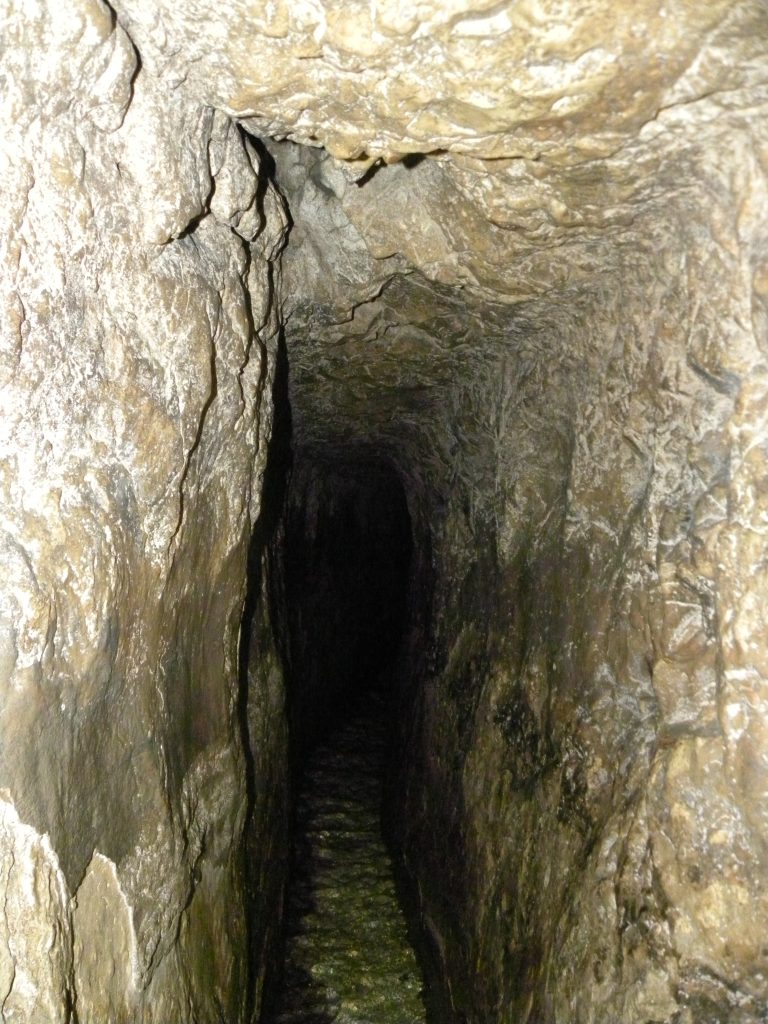
Second Kings 20:20 remembers Hezekiah’s work on Jerusalem’s water supply. For a reader of that verse, the tunnel is of special interest because it preserves a substantial work in the city. The Siloam text itself describes people cutting rock and water passing through. The tunnel’s original setting is an especially helpful part of interpreting those words. Standing inside a water passage changes how a reader imagines the effort of cutting it. The named work in Kings and the preserved tunnel can be studied together by examining the historical arguments that link them. 2 Kings 20:20.
Read a museum label with the evidence in mind
Think about two hypothetical entries for similar bowls. One says only that the bowl is from the region. The other locates it beside a doorway, on a particular floor, in a recorded room. The first may let a specialist recognize a vessel type. The second gives a researcher a chance to ask how that kind of object relates to the activities of the household. Perhaps a drain, storage jars, or wear around the door helps explain the association. A plan makes the details available even after excavation is finished. The added information comes from recording relationships while the room is being uncovered.
A photograph in the excavation report lets someone look at the position of the find before it was lifted. A drawing may show how the feature continued beyond the edge of that photograph. Written context sheets record descriptions and relationships that would be difficult to see after other layers have been removed. Each record gives the reader a different way back to the same spot. Excavation changes what it uncovers, so the archive becomes part of how future researchers can follow the work. The archive is also where someone can check whether a museum account has accurately identified the condition in which a particular object was found.
Removal without proper documentation can destroy the very associations that make an object informative. The damage reaches beyond one piece. Digging through a surface removes part of the arrangement shared by nearby finds and features. The Archaeological Institute of America’s code of ethics connects concern for that loss with responsibility for protecting sites and discouraging trade in undocumented material. A well-kept excavation record, preserved and available for later research, lets other people test claims by starting from the place where the material was found. Archaeological Institute of America Code of Ethics.
Next time a label tells you where something came from, ask which of its histories you are seeing. Was its location recorded during an excavation? Was it found where it was used, or was it built into something later? What records place it in a museum? The answers can change the scope of a link to Scripture and often make that link more interesting. At Caesarea, stages of reuse preserved an official’s name. At Magdala, a room gives meaning to a carved piece of furniture. At Siloam, a passage gives context to its own inscription. The work of recording those connections makes ancient places available to later readers in ways an isolated object seldom can.
Sources and further reading
- National Park Service, What Is Archeological Context? — Field definition of archaeological context and the value of relationships among objects and features.
- Database of Military Inscriptions and Papyri of Early Roman Palestine, Pontius Pilate dedication — Caesarea theater findspot and Roman inscription.
- Helen Bond, Pontius Pilate in history and interpretation — Detailed scholarly study of the inscription, find context, and Pilate’s historical setting.
- Dina Avshalom-Gorni and Arfan Najar, Migdal excavation report — Area C and figure 11 document the location of the carved stone and features of the room.
- Gary A. Rendsburg and William M. Schniedewind, The Siloam Tunnel Inscription — Scholarly article on the original location, language, and wider historical context of the inscription.
- Archaeological Institute of America, Code of Ethics — Professional guidance on protecting archaeological sites and preserving information from finds.