Look along a column of the Great Isaiah Scroll and the black letters stay surprisingly steady across the pale leather. Look a little longer and signs of work appear. There are gaps, occasional corrections, and little departures from what a reader might expect from a printed Hebrew Bible. Near the end of Isaiah 53 is a small word that offers a useful way to see what the discovery changed. In this ancient manuscript, the servant sees light. Open two English Bibles and you may see that word in one and only a note about it in the other.
What you’ll learn
- Why the date of a manuscript and the date of the words it preserves are different questions.
- How to work through one real variant in Isaiah 53:11 and follow it into modern translations.
- What the scroll contributes to a Christian reading of Isaiah and the conversation in Acts 8.
From Cave 1 to sixty-six chapters
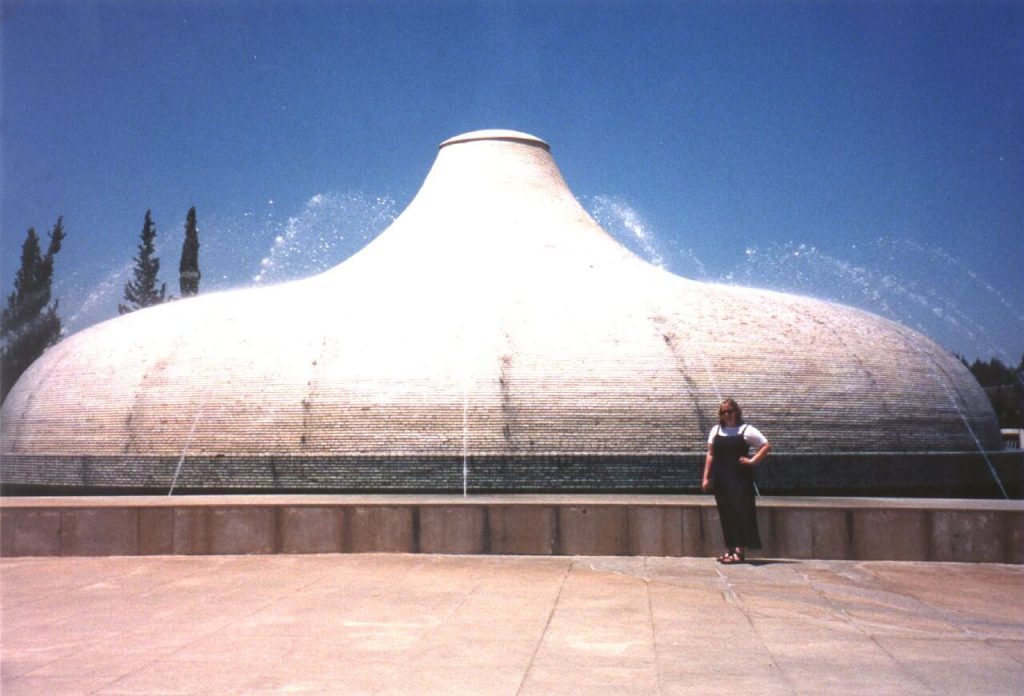
The Great Isaiah Scroll is one of the first seven Dead Sea Scrolls that came to the attention of scholars after the 1947 discovery near Qumran. Bedouin discoverers found manuscripts in a cave that came to be called Cave 1. Ancient manuscripts turned up in other caves, and the labels for them can be unwieldy at first. The label 1QIsaa is a compact filing system. The initial 1 associates it with Cave 1, Q is for Qumran, and Isa identifies Isaiah. The superscript a distinguishes it from another Isaiah manuscript from the same cave. The place, cave and separate copy are all part of its identity. Israel Museum’s Digital Dead Sea Scrolls.
The almost complete manuscript is more than seven meters long when laid out. Its 54 columns stand side by side on joined sheets of prepared animal skin. Open the scroll from right to left to follow the Hebrew writing. Relative to a modern Bible, the form changes how much continuous text can be seen at once. The modern chapter and verse numbers a reader uses for reference were added in a later era. An ancient reader located a passage in the columns by opening and rolling the scroll. This helps us imagine a manuscript used for reading long before biblical texts appeared in the familiar format of chapters on facing pages. Israel Museum, A Voice from the Desert.
The Museum places the manuscript in the late second century BC. That is a date assigned to the physical copy. The writing it preserves already had a history. Copyists worked from whatever text was available to them, which itself could preserve an earlier copy. Dating the leather or looking at the form of the letters helps situate the visible manuscript in time. Establishing the age and history of the text that was copied takes other comparisons. The distinction matters when a headline says archaeologists found an ancient Bible. They found a specific ancient copy of a particular book, and it belongs within a history of authorship, copying, circulation and reading.
Names like ‘Dead Sea Scrolls’ describe a collection assembled from finds, not a single book dug up in one uniform condition. A manuscript may survive in a long continuous roll, a few joined columns, or tiny pieces that need to be associated by text, handwriting or physical evidence. The Great Isaiah Scroll is unusually useful because scholars have so much continuous writing from one copy. A small fragment that agrees with it at one point can still make an important contribution, even if the fragment cannot tell us how a different part of the same book read. Keeping track of both the scope and the limits of each witness is central to the work.
What the object preserves about its makers
Running down the column when you know what to look for, you can see the spaces the scribes left and adjustments in the writing. The joins between sheets draw attention to the cooperation behind a large manuscript. A 2021 study compared recurring letterforms with computer-assisted pattern analysis. The researchers found that the shapes tended to group in two halves, with the strongest change close to the break between columns 27 and 28. The closeness of the hands can make them look like a single writer at first. The authors prefer an explanation involving two scribes with similar training or habits. Even a careful analysis of handwriting cannot name those people. Popović, Dhali and Schomaker’s handwriting study.
The physical scroll is also evidence of the work involved in keeping what was found. Leather, ink, joins, tears and past conservation materials can react differently to changes in environment. The Israel Museum’s research on fragments uses material analysis to understand how the scroll was made and to guide preservation. A public digital image is now another kind of aid. It lets readers examine successive columns without regularly unrolling or illuminating the fragile original. A photograph preserves a view at a particular moment. The original can still supply information a two-dimensional view cannot, including what a seam contains or how ink interacts with the skin. Israel Museum’s research on the scroll’s conservation.
Every surviving manuscript connects us to people who considered a text worth copying, correcting, and handing on.
Even the length of a famous scroll can be worth measuring again. In 2026 a conservator at the Israel Museum described a straight measurement along a tracing that came to about 7.17 meters, in contrast with the long-cited 7.34-meter figure. The way an object is measured matters, and so do changes in the skin over time. The same account describes seventeen sheets and indications of where the skin came from on the animals. The revised measurement and the laboratory observations show why basic description remains an active part of research on an object that has been studied for generations. The Israel Museum conservator’s report and photographs.
Look closely at the word light
To see how the Great Isaiah Scroll bears on modern reading, start with the poem from Isaiah 52:13 through 53:12. It speaks of a servant who suffers, bears the consequences of others’ wrongs, and is ultimately vindicated. The poem moves between the humiliation people see and the significance God gives to the servant. The example in 53:11 falls near the close, after the portrayal of suffering. The verse’s opening words direct attention toward what the servant will see after his travail.
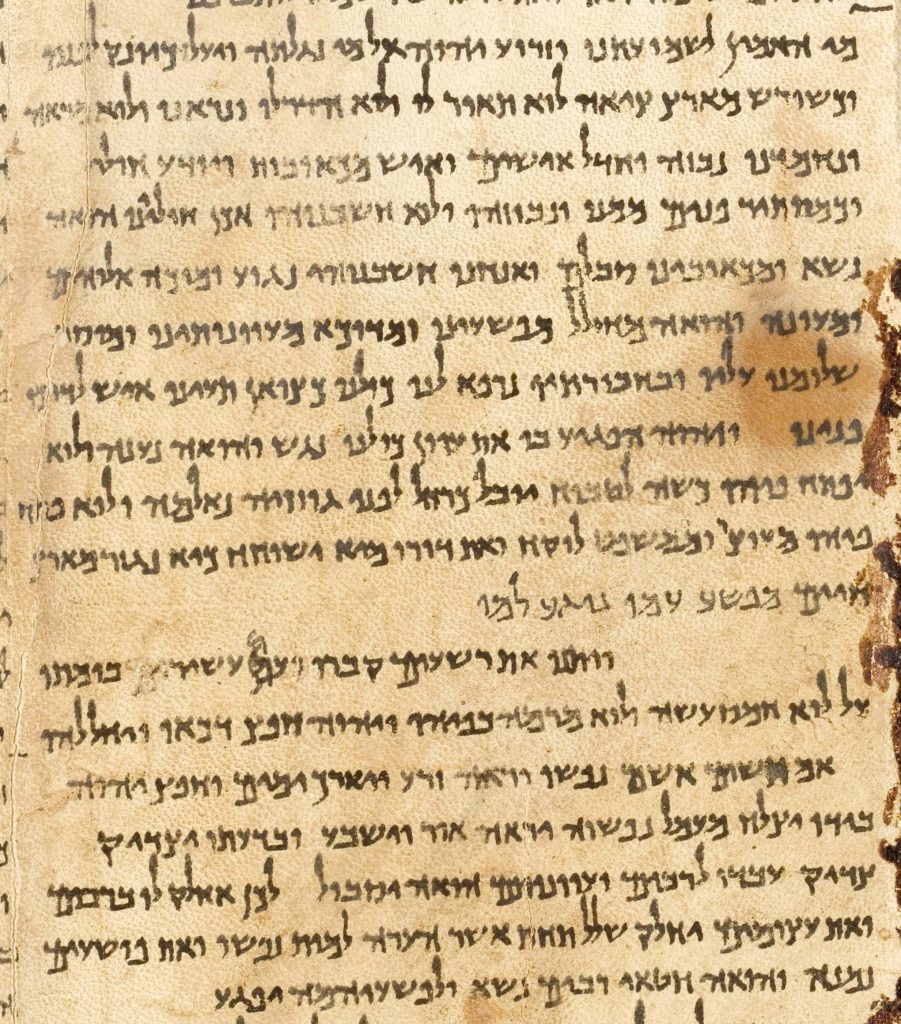
In the medieval Masoretic tradition underlying many Hebrew Bible editions, the verb appears without the separate word for light at this point. In the Great Isaiah Scroll the word or, meaning light, gives the verb an object. Other Qumran witnesses support its presence, and the ancient Greek version attests light in its rendering as well. Emanuel Tov discusses the comparison as an example of why each reading must be weighed across manuscripts. Ancient agreement across several lines of transmission gives editors something to work with. The oldest complete copy can matter enormously without deciding every question on its own. Emanuel Tov, The Text of Isaiah at Qumran.
- Read Isaiah 53:11 in the translation you regularly use and look for a footnote.
- Check the same line in a second translation for a reading with or without “light.”
- Read both versions within the poem. The larger movement from suffering to vindication remains visible, while the word light supplies a concrete image in one ancient reading.
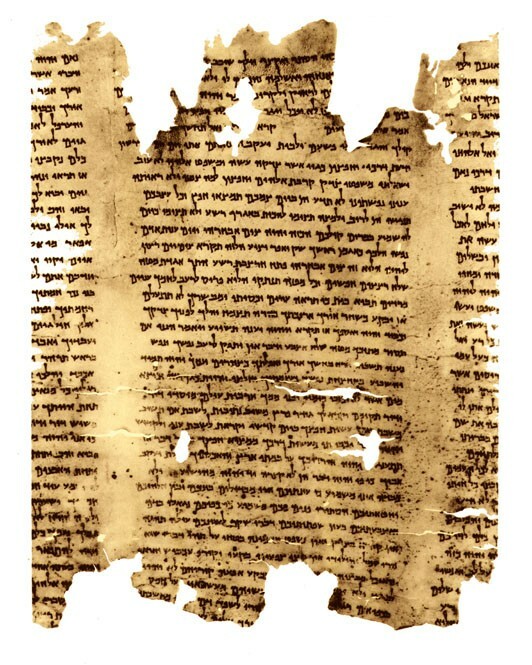
There will be many smaller things to see as you compare the scroll and a printed text. Some differences reflect spelling habits and ways of representing vowels. Others involve words, phrases or the way a line was corrected. The text of the book is recognizable across the long interval between Qumran and medieval copying. The differences give specialists useful places to ask how particular lines were read, transmitted and sometimes revised. A responsible comparison gives a reader room to appreciate the shared book and the details that invite closer work.
How might ‘light’ have come to be present in some copies and absent from others? One possibility is that someone supplied an object to make a terse sentence easier to understand. Another is that the word stood in an earlier form of the line and dropped out of one stream of copying. The wording of the immediate passage and what is known about how a copyist tended to work can help test such explanations. Counting the surviving copies that contain a reading is only a start. Two copies might both reflect a single earlier branch of the tradition. A different language may preserve a rendering from a Hebrew copy that no longer exists.
It is worth leaving a little space between the evidence and the modern sentence on the page. Biblical translators work with editions that represent judgments about the strongest available witnesses. They also decide whether to put a disputed reading in their main text or in a note. A reader who sees a footnote has found a place where the work is visible. In this case one English word can direct you to the Hebrew manuscripts of Isaiah, to ancient Greek translation, and back to your own edition’s account of how its translators worked.
From the servant’s suffering to Acts 8
Acts describes Philip encountering an Ethiopian official on the road from Jerusalem toward Gaza. The official is reading words from Isaiah about a figure led to slaughter and denied justice. He asks whom the prophet means. Philip begins with that passage and tells him the good news about Jesus. Luke’s account is a direct invitation to read what Isaiah says, notice the question a reader brings to it, and follow the Christian understanding from the prophet to Christ. The copy found near Qumran was in existence before that scene and before any Christian copyist had a hand in the tradition. Acts does not identify the physical scroll used by the official. Acts 8:26–40.
For Christians, the Bible speaks truly about God and the saving work of Jesus. This confidence makes the physical details more interesting. Ancient Jewish scribes preserved these passages in a Hebrew manuscript before the Gospel accounts were written. The words about the suffering servant were already part of Israel’s Scriptures, with a long life among Jewish readers. Philip’s proclamation belongs to a later point in that history. The scroll makes the chronology of those witnesses easier to grasp. It gives modern readers an ancient copy of the poem they can inspect on its own terms before watching how Acts uses it.
There is a simple way to end the comparison. Read Isaiah 52:13–53:12 as a whole, then read Acts 8 from the moment Philip meets the traveler. The ancient sheet can tell you something tangible about how the words were handed down. The account of Philip shows what happens when a reader encounters those words and wants to know whom they concern. That question has outlived the ancient handwriting, though the handwriting is still there to see.
Sources and further reading
- The Israel Museum, Digital Dead Sea Scrolls — Collection and viewer for the nearly complete Great Isaiah Scroll.
- The Israel Museum, A Voice from the Desert — Object history, exhibition documentation and the scroll’s relationship to the original finds.
- Popović, Dhali and Schomaker, Great Isaiah Scroll writer identification — Physical dimensions, codicology and testing the hypothesis of two main scribes.
- The Israel Museum, Conserving the Great Isaiah Scroll — Material analysis and conservation context.
- Emanuel Tov, The Text of Isaiah at Qumran — Revised scholarly discussion of relationships between the Hebrew manuscripts and Greek Isaiah, including Isaiah 53:11.
- Acts 8:26–40 — Philip and the Ethiopian official read the suffering servant passage together.