At Persepolis, the Persian court appears on stone stairways lined with carefully ordered figures. Clay tablets found near the fortifications preserve the same world in another form. A document can record a quantity of food, a person entitled to receive it, and a place in the network through which it moved. Others preserve impressions of seals and very little writing. Taking the two bodies of evidence together brings us from the formal approach to Persian royalty into the offices and storehouses that kept royal business moving. This is the kind of administrative world in which the books of Ezra and Nehemiah place their requests to Persian rulers.
What you’ll learn
- Where the archive was found in 1933 and how the Fortification tablets differ from the Treasury tablets.
- How words and impressions on clay record rations, authorizations, and travel in the reign of Darius I.
- Why Persepolis is valuable evidence for the Persian setting of Ezra and Nehemiah even though their missions took place elsewhere.
The discovery near the terrace
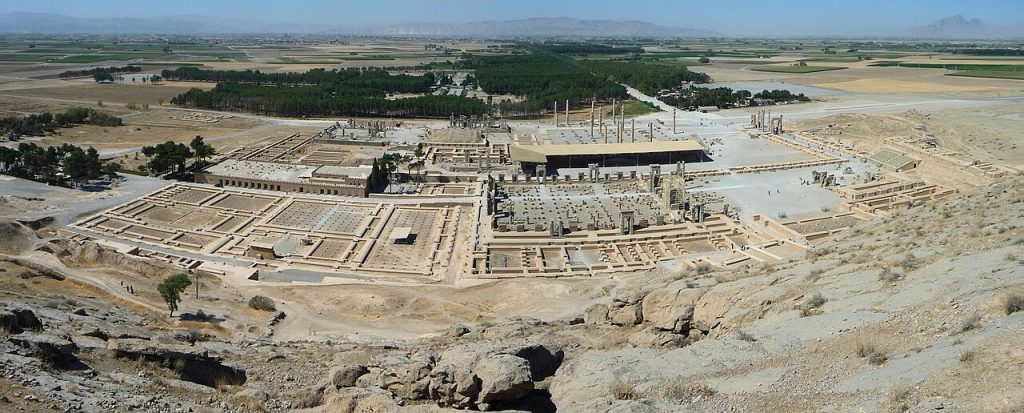
Persepolis stands in southwestern Iran, in the region from which the Achaemenid rulers built their empire. Darius I began the monumental complex, and his successors continued construction. Excavators working under Ernst Herzfeld for the University of Chicago began investigating and documenting the site in the early 1930s. In 1933 work near a bastion of the fortification wall exposed a concentration of clay tablets and fragments. The find was different in kind from the monumental reliefs the mission was also recording. The small pieces preserved routine administration in a building complex widely known for the way it represented royal power. Metropolitan Museum’s study of Herzfeld’s excavation records.
The original records were made at many points in a system that moved food and other supplies. Their modern name comes from the place where the group was found. That is valuable archaeological information. It tells us where a body of documents finally ended up rather than establishing that a clerk wrote every one of them alongside the fortification. There is also a separate Persepolis Treasury group, published as a different corpus. Its texts come from another find context and follow other transactions. Visitors sometimes see both described as tablets of Persepolis. Keeping the find groups and publication numbers distinct makes it much easier to follow the claim a particular tablet supports. University of Chicago edition of the Treasury tablets.
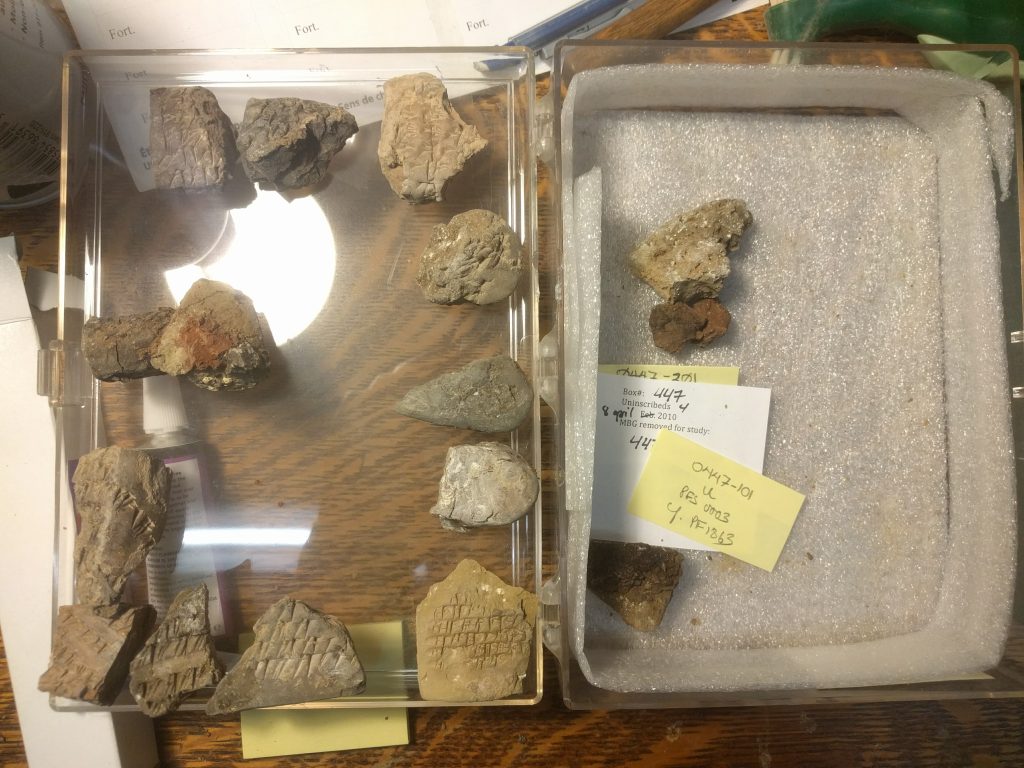
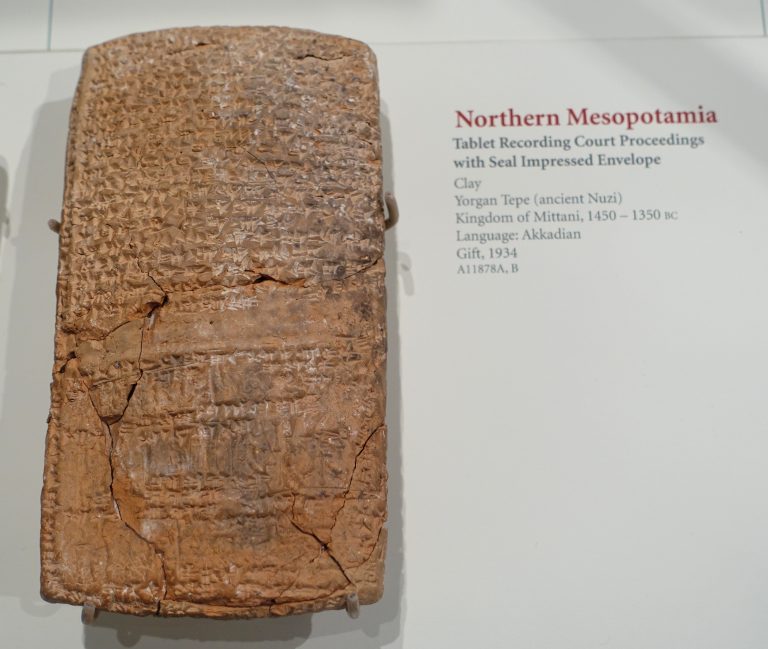
The best-known Fortification records date to about fifteen years in the middle of Darius I’s reign, commonly given as 509–494 BC, with the final dates sometimes expressed as 494/493. Richard Hallock’s 1969 edition made more than two thousand Elamite documents available in transcription, translation, and discussion. A wide range of material remained to be read and compared. In addition to the Elamite cuneiform tablets, the archive includes a smaller number of Aramaic texts and many pieces with seal impressions and no visible written text. The same government could maintain records with more than one language and leave evidence that requires several different kinds of expertise. Some of the tablets loaned to Chicago for study have since been returned to Iran through documented transfers. Hallock’s edition and publication material.
What an ordinary ration record can tell us
A date on an ancient tablet usually belongs to a system of years and months known to the clerk. An editor has to establish which king’s reign lay behind a numerical year and how to relate the named month to a modern calendar. Names and seals can help put records together, but royal names on a seal still have to be read with care. The same instrument may remain in service after the death of a ruler. A good date therefore rests on several kinds of evidence. Once a sequence is established, historians can study administrative routines across time and distinguish a steady relationship from a single exceptional transaction.
A food allowance can look unremarkable at first. A record can end up giving a historian a person, a commodity, a date, a station, and a link to the official who approved the transaction. Comparing many such records lets readers see which people received provisions on the move and which supplied a place or workforce over time. It also shows that food had to be collected from different sources and remain available when an authorized person arrived. The system described in the tablets brings our attention to people farther from power than the carved king. An account can preserve the name of the person carrying out the transaction even when it tells us almost nothing about the rest of that person’s life. Fortification Archive Project overview of record categories.
One frequently discussed text, PF-NN 1809, gives an example of how a single travel record reaches beyond the office that kept it. David Lewis identified its Datiya with Datis, later known from Greek accounts of the Persian campaign that reached Marathon in 490 BC. The tablet records travel to the king in 494 BC in the imperial express service. The identity gains credibility through the name, chronology, and historical setting. Some details still require separate judgment. A seal impressed on the tablet may have belonged to Datis himself or to someone involved in the trip. The uncertainty about the seal’s user remains even if the proposed identification of the traveler is persuasive. Fortification Archive Project report on PF-NN 1809 and its seal.
The reason to pay attention to the ration here is the same reason an ancient clerk did. A traveler and the people providing food needed the transaction to be authorized. A treasury officer or a warehouse supervisor could then account for what someone had spent. The short record gives historians solid evidence that a journey involved practical requirements beyond an order from the king. Another set of documents can show who managed animals, where grain or drink was stored, and how accounting practices varied by office. Most of those facts would be incidental in an account of a ruler’s reign. The surviving archive preserves them precisely because administrators treated them as central to their work.
Who approved the transaction?
The impression of a seal is evidence left by a tool about the size of an object someone could carry. Its image can be reconstructed by comparing impressions on different tablets, because a single use may have preserved only part of the design. When the same design occurs beside several repeated names and transactions, researchers can ask whether a person, office, or other administrative relationship accounts for the pattern. The image of a king or animal on that seal belongs to the visual choices of the person or office using it. It takes further evidence to decide how closely a particular design was associated with a named individual. Garrison and Root’s published edition of the seal impressions.
The people carved on the palace stairs give a public picture of royal service. The tablets preserve the dates, quantities, and names that officials needed to do the work.
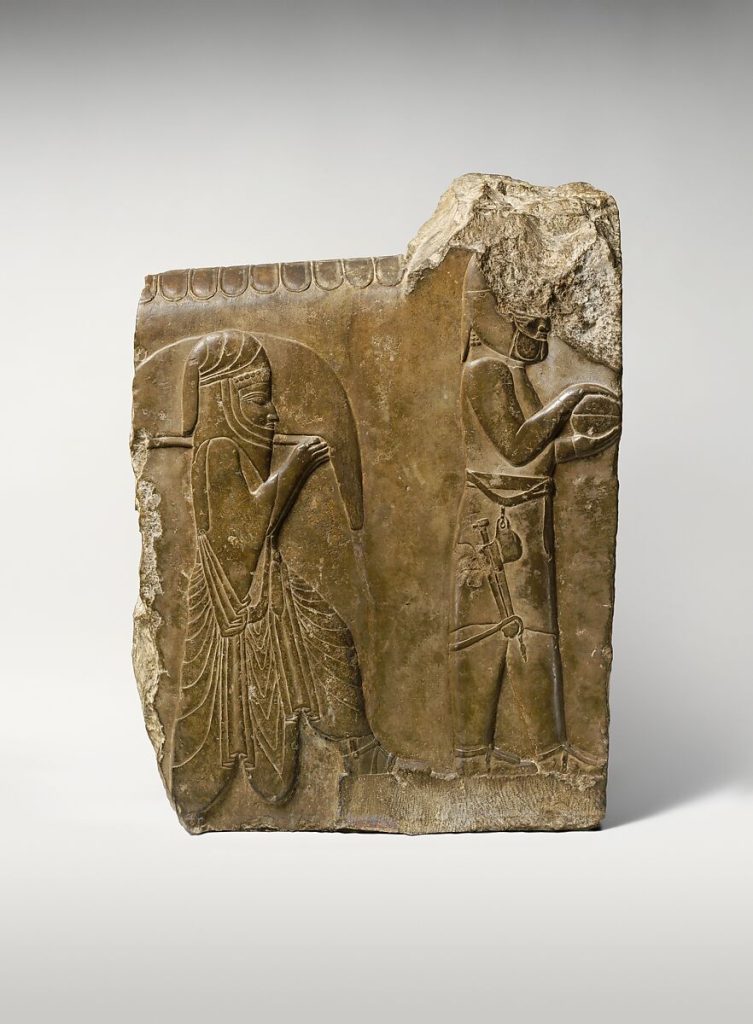
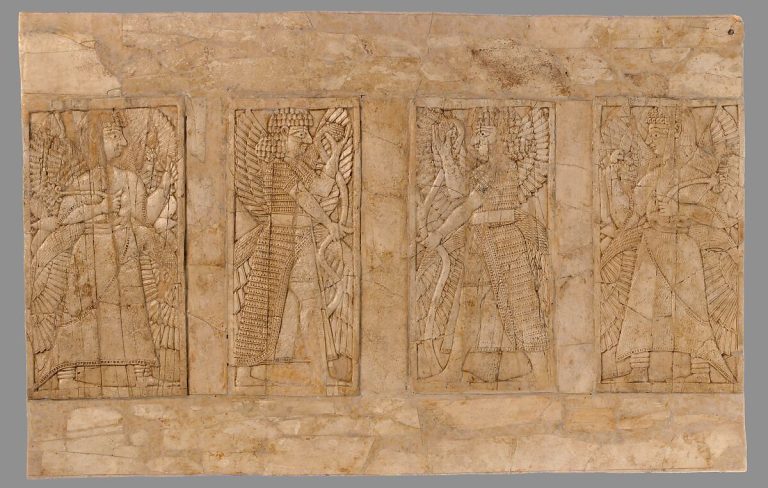
The distinction between clay and stone helps in reading the picture. The relief shows the carefully represented work of attendants bringing provisions. It comes from a building intended to impress people. The Fortification record was handled and stored because officials needed a transaction to be known. This is why the archive gives unusually concrete evidence of how persons and resources moved in the region of Persepolis. A carved procession can be eloquent about the customary presentation of service. An account can name what a given person received. Looking at both helps readers appreciate the activities that had to go on outside of grand public scenes. Metropolitan Museum catalogue for the two attendants.
Reading Ezra and Nehemiah with the archive
Esther supplies a third perspective on the period. Its opening places the king at Susa and describes hospitality, clothing, vessels, and rooms from the point of view of a court narrative. The objects at Persepolis can enrich the general picture of Achaemenid court culture. The place and period of a specific scene still belong to the evidence that identifies it.
In Ezra 5, officials inquire about construction at Jerusalem and send a report to Darius. Ezra 6 describes a records search, the identification of an earlier authorization, and instructions involving the expenses of the work. The Fortification tablets belong to the rule of Darius I and provide a close historical setting for the operation of Persian administration. They survive from a different region and primarily concern different kinds of business. The records in the archive give no copy of the Jerusalem correspondence. Their contribution is the ability to compare the biblical story’s concern for officials, authorized expenditures, and lasting paperwork with evidence of a working Persian administrative system.
Nehemiah 2 also gives readers a particular sequence. Nehemiah asks for letters to governors and a letter to an official who can provide timber. The opening of the book sets Nehemiah at Susa before the journey to Jerusalem, under Artaxerxes. The Fortification archive belongs to an earlier reign, and Susa is a different royal center from Persepolis. The parallel lies in a traveler’s need to gain passage and obtain physical resources with official approval. Documents from Persian Iran let us picture what it meant for a court’s instruction to reach someone at a post, warehouse, or estate in the countryside. They also help us notice how specific Nehemiah was in asking for the means to undertake the work.
For Christians, Ezra presents the rebuilding of the Lord’s house as an outcome in which God can work through the decisions of rulers and the daily labor of his people. The Persian empire was large enough to sustain systems of writing, provisioning, and exchange. Scripture pays attention to what happened to the worshiping community in Jerusalem within that world. The tablets give reality to the offices and procedures that a biblical reader might hurry past. The detailed picture is a reason to read the letters and journeys more carefully and to notice where practical decisions served the return and rebuilding. See also the Chronicle of Babylon’s capture and the earlier rise of Persian rule.
Sources and further reading
- Fortification Archive Project overview — University of Chicago account of the 1933 discovery and major text groups.
- Herzfeld at Persepolis — Metropolitan Museum assessment of excavation and archival field records.
- Persepolis Fortification Tablets — Richard Hallock’s original edition of Elamite documents.
- Seals on the Persepolis Fortification Tablets — Published corpus of seal impressions and their relationships.
- Fortification Archive Project report — Project interpretation of a named traveler, seal evidence, and later conservation and transfers.
- Persepolis Treasury Tablets — Edition of the separate archive group.
- Two servants bearing food and drink — Object record for the architectural comparison.