The account of Babylon’s fall preserved on a clay tablet takes up very little space. It moves from war on the Tigris to the capture of Sippar, the flight of Nabonidus, and the arrival of Cyrus’s army at Babylon. Then the writer turns to the guards at a temple, the calendar, and the restoration of cult images. Daniel 5 gives the fall of Babylon a very different focus. It takes us inside a royal feast, where an act of sacrilege brings a message of judgment. Reading those two accounts beside each other helps us understand the political change behind the biblical narrative and the parts of the story each writer thought worth preserving.
What you’ll learn
- How a broken tablet entered the British Museum and what scholars can say about the date of this copy.
- Why the Chronicle’s phrase about entering Babylon without fighting applies to the city and one stage of the campaign.
- How the Chronicle, the Cyrus Cylinder, and the books of Daniel and Ezra illuminate different parts of the Persian takeover and its aftermath.
The tablet and the copy that survives
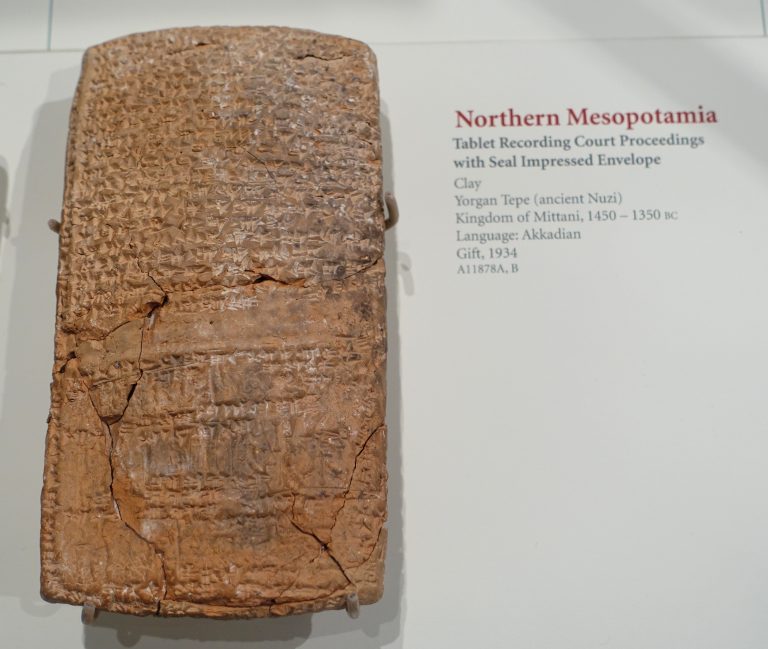
The British Museum bought the tablet in 1879 and now catalogues it as BM 35382, also known as Sp II.964. It is inscribed in Babylonian cuneiform and preserves portions of two columns on each face. The uneven breaks account for many of the brackets and blank spaces in modern editions. The earliest modern readers did not have the benefit of an archaeologist’s record of the room or layer from which it came. It passed through the antiquities trade. The Babylonian origin is supported by the writing, subject matter, and acquisition history, while a precise excavated location is unavailable. The British Museum tablet record.
Theophilus Pinches reported on the new acquisition to the Society of Biblical Archaeology in 1880. His early translation illustrates how much work can lie between a museum acquisition and a usable historical text. The signs are impressed in clay, and the physical marks sometimes leave several possible readings. An editor working on a date checks the sign against its shape elsewhere on the tablet, the sequence of entries, and parallels in other Babylonian texts. New editions can still disagree about a damaged place name even where they agree that Cyrus’s army crossed a river and entered another territory. Pinches’s published early report.
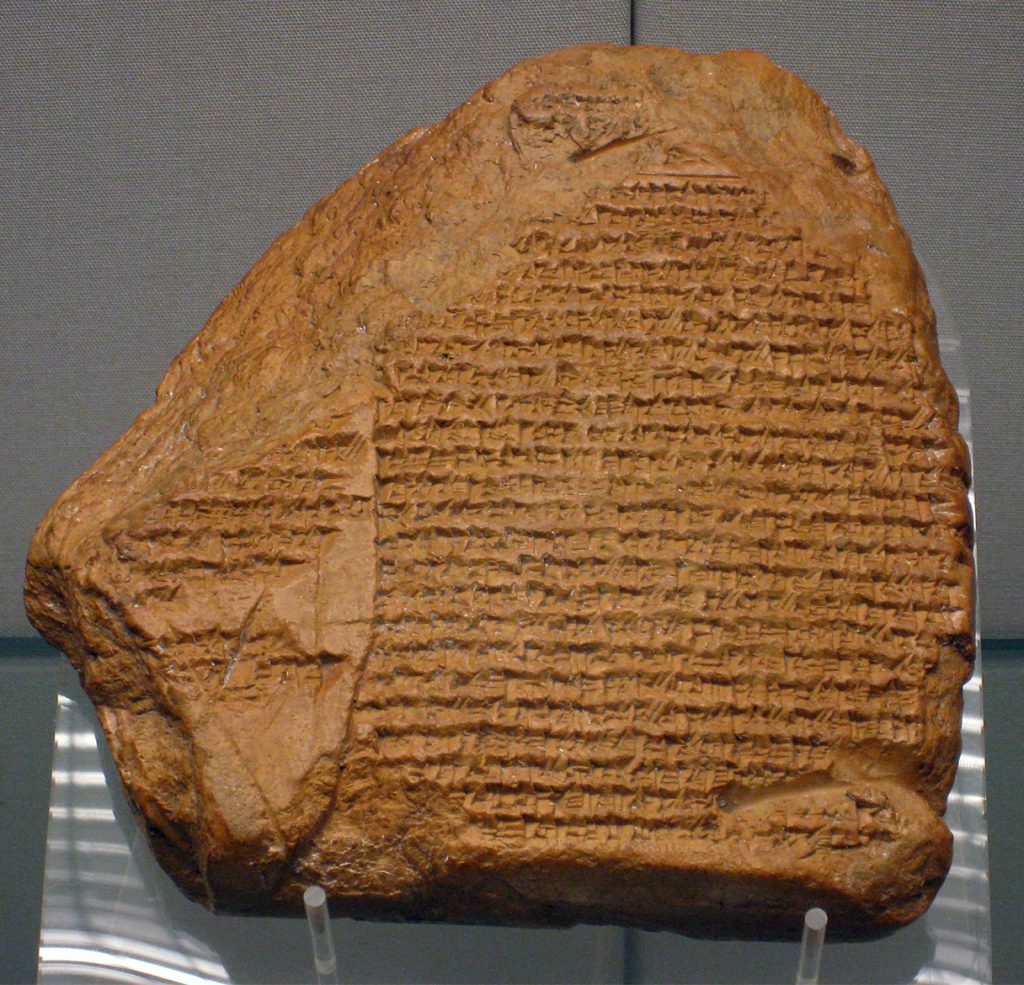
The story and the physical copy also have separate dates. The events include the reign of Nabonidus, from 556 to 539 BC, and the beginning of the transition under Cyrus. The surviving tablet is usually treated as a later copy, and its exact date within the later Babylonian scribal tradition remains debated. Historian Caroline Waerzeggers has examined its writing and likely collection setting as evidence for that later context. A later copy can transmit much earlier information. It can also show how later scribes selected and preserved particular accounts of political change. The condition of the clay and the history of transmission both belong in an assessment of the source. Waerzeggers on the manuscript and its political memory.
What happened in the seventeenth year
An ancient chronicle can be read at two speeds. First look for the year headings and ask what the sequence does. Here, earlier items about Cyrus and Median king Astyages establish that Persian power was growing before it reached Babylon. Then look at the changes of scale. An entire campaign can fit within a few lines, while a local ceremony receives several separate notices. That choice reflects what the writer could consult and what a reader in Babylonia might want to remember. It also explains why a historian combines chronicles with building inscriptions, letters, and dated legal records when trying to reconstruct how a reign affected people beyond the capital.
Earlier entries report that Nabonidus stayed at Teima, an oasis in northwestern Arabia, while the crown prince and military officials were in Babylonia. The Chronicle returns to the king’s absence again and again. It associates that absence with disruption of Babylon’s New Year observance while also mentioning continuing offerings. Read closely, it distinguishes what happened at one ceremony from what continued in the temples. The broken entries leave room for disagreement about the precise movement of Cyrus’s forces in an earlier year. The final campaign is much easier to follow because more of its sequence survives. Rollinger and Kellner on a disputed place name earlier in the Chronicle.
- At Opis on the Tigris, Cyrus engaged the Babylonian army. The Chronicle reports violence in the aftermath, though the details of the damaged account require care.
- Sippar fell on the fourteenth day of the month of Tashritu. Nabonidus fled.
- Two days later, Governor Ugbaru and Cyrus’s troops entered Babylon without battle there. The Chronicle subsequently records the capture of Nabonidus.
- Cyrus himself entered Babylon later. The account then attends to administration and the return of cult images to their own cities.
These events belong to the autumn of 539 BC. The text gives a Babylonian month and day, so a modern day requires a calendar conversion. The sequence is what matters most for understanding the report. The army’s peaceful entrance describes how the capital fell to the invading forces at that stage. The same entry records armed conflict elsewhere. The interval between the army arriving and Cyrus arriving also separates an act of military control from the appearance of the new king in the city. Late Babylonian Priestly Literature project, transliteration and translation of ABC 7.
The army entered Babylon on one date and Cyrus entered on another. Between the two comes the business of taking charge of a city that still had offerings to make and offices to fill.
The report pays particular attention to Esagil, the principal sanctuary of Marduk in Babylon. It puts troops around the precinct and emphasizes continuity of the temple’s regular practices. The observation helps distinguish the occupation of a city from its destruction. It also gives concrete meaning to the appointment of local governors later in the passage. Offices and sanctuaries could keep functioning while ultimate authority changed hands. For a family in an outlying settlement, the change might first become visible in a new name on a dated transaction or an official instruction. Such ordinary records offer a different angle on the transfer described so briefly in the Chronicle.
A royal cylinder tells a related story
The Cyrus Cylinder is an official statement made in the name of the new ruler. It also tells of his arrival at Babylon and gives prominence to the return of cult images to their cities. Its speaker gives the god Marduk a decisive role in choosing Cyrus and depicts the king restoring order. It was made to put a favorable account of his kingship into Babylonian religious and political language. The Chronicle is more compact and organized by years and days. It also favors subjects that mattered in Babylon, especially the running of the city’s sanctuaries. Reading the two together gives historians points of comparison, while each text still has its own reason for telling the story. British Museum collection record for the Cyrus Cylinder.
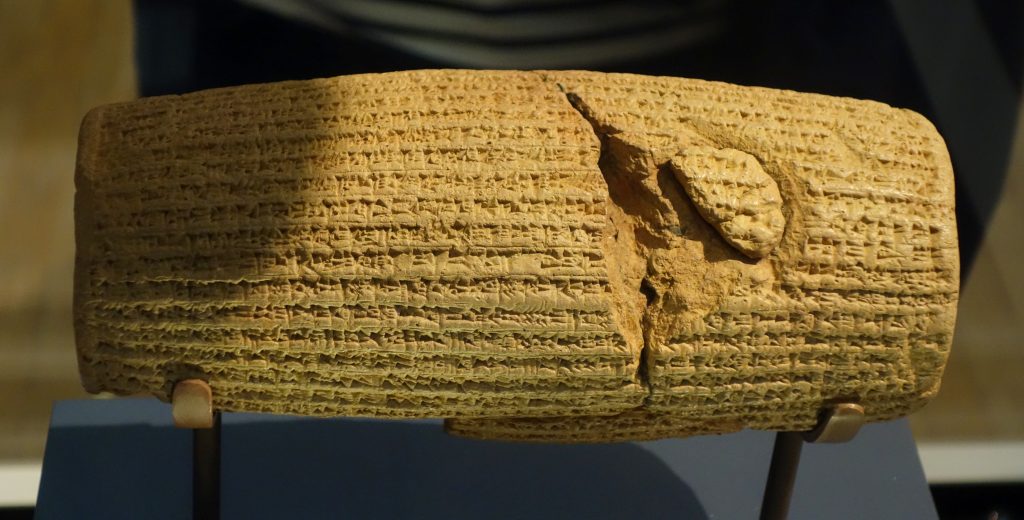
The mention of the gods entering or leaving Babylon refers to cult statues being moved. The Chronicle lists exceptions as well as cities whose cult images traveled. In a city organized partly around sanctuaries and their staffs, moving the images had religious and political significance. Cyrus could portray their return as restoring the proper relationship between towns and temples. The language also helps to explain why records of the transition mention rituals alongside troop movements. In the world of this writer, control of the calendar and security around a temple were visible evidence of how a ruler was governing.
From Daniel’s feast to Ezra’s return
The three texts also reward a simple check of their geography. Opis and Sippar belong to the Chronicle’s account of military conquest in Babylonia. Babylon is where the writer records the royal entrance and the continuing work of the temple. Jerusalem is the place the book of Ezra follows. Recognizing that change of location protects us from reading a local Babylonian report as though it were an empire-wide register. The Chronicles passage and Ezra also make the Jerusalem temple central in their own way, by bringing together the return journey, the rebuilding of a house of worship, and the memory of the earlier destruction.
In Daniel 5, Belshazzar orders that vessels taken from Jerusalem’s temple be used at a feast. The narrative follows the writing on the wall, Daniel’s interpretation, and judgment on Belshazzar. The Chronicle’s entries about Nabonidus and the crown prince help a reader see that two figures could be prominent in Babylonian rule while the king was away. Earlier inscriptions, discussed in the article on Nabonidus’s cylinder and Belshazzar, identify the crown prince by name. The Chronicle records Nabonidus’s fate during the capture, while Daniel follows the fate of Belshazzar. Each text’s subject determines which people we see during the transition.
The name Darius the Mede at the end of Daniel 5 introduces a well-known historical difficulty. The Chronicle names Cyrus and Ugbaru and also refers to a governor appointing subordinate governors. It supplies no explicit equation between those figures and Daniel’s Darius. Proposals to identify Darius with a known official, or to interpret the reference to his rule differently, require arguments beyond the Chronicle’s surviving lines. Christians can read Daniel as true Scripture and still give the tablet its actual weight. It anchors the transfer of power and names several participants. The identification of Darius remains a separate question.
Ezra 1 and 2 Chronicles 36 begin a new stage of the story with Cyrus’s authorization to rebuild the Lord’s house in Jerusalem. Ezra attends to the people who went up, the preparation for the work, and the vessels taken from the old temple that were returned. The Chronicle gives the political setting in which Persian authorization became possible. The Cylinder supplies a broader comparison for Cyrus’s public language about restoring sanctuaries. Neither inscription mentions the rebuilding order for Jerusalem. The comparison is worthwhile because it lets us see a specific action reported by Ezra alongside other ways the Persian court presented the restoration of worship.
Isaiah 44–45 gives Christians a reason to pay attention to the accession of a ruler who spoke of different gods in his own inscriptions. The Lord calls Cyrus by name and assigns him work that serves Israel and Jerusalem. A Babylonian observer could date the entrance of his army and the day of his public arrival. The prophet tells us who holds authority over the king and what that authority means for God’s people. The tablet makes the dates and political movements easier to follow. Scripture explains why a shift in Babylon had consequences for families preparing to return to Judah.
Sources and further reading
- British Museum BM 35382 — Museum record for the actual Chronicle.
- ABC 7 edition — Institutional text edition, commentary and translation with lines.
- Pinches’s report — Early publication following the 1879 acquisition.
- Facts, Propaganda, or History? — Primary study of the manuscript’s date, context, and presentation of political memory.
- Once More the Nabonidus Chronicle — Primary review of the damaged place-name and its historical limits.
- British Museum Cyrus Cylinder — Catalogued comparison object and inscription.