In Greek letters cut into a slab of white marble, an unnamed Caesar orders that graves be left in peace. The wording takes a serious turn when it discusses bodies being moved and tombs being opened. An owner’s note from the nineteenth century associated the slab with Nazareth, which prompted readers to ask whether a Roman response to the reports of Jesus’ empty tomb might survive in stone. The marble itself pointed the inquiry somewhere else. When researchers analyzed its carbon and oxygen isotopes, the closest match came from a quarry on the Greek island of Kos. The findspot, the stone’s geological source and the occasion for the decree are three different historical questions. Harper and colleagues’ primary marble study.
Key takeaways
- Wilhelm Froehner acquired the slab in 1878. His notes say it was sent from Nazareth. An archaeological findspot is unrecorded.
- The Greek text is an order attributed to an unnamed Caesar protecting tombs and the bodies within them.
- Three isotope measurements gave the white marble a close match to published data for the upper quarry on Kos.
- A local episode on Kos and a more general Roman decree remain plausible readings. A link to Jesus’ tomb remains unsubstantiated.
How it came to be called the Nazareth inscription
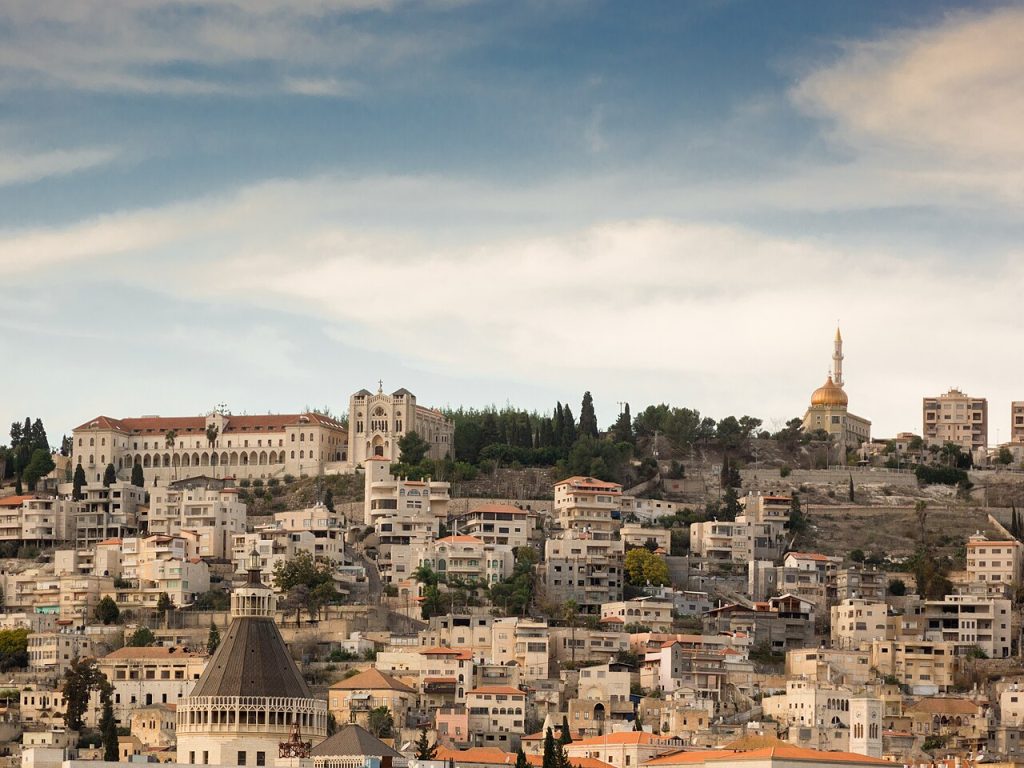
The document is listed at the Bibliothèque nationale de France as Froehner.VIII.13, under the traditional French title Édit de Nazareth. Wilhelm Froehner, a collector who lived in Paris, acquired it in 1878. The French catalogue repeats his report that it was sent from Nazareth. The report supplies an association with the town in the history of the collection. It gives no excavator, site plan, burial context or description of where the slab stood. The gap was already important when Franz Cumont published the inscription in 1930, several years after Froehner’s death. The scholarly name outlasted any agreement about what the note actually establishes. BnF object record, including the collector’s recorded provenance.
In 2025 Michael Press took a closer look at the late Ottoman antiquities trade. He argued that the inscription probably was sent by a dealer in Nazareth and that its history before that moment cannot be recovered from the surviving documentation. This inquiry asks a question a geological analysis cannot answer. It tries to identify what kind of transaction produced the words in a collector’s note. A dealer’s location can be meaningful for the modern route an object followed. Dealers can acquire and send material from many places. The same words can therefore be accurate about a shipment and uninformative about an ancient site. Press’s study of the inscription and the antiquities trade.
What the Greek order says
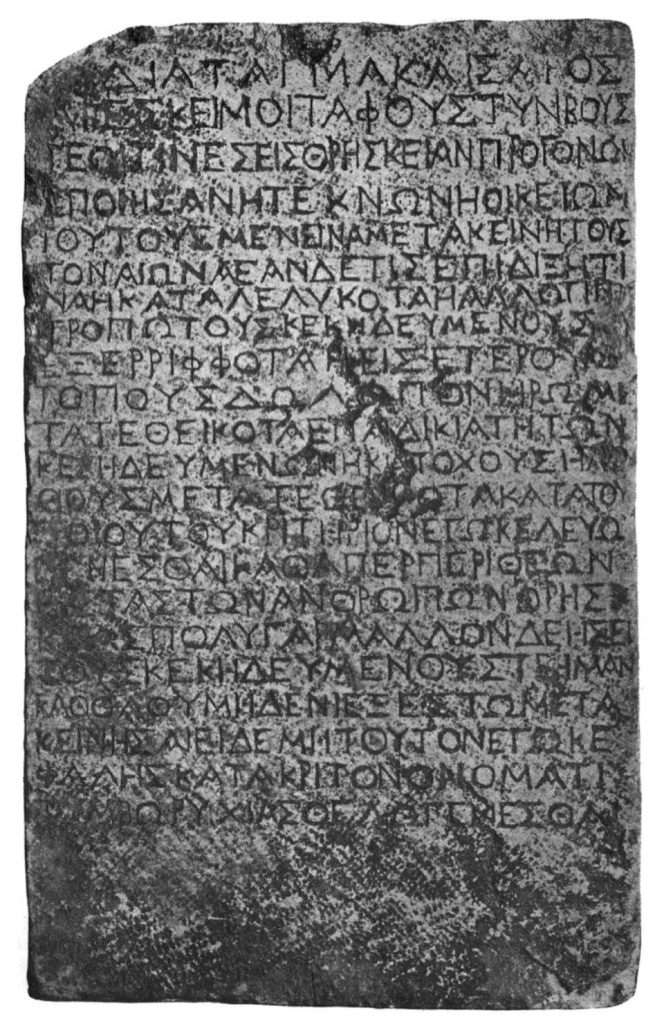
The text starts with a heading meaning “Ordinance of Caesar.” It then protects graves made for ancestors, children and other members of a household. It addresses damage to graves, removal of bodies and interference with their markers or stones. In one portion it calls for legal proceedings. In the final portion it threatens a capital penalty for anyone who removes the buried. The BnF prints the Greek and a French translation, and an English version is available through the published reference to the inscription. The object’s importance as a source for the protection of ancient burials survives even while the circumstances in which this particular order was put on stone remain uncertain. English translation of the Greek order.
The word Caesar by itself gives a ruler’s title without a personal name or regnal date. The Greek also contains turns of phrase that have been compared with Roman legal language. Scholars have looked at its letter shapes, wording and parallels in Roman law to propose a period. The BnF broadly assigns the slab to the first century. The 2020 study considers a range running from the later first century BC into the first century AD. Differences of a few decades matter. They affect which emperor or particular incident is historically possible. A date derived from the shape of letters still leaves a degree of uncertainty. Giovannini and Hirt’s study of the wording and possible date.
How researchers traced the marble
In 2020 Kyle Harper, Michael McCormick, Matthew Hamilton and colleagues published a scientific analysis of the stone. After cleaning a small surface, researchers collected powder from the exposed white marble. The first analysis identified calcite as the carbonate mineral, which helped determine the settings for the isotope work. Three portions of powder were then analyzed for stable carbon and oxygen isotopes. Isotopes of the same element have different masses. Their relative proportions in a rock can reflect conditions of formation and later geological change. Measured together, the two values can help distinguish between sources whose marbles look similar to the eye. The full study’s sample collection and methods, sections 2.2–2.4.
The team reported means and standard errors of +5.2 ± 0.1 per thousand for carbon and −10.5 ± 0.3 per thousand for oxygen on the scales used for the marble. The unusually high carbon value combined with the low oxygen value was a close match for published reference samples of white calcite marble from the upper quarry on Kos. The study compared other nearby matches. A quarry near Lubrín in Spain gave a different oxygen value, and similar readings from Teos in present-day Türkiye were for dark marble. The comparison is unusually informative because the two numbers and the kind of stone can be considered together. Results and comparative plots, section 3 and figure 3.
In the laboratory, researchers measured the isotope ratios of carbon dioxide released from three small portions of powder. Each portion weighed only about 200–300 micrograms. The results are expressed as departures from reference values in parts per thousand. Comparing both ratios is especially useful because a single value can fall inside the range of several quarries. The alternative marbles discussed in the paper are close enough on some measures to show why checking the physical material and the published reference data matters. This is a sourcing study conducted with a laboratory instrument. A match means two sets of measured properties fit together closely. Analytical methods and reference comparisons.
The comparison depends on the quarries represented in published studies. Harper and colleagues describe Kos as the likely source and leave open the possibility of an unreported marble with similar values. The test operates on the material from which the tablet was made. It cannot date the act of carving the Greek letters or trace the journeys taken by the stone after it was cut from the bedrock. Those questions need different evidence, such as a documented excavation or an archival record. In this case the strength of the quarry result helps us see exactly where the surrounding questions begin. Primary study, results and conclusions.
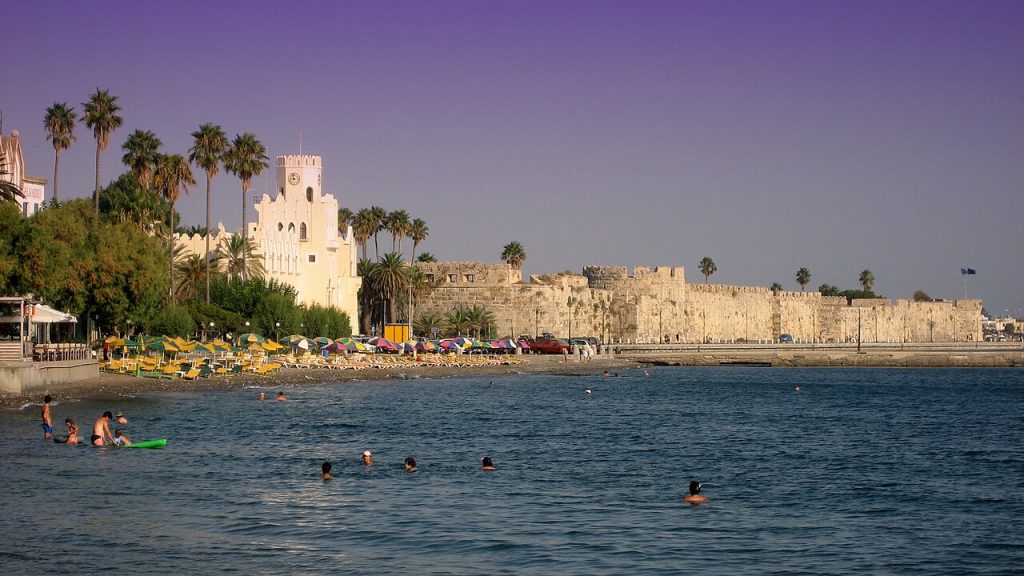
A quarry can tell us where the stone began. The route from quarry to inscription still has to be traced.
Why interpretations differ
One hypothesis in the 2020 paper gives the text a local setting. A Greek poet describes the desecration of the grave of Nikias, a ruler of Kos in the late first century BC. Harper and colleagues asked whether an order attributed to Caesar Augustus might have responded to that episode. The proposal joins a known incident to an unusually close geological match for the raw material. Its harder step is connecting the general burial protections to that single case. The slab itself leaves Nikias unnamed, and the poem gives no reference to the order. The proposed context has a reason to be taken seriously and evidence gaps that matter. Harper and colleagues’ discussion of Nikias and the original setting.
An Augustan date had also been proposed independently of the isotope results. Adalberto Giovannini and Marguerite Hirt read the text in the setting of Roman authority and the legal protection of graves in the eastern Mediterranean. Their linguistic and legal arguments led them to favor Augustus. A decree could be set up in a province or in response to a concern that applied more broadly than one grave. The historical question therefore extends beyond whether two names can be matched. Establishing the legal language, issuer and scope of a rule would matter even if someone could eventually establish where this particular tablet was displayed. An independent legal and epigraphic reading.
The contrary reading has a history worth knowing. In 1998 Erhard Grzybek and Marta Sordi attributed the order to Nero and related it to Roman policy toward Christians. Their historical case included comparisons with other Greek inscriptions and a particular interpretation of the law’s reference to cult. Giovannini and Hirt challenged that reading before the marble was tested. The disagreement shows that the proposed Christian context depended on interpretations of both language and history from the beginning. Adding the quarry result makes the case for Kos more concrete. It also makes it easier to separate the geological evidence from arguments built on the identity of Caesar. Grzybek and Sordi’s 1998 study.
An imported stone could in principle have been carved elsewhere. The 2020 authors themselves note ancient connections between Kos and the Herodian dynasty, including Josephus’s report that Herod the Great supported a gymnasium on the island. Set that possibility beside the collector’s note and the demands of the older interpretation become clearer. A case for a Galilean setting still needs evidence for the slab’s presence there in antiquity. A case for an edict prompted by reports about Jesus then needs another link identifying the occasion. The existing inscription, quarry measurements and account of the shipment cannot supply those links. Discussion of competing contexts and the possibility of ancient transport.
The biblical connection
Matthew names Joseph of Arimathea as the man who placed Jesus’ body in a tomb and describes the arrangements for guarding it. Matthew 28 then relates the women’s visit, the message that Jesus was raised, and the account that the guards were paid to circulate about the disciples taking the body. That last detail explains why some readers found the slab’s subject immediately familiar. In Matthew the accusation is part of the story of the resurrection proclaimed by witnesses. In the stone the removal of bodies is an offense specified in a legal order. An actual link between the two requires the place, issuer or incident to converge in the sources. Matthew 27:57–66; Matthew 28:1–15.
Christians receive the resurrection of Jesus as true and central to the Gospel. Paul rehearses what he had received in 1 Corinthians 15, moving from Christ’s death and burial to his resurrection and appearances. There is another link to Scripture here that can be stated directly. Acts names Kos as the first stop after Paul’s company sailed away from Miletus on its way to Jerusalem. The biblical voyage lets a reader situate the island in a real maritime route. It offers context for movement around the eastern Mediterranean while the particular journey of the marble remains unknown. 1 Corinthians 15:1–8; Acts 20:36–21:4.
Frequently asked questions
Was the tablet discovered in Nazareth in 1878?
That is the year Froehner acquired it. His statement about a shipment is the basis of the name. Its exact ancient findspot is unrecorded. BnF provenance entry.
Do the measurements date the inscription?
They compare the marble’s stable isotope values with ones reported for other marbles. The date of the carving depends on separate evidence such as the form of the letters and the legal language. Primary scientific study.
Where can I see the tablet and read its text?
The holding catalogue shows the tablet and supplies a transcription and translation. The historical reproduction from Cumont’s study is shown above. BnF object catalogue.
Sources and further reading
- Bibliothèque nationale de France, Froehner.VIII.13 — Holding catalogue with image, transcription, object details and collector’s provenance note.
- Kyle Harper and colleagues, Establishing the Provenance of the Nazareth Inscription — Primary peer-reviewed 2020 study, including methods, statistical results and the Kos interpretation. DOI 10.1016/j.jasrep.2020.102228.
- Franz Cumont, Un rescrit impérial sur la violation de sépulture — 1930 first publication with a historical image, source of the reproduced figure.
- Michael Press, The Nazareth Inscription and the Antiquities Trade of Late Ottoman Palestine — 2025 study of the collector’s record and historical possibilities for its shipment.
- Adalberto Giovannini and Marguerite Hirt, L’inscription de Nazareth — 1999 epigraphic and legal study arguing for an Augustan context.
- Supplementum Epigraphicum Graecum 8.13, English translation — English rendering of the inscription based on Bruce Metzger.
- Bibliothèque nationale de France, Image Reproduction — Terms and permission information for modern BnF reproductions.
- Erhard Grzybek and Marta Sordi, L’édit de Nazareth et la politique de Néron — Earlier argument for a Neronian context and an association with the Roman response to Christians.