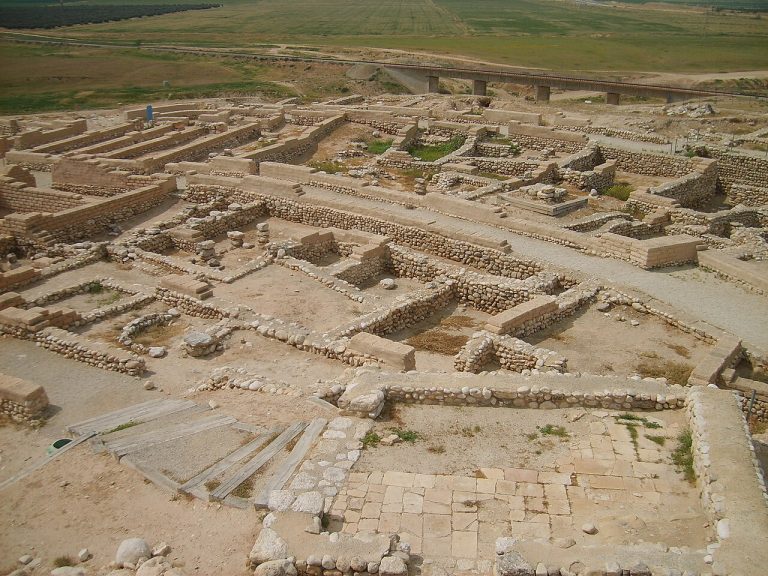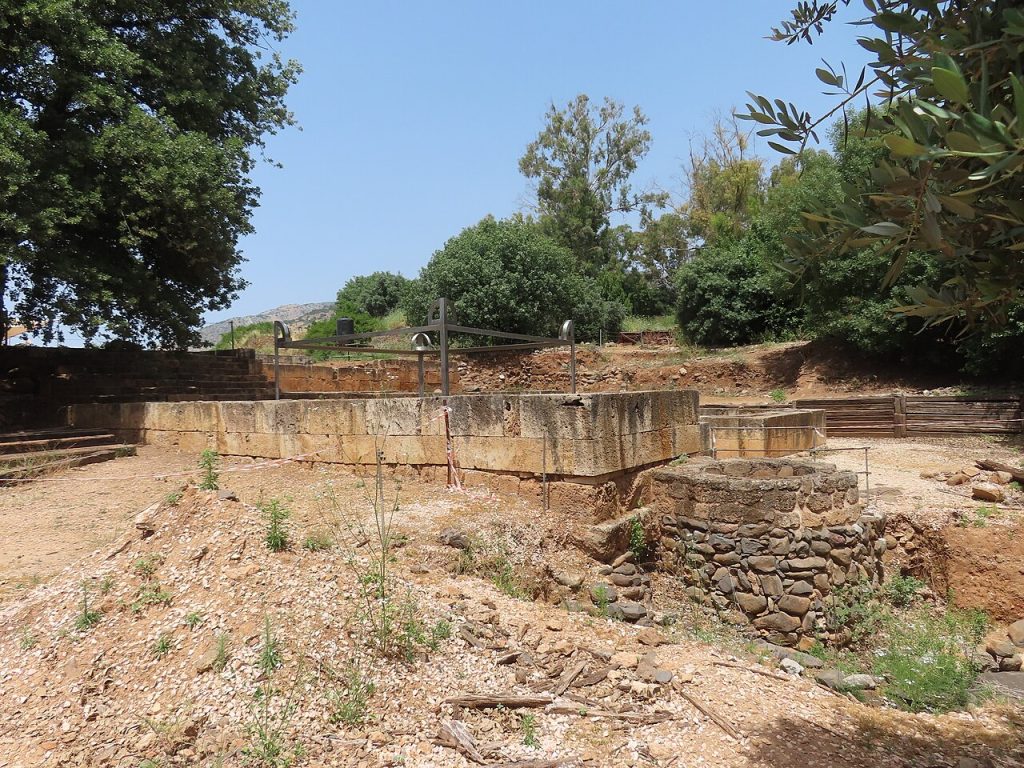
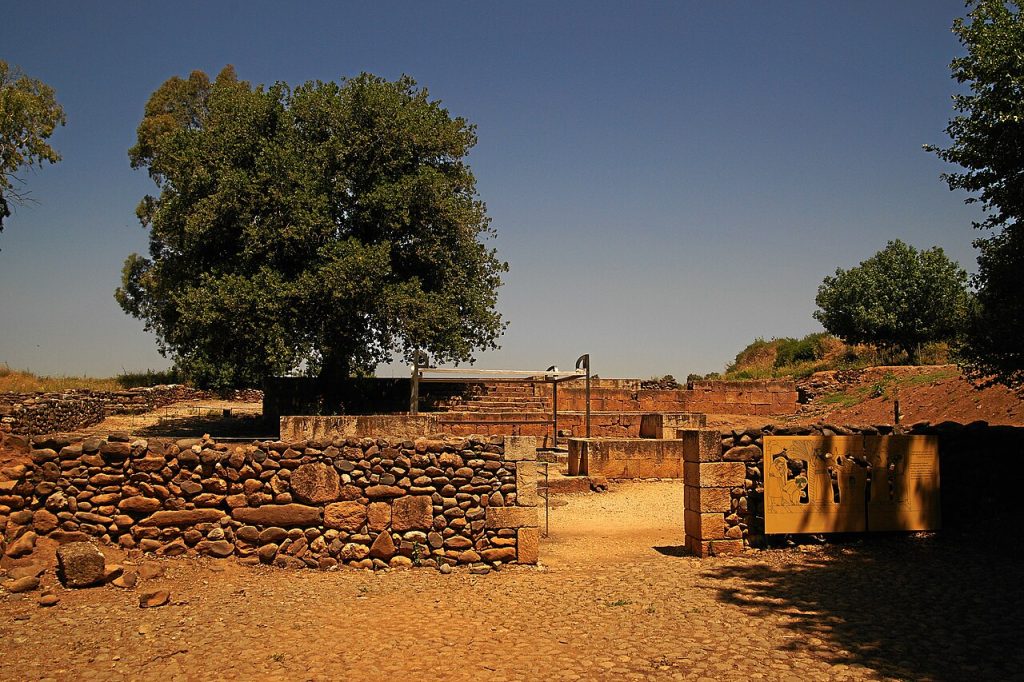
At the northwestern edge of Tel Dan, a visitor can walk between low walls toward the broad stone platform of an ancient sanctuary. Near it, a metal outline gives a sense of the scale of an altar proposed by the excavators. The platform and its surroundings were part of one of the most prominent worship settings in the northern kingdom of Israel. They are also the remains of a place that people rebuilt and adapted over centuries. Reading those layers well makes this one of the most interesting sites to bring alongside the account of Jeroboam in 1 Kings 12.
The Bible says Jeroboam son of Nebat established royal worship at Dan near the northern limit of his kingdom. We read that history as true and accurate. The excavated precinct gives us a way to look closely at what worship on that frontier could have involved. Its stones raise a second set of questions, about the dates of particular walls, the uses of equipment, and the centuries that separate some of the structures we can see. Christians can look at those questions with real interest. The biblical author tells us why Jeroboam wanted a sanctuary at Dan, and the excavators help us picture what people later did there. The Tel Dan expedition.
Key takeaways
- Avraham Biran began excavating Tel Dan in 1966. His team uncovered the large platform associated with the sacred precinct in 1968.
- The sanctuary complex preserves evidence of ritual architecture and equipment. A large stone base and a basalt horn support the excavators’ reconstruction of a substantial horned altar.
- Biran associated construction stages with Jeroboam I, Ahab, and Jeroboam II. A 2025 study argues that many visible features belong to Persian, Hellenistic, and Roman phases.
- First Kings 12 records a royal sanctuary and its calf image at Dan. No image from the excavated precinct is securely identified as Jeroboam’s calf.
A sanctuary by the springs
The mound of Tel Dan stands in the northeastern Hula Valley near a major source of the Jordan River. The springs give a sense of a place where people could live, farm, and travel within reach of a dependable water supply. Northern routes brought it into the affairs of Israel and the Aramean states. The geographical setting also helps explain why the city figures in the biblical description of the whole land between Dan and Beersheba. For a king seeking to hold a new kingdom together, Dan’s position mattered as much as the familiarity that the name carried.
In older reports the mound was known as Tell el-Qadi. Following a brief investigation in 1963, Biran’s campaign began in 1966. The platform came to light at the northwest edge in 1968. Excavation then exposed a precinct of walls, courts, and installations. Archaeologists often call this part of the site Area T. It is a different excavation setting from the gate complex associated with fragments of the Tel Dan Stele. The Aramaic stele is about conflict and royal claims, with a reference commonly read as the House of David. The precinct helps us investigate architecture and practices of worship in the same city. The two finds gain much of their significance from different kinds of evidence. The expedition’s account of the excavated areas.
The platform and the altar
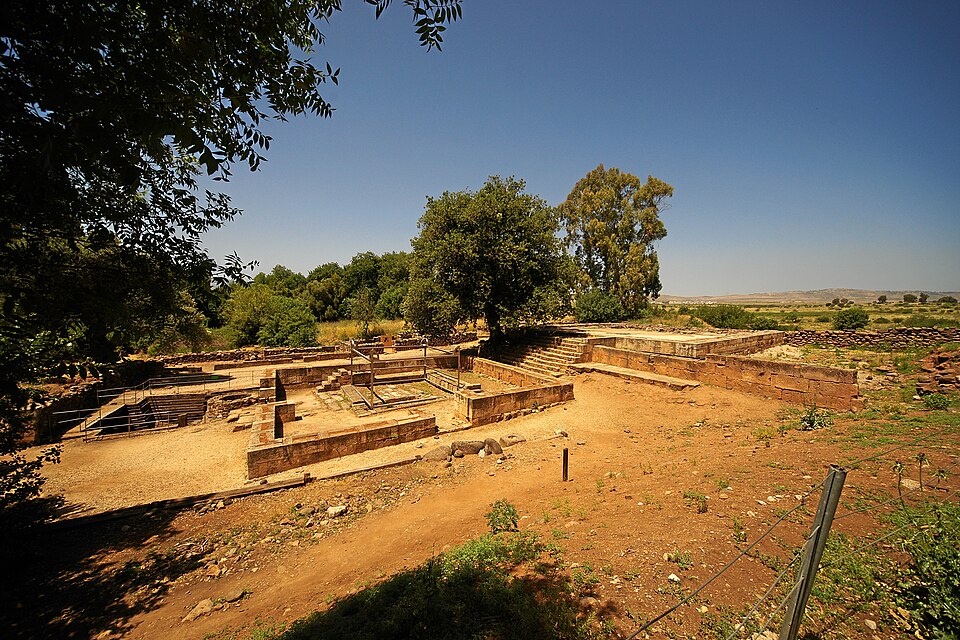
When people speak of the “high place” at Dan, they can mean the entire ritual precinct or the raised platform within it. Biran discussed whether the platform could have served as an open installation. Other researchers have considered that it might have supported a temple or other building above. Very little of whatever stood at the top survives in a form that fixes the design. The excavated base helps define the footprint. Upper walls and furnishings require another level of reconstruction. A person who imagines a complete building should hold that image lightly and ask which part of the idea begins with stones actually found in place. Biran’s description of the worship spaces.
A substantial altar base occupied another part of the precinct. Ilan and Greer describe remains of steps and a large basalt corner horn recovered from secondary use in a Hellenistic wall. They interpret it as a piece of the altar and discuss a reconstruction about 4.75 meters on a side and about 3 meters high. The model at the site presents the scale of that proposal. Recognizing the horn in newer masonry provides a helpful comparison with the horned altar at Beersheba, where several blocks were recovered after later builders reused them. Dan has a base at the precinct, an associated horn from a later wall, and a reconstruction that joins those lines of evidence. Beersheba has multiple fragments of its altar but no secure original position. Ilan and Greer, figures 25–26.
An altar also tells us little in isolation about the people who came to use it. Animal remains and pottery from the larger excavation bring an additional scale of evidence. When scraps of meals and discarded containers occur together in a known layer, the researchers can ask how food was supplied, where it was prepared or shared, and how public activity shaped what people left behind. One pilot study examined the tooth enamel of eleven sheep and goats attributed to Iron Age contexts. The sampled animals fit grazing areas within roughly 10 to 20 kilometers of Dan. That result supports local supply for the sample while leaving open how far people themselves had come. A sanctuary could draw visitors from a distance and still rely on livestock from the nearby countryside. Arnold and colleagues’ study of animal provisioning.
Which stones belong to which age?
Biran’s interpretation associated major stages of construction with Jeroboam I, Ahab, and Jeroboam II. Each was a prominent northern king and makes historical sense as a candidate for royal spending at a sanctuary. But a king’s building program needs its own archaeological evidence before a particular wall can be put in that reign. A room might keep its lower course after ten generations of repair. A later builder might match an old style on purpose. People could also clear away most of an earlier floor while leaving the wall beside it standing. That is why the order and relation of surfaces, fills, and reused blocks matter more for dating individual structures than their appearance alone.
In 2025 Levana Tsfania-Zias published a reassessment of the precinct, arguing that much of the architecture and material once credited to Iron Age kings should be assigned to Persian, Hellenistic, or Roman stages. She points to regional Phoenician parallels in material from the complex. A separate study examines a Hellenistic bathing installation and a Late Roman fountain house, tangible reminders that water in the precinct could be treated differently as worship and building practices changed. Their presence helps explain why the exposed site contains evidence of several centuries. On the old platform, the threshold for saying that Jeroboam himself saw a particular feature is higher than for placing royal worship at Dan as a matter of biblical history. Tsfania-Zias’s architectural reassessment. Her study of the water installations.
The reevaluation also has consequences for a visitor reading the site today. Imagine two phases of use resting against one another. Where a later structure cut deeply into older deposits, its builders may have mixed rubble with objects left behind by earlier worshippers. A later floor can thus seal old fragments inside a new building while pointing to a much later occupation for the floor itself. Archaeologists can compare joins and cuts across a courtyard before assigning either date. This process makes better use of an old excavation than taking every architectural label at face value. It keeps the question about an Iron Age sanctuary in view while asking anew how much of the precinct visible in photographs belongs to it.
Jeroboam feared what a journey to Jerusalem could do to his kingdom. Scripture asks what his new sanctuaries did to Israel’s worship.
What Scripture tells us about Jeroboam’s decision
Judges 18 already associates Dan with a shrine, early in the life of Israel in the land. In 1 Kings 12:25–33, the political setting is the division of Solomon’s kingdom. Jeroboam fears that if Israelites travel to Jerusalem for sacrifice, their loyalty will return to Rehoboam, the king of Judah. So he sets up calf images at Bethel and Dan, appoints priests, and establishes a feast. Readers can see how geography, religion, and royal survival intersect in the story. Dan at the north and Bethel in the south provided alternate places for the people of Israel to go. The narrative remembers the royal decision and passes judgment on it.
Kings returns to the practice in the story of Jehu. Second Kings 10:28–31 recounts the removal of Baal worship, then records that Jehu continued in the sins of Jeroboam involving the calves at Bethel and Dan. The two notes belong together. The writer distinguishes what Jehu removed from what he maintained and tells us that the Lord required wholehearted faithfulness. Sharing a feature of Israelite ritual such as a horned altar tells us something about practice. It cannot by itself tell us whether people worshiped as God had commanded. Scripture’s concern reaches past the layout of an altar or court to what the king taught Israel to do there.
Amos 8:14 brings Dan and Beersheba together in a later prophetic warning about oaths attached to worship at particular places. That reference keeps the northern site in view well after Jeroboam I. The kings and prophets give us different windows on its influence. Kings records the decisions of rulers and the consequences for the nation. Amos places the responsibility before people who still trusted in their customary expressions of worship. Read together, the passages give a reason to ask how a precinct changed through time and why the place retained significance for ordinary worshippers.
For a Christian reader, the setting at Dan brings these words close. The hill, the cold springs, the remains of a raised platform and the scale proposed for the altar show that a trip to this place could be an important occasion. First Kings also shows how a king can organize worship to secure allegiance to himself. Jeroboam’s fear is understandable in political terms, and Scripture is direct about its religious cost. The sanctuary that archaeology brings into view deserves close study in its own right. As we read the biblical account, its physical scale helps us take seriously the choices that played out in that place over many years.
What would clarify the dating?
- Architecture: A securely dated floor and its connection to a wall can help establish when a given space was in use.
- Objects: The basalt horn is evidence of an altar, while its reuse belongs to a subsequent phase. A dated object found in undisturbed primary use could help narrow the earlier phase.
- Inscriptions: A securely provenanced building dedication could identify a sponsor. The textual evidence in 1 Kings names the founder of the royal shrine but does not identify particular surviving walls.
Did excavators find Jeroboam’s golden calf?
The calf image is known from 1 Kings 12. No object recovered from this sanctuary has been securely identified as that image. The visible platform, altar evidence, and other finds establish the archaeological interest of the precinct independently of that identification.
Sources and further reading
- Nelson Glueck School of Biblical Archaeology, Tel Dan expedition — Excavation history, the setting of the mound, and the Iron Age architectural remains.
- Avraham Biran, “Sacred Spaces” (1998) — The excavator’s account of Dan’s sacred precinct and ritual finds.
- David Ilan and Jonathan S. Greer, “A Pilgrimage to Iron Age II Tel Dan” (2021) — An archaeological reconstruction of the approach and use of the ritual spaces. Figures 25 and 26 show the central altar base and the basalt horn.
- Elizabeth R. Arnold and colleagues, “‘Come, O pilgrim’—but buy local” (2021) — A study of animal provisioning using isotope data from the tooth enamel of Iron Age sheep and goats.
- Levana Tsfania-Zias, “The Sacred Precinct of Tel Dan Revisited” (2025) — A stratigraphic and material-culture argument for reassigning several features to later phases of the precinct.
- Levana Tsfania-Zias, “Ritual Purity among the Phoenicians in the Sacred Precinct at Tel Dan” (2025) — Detailed study of Hellenistic and Roman water installations and their archaeological contexts.