Lesson 1 of 5 · About 20 minutes · Course outline
Imagine finding a pottery fragment on the ground. It fits in your palm. There is a dark mark on it that might be writing. What would you want to know before calling it a discovery? You might ask where it lay, how the archaeologists know its age, and why they think the mark was deliberate. Those questions already put you on the way to reading archaeology. This course will give you a way to ask them about a tiny sherd, a stone naming a Roman official, and a whole city attacked by an ancient empire.
What you’ll learn
- Recognize three kinds of material evidence and explain why a findspot matters.
- Describe how survey, excavation and laboratory study became part of biblical archaeology.
- Tell the difference between a description, a historical inference, and a question an artifact leaves open.
Start with what survives
Archaeologists study human life through its physical remains. Many surviving things are very ordinary. Broken jars may record how a household stored food. A wall can show where a room began. Seeds from a hearth can show something about the crops people used. A written object is an especially interesting case because it gives a researcher two things to study at once. It has a material history as a piece of clay, stone, or metal. It also carries words that someone decided to put on it. Those histories can point to different moments in the object’s life.
A few terms will help as you read the later lessons. An artifact is an object made or altered by people. A feature is a trace such as a wall, hearth, or pit recorded where it was encountered. Plant remains and animal bones can preserve evidence about food, work, and the environment. The groups overlap in useful ways. A cooking pot is an artifact. The hearth nearby is a feature. A charred seed in the pot may be evidence for an ingredient or for something that entered the pot during a different use. To work out which, archaeologists need records of their relationship.
Biblical archaeology asks questions about the lands, people, and periods involved in Scripture. It can help us see what houses looked like, how goods entered a city, why water mattered at a settlement, or what it took for a governor’s order to reach another town. Much of that evidence comes from people the Bible never names. Their everyday remains help a reader imagine the material world in which the biblical people lived. The later lessons bring those surroundings into focus with photographs, maps, and field records.
At an excavation, the relationship between two ordinary things can tell us more than the appearance of either one by itself.
How people learned to record a site
Travelers and scholars once compared places named in Scripture with routes, ruins, and living place names. Surveyors recorded the shape of hills, roads, and buildings. That work could help narrow a question about where an ancient place might be. The shape of a mound or the sound of a modern name still needed to be checked against the remains themselves. At a long-occupied site, walls may belong to settlements separated by centuries. A map tells us where those remains lie. Excavation can help establish when people built, repaired, filled, or abandoned them.
An important early example is Tell el-Hesi. Flinders Petrie began work there for the Palestine Exploration Fund in 1890. Frederick Jones Bliss continued the expedition. Their work helped establish the value of recording distinct occupations in a mound and comparing groups of finds from different levels. Pottery was useful because containers change in shape and manufacture over time and because broken pieces survive in large numbers. An excavator who tracks which kinds occur in which deposits has a way to follow change across the mound. The significance of the work is in the method, which later excavators could refine and apply elsewhere.
Later fieldworkers improved the recording of layers, features, elevations, and the precise positions of small finds. Kathleen Kenyon’s work at Jericho and Jerusalem forms part of that history. Modern teams may also use laboratory sampling, high-resolution photography, and digital survey. Changes in recording have consequences for how much can be recovered from earlier work. A good old plan or notebook may answer a question its author never anticipated. An object with only a city name on its label may leave the people studying it with fewer ways to test competing explanations.
What survives also shapes the questions we can ask. Stone and fired clay often outlast wood, cloth, or food, so the collection on a museum shelf can make ancient life look more durable than it was. A building platform may remain after the furniture disappears. A small seed may survive because it charred in an otherwise destructive fire. Researchers may deliberately look for fine remains when they want to study diet or plants. The resulting evidence depends on what people left, what the soil preserved, and how the field team collected it. Each of those steps has a history.
Excavation changes the site as people remove one layer to examine the next. The plans, photographs, labels, and samples become the records on which future researchers depend. This is why finding something and recording it are different achievements. Even a plain fragment can be the strongest clue in a study if someone knows exactly where it was found. On visits to archaeological places, photographs and notes can preserve your own observations while the objects and their associations remain available for trained recording.
Take one stone and ask three questions
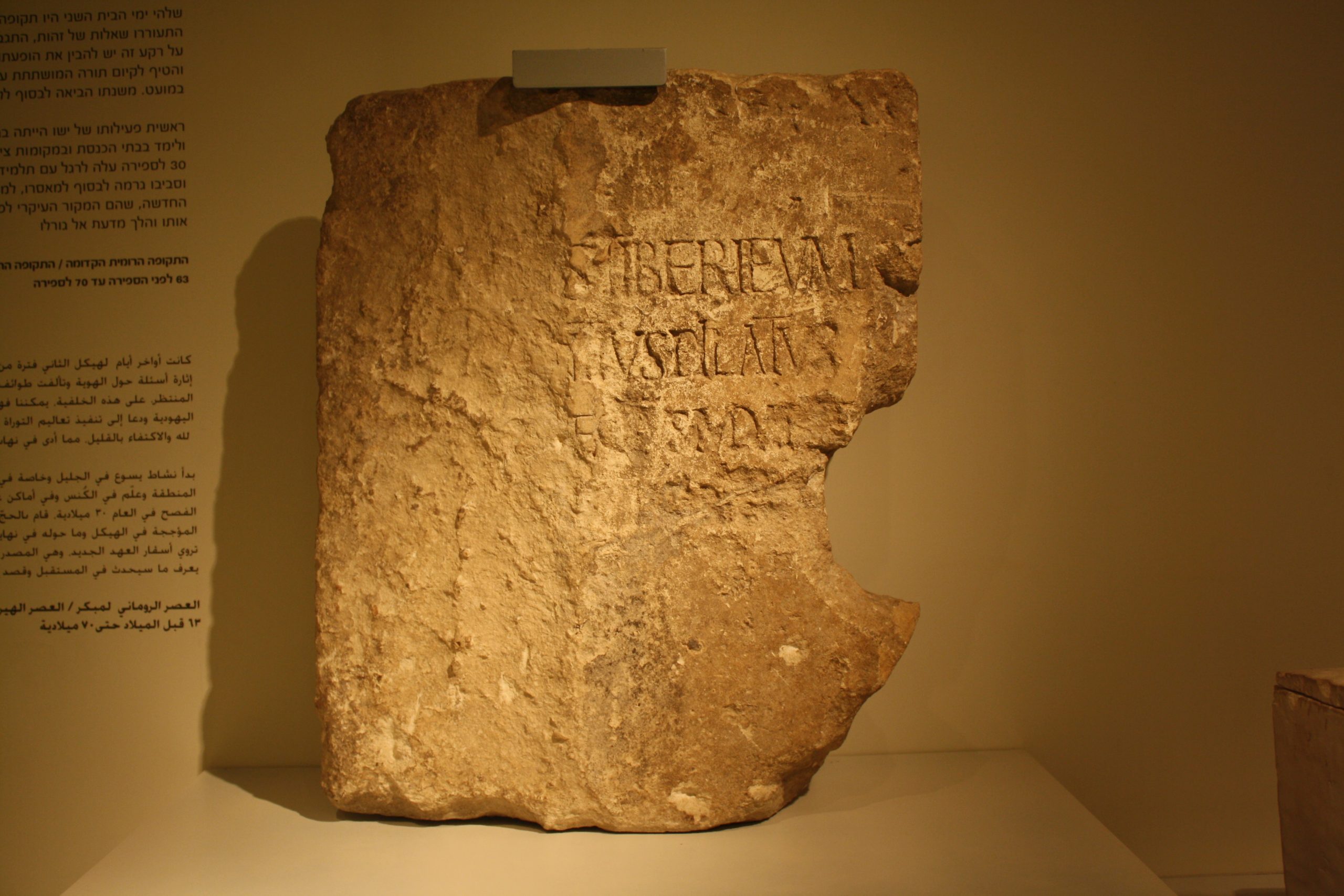
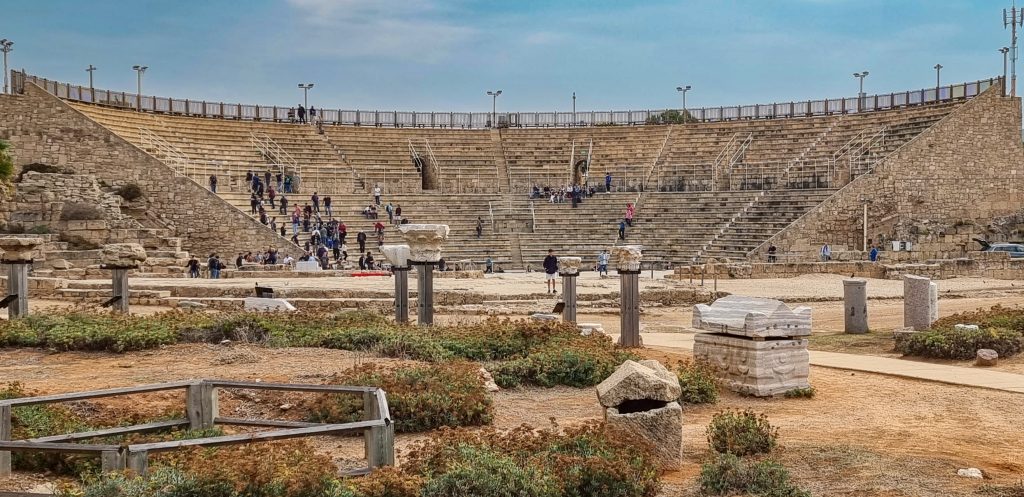
Look at the broken inscription from Caesarea Maritima. Start with the object. What do you see? There are rows of Latin lettering on stone, and damage has removed parts of lines. Then ask how the words are read. Specialists can compare the surviving letters with conventions used in Roman inscriptions. They identify the name Pontius Pilate and his office as prefect of Judaea. Finally, ask where the object turned up. It was found in later reuse in the theater, giving the stone a second history beyond the dedication for which the text was first carved. Published Latin reading of the inscription.
Now read John 18:28–40 and note what the chapter asks Pilate to do. The Gospel describes the hearing and gives words spoken in it. The inscription gives independent evidence of a man who held Roman office in Judaea. It cannot report the words of a particular hearing. A claim that the name and office are attested is much more specific than a claim that the stone records the whole scene. The museum object is more interesting when we let it tell us something precise about the historical setting.
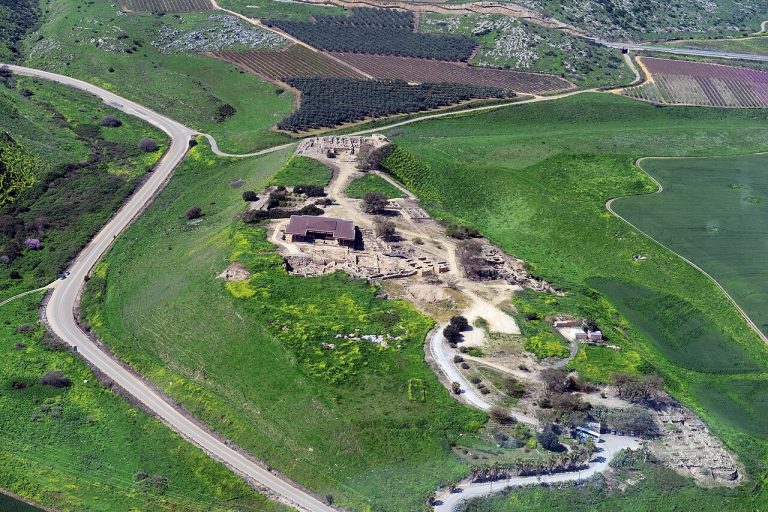
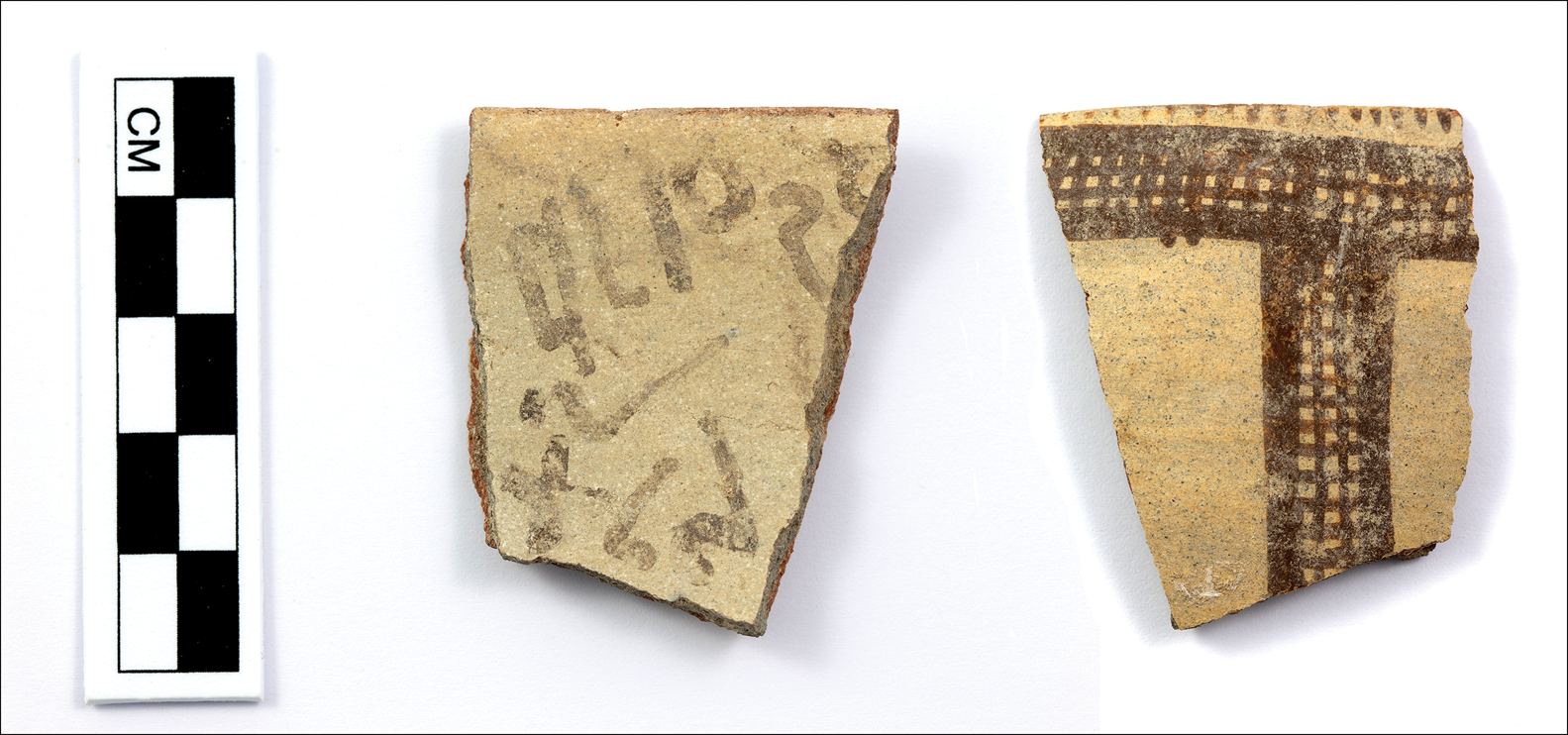
Try the same questions with the sherd below. It is small, carries traces of early writing, and comes from a documented excavation at Lachish. An excavated assemblage may preserve samples that help date the layer beside a wall, while study of the writing and pottery asks when the object itself might have been made or used. In Lesson 3 you will practice keeping those dates apart. Here the point is simpler. The object and the record of how it was found are both evidence.
Practice describing a discovery
Give yourself about five minutes. Choose either figure and write one sentence under each of three headings, See, Infer, and Ask. Under See, record what another reader can check in the image. Under Infer, state a conclusion and the additional evidence it rests on. Under Ask, name one thing you still want to learn. Then open the explanations below and compare them with what you wrote.
What belongs under see for the Caesarea inscription?
You might say that the stone is damaged and preserves parts of several lines of letters. If you identify Pilate or name a Roman office, tell the reader that you are using the published reading of the text. The lettering is visible. The name and office depend on reading the inscription.
What could you infer about the Lachish sherd?
The published study describes early alphabetic signs and supplies records of the sherd’s findspot. A reader can reasonably infer that someone in the region used early alphabetic writing. A ruler’s name, a full message, or a date for a biblical event would require more evidence.
What is one question a photograph cannot answer?
For instance, where exactly was the sherd found in relation to the wall, and what material lay in the same deposit? For that you want an excavation plan, photographs of the area, and the report’s description of the context. The photograph of the fragment is one piece of that evidence.
Read Scripture and evidence together
This course begins with the Christian conviction that the Bible is true and historically grounded. It also takes seriously the work of asking what a particular excavation can tell us. When we read the Gospels, it matters that Pilate held real public office in the province. When we read 2 Kings 18, it matters where Lachish stood and what a recovered sculpture says about it. Taking the Bible seriously gives us a reason to read its claims closely. Taking the finds seriously gives us a reason to resist careless conclusions about them.
Keep your three sentences. In the next lesson you will move from a close look at an object to the soil and structures around it. By the final Lachish exercise, you will use the same habit to read several kinds of evidence together and explain why a conclusion is stronger when different sources agree about the same specific point.
Sources and further reading
- Palestine Exploration Fund archaeological collections Tell el-Hesi, early pottery sequencing, and Kathleen Kenyon’s fieldwork.
- Society for American Archaeology, What Is Archaeology? Material evidence and archaeological context.
- Archaeological Institute of America glossary Definitions for excavation, stratigraphy, and field records.
- Early alphabetic writing at Tel Lachish The primary excavation study and images of the sherd.
- Pontius Pilatus inscription Published Latin text with the extant letters and editorial restorations.
- Why an Artifact’s Findspot Matters Go deeper into the Pilate inscription’s reuse and the context of other finds.
Next lesson: Reading Excavation Layers and Findspots · Return to the course outline