The name on the broken wall plaster came with a father’s name. Balaam son of Beor, the text says, was a seer. It goes on to tell how divine beings visited him at night and how he grieved over the calamity he saw coming. The excavators who found the fragments in Jordan in 1967 had uncovered one of the closest ancient parallels to a name in Scripture. The Balaam of Numbers also receives messages at night. The plaster and Scripture remember the seer in very different settings. That combination of recognition and surprise is what makes the discovery worth reading line by line. Levine’s translation, Combination I, lines 1–7
What you'll learn
- How a text written in ink survived on a collapsed wall and what helps date it to around 800 BC.
- Which details identify the seer and where the fragmentary vision leaves room for interpretation.
- Why the agreement in Balaam’s name and role matters, and what Numbers teaches through its own account.
The wall fell before anyone could excavate it
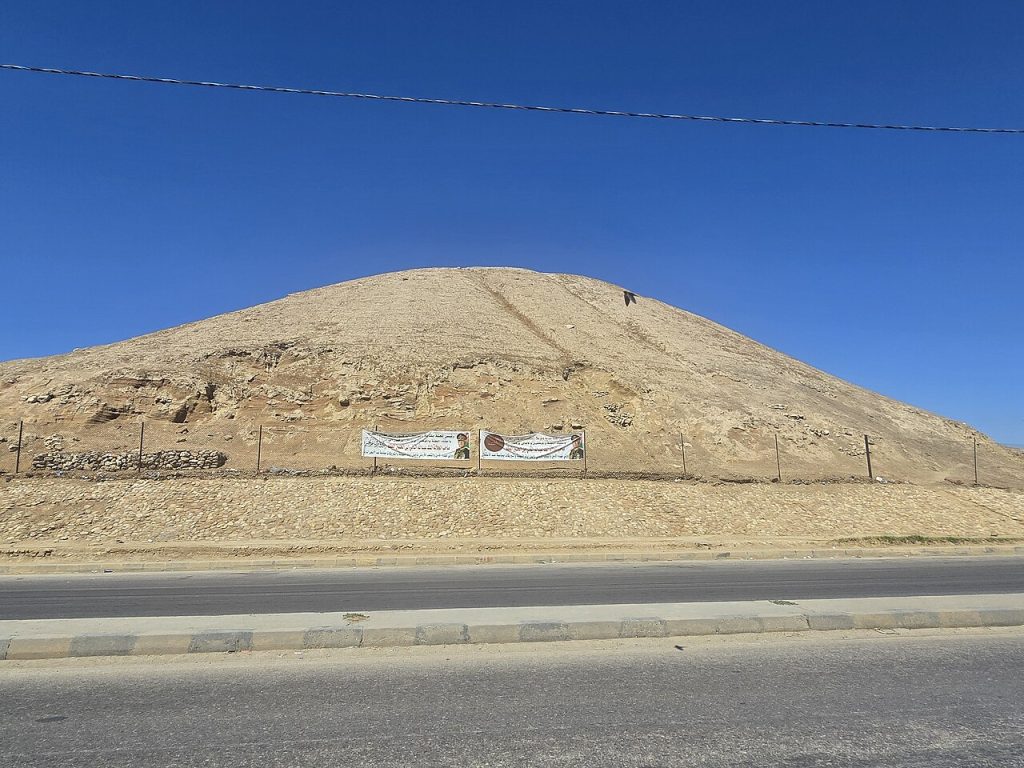
Tell Deir ‘Alla stands in the Jordan Valley on the east side of the river, near the opening of the Zarqa River into the valley. The Zarqa is commonly identified with the Jabbok of Scripture. At Deir ‘Alla a tell, or mound built up by repeated settlement, preserves evidence of very different periods. Earlier levels include a Late Bronze Age sanctuary. The inscription belongs to a later settlement. The place name of the mound and the layers excavated there help locate the object. They give a particular room and community a part in the survival of a literary story. Ibrahim and van der Kooij, archaeology of Phase IX
In the 1967 season of the Leiden expedition directed by H. J. Franken, the excavators noticed strokes of ink on broken plaster among building debris. The wall had once carried lines in black ink, with portions in red. The collapse left the investigators with fragments whose edges, writing and positions became evidence in their own right. A piece that belonged near the beginning of a line might have been found next to something from the line below. Conservators and epigraphers had to compare plaster surfaces and letters before they could offer a reading. Hoftijzer and van der Kooij published the first full edition in 1976. First edition, catalogue of marked plaster fragments Hackett’s examination of the fragments
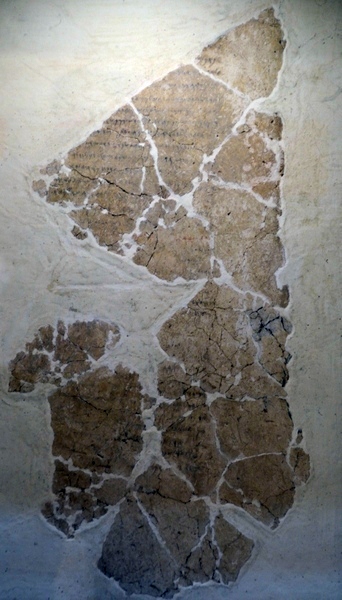
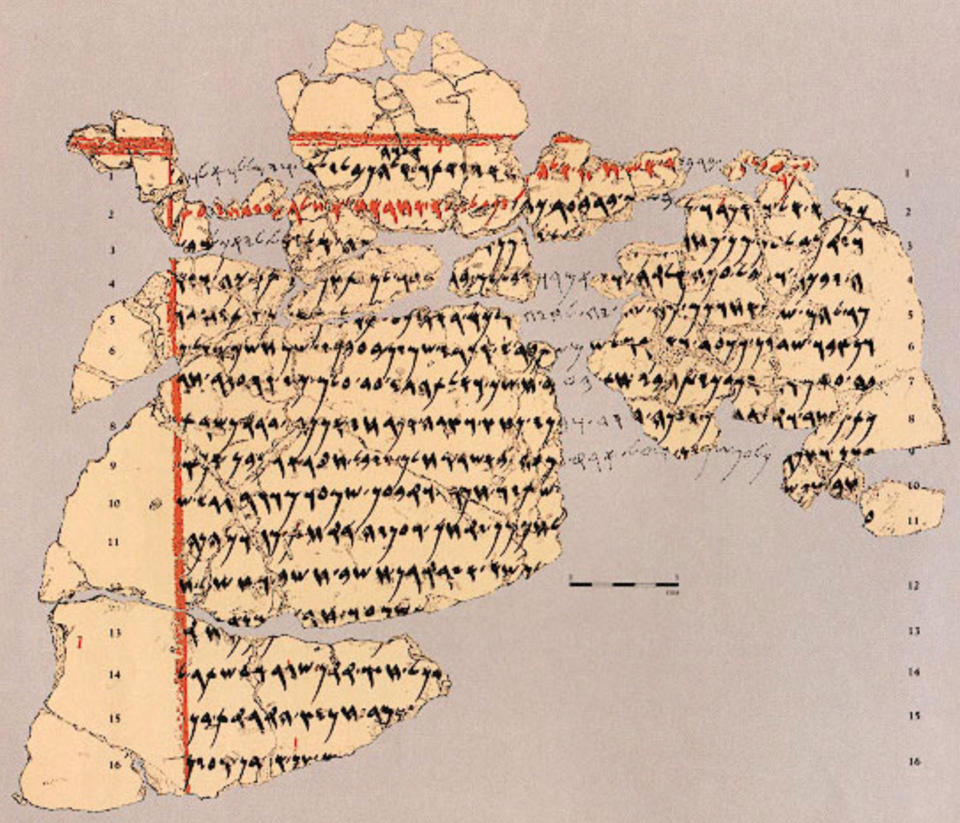
An important part of the story is the movement from fragment to fragment. Scholars refer to the two major arrangements as Combinations I and II. The first has the recognizable opening and a more continuous account. The second is harder to read and its relationship to the first is debated. When you look at a photograph, white space between pieces can stand for a bit of plaster that never survived. A written edition marks those gaps and places some proposed letters inside brackets. That helps readers tell which parts of the text they can follow securely and where the reconstruction is doing more work. Saunders, description of the two combinations
The wall itself is generally placed in the Iron Age around 800 BC. Archaeologists use the context of the building and radiocarbon evidence from the site, while specialists compare the lettering with other inscriptions. Calling the text “about 800 BC” gives the reader the scale of the evidence. It does not date the events the story describes, or tell us when its first version took shape. The opening seems to refer to a book or written account of Balaam, which invites the possibility that the wall carried a version of material already in circulation. Even an earlier text would need its own evidence to establish when and where it originated. Van der Kooij, dating and writing technique, pp. 108–109 Levine, opening line of Combination I
Writing on a wall changed the possibilities for a text. Here the ink went onto a plaster surface with enough space for a connected account. Van der Kooij examined the letter shapes and proposed that the scribe used a broad-nibbed pen, likely made from the stem of a rush. Varying widths and angles within the strokes helped him trace how the hand turned while writing. That is a different method from identifying the words. It recovers some of what a scribe did with the tools at hand, down to the movement that left a feature in the ink. Van der Kooij, analysis of pen and stroke
When the seer hears something at night
Combination I introduces Balaam by name and calls him a seer of the gods. Divine beings visit at night, and the story connects the vision with an utterance of El. Afterward Balaam fasts and weeps. Others ask him what has caused his distress, and he tells them what the divine assembly has planned. In Levine’s translation the heavens are to be shut up and covered with darkness, with striking images of animals appearing in the account of disorder that follows. The opening is much clearer than parts of the damaged ending. It is possible to recognize the shape of the story while leaving details of its resolution unsettled. Levine, Combination I, lines 1–17
Questions keep opening as the lines change from an announcement to a description of the vision. One is the meaning of the figures usually called the Shaddai gods. Readers of Numbers 24:4 and 24:16 will recognize the resemblance to the divine title commonly translated “the Almighty.” In the wall text the term is associated with a group acting within a divine council. In Numbers it names the one whose vision Balaam sees. A family relationship between words is interesting evidence about regional speech. It cannot make the respective portrayals of God and the gods the same. Saunders on Shaddai and the divine council Hackett, comparison with biblical usage
Specialists also distinguish the shapes of the letters from the language spelled out in them. The early editors classified the language as Aramaic. Other scholars have argued for a Canaanite dialect or a distinct local Northwest Semitic variety. Some features resemble familiar Aramaic patterns, while other words and constructions are closer to neighboring languages. The disagreement is easier to understand if you imagine a form of writing shared across communities whose speech did not always follow the same patterns. The differences matter to the reading of an obscure phrase, but the double name and the role of the seer still give the comparison with Numbers a firm center. Saunders, linguistic proposals and bibliography
Balaam’s name got out of the room where its story was written. The broken plaster gives us a rare chance to hear how a neighbor remembered him.
A name that travels across traditions
In Numbers 22, Balak son of Zippor fears what Israel’s arrival will mean for Moab. He sends messengers to summon Balaam from Pethor and asks him to curse the people. Balaam receives word from God at night. The Lord declares that the people are blessed. The account preserves the human bargaining around the commission, the encounter on the road and the limits God puts on Balaam’s speech. The fact that a wall on the other side of the Jordan Valley also links Balaam son of Beor with a night revelation gives the comparison more depth than a shared name alone.
The strongest connection is cumulative. Both accounts pair a personal name with the same patronymic, which is a name identifying someone’s father. Both give Balaam an unusual ability to receive and report revelation. Both circulated in the ancient Near East, and the archaeological witness comes from east of the Jordan. That makes a shared figure or tradition the natural explanation. The wall was written long after the setting of Israel on Moab’s border. It preserves neither Balak’s invitation nor the blessings over Israel. It also does not show that the events happened at Deir ‘Alla. The findspot marks where the story was recorded on plaster. Hackett, Balaam’s role across the two traditions
Numbers 23 and 24 turn Balak’s plans back on him. More than once he takes Balaam to another place and has sacrifices prepared, with the expectation that another site might bring another answer. The Lord’s blessing stands. These scenes depend on the particular account Scripture gives of God’s relationship to Israel. There is no equivalent in the plaster of the sequence in which a king pays for a curse and hears a promise instead. The similarities explain why the fragments arrest a Bible reader’s attention. The story in Numbers gives the parallels their limits and its own center of gravity.
The figures who hear the seer are also worth noticing. At Deir ‘Alla his companions ask why he is fasting and weeping. In Numbers, a ruler and his party wait to hear a report that will affect their dispute with Israel. Each story imagines people depending on an intermediary to hear a message they cannot obtain for themselves. That common social idea helps explain how a figure like Balaam could have remained memorable. The stories give him distinct reasons to speak and different outcomes for the people listening. When reading an ancient parallel, the audience within the story can be as revealing as the speaker.
What the Lord asks Israel to remember
The Bible has more than one occasion to mention Balaam. Joshua 13:22 remembers him as a diviner, and Numbers 31:15–16 connects him to counsel that led Israel into disobedience. The man who spoke blessing under God’s command did not thereby become a model of faithfulness. Micah 6:5 takes the reader back to Balak’s plan and Balaam’s answer as part of the Lord’s appeal for Israel to remember his righteous acts. In that setting the people are being called to respond to a history of rescue. They remember what Balak intended because God had another word in view for his people.
We read Numbers as a true account of the Lord’s dealings with Israel. That conviction gives us reason to appreciate the particular witness from Deir ‘Alla. A reader may look closely at the names and the ink, value what the ancient source tells us and allow it to remain an account from its own community. The plaster gives us a seer whose reputation traveled. Scripture tells us why the episode still matters for faith. God’s blessing did not depend on Balak’s intentions, Balaam’s ambition or Israel’s ability to arrange a favorable word. When Micah calls the people to remember, the One who protected them is the subject of the appeal.
Sources and further reading
- Jacob Hoftijzer and Gerrit van der Kooij, Aramaic Texts from Deir ‘Alla (1976) — The first full edition, with catalogue beginning on p. 97 and translation beginning on p. 179.
- Jacob Hoftijzer and Gerrit van der Kooij, eds., The Balaam Text from Deir ‘Alla Re-evaluated (1991) — See the archaeological discussion of Phase IX, followed by papers on script, language and interpretation.
- Jo Ann Hackett, Some Observations on the Balaam Tradition at Deir ‘Alla (1986) — The author's close reading, comparison with Numbers and description of the fragments.
- Baruch A. Levine, translation of the Deir ‘Alla inscription — Combination I, lines 1–11, translated by Levine; fragments elsewhere are identified by combination and line.
- Gerrit van der Kooij, The Identity of Trans-Jordanian Alphabetic Writing in the Iron Age — The excavator and epigrapher discusses date, pen and development of the script, especially pp. 108–109.
- Matthew Saunders, Balaam Inscription from Tell Deir ‘Allā (2024) — Modern scholarly synopsis of the main readings and competing linguistic classifications.




