The people who wrote on the storage jars at Kuntillet ‘Ajrud lived in a world familiar from the books of Kings. They knew the name of the Lord, recognized Samaria as a place that mattered, and wrote blessings asking for divine protection. They also used a phrase that many translators render “his asherah.” When Ze’ev Meshel’s team brought the jars’ fragments to light in 1975 and 1976, the discovery opened a window into the religious language of ancient Israel. The writing is remarkable in its own right. It becomes more revealing alongside the Bible, which places exclusive loyalty to the Lord at the heart of Israel’s covenant and recounts how often people departed from it. Meshel’s excavation report
Key takeaways
- Excavations in 1975–76 uncovered ink inscriptions and drawings at a short-lived site in northeastern Sinai. The finds date to around 800 BC.
- The inscriptions on two large jars invoke Yahweh of Samaria and Yahweh of Teman. The accompanying term usually rendered “his asherah” has several defensible readings.
- The text and nearby drawings must each be interpreted. Together with Scripture, the finds illuminate religious practices and language that could coexist with the worship of the Lord in ancient Israel.
What the excavation found in the Sinai
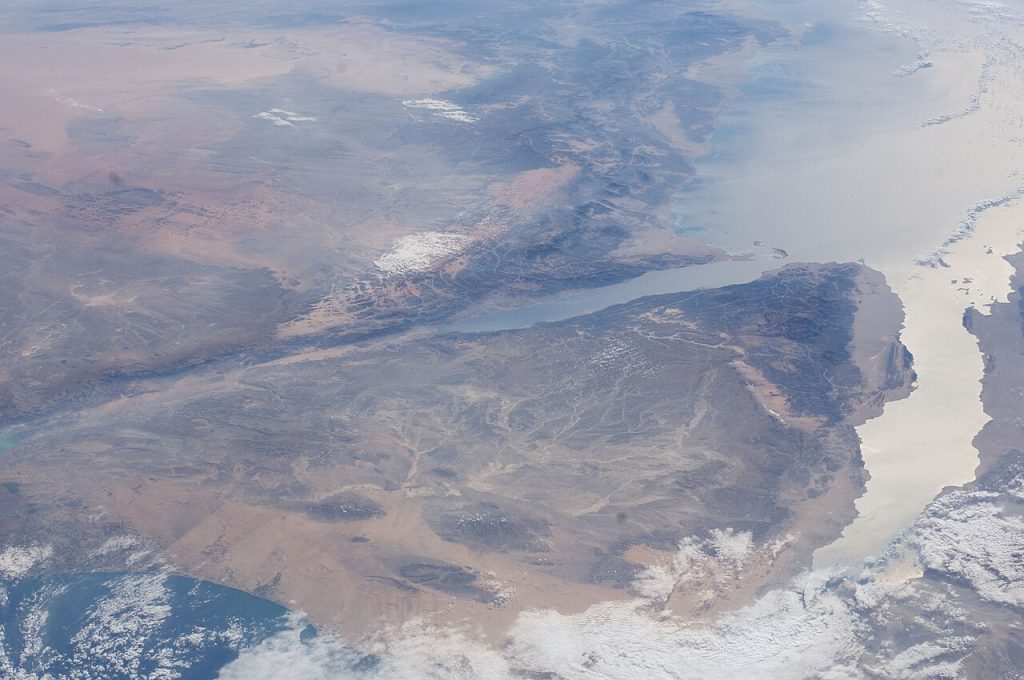
Kuntillet ‘Ajrud sits on an isolated rise in northeastern Sinai, south of Kadesh-barnea and near sources of water for people traversing the desert. It was modest in size for a site that tells us so much. Archaeologists exposed a main building with an entrance area lined with benches and rooms arranged around a courtyard, along with remains of a smaller structure. A vessel that once stood in a room can be reduced to fragments by the time it is excavated. By recording where the pieces were recovered and how they fit, the team could examine what had once occupied the spaces through which people moved. Site plan and excavation context
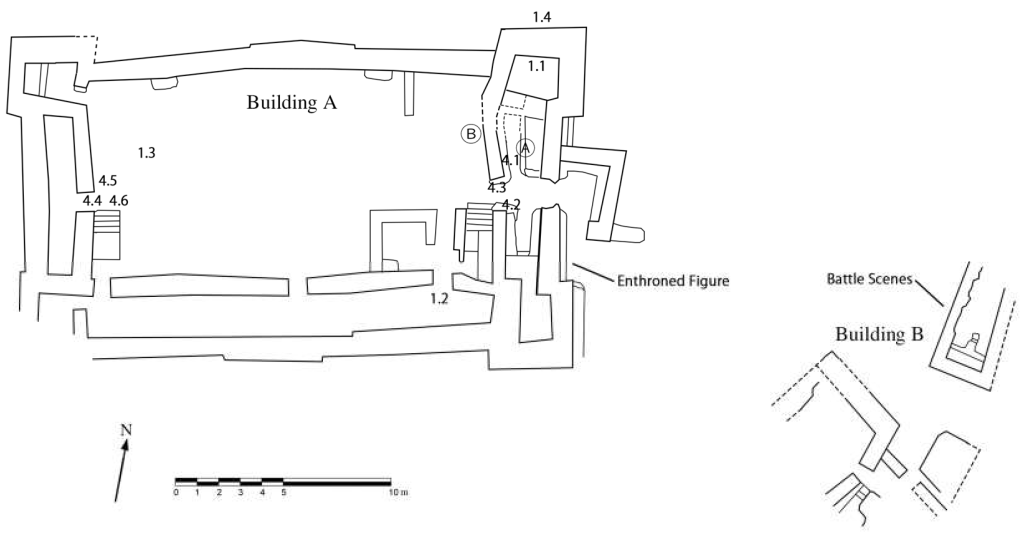
The name Horvat Teman, also used for the site, takes its cue from the texts mentioning Teman. The Arabic place name remains the usual reference in English. The excavators placed the fairly brief occupation near the transition from the ninth to the eighth century BC, using archaeological finds and radiocarbon analysis. That dating places the inscriptions centuries before the later reforms described in the closing chapters of Kings. It also gives them an important kind of independence. The letters on the jars and plaster come from people who lived in the period being studied. Their work survived on objects they used and on surfaces they could see. The excavators’ dating study
Archaeologists have proposed several uses for the compound. The benches and inscriptions have led some to see a place where travelers stopped and performed religious rites. The provisions and position also make sense for a defended station along a desert route. The written material has prompted a proposal that scribes working there practiced composing letters and blessings. These possibilities show why a building with a religious life can be hard to classify. A traveler, a soldier, and a scribe could all have reason to ask for protection in the same building. The precise people who commissioned the site and their purpose in building it remain open questions. Smoak and Schniedewind on scribal practice · Hogue on ritual use
Reading the blessings
A pithos is a large storage vessel. Archaeologists call the two decorated examples Pithos A and Pithos B for ease of reference. The blessing on A, numbered 3.1 in the excavation report, names Yahweh of Samaria. Samaria was the capital of the northern kingdom of Israel, whose founding Kings attributes to Omri. On B, inscription 3.6 invokes Yahweh of Teman. Teman is associated with the south, and the expression’s exact geographic reference remains a subject of study. Readers of English Bibles will recognize Yahweh as the personal name often represented by LORD in small capitals. Both jar texts follow that divine name and regional designation with the disputed expression. Excavation edition, inscriptions 3.1 and 3.6
The reference to named places tells us how people spoke about the Lord in connection with particular communities or regions. There are different ways to understand such a designation. A group could identify the place from which its worship or authority came. A phrase could also refer to the way people encountered or spoke about divine presence in one region. The two jar texts furnish much less evidence about what each writer believed about his relation to the others. Christians reading the site alongside Deuteronomy hear a clear claim that the Lord is one and the covenant calls for the whole heart. That claim gives us a way to understand the stakes of divided worship in Israel. Deuteronomy 6:4–5
What does “his asherah” mean?
One possibility is an object used in worship, understood as belonging to or associated with Yahweh. The Hebrew Bible speaks of asherahs that can be set up, made, or cut down, and Deuteronomy 16 warns against placing one alongside the Lord’s altar. The usual reading of the ending in the jar inscriptions as a possessive makes the object interpretation attractive. In standard biblical Hebrew, a personal name would not ordinarily carry that kind of possessive ending. The ancient ink provides the letters, while the object interpretation depends on grammar and on known biblical and archaeological uses of the term. No physical pole or other object from this site has been identified as the precise referent. Lindenberger’s discussion of the term · Biblical examples
Other interpreters point to Asherah as a goddess known from the larger West Semitic world. They ask whether the inscription invokes her as Yahweh’s consort, or invokes a symbol understood by its users to represent her. Some, including Timothy Hogue following Richard Hess, adopt the alternative reading Asherata as a name, which treats the spelling differently from the conventional possessive. There is also a broader question of whether a reference to a goddess tells us the exact role worshipers attributed to her. Calling the figure a wife adds a claim about that relationship. Both major lines of interpretation start from the ancient text, and the jar never pauses to define the term for us. Hogue’s translation and note 14
The drawings have their own evidence
On Pithos A the blessing appears near drawings that include two standing figures and a seated figure commonly interpreted as a musician. The striking placement has led some to see a caption identifying the figures as Yahweh and Asherah. Other specialists point to the figures’ likeness to images of Bes, an Egyptian protective deity whose features circulated beyond Egypt, and question whether the writing was made to explain the artwork. Some see a relationship between the text and the scene while identifying the figures differently. The physical proximity matters, and it leaves room for several sequences or purposes. A useful first step is to see what survives on the original fragment. Photograph of Pithos A · Thomas’s reassessment
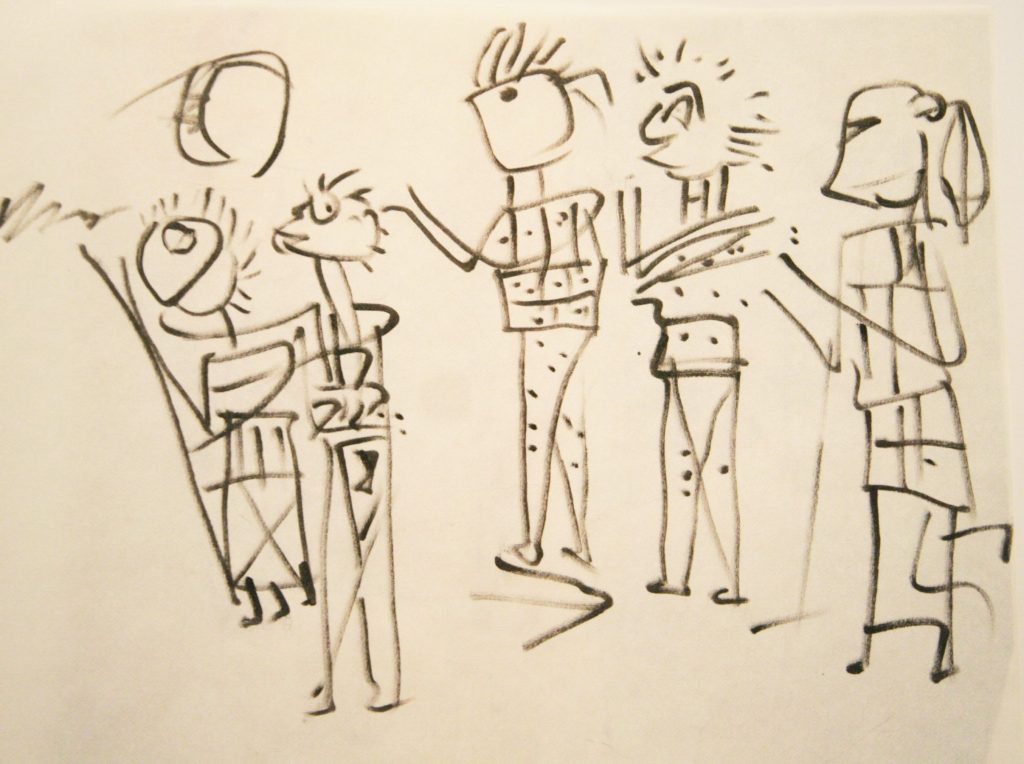
The image on Pithos B gives us a second kind of problem. The group of figures has raised arms, a posture that could represent worship. Because this jar stood in or near the courtyard, Hogue relates its imagery to people moving through the building and its spaces for ritual. That proposal asks how a picture might work in a room rather than reading it in isolation. We can still distinguish what the eyes can see, where the excavators found the pieces, and what an interpretation adds. Keeping those observations in view gives the arguments about the imagery something to answer to. Hogue’s reading of Pithos B and the courtyard
The ink shows us what people could write in a blessing. Scripture shows us whom Israel was called to worship.
Reading the inscriptions alongside Kings
When the northern kingdom broke away under Jeroboam, 1 Kings 12 portrays him making worship a matter of political survival. He feared that people who went to Jerusalem to sacrifice would return their loyalty to the house of David. He established worship centers at Bethel and Dan, set up calves, appointed priests, and instituted a festival. Centuries later, 2 Kings 23 describes Josiah removing items associated with Baal, Asherah, and the host of heaven from the Lord’s temple in Jerusalem. Israel’s temptation to attach other objects and loyalties to the worship of God is as visible in the biblical story as almost any of its battles. 1 Kings 12:25–33 and 2 Kings 23:4–7
The jars give us a local witness from within that history. They let us hear a blessing using the Lord’s name with language a worshiper might have understood as invoking a goddess or as invoking a related object. Neither requires us to imagine that everyone at the site, or everyone across Israel and Judah, shared one view. Christians trust the Bible’s account of the Lord’s exclusive claim and of Israel’s actual history. What we find here fits a world in which a person could know the name of the Lord and still use language or practices whose place in Israel’s worship the Scriptures challenged.
The wording on Pithos B allows a comparison that comes closer to ordinary life. The writer greets his recipient, asks about his well-being, and wishes that he may be blessed and guarded. Readers hear a family resemblance to the priestly blessing in Numbers 6, where the Lord is asked to bless and keep Israel. The resemblance lies partly in the verbs, and the surrounding words give each blessing its own direction. Numbers closes with the Lord placing his name on Israel and blessing them. The Ketef Hinnom silver amulets preserve an ancient Hebrew instance of wording close to that priestly form. Read together, the three texts show the value of looking at each blessing in full. Comparison of the blessing formulas · Numbers 6:22–27
Three details to check when you look at a jar
- Start with the inscription number. Pithos A’s blessing 3.1 mentions Samaria. Pithos B’s blessing 3.6 mentions Teman.
- Identify the medium and placement. The first blessing and the figures occur on the same painted surface, and scholars still debate how closely they are connected.
- Compare a translation that uses his asherah with one that uses Asherata. Each translator has made a decision about the underlying letters.
A weathered jar can preserve a greeting between people whose lives otherwise escape us. At Kuntillet ‘Ajrud, it preserves words of concern for a recipient’s welfare, the name of the Lord, and an expression that takes work to understand. The careful study of clay, paint, and architecture helps us see how worship and daily life met in a particular place. The books of Kings tell us what was at stake when the same people who sought divine blessing borrowed practices from the religious world around them. Their struggle over whom to trust and how to honor him remains recognizable today.
Sources and further reading
- Ze’ev Meshel, Kuntillet ‘Ajrud (Ḥorvat Teman) — Final excavation report, 2012, with the site plans and full artifact catalog.
- Shmuel Aḥituv, Esther Eshel, and Ze’ev Meshel, The Inscriptions — Primary edition, in the final report, pp. 73–142. See inscriptions 3.1 and 3.6.
- Ze’ev Meshel, Israel Carmi, and Dror Segal, Radiocarbon dating of Kuntillet ‘Ajrud — Published laboratory dates and archaeological interpretation.
- Jeremy Smoak and William Schniedewind, Religion at Kuntillet ‘Ajrud — Editions and analysis of the blessings, scribal education, and the comparison to Numbers 6.
- Timothy Hogue, Texts, Architecture, and Ritual in the Iron II Levant — Spatial and ritual interpretation, alternative reading Asherata, and original site-plan illustration.
- Ryan Thomas, The Identity of the Standing Figures on Pithos A — Author’s copy of the 2016 peer-reviewed examination of competing readings of the figures and text.
- Biblical Archaeology Society Library, Inscription and drawings from Kuntillet Ajrud — View the original Pithos A fragment in a photograph credited to Zev Radovan / Alamy.
- Deuteronomy 6, 1 Kings 12, and 2 Kings 23 — Scripture on Israel’s covenant loyalty, Jeroboam’s worship centers, and the removal of Asherah from the temple.





