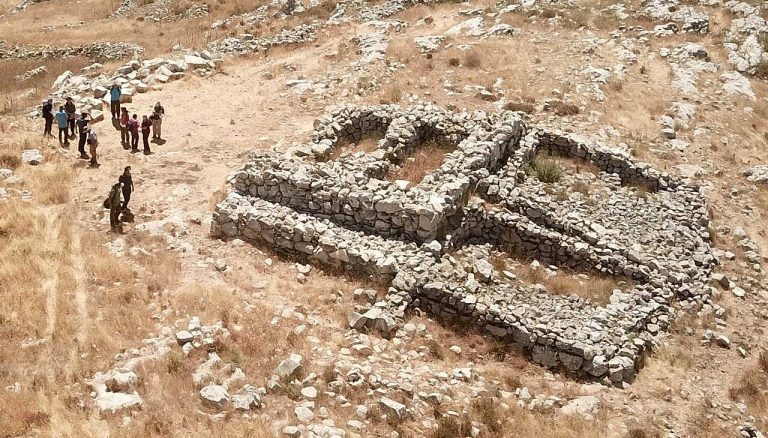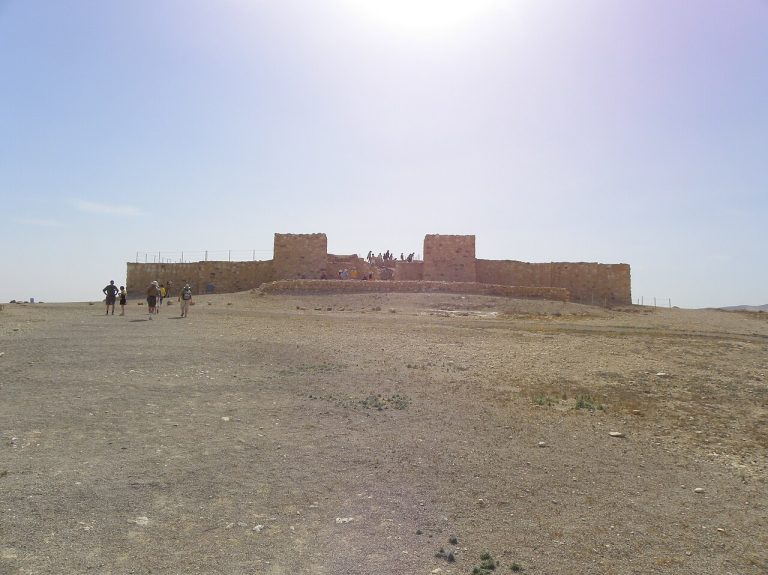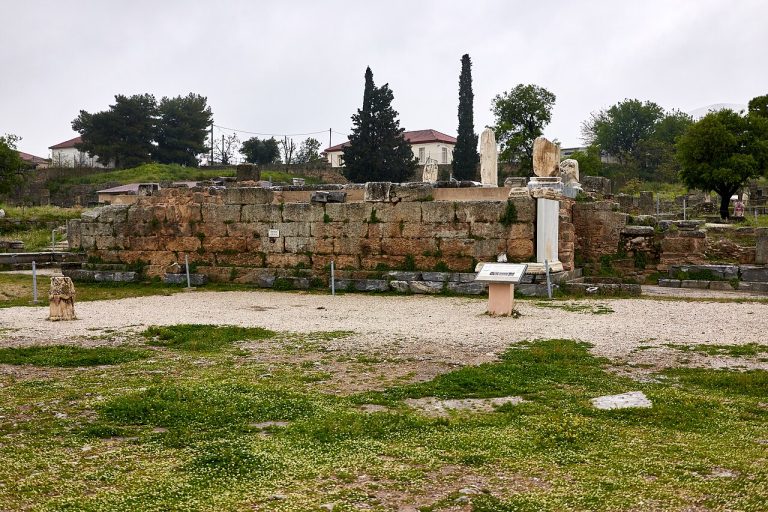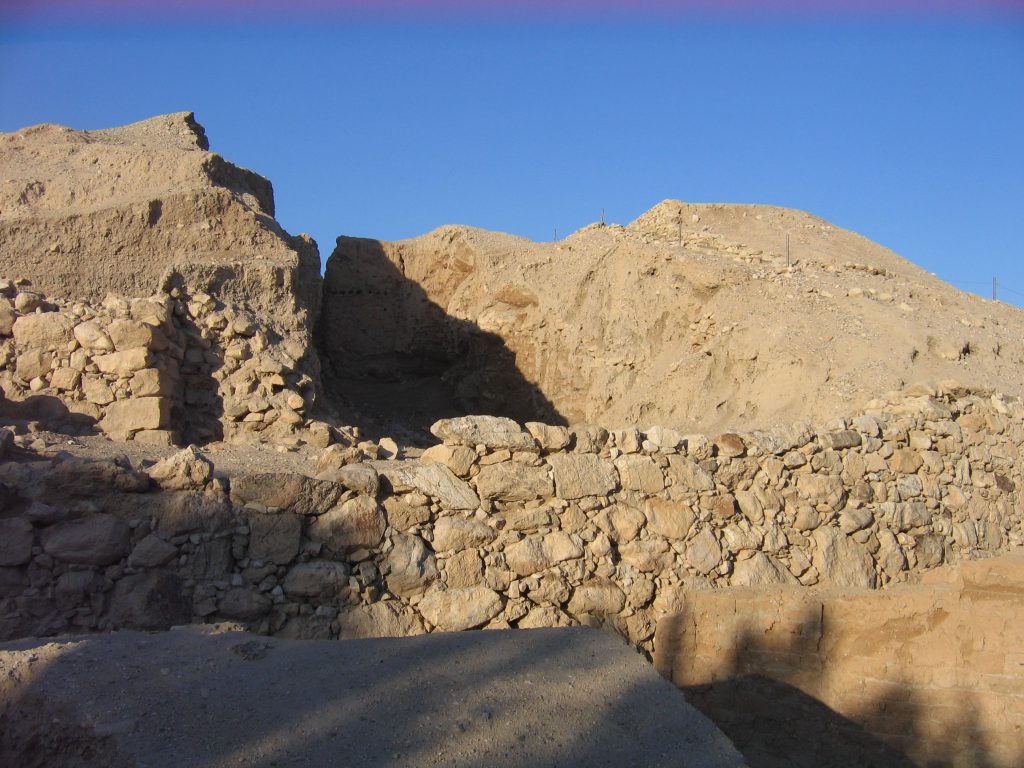
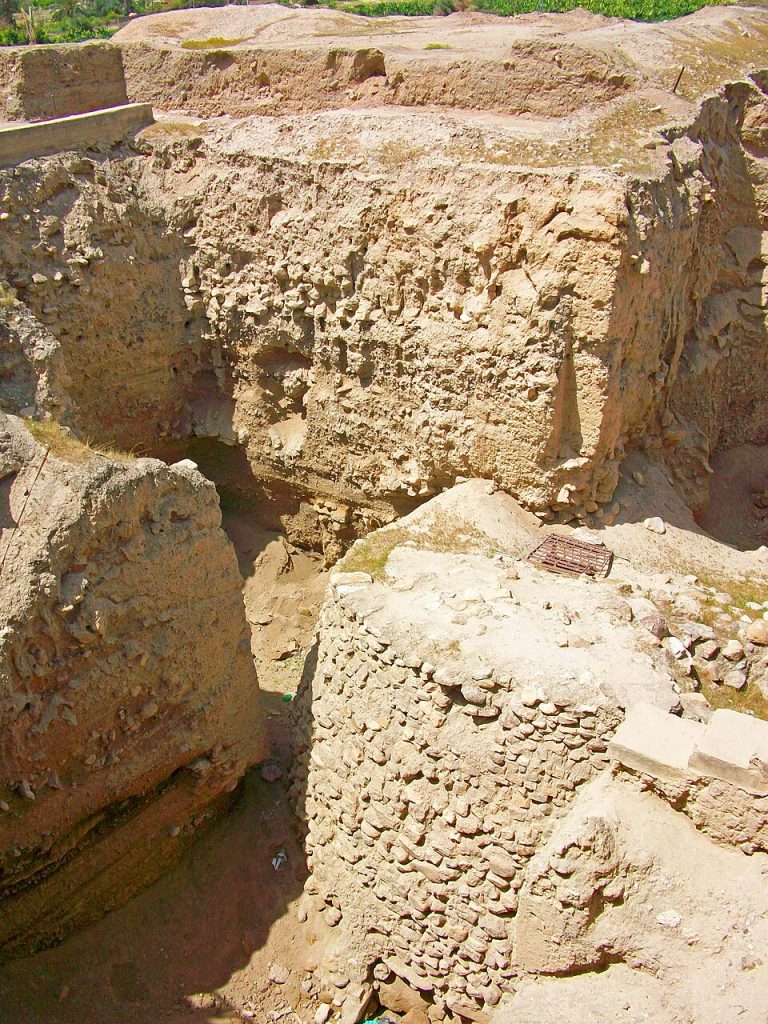
An old tower can make a powerful first impression at Jericho. In a photograph, it looks like the sort of place readers expect to see beside the story of a fallen city wall. The famous round tower at Tell es-Sultan belongs to the Neolithic, thousands of years before the Bronze Age settlements that enter the discussion about Joshua. The same mound also preserves later stone foundations, mudbricks, and evidence of more than one fire. The first question a photograph of Jericho should raise is which part of the mound and which phase of settlement it shows. UNESCO’s description of the site’s Neolithic and Bronze Age remains.
As Christians we receive the Bible’s account of Joshua as true and accurate. It gives us a city, a people approaching it, and a household spared after Rahab received their messengers. Archaeology gives us a different task, to identify and date the specific remains left by past activity at Tell es-Sultan. These are related questions, and the connection requires close attention to the layers. The archaeology of Jericho is fascinating partly because a photograph of stonework, a pot excavated in ash, and a cereal grain burned in a house can each open a different part of its history.
What you’ll learn
- Which remains at Jericho belong to different periods, and why the round tower is much older than the Bronze Age.
- How archaeologists have interpreted the burning and collapse at the end of a fortified phase.
- What the competing dates mean for attempts to connect a specific destruction with Joshua 6.
A town beside a spring
The excavation mound at Tell es-Sultan lies near the spring of ‘Ain es-Sultan on the edge of the Jordan Valley. A dependable source of water helps explain why communities returned to this area across so much time. Ancient builders leveled surfaces, raised new walls, and worked around earlier structures. In some areas the debris from one settlement became part of the ground on which another could build. Excavations cut through that accumulation. The archaeological setting makes the history hard to see at a glance and provides the very relationships that enable researchers to put old and new walls in order. World Heritage description of Tell es-Sultan and its oasis.
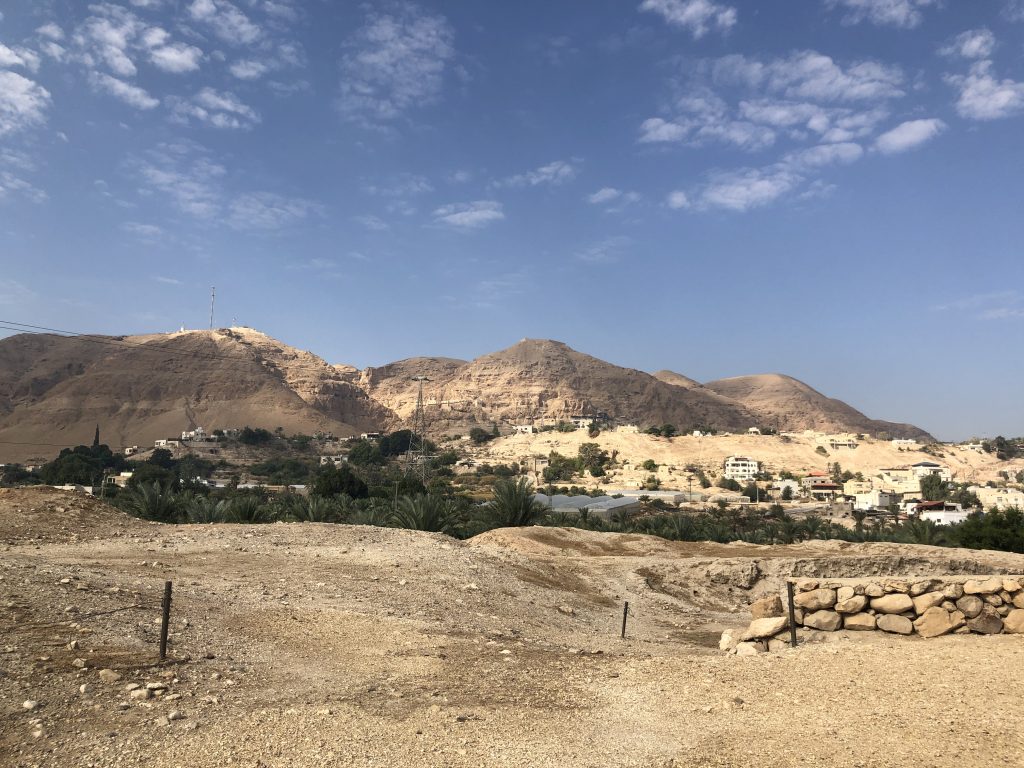
The most prominent opening on a visit may show remains from a phase much earlier than the argument that brought you there. The round tower with an internal staircase belongs to the Neolithic. Early Bronze Age residents built other substantial fortifications, and Middle Bronze Age Jericho had successive systems of walls and earthworks. All can be described as ancient defenses without attributing them to the same people. It is worth keeping the word wall narrow enough to be useful. Think of a particular line of masonry that belonged to a particular building project, at a point in the mound’s life that researchers need to determine. Interim excavation report, period table and discussion of the walls.
How excavators separated successive cities
Early major excavations took place from 1907 under Ernst Sellin and Carl Watzinger. John Garstang led work from 1930 to 1936. Kathleen Kenyon’s excavations in the 1950s reopened questions about which walls belonged together and how the pottery and destruction deposits should be assigned. The Italian-Palestinian expedition has continued the process with further excavation and conservation. It studies areas already investigated and documents features previous researchers could only see in part. Under different teams the names for layers can change. A helpful publication tells you how its own period scheme relates to the rooms, trenches, and deposits that earlier reports labeled. Sapienza expedition history of excavations · Council for British Research in the Levant, Kenyon’s excavations.
Consider a common difficulty in reading a photograph of a fortification. The visible wall can include dark rough stones or pale dressed blocks toward the bottom, while above it other materials survived as fallen fragments. Stone foundations can support walls built of sun-dried mudbrick. Once the upper structure falls, a pile of brick and soil may cover the route of the wall. Archaeologists need to examine the cut through that pile and note the order of what fell or was built against it. An exposed stone line may tell us where a wall stood, while the deposit against it preserves evidence of what happened after construction.
The modern team uses one part of the southern excavation to show how that distinction works. The report describes a street along an earlier Middle Bronze fortification, with a destruction deposit above the street. Work associated with a later wall cut into that deposit. That relationship establishes a sequence of pavement, damage, and new building without relying on the appearance of an isolated stone. Separate excavated floors and collapsed material in the same part of the mound can record separate episodes. Once records put them into order, investigators can ask which one should be compared with the destruction at the end of the final fortified Middle Bronze city. Nigro’s interim report on Areas A and E, especially the Cyclopean Wall and its foundation cut.
Jericho has given archaeologists more than one wall and more than one destruction. The relationship between them is where the history begins.
The grain behind one date
Garstang associated his final destroyed Bronze Age city, often called City IV, with Joshua and favored a date around 1400 BC. Kenyon put the major destruction she excavated at the end of the Middle Bronze Age, conventionally around 1550 BC in her chronology. The date changed because excavators read the stratigraphy and pottery differently. A jar has historical value as a type of vessel. A jar with known contents, on the floor of a dated room and covered by destruction material, has a particular relationship to an event. Recovering those relationships is how archaeologists move from a group of recognizable objects to a chronology of the city. Titus Kennedy’s history of the competing interpretations and the collected evidence.
Kenyon’s samples later supplied an independent test. Hendrik Bruins and Johannes van der Plicht published radiocarbon measurements on short-lived charred cereal grains and longer-lived wood charcoal. The cereal grains, likely wheat or barley, come from a growing season. The charcoal can represent wood that grew many years before it burned. The researchers found that the wood dates averaged older in radiocarbon years than the grain dates. Their calendar conversion involves intervals rather than a date on a calendar page. The report places the cereal evidence in the general period of the end of Middle Bronze Jericho, substantially earlier than 1400 BC. Bruins and van der Plicht, sample descriptions, results and conclusions.
A newer field report from the Italian-Palestinian expedition places the final Middle Bronze destruction in its excavated House A341 in the third quarter of the sixteenth century BC, about 1550–1525 BC. Its authors also report Late Bronze material elsewhere in the site, including relatively limited remains over the later Middle Bronze wall. Two questions can be asked without combining them. When did the city of a particular fortified phase burn? What settlement and construction followed? Evidence that people used the mound in a later period is important on its own and needs further work before it can date a particular collapse. 2019–2023 fieldwork report, sections 4–6.
A date such as 1550 BC can do different jobs in different parts of a publication. A chart may use it as a rounded boundary between archaeological periods. A laboratory report may give a range that reaches to one side of that boundary or crosses it. The label Middle Bronze describes an archaeological sequence built from pottery, buildings, and other comparisons. The year assigned to its end depends on how those comparisons are calibrated for the region and how the deposits at a particular site are dated. At Jericho, the overlap between independently dated grains and the order of excavated features is more informative than the appearance of the same rounded number in two tables.
Why assigning the destruction remains debated
Bryant Wood and more recently Titus Kennedy have argued that pottery and other finds support bringing the destruction of City IV down toward the end of Late Bronze I. Their arguments examine, among other material, ceramic forms and scarabs of the Egyptian Eighteenth Dynasty. The position of a find in the excavation matters to the result. A scarab from a tomb can date an aspect of that burial and illuminate continuing activity nearby. To date collapsed material in a building, an object or sample must be tied to the phase in which it was left. This is one reason researchers can agree on the identity of an object and assign different weight to it when discussing the end of a city. Kennedy’s case for redating and its discussion of Wood.
The date of the biblical events and the date of an excavated burn layer also have to enter the comparison separately. Archaeologists can test charcoal or grain and estimate the time a surface was used. A text can speak of a city falling and tell us what the people involved did. To match one recorded destruction to one event, both sides of the comparison must be placed reliably in time, and competing explanations have to be considered. At Tell es-Sultan the evidence for several distinct phases is excellent. For using the radiocarbon evidence with a particular archaeological layer, see also How Archaeologists Date a Site.
Follow Rahab through the biblical story
Joshua 2 begins before the Israelites enter Jericho. Rahab receives the two messengers and speaks to them about what she and others have heard. The city has gates, and her house is described in relation to its wall. Those details convey the setting of a household inside a fortified town. Joshua 6 tells what happens to the city and how the people Joshua sent go to bring out Rahab and her household as promised. The narrative takes the fate of Jericho seriously and keeps its attention on this family across the two chapters. Joshua 2 and 6.
Hebrews 11 remembers both the fall of Jericho and Rahab’s faith. Its attention to Rahab gives us a reason to return to her speech and to the decisions she makes when she helps the messengers. James 2 also remembers her through her actions. The archaeology can put the reader within sight of excavated walls and show how a town at this spring built, burned, and changed. Then Scripture introduces a particular household along those walls and asks us to consider how its members responded to what they had heard. That is why a careful reader of Jericho keeps the question of archaeological identification open while reading the biblical account all the way through. Hebrews 11:30–31 and James 2:25.
Sources and further reading
- Lorenzo Nigro, Interim report on excavations at Tell es-Sultan (2019–2023) — Primary field report, especially sections 4–6 for excavation, construction sequences and calibrated samples associated with final Middle Bronze destruction.
- Sapienza Expedition to Tell es-Sultan, excavation history — Overview of the major excavation programs and of the current joint Italian-Palestinian work.
- UNESCO, Ancient Jericho/Tell es-Sultan — Site setting and chronological extent, including separate Neolithic and Bronze Age remains.
- Hendrik J. Bruins and Johannes van der Plicht, radiocarbon results from Jericho — Primary study in Radiocarbon 37 (1995), pp. 213–220, on dating the short-lived grains and multiyear charcoal.
- Titus Kennedy, The Bronze Age Destruction of Jericho, Archaeology, and the Book of Joshua — Research article reexamining arguments for a later dating of the final destroyed Bronze Age city.
- Joshua 2 and 6 — The visit of the messengers to Rahab, the wall and gates, and the account of Jericho’s fall.