At Gezer you can walk beside a line of foundations and see where three chambers opened off each side of a central passage. It is one of a group of ancient gates often called Solomonic. The plan is easy to recognize, and the name points to 1 Kings 9, which lists Gezer among places where Solomon built. A new chronological study reached its estimate through a different part of the site. Some of the most useful evidence came from seeds found in a building next to the gate. Their place in the excavated sequence lets researchers bring a calendar estimate to the city’s rebuilding. Webster and colleagues, radiocarbon study and figure 7.
We believe Scripture is true and accurate. Gezer is a good place to learn how that conviction can lead us into the particulars of the material evidence. First Kings gives Gezer a place in Solomon’s building activity. The excavation gives us a gate, a fortification, and a neighboring building that researchers can connect with a major change in the city. Linking the biblical notice to this specific group of remains involves a properly historical question. We can see which dates are compatible and ask what evidence might narrow the attribution further.
What you’ll learn
- Why Gezer’s gate matters as one part of a coordinated Iron Age building project.
- How the 2023 study used nearby seeds, later deposits, and stratigraphic order to constrain the project’s date.
- How to compare the result with 1 Kings and with the gate at Megiddo.
Find the gate within the city
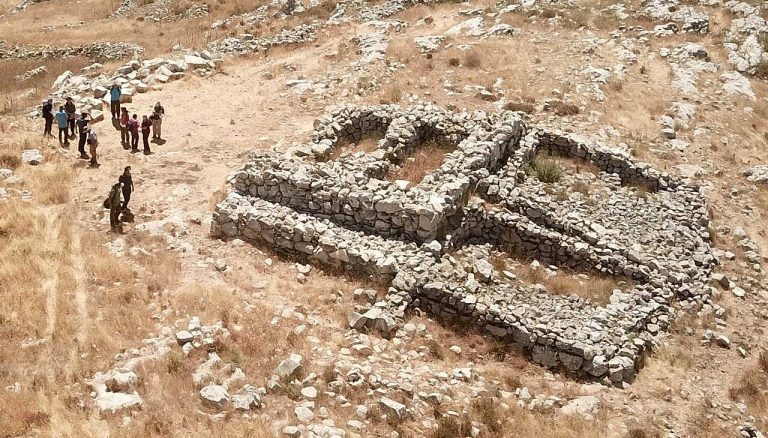
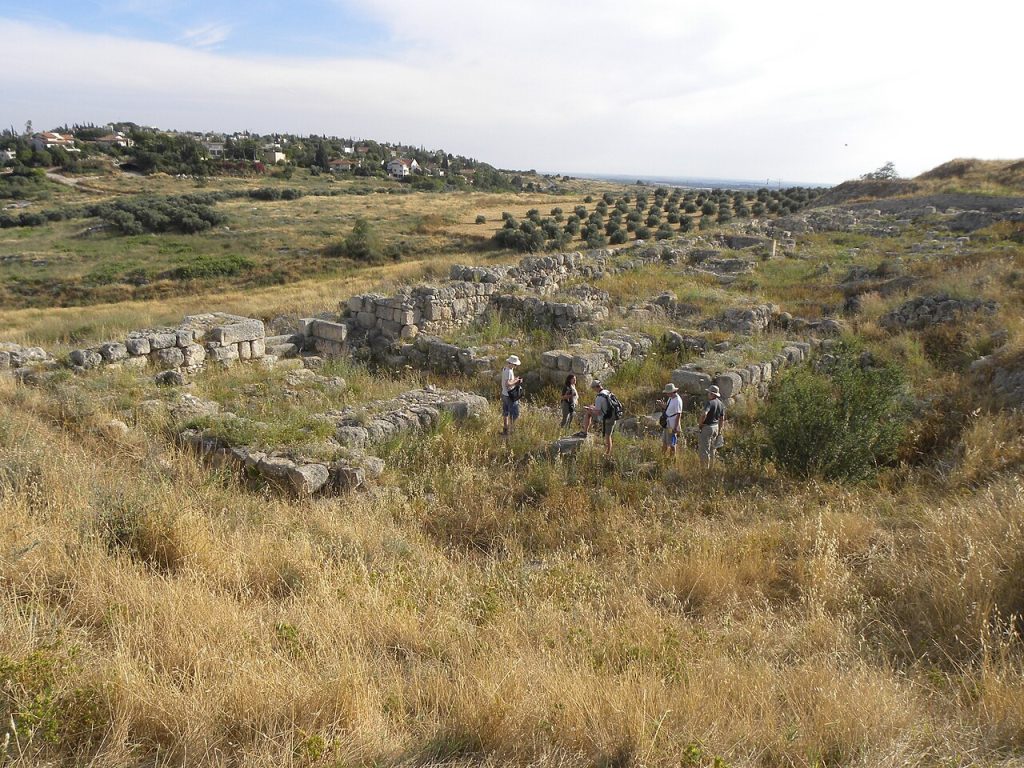
Tel Gezer lies inland from the coastal plain, on the western approaches to the hills that lead toward Jerusalem. A city in this position could watch routes moving between distinct parts of the country. The excavated site has several gates, walls, and buildings from different periods. The six-chambered gate discussed here belongs to the southern excavated sector and is associated by its investigators with new Iron Age fortifications. The gate’s side spaces make its plan recognizable. The low masonry also helps show that the exposed remains are the bottom part of a building whose full height and roof require reconstruction. Study introduction and description of the fortified phase.
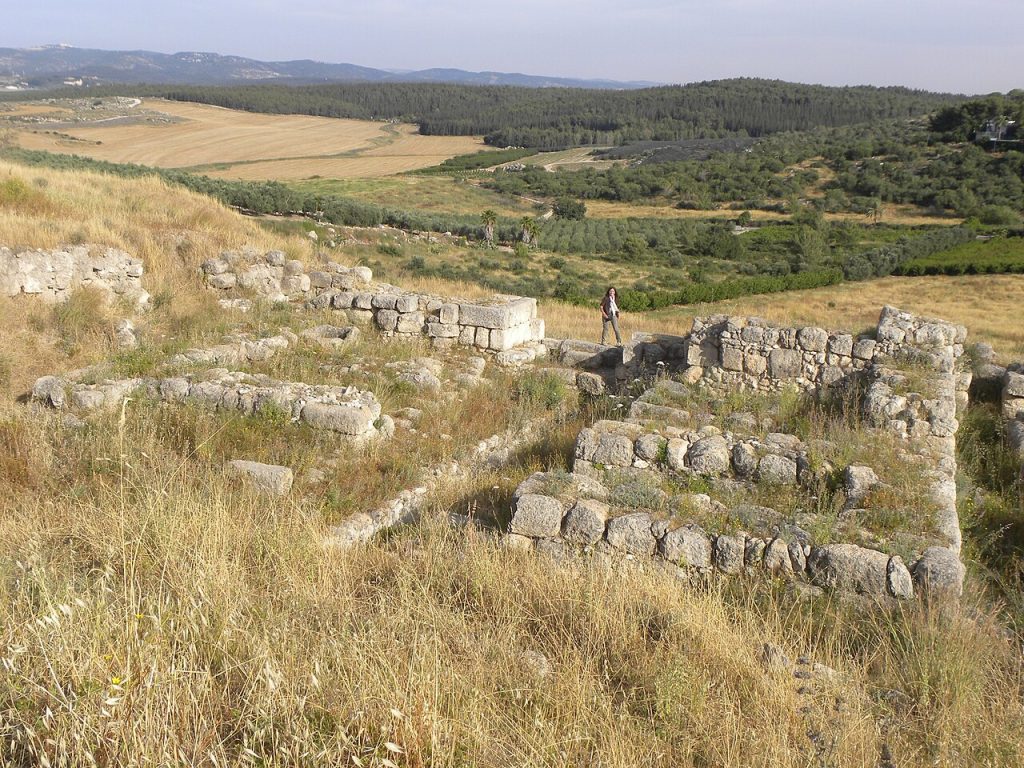
R. A. Stewart Macalister conducted major excavations at Gezer between 1902 and 1909. He documented the gate and nearby defensive walls and assigned them a much later date than archaeologists give them today. Yigael Yadin saw the resemblance of the Gezer plan to the gates at Megiddo and Hazor and argued for an Iron Age date and a connection with Solomon. Later excavations by Hebrew Union College and the Tandy expedition clarified the stratigraphy further. Macalister’s plans could be reread because he recorded what he saw. New explanations became possible when investigators compared the old documentation with new excavation at the site. Macalister’s published excavations · Webster and colleagues on Gezer’s research history.
The Tandy expedition consolidated evidence for a large change in the use of this part of Gezer in a period it calls Stratum 8. A stratum groups remains belonging to a phase in the site’s history. In Stratum 8, a massive gate was part of a project involving a casemate wall, which uses two parallel lines of masonry with spaces between them, and a stone-covered slope below the defenses. A building with many rooms around a courtyard stood nearby. The report describes a narrow alley between the gate and that building. The closeness of the features matters because dating one part of the construction can help constrain other features tied to it. Stratum 8 context and figure 7.
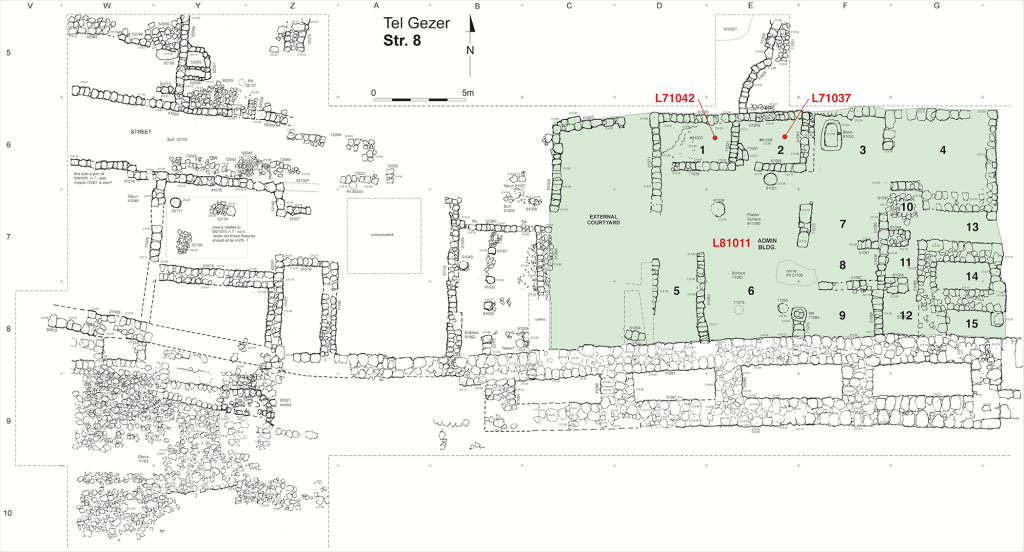
Notice on the plan how the administrative building is divided around the courtyard, with openings leading to a number of different rooms. Once an excavator identifies a floor, finds lying in one room and finds fallen into another can be recorded separately. The report describes the building as largely empty when it was destroyed. That affects what can be learned from its contents. Investigators can still follow its walls back toward the gate and see how the structures relate to the city’s fortification. The age estimate depends on recovering a few well-placed samples from a group of remains whose connections were carefully recorded. Gezer Stratum 8 architecture and destruction deposits.
What the seeds can date
The radiocarbon study used short-lived organic material. In Stratum 8, some charred seeds came from floors within the courtyard building, with additional material above a courtyard surface. There were more samples from buildings associated with a later phase, including seeds recovered in destruction debris or burned in an oven. A seed grew over the course of a season. The radiocarbon measurement is related to that growth. The archaeologist uses the sample’s setting to infer when it was deposited and how that event is related to the lifetime of a building. The scientists were able to use several such relationships rather than expecting a direct date from the stone gate. Sample selection, excavation contexts, and dating methodology.
The team combined measured dates with the known order of the layers. That method lets a series of dated samples inform when an archaeological phase began and ended. Some samples came from contexts that allowed a close relationship to a particular event. Others may have been residual, meaning that a seed could have been left behind and settled onto a surface later than the season in which it grew. The researchers ran two models to evaluate the effect of two less secure samples. One model downweighted possible outliers, and their preferred model excluded the two samples. Under either treatment, the layering and the later occupation helped constrain when the gate’s phase belonged. Figure 10 and discussion of models A and B.
The key to dating the gate was knowing how the building next door and the layers above it fit into the same city’s history.
In the preferred model, the authors give a narrower interval of 998–957 BC for the beginning of Stratum 8, with a wider interval of 1023–942 BC. Its ending has a narrower estimate of 969–940 BC. These are probability intervals for boundaries of the phase. Taken together, they support a date in the early part of the tenth century BC for the transformation, while leaving room for uncertainty about exactly when the first work started. The overlying Stratum 7 is especially important to the argument. Its later evidence constrains how late the preceding project could have been, even though a few more samples directly tied to Stratum 8 would make the estimate more secure. Results, table 3 and discussion of the beginning and end of Stratum 8.
What the new chronology does for the biblical question
In 1 Kings 9:15–17, Gezer enters a list of sites where Solomon built. A brief note says that an unnamed pharaoh had captured and burned Gezer and given it to his daughter when she married Solomon. The text then speaks about Solomon building there. It does not give a plan or a list of features anyone could identify on the ground. An excavator can establish that a large fortification and gateway belonged to a particular period, and that evidence supplies a direct point of comparison. The new chronology gives the tenth-century proposal stronger support at Gezer than a resemblance among gate plans could provide on its own. 1 Kings 9:15–17.
The builders’ identity remains a further question. The dating window reaches across years historians might associate with more than one ruler. The samples and their contexts constrain the construction phase, but the seeds carry no royal names. A contemporary dedication would solve a different part of the question. A similar distinction applies to the end of the phase. The study compares Gezer’s destruction horizons with chronological estimates for Sheshonq I, often identified with biblical Shishak. It finds possibilities and some tension among dates. That is a comparison with a later ruler than the unnamed Egyptian king in the opening of the Gezer passage. Discussion of 1 Kings 9, the destruction of Stratum 8, and the Sheshonq I chronology.
Gezer’s destruction layers show why identifying a campaign is its own historical exercise. The published sequence records more than one substantial destruction over a relatively short span. The chronological model can compare the two layers and produce different estimated ranges for them. An external text about a campaign adds a proposed cause only if its date, geography, and relationship to the city are also persuasive. For Sheshonq, the authors compare competing historical and radiocarbon estimates for his reign and the dates of disturbances at Gezer. Second Chronicles 12 and 1 Kings 14 describe Shishak in Rehoboam’s reign. That material provides a worthwhile comparison with Gezer’s later difficulties, while the origins of its new defenses belong to the beginning of Stratum 8. Published comparison of the two destructions and Sheshonq I.
Compare it with Megiddo and Hazor
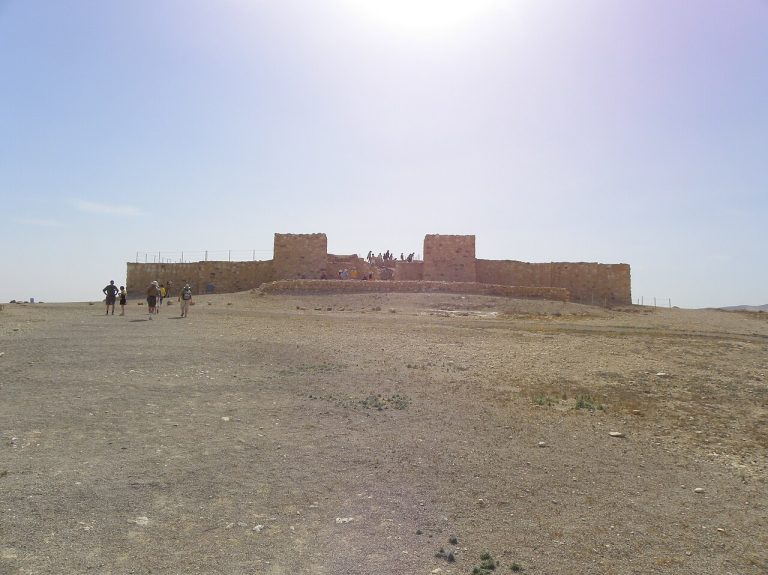
First Kings supplies a reason to read about Gezer, Hazor, and Megiddo together. To use their gates as archaeological comparisons, start by seeing what they have in common. A central passage and spaces on either side are striking when you look down on the plans. Then turn to what distinguishes them. At Megiddo, archaeologists examine a gate built above an earlier one and reused alongside later walls. At Gezer the chronological argument involves the adjacent courtyard building and a sequence of datable deposits. The methods can produce different dates at the two sites while leaving the similarity of plan perfectly intelligible.
Recall the beginnings and endings considered here. Some part of the city was being rebuilt when crews established a gate and a new line of defenses. That is a construction history. People used the arrangement, and part of the adjacent buildings was destroyed. That is a separate set of events. A person looking at the Gezer Calendar asks when someone made and used a small inscribed object from the same site. The two discoveries share a place name. Each needs its own link from the surviving object or building to a period of activity.
As a final check, read the words about building Gezer and then look at the excavation plan. The layout lets you follow the shape of a new defense and the open spaces left between substantial buildings. Dates clarify when those structures belong in the life of the city. Scripture explains why Gezer enters the account of Solomon. Readers can value the correspondence while continuing to ask how closely a known royal project can be matched to the traces preserved in one part of the mound. That question is worth taking to the next excavated city, where a familiar gateway may have its own sequence of floors, walls, and repairs.
Sources and further reading
- Lyndelle C. Webster and colleagues, The chronology of Gezer from the end of the late bronze age to iron age II — PLOS ONE (2023). Primary report with the strata, radiocarbon contexts, models, date intervals and comparison with written history.
- R. A. Stewart Macalister, The Excavation of Gezer — Primary early report, available through the University of Pennsylvania Online Books Page. Reports the 1902–1905 and 1907–1909 campaigns.
- Israel Antiquities Authority, Tel Gezer excavation report — An additional field report for the site and useful research context.
- 1 Kings 9:15–17 — The notice of Solomon’s construction and the earlier Egyptian attack on Gezer.