The Samaritan woman in John 4 speaks to Jesus about a mountain that needs no further introduction. Her ancestors worshipped there, she says. The Jews say Jerusalem is the place to worship. Behind her question stands Mount Gerizim, which rises beside the valley of modern Nablus in the West Bank. Excavations near its summit have exposed the remains of a substantial sacred precinct and buildings around it. Written dedications make it possible to hear something of the worshippers who came there, centuries before John gives us the words of a woman who appealed to what her ancestors had done. John 4:19–24 · Yitzhak Magen’s account of the Mount Gerizim excavations.
We believe the Bible is true and accurate. The discoveries on Gerizim help us recognize the weight of the woman’s question. A community had given enormous care to the place she names. It built there, made offerings, and remembered the site as holy after its sanctuary had been destroyed. Archaeology can help us distinguish what those communities built and when. John’s narrative shows why the location matters to her and where Jesus takes the conversation when she asks him about worship.
What you’ll learn
- What excavators found on Gerizim and why the sanctuary is understood as a place of worship of the God of Israel.
- How the dates of the early precinct, its expansion, and its destruction are reconstructed.
- How the mountain’s history gives substance to the woman’s question in John 4.
The mountains on either side of the valley
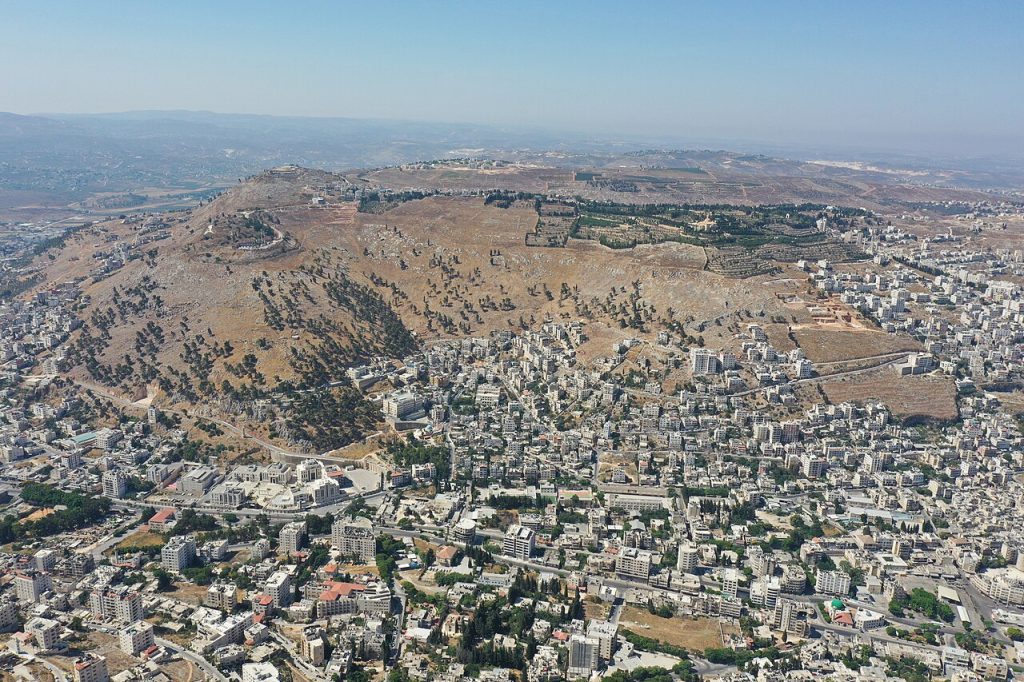
Gerizim stands south of the valley. Mount Ebal rises to the north. The ancient site identified with Shechem lies near the eastern part of the valley beside modern Nablus. The two slopes give a reader a way to orient a place name that appears early in Scripture. Deuteronomy 11:29 names Gerizim in connection with the blessing and Ebal in connection with the curse. Joshua 8 describes people assembled in relation to both mountains as the words of the law are read. When the woman in John says “this mountain,” she speaks of a landscape already laid out in traditions associated with Israel’s covenant. Deuteronomy 11 and Joshua 8.
The texts through which people remembered that landscape developed in different communities. The Samaritan form of the Pentateuch names Gerizim in the passage in Deuteronomy 27 about the location of the altar. This is important as evidence of how specifically the mountain mattered within Samaritan tradition. The sanctuary on the summit is a separate kind of evidence, because archaeologists can record its walls, offerings and inscriptions. John lets us hear someone bring the inherited place and the difference about worship directly into a conversation. Anne Katrine de Hemmer Gudme on Deuteronomy 27 and the Gerizim sanctuary.
Read the exposed stonework by phase
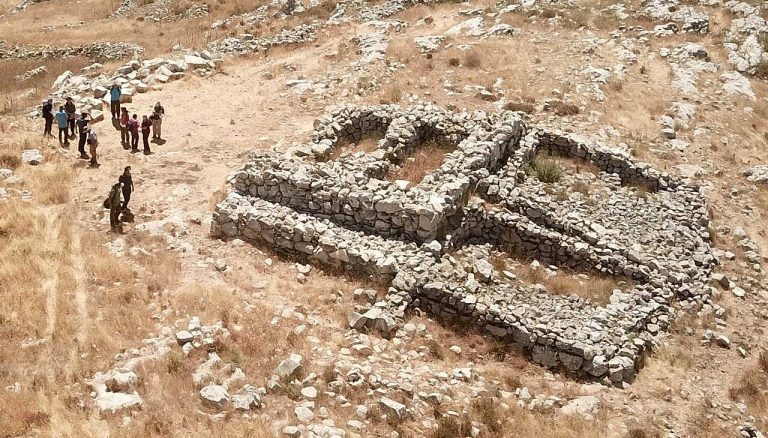
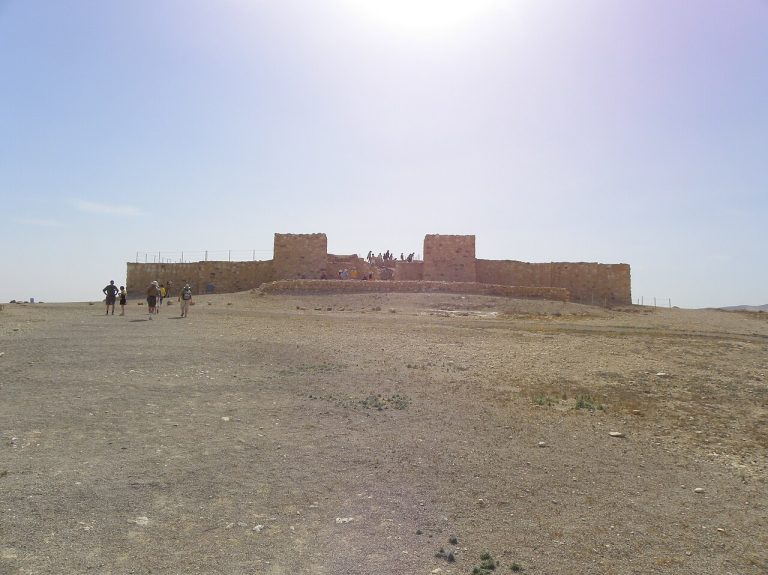
Yitzhak Magen’s excavations, which began in the early 1980s and continued for many seasons, revealed large parts of the ancient city near the sacred precinct. Magen distinguished an earlier enclosed sacred area from a more extensive later phase in the Hellenistic period. The larger settlement grew around it. His reports use masonry, pottery, coins and other finds to tell the story of how the site developed. On the summit today the excavation also reveals later construction. The Roman-period sanctuary on a neighboring summit and the late antique church on the main summit need their own places in any account of what the mountain held. Magen, sections on the Persian and Hellenistic precincts and the later buildings.
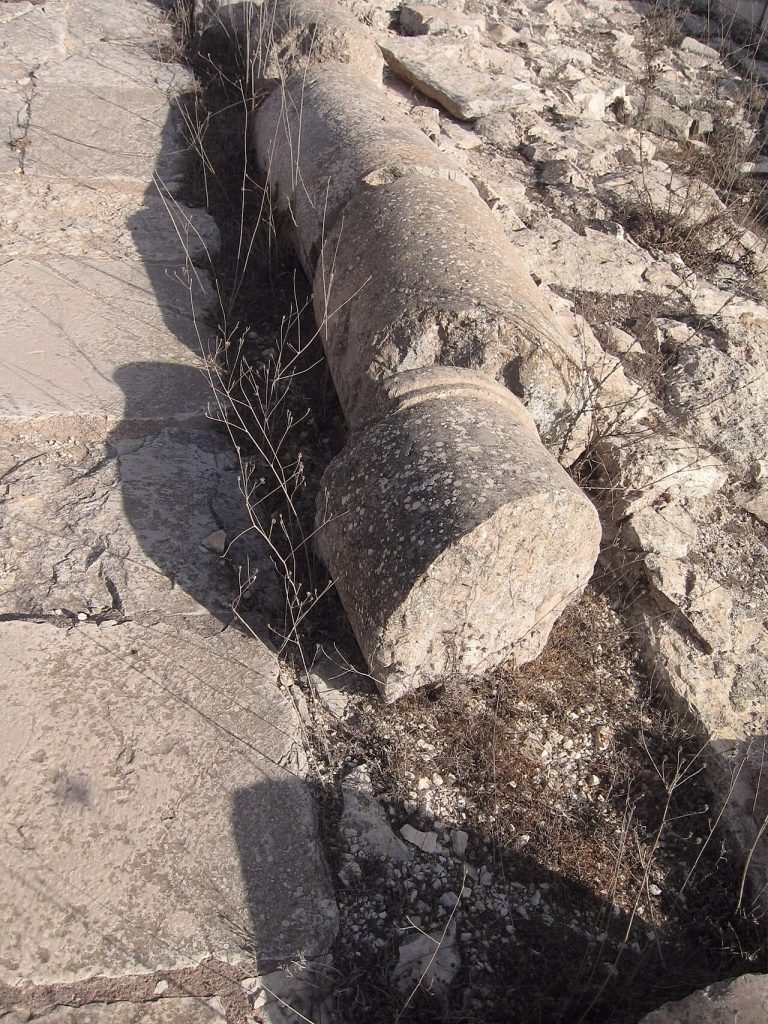
The distinction between a sacred precinct and a temple is useful here. A precinct is an area set apart for religious use, defined in part by enclosing walls and entrances. A temple can be a particular building within it. The size and layout of the precinct can be studied even when the inner building has a more fragmentary history. Gudme points out that the identification of the sanctuary and its worship does not yield a securely preserved temple plan. She assesses a proposal that the building was patterned after the Temple in Jerusalem. Her conclusion is that the excavated remains of the earlier sanctuary cannot establish that specific architectural relationship. Gudme’s study of the proposed architectural comparison with Jerusalem.
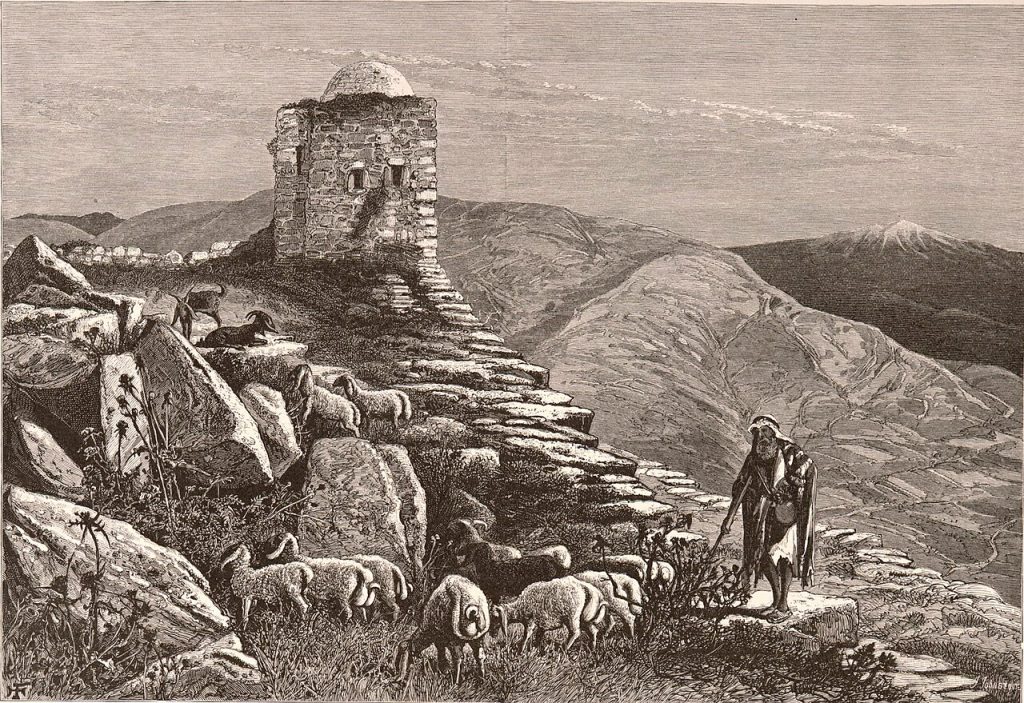
The historic illustration is helpful as an example of how long people have attached a name and a story to ruins on the summit. Its date and medium are part of the caption for a reason. It records an artist’s view from the nineteenth century, with the vegetation and exposed stones of that period. It can show what someone from that time found striking. Excavation plans and photographs answer other questions about which walls go together. Over centuries people used new building material, reused older pieces, and made different places of worship in the same area.
The excavated precinct also changes the scale at which we read the site. A traveler might remember the summit as a single destination, while the archaeology can show how a community added an entrance, extended a boundary, or built houses nearby. Those actions belong to people who visited and lived on the mountain under changing political conditions. A later sanctuary can use the same high ground without sharing the date or purpose of an earlier one. The summit is the persistent feature in the landscape. Identifying the functions of particular walls depends on where the excavation places them in the record of rebuilding.
Listen to the dedicatory inscriptions
Some of the most revealing finds are pieces of worked stone with short dedicatory texts. An inscription can record that someone gave something at a sacred site and supplied a name or a reason to remember the act. At Gerizim the language of dedications includes references to the Lord and to a sanctuary. One of the terms discussed by Gudme describes a house of sacrifice. That expression has a point of comparison in 2 Chronicles 7:12, where the Lord speaks to Solomon about the Temple. Shared vocabulary helps us recognize the kind of worship underway. It cannot by itself tell us the design of either building. Gudme’s discussion of the Gerizim inscriptions and their terminology.
The dedications help place real people beside the much larger remains of walls. A boundary shows where a precinct was set off. A short text shows someone using language to place a gift before God. The two kinds of evidence increase our appreciation of the site together. John’s Gospel gives an equally particular example of how knowledge of the place was passed along. The woman tells Jesus that her ancestors worshipped on the mountain. Her words concern the practice she has inherited, in a conversation where the place of worship is significant to both people speaking. John 4:16–24.
The walls mark a sacred place. The dedications let us hear how worshippers understood what they brought there.
What the dates can and cannot settle
Magen dated the beginning of the precinct to the Persian period, around the middle of the fifth century BC. Scholars use coins, pottery, and the positions of architectural features in the excavated sequence to consider proposals like this one. A coin within a floor deposit can help establish when the floor was laid. A coin brought in from another location speaks first about its own use and eventual burial. Investigators have to specify what belongs with the first enclosure and what could have accumulated during later repairs. The result is a history supported by many observations, with more room for dispute at some points than others. Magen on the excavation and dating of the first precinct · Published catalogue of the coins.
The earliest phase has been dated in more than one way. A study published in Semitica in 2023 argued for an earlier origin, around 650–550 BC, after reexamining the material attributed to the founding phase. Josephus, writing many centuries after the opening of the sanctuary, connects its establishment with events at the time of Alexander the Great. That puts the founding much later than Magen’s proposal. These disagreements relate to when the sanctuary began and how to connect it to a particular political history. The recovery of a substantial precinct and a growing Hellenistic settlement gives the discussion a firmer footing than the most exact founding date alone. Reassessment of the founding date in Semitica · The evidence and the account in Josephus.
In Magen’s reconstruction, the sanctuary and town were destroyed by the Hasmonean ruler John Hyrcanus around 110 BC. The excavated material and the record of coins are central to that estimate. The destruction had occurred well before the first-century conversation described in John. Sacred geography can outlast a building. The woman’s use of her ancestors’ worship is intelligible even after the major sanctuary ceased to stand. It gives us a reason to ask what remained meaningful about the mountain through all the changes in its buildings. Magen’s discussion of the destruction of the Hellenistic city and sanctuary.
Hear the whole conversation at the well
When the woman speaks about worship, she has already told Jesus that she sees he is a prophet. He has addressed matters she knows to be true about her own life. Her question turns to the disagreement she can name between Samaritans and Jews. Jesus acknowledges the historical particularity of salvation coming from the Jews and says that the hour is coming when worshippers will worship the Father in spirit and truth. Later she goes into the town and tells people about the man who knew her life. Other people hear him themselves and describe him as Savior of the world. John 4:16–42.
The woman’s return to the town is also part of the answer John gives. The conversation began with a request for a drink and moved through questions about a shared ancestor, her life, and where to worship. Now the people who come out to meet Jesus have heard about him through her. They ask him to remain with them, and John says that many more believe after hearing his words. His visit reaches a community with its own history of worship. The account invites us to read the mountain’s significance as part of the story and also follow what happens when Jesus is received in that Samaritan town. John 4:28–42.
It is worth looking at the mountain again after reading to the end. The view from across the valley gives the words “this mountain” a physical setting. The excavated precinct and dedicatory texts show that worship there had a substantial history. The late buildings add other stories of how the place was remembered and used. John keeps our attention on someone who had learned the difference between her community’s place and Jerusalem, and who wanted to know what that difference meant in the presence of Jesus. The ruins help us feel the force of her question. It is John’s account that gives us Christ’s answer.
Sources and further reading
- Yitzhak Magen, Gerizim, Mount — Excavator’s synthesis, including the city, sacred precincts, later construction, and the proposed dates of foundation and destruction.
- Yitzhak Magen, Mount Gerizim excavations III: The coins — Published catalogue and discussion of the coin evidence from the excavation.
- Anne Katrine de Hemmer Gudme, Was the Temple on Mount Gerizim Modelled after the Jerusalem Temple? — Research article on the archaeological remains, dedicatory texts, temple comparison, and Josephus’s narrative.
- When was the Sacred Precinct on Mount Gerizim Really Constructed? Why? and by Whom? — Semitica 65 (2023), pp. 141–164. A proposed earlier date for the first precinct.
- John 4:1–42 — Jesus’ conversation in Samaria, the question of the mountain and Jerusalem, and the response of others in the town.