The ancient copper workers at Timna left behind piles of what they set out to remove. Smelting separates metal from other substances in the ore, producing a waste called slag. In the southern Arabah, layers of this material accumulate beside old furnaces and working surfaces. A heap that looks like a dark patch against the red landscape can preserve evidence of repeated work over many years. At a site called Slaves’ Hill, archaeologists found slag and other remains that make it possible to ask how the camps operated, how their workers were supplied, and when copper production reached a peak. Erez Ben-Yosef’s report on the early excavations at Site 34.
We believe the Bible is true and accurate. The record of Timna helps us take the economies of the ancient southern lands seriously when we encounter Edom in Genesis and Samuel. The copper camps make visible an industry on a scale difficult to imagine from a simple list of places or kings. Studying the things workers discarded gives us a way to learn about their skill and organization. It also raises a historical question about political control, because a well-run industrial site can survive without a written label naming the people who directed it.
What you’ll learn
- What slag, furnace debris, and tools show about copper working in the Timna Valley.
- How excavators dated the Iron Age camps and used food remains to study their workforce.
- Where Edom enters the discussion and which questions remain open.
A mining valley and its smelting camps
Timna lies north of the Gulf of Aqaba, in the southern Arabah. Its mineral resources and desert setting both shaped the work. Mine openings and traces of extraction tell us about getting ore from the ground. A smelting station answers a different question about the next stage. Workers prepared material, managed fuel and air, and separated metal from the rocky part of the ore. A skillfully run camp needed both equipment and reliable supplies. The distance from fertile areas made it especially important to organize deliveries of what people and animals needed. Those demands form part of the archaeological story. Shimelmitz and Ben-Yosef on the industrial setting and the smelting camps.
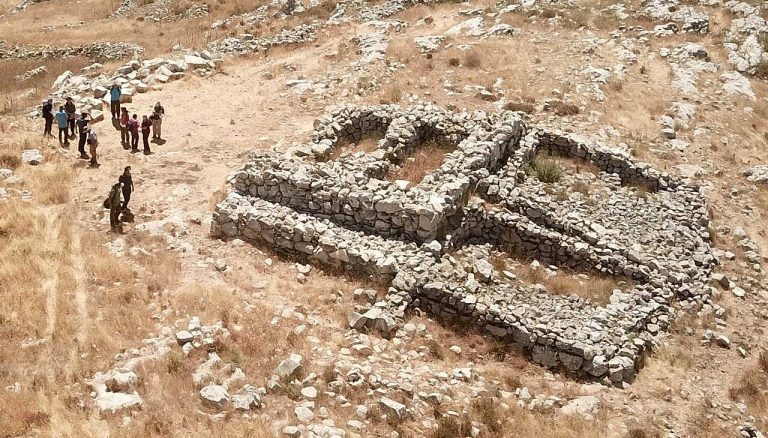
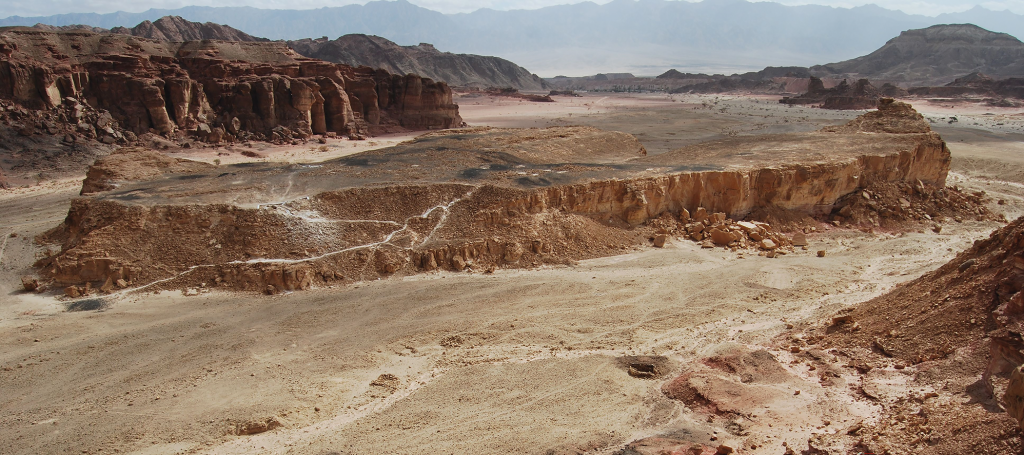
Archaeological work in the valley began on a substantial scale with the Arabah Expedition in the late 1950s and continued through later decades. The Central Timna Valley Project began renewed investigations in 2012. Its excavations at Site 34, the mesa in the cover photograph, studied slag accumulations, metallurgical installations, the gatehouse, and the perimeter of the camp. A visitor can see why the flat surface offered usable working space on the mesa. The surrounding slopes also helped give the camp a clear boundary, separating some of its activities from the work and travel around it. Site 34 excavation scope · Figure 2 and the research history.
Why slag is worth a close look
A piece of slag may contain traces of how workers controlled the smelting process. Researchers can look for changes in its composition and the amount of copper left behind. Repeatedly recovering more of the available copper would have mattered to people processing large amounts of ore. To interpret the changes, archaeologists study where a piece sat within a mound of waste and whether it can be compared with pieces from other sites or periods. The waste is useful precisely because particular batches produced it. Well-sampled sequences let researchers ask how consistently crews were working and how the process changed. Comparative elemental study of slag from the Arabah.
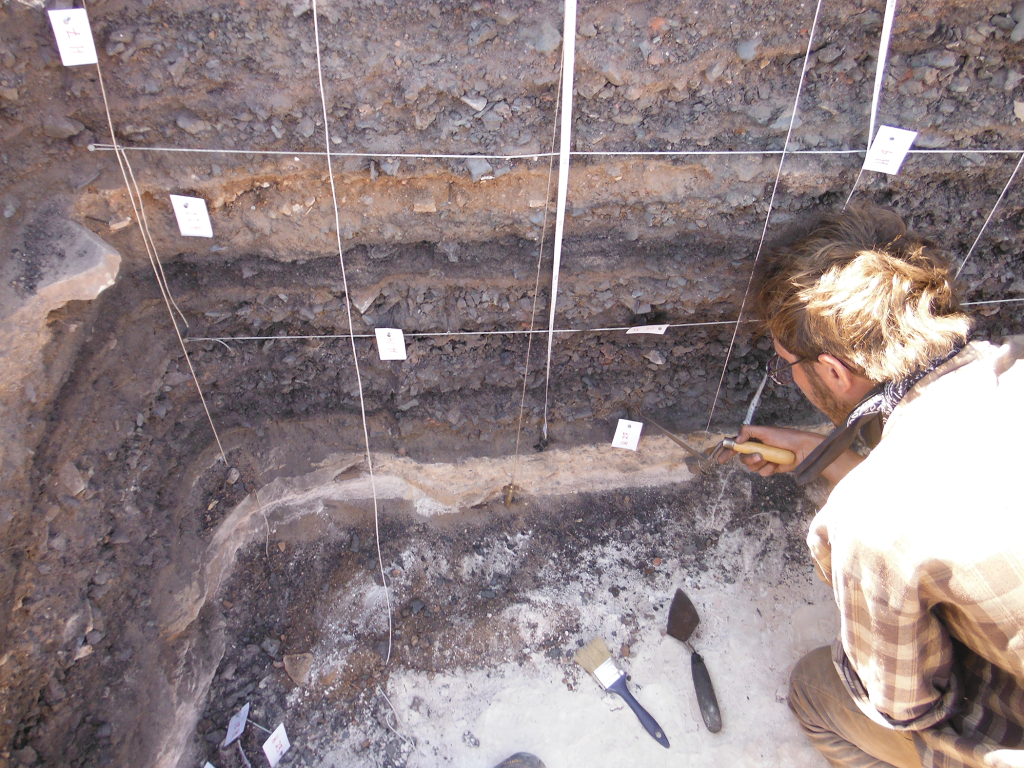
An excavation profile is a view through layers. In the photograph, look for the dark deposits arranged one above another. A pile like this accumulates as part of work, but different activities and interruptions can leave different sorts of layers. Excavators record the places where they took samples because the sequence matters to the result. At Timna, later analyses could then connect radiocarbon dates and chemical measurements to an industrial history. Taking only a striking chunk of slag from the surface would give us an example of the material. Sampling the sections lets us learn how and when the material accumulated. Sampling Slag Mound 19, figure 3.
One surprise concerns the stone tools. The discovery of metalworking can make a reader expect a camp filled with metal tools. Excavated stone pieces give a fuller picture. Ron Shimelmitz and Erez Ben-Yosef studied sizable collections of flint flakes and cores from sites including Site 34. A core is a piece from which flakes were struck. The finds indicate that knapping, the process of shaping stone by striking it, belonged to the work at the camp. A useful sharp flake could be made on site from familiar material. New metal industries could still draw on much older skills. The stone-tool study and figure 4.
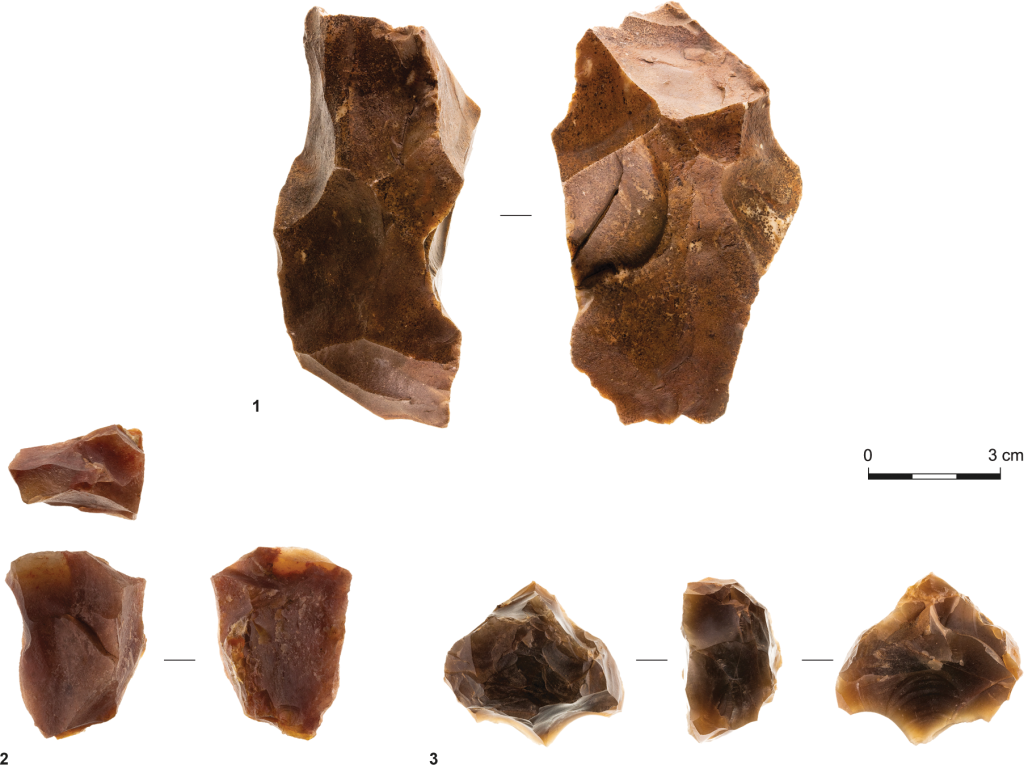
The things workers left behind can tell us how they worked, what skills they used, and how someone kept the camp supplied.
Charcoal supplies another record of the work. Microscopic examination can distinguish the structure of different sorts of wood, even in fragments that have lost their shape as recognizable branches. A separate study of Timna identified plant taxa represented by charcoal in smelting deposits and considered how fuel collection changed during the life of the industry. Those remains tell a story that a finished piece of copper would rarely preserve. The people operating the smelters had to supply a continuing fire in a dry environment. Where the fuel came from and how its sources changed are questions about the whole landscape around the camp. Primary charcoal study on fuel use in Timna.
Date the camp before naming its owners
The valley was used in more than one period. Evidence at Timna includes activity in the Late Bronze Age connected with Egypt’s New Kingdom. For the Iron Age camps, a separate set of dates came from short-lived samples associated with the working deposits. The published report on Site 34 found that its production reached a peak in the first half of the tenth century BC, broadly comparable with nearby Site 30. That date places an important phase of production. It also lets archaeologists compare the output of particular sites with other known working areas in the wider Arabah. Site 34 chronology and comparison with Site 30.
The dates broadened older expectations about when the desert industry flourished. They also help explain the popular association with Solomon’s era. A date in the time traditionally assigned to the early kings of Israel is a chronological comparison. Assigning the work to Solomon would take evidence of a royal connection at the site. The same difficulty applies to a precise claim that another named king directed it. The remains support a substantial enterprise with many jobs, and investigators consider several ways in which people who lived in the region could organize it. Ben-Yosef on the organization and political setting of production.
What the camp was feeding its workers
“Slaves’ Hill” is a modern name. Archaeologists tested one of the assumptions behind it by examining animal bones. Lidar Sapir-Hen and Erez Ben-Yosef compared the parts of butchered animals recovered from industrial areas and contexts they interpreted as domestic. The industrial contexts contained a higher share of meat cuts they considered valuable. They suggest that well-trained metallurgists were supplied with higher-quality food. It is a study that begins with what particular bones and their locations can reveal about who ate where. That evidence has to be interpreted alongside pottery, facilities, and the other needs of a desert camp. Sapir-Hen and Ben-Yosef, analysis of the animal economy.
The workers’ exact legal or social standing cannot be read directly from a meal. The stronger point is that skilled people doing difficult work appear to have had access to substantial provisions. To feed a camp meant setting aside resources, moving them to an arid location, and distributing them among people whose jobs took them to different parts of it. A furnace and a bone can thus tell two connected histories. Smelting required expertise at the installation. Sustained production also required somebody to make sure the people there could stay and work. Diet, skill, and possible social distinctions.
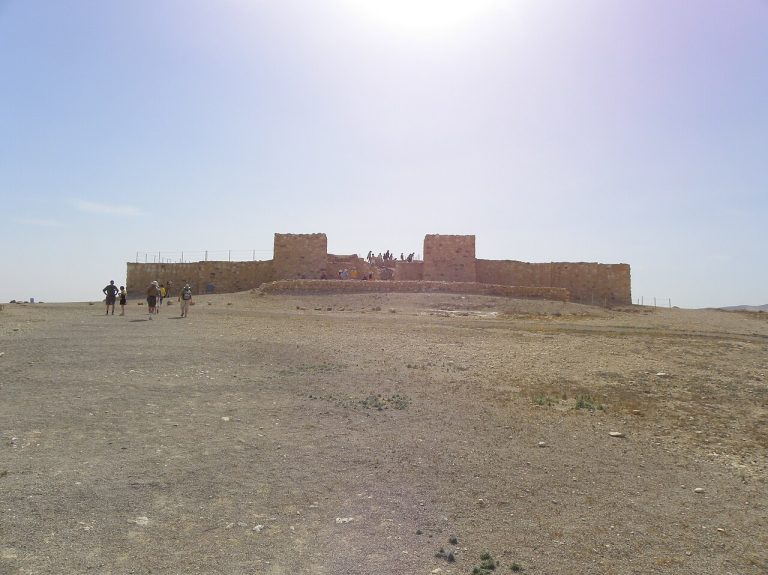
Other evidence for the supply system comes from the entrance to Site 34. Excavators found a gatehouse with adjacent places containing thick deposits of dung and other organic material. They interpreted these areas as pens for animals. Seeds and pollen from such an area can help researchers study what animals ate and, in some cases, the places from which fodder could have been brought. The gatehouse marks movement into the camp. The animal pens make some of the work behind that movement visible. Processing copper was one activity within a larger community moving supplies, providing food, and keeping valuable materials together. Ben-Yosef, Langgut and Sapir-Hen, report on gatehouse and animal pens.
Read Edom with the Arabah in mind
Genesis 36 presents Esau’s descendants and the chiefs and kings associated with Edom. Second Samuel 8:14 describes David placing garrisons in Edom. These passages concern people and political relationships in the southern lands. At Timna, the smelting remains give us an independent example of how much organization could be needed to sustain work in the broader region around this period. Identifying the political entity whose authority reached each camp, and connecting a camp with a particular campaign, require further evidence. An industrial landscape is especially useful to a reader who wants to understand what the region could produce and why it could matter to neighboring powers. Genesis 36 and 2 Samuel 8.
One influential study interprets evidence of coordinated copper production across Timna and Faynan as a clue to the development of ancient Edom. Another study puts more emphasis on gradual improvements by local workers and questions how much influence should be assigned to changes brought from outside the region. Their arguments start from such things as a change in the metal left in slag or a difference in the size of surviving equipment. These are observations from which researchers can investigate organization. They are also a reminder that a regional industry can carry traces of many decisions made by people whose individual names have been lost. Ben-Yosef and colleagues on regional organization · David Luria’s alternative account of technological change.
Return to the mesa and its waste layers. Each represents work people did with supplies they had to bring to this place. The flint came from a skill that remained useful beside a furnace. The animal remains point to people who needed to be fed while they carried out that work. Scripture gives us names and histories in the southern regions. Timna gives those regions an industry we can investigate one section, one tool, and one sample at a time. That patient work makes the story of the Arabah richer even when the political questions have more than one possible answer.
Sources and further reading
- Erez Ben-Yosef, Back to Solomon’s Era: Results of the First Excavations at Slaves’ Hill — Site 34 excavation, radiocarbon samples, peak chronology and the possibilities for industrial organization.
- Ron Shimelmitz and Erez Ben-Yosef, The stone-to-metal transition reflected in the Iron Age copper production sites of Timna Valley — Open primary paper with Site 34 photo, slag section, flint assemblages, and research context. Figures 2–4 supply featured and body visuals.
- Lidar Sapir-Hen and Erez Ben-Yosef, The socioeconomic status of Iron Age metalworkers — Analysis of animal remains from different contexts at Site 34 and an interpretation of workers’ provisions.
- Erez Ben-Yosef, Dafna Langgut and Lidar Sapir-Hen, Beyond smelting — Site 34 gatehouse and animal-pen excavation, with environmental and biological evidence.
- Fuel exploitation and environmental degradation at the Iron Age copper industry of the Timna Valley — Analysis of charcoal assemblages and changes in the material selected for fuel.
- Erez Ben-Yosef and colleagues, Ancient technology and punctuated change — Comparative slag analysis and an interpretation of the emergence of ancient Edom.
- David Luria, Copper technology in the Arabah during the Iron Age and the role of the indigenous population in the industry — An alternative explanation emphasizing long-term development by local workers.