A jar of wine reached Samaria and someone made a note of it. The person who wrote the note included the year, the place the wine came from, and the name of the person with whom it was associated. The sheet on which those details survived was a broken piece of pottery. Other pieces from the same find record shipments of oil and name more people and places. Buried until excavators recovered them in 1910, these short texts come from the city that the Bible identifies as the capital of the northern kingdom. They bring into view the clerks and country districts that helped sustain the kings whose portraits Scripture gives us. Lyon’s early report
Key takeaways
- The Harvard expedition uncovered most of the inscribed sherds in 1910 at Samaria, the ancient capital near modern Sebastia.
- Several potsherds record jars of wine and oil, with details about regnal years, personal names, and the districts that produced the goods.
- The records help us understand a real administrative system. The identity of the king or kings behind the year numbers and the precise purpose of the shipments are still discussed.
What the excavators uncovered
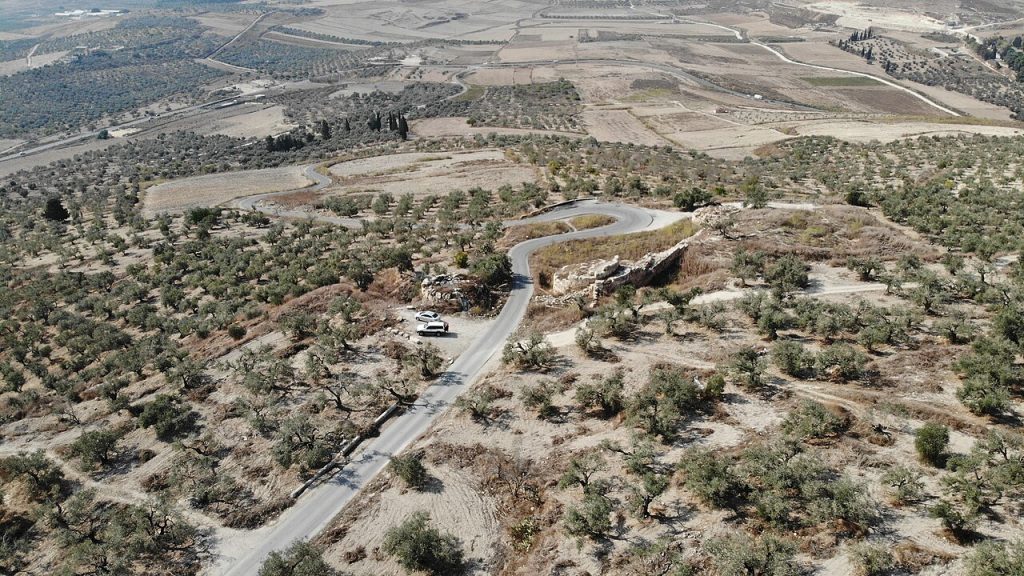
First Kings 16 says Omri bought the hill of Samaria from Shemer, built on it, and named his city after the hill’s owner. The founding account helps orient us when we see the site. A particular hill became the seat from which generations of rulers governed Israel. By the time the Harvard expedition went to work in 1908, remains of much later settlements stood alongside those from the biblical monarchy. Later city walls and gates show subsequent uses of the place. The excavation’s task was to distinguish those successive periods and recover the parts of the Israelite city that much later people had built over. 1 Kings 16:23–28 · Harvard excavation plans
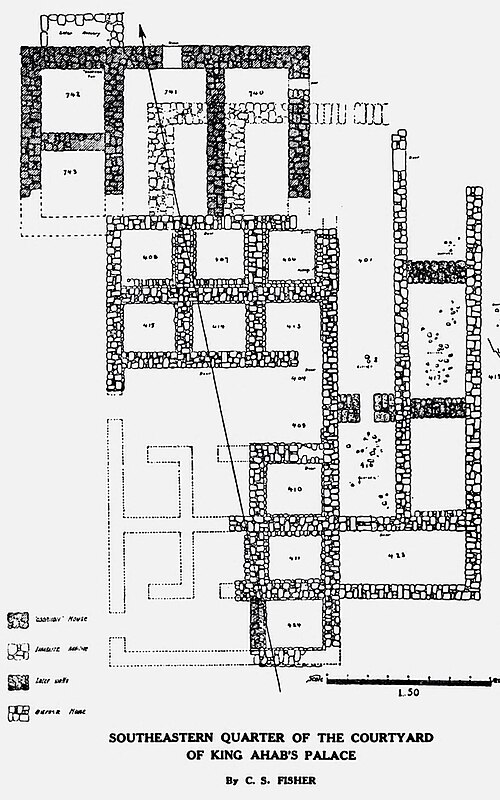
In 1910 the Harvard team under George Andrew Reisner found the distinctive group of inked sherds near the royal buildings. Excavators named the area the Ostraca House for the finds. The location is important, though the name can give an impression of more certainty than the ground allows. Many of the pieces occurred in material reported as fill associated with construction. Shards of pottery can be collected with earth and stone and moved as builders prepare a surface. A modern study of the excavation notebooks and architectural history revisits exactly how the deposits were formed. The find helps place the documents in the palace district, while their original room and desks are harder to identify. Tappy’s reassessment of the excavation
An ostracon is a broken piece of pottery that someone wrote on. The plural is ostraca. Clay vessels were everywhere in the ancient city. A small piece of one offered a writing surface for the kind of note a clerk might keep on hand until a delivery had passed through the office. It could have an irregular outline and an uneven surface. The small space helps explain the economy of the language. A few details were enough for a reader who understood the system. Pigment often fades before the clay breaks down, which is one reason a cluster of legible sherds is more revealing than the many plain fragments excavators routinely find. Modern study of the writing surfaces
Reading a shipment record
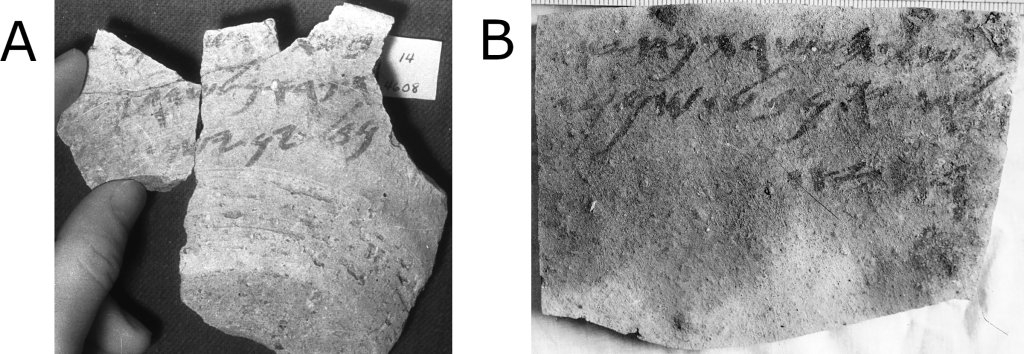
In the photographs below, two records preserve enough of the original text to follow the transaction. Number 14 records a jar of aged wine in year nine and associates it with Shemaryau. Number 18 records oil in year ten, gives Hazeroth as the place of origin, and names Gaddiyau. Scholars can compare the order of the details and the spelling with other records in the group. In some year fifteen texts the details can include a clan or district and several people, while the commodity itself is left unstated. The sherds make more sense as a group than any single line would on its own. Ostraca 14 and 18, with translations · Comparison of the text groups
What the clerks put on the sherds
- A year number, generally read as a year of the reigning monarch.
- A place, district, or clan, which helps locate people and agricultural production outside the capital.
- One or more personal names and, in many texts, a jar of wine or oil.
In this setting the records are often called receipts. That description captures their short administrative form, but the exact relationship among the people they name is debated. Some scholars interpret them as shipments to officials from the estates that supported those officials. Other proposals place more emphasis on collections made through districts or clans. The word translated as “to” in an individual record may help identify the recipient, while the status of that recipient and the basis for the collection require further evidence. Whether the record specifies a due, an allocation, or another obligation changes the history we could reconstruct from the same jar. Rainey on shipments and landholding · Na’aman’s comparison of the people and shipments
The place and clan names are one of the most tangible connections to Scripture. Names such as Abiezer and Helek appear in the administrative material and also in the biblical list of Manasseh’s descendants in Joshua 17. The biblical text describes inherited territories through named families. At Samaria, such names help place goods within a system of relationships between people, land, and the city. Their meaning need not be identical in each document. A family name can also become the name of a district, and that usage can outlive a particular family member. These are two records of ties to the land from very different moments and for very different purposes. Joshua 17:1–3 · Map of places and clans
Counting years and counting scribes
When a note says only “year ten,” it leaves out information ancient readers would have known. That omission has sent scholars to the other evidence. They compare the letter shapes with examples elsewhere and examine the types of jars and bowls the fragments once belonged to. The combined evidence favors the first half of the eighth century BC. Proposed settings place the documents in the days of Joash and Jeroboam II, or in the reign of Jeroboam II alone. Rainey suggested that years nine and ten belonged to Jeroboam II and year fifteen belonged to Joash during overlapping reigns. That is a proposal for coordinating the dates. The sherds lack a named king who could decide the matter by himself. Rainey’s dating proposal · Finkelstein on vessel types and chronology
The changes between groups give the dating question some substance. In the years nine and ten group, the wine and oil are often named with the town and a personal name. In the larger group from year fifteen, many records put a clan name and more names into the note, and a group of them writes the year using signs derived from Egyptian numerals. A change in how an office kept its records could account for some of the differences. Assigning the groups to different reigns could also account for them. Finding familiar forms of writing in a different system is part of the work of understanding an ancient administration, because a modern reader sees conventions that the scribes took for granted. The five groups in Finkelstein’s study
A team led by Shira Faigenbaum-Golovin examined 31 inscriptions by comparing repeated letters and testing whether their shapes were consistent with the same person writing them. Its model favored two likely writers in that sample. The researchers inferred that the records were probably made by a small group at Samaria when shipments arrived, rather than independently by many scribes in the countryside. Two people could theoretically have traveled between estates, and the study discusses that possibility. The result presses us to distinguish the administrative practice visible in this collection from the broader question of how many Israelites could read or write. The sherds can tell us about one operation within a large society. The handwriting analysis, methods and discussion
The lists of kings tell us who ruled from Samaria. The sherds let us see the routine work that kept a royal capital supplied.
Looking at Samaria with Amos
Second Kings 14 gives Jeroboam II credit for recovering territory and also says that he continued the sins associated with Israel’s first Jeroboam. Scripture holds political success and covenant failure in view at the same time. Amos makes a similarly searching distinction when he addresses the people secure in Samaria. In chapter 3 he summons witnesses to the turmoil and oppression in the city. Houses with ivory and residences for different seasons are among the possessions whose destruction the prophet announces. In chapter 6, he pictures those who drink wine in bowls and use the finest oils, without grieving over the ruin of Joseph. Second Kings and Amos on Israel in this period
The potsherds tell us that supplies of wine and oil reached Samaria from its surrounding districts. They do not identify the drinkers Amos rebuked or give us an inventory of any of the houses in his message. The connection lies in the picture of a capital that could draw agricultural products from many people and places. Once we can see some of that movement, the prophet’s address becomes more concrete. The comforts Amos describes came from somewhere and required someone’s work. He is concerned with what people did with the benefit they enjoyed, and with what conditions in the rest of Israel they were prepared to overlook.
We read this history as Christians convinced that Scripture speaks truthfully about the people of Israel and about God’s judgment of them. It is worth seeing the competence involved in a working capital. People grew the crops, tended the oil and wine, loaded vessels, and kept track of the deliveries. The ability to coordinate that labor helped make the kingdom prosperous. It also put real obligations on those who benefited from it. Reading these few words on clay alongside Amos gives us more reason to heed his concern for the people whose lives remained outside the court’s accounts.
Two different ways history survives
Assyrian victory inscriptions name Samaria while enumerating rulers who paid tribute or boasting about the city’s eventual conquest. The account of Menahem’s tribute brings us to the relationship between a northern king and the empire whose backing he sought. The Samaria potsherds give a view from within Israel itself, earlier in the century, and show how goods moved between the capital and people in its orbit. The Kuntillet ‘Ajrud inscriptions give another kind of Hebrew writing and a very different place in which to find it. Kingdoms are easier to imagine when both monuments and scraps survive. The scraps let us see the people who handled the everyday work.
Sources and further reading
- David G. Lyon, Hebrew Ostraca from Samaria — Early report of the discovery and readings, originally published in 1911.
- George A. Reisner, Clarence S. Fisher, and David G. Lyon, Harvard Excavations at Samaria — Plates and plans volume of the Harvard expedition’s final report, originally published in 1924.
- Ron E. Tappy, The Archaeology of the Ostraca House at Israelite Samaria — Reassessment of the excavation records, deposits, and building history.
- Faigenbaum-Golovin et al., Algorithmic handwriting analysis of the Samaria inscriptions — Test of 31 inscriptions for scribal hands. Figure 1 shows ostraca 14 and 18.
- Anson F. Rainey, Toward a Precise Date for the Samaria Ostraca — Proposal to connect the regnal dates with two rulers during overlapping reigns.
- Israel Finkelstein, Notes on the Date and Function of the Samaria Ostraca — The author’s published analysis of vessel types, dating, and the function of different groups of texts.
- Nadav Na’aman, A New Appraisal of the Samaria Ostraca — Comparative analysis of the record formats, people, and places.
- Amos 3:9–15 and 6:1–7 — Amos’s warnings to Samaria, with descriptions of luxury and the violence stored up in its strongholds.





