In a photograph from Ebla, clay tablets sit partly over one another. Some have lost a corner. Others still show lines and columns of tiny wedge marks. The Italian team that found the archive could learn from their position before anyone published the words. The deposit preserved evidence of where scribes kept different kinds of records. When the first decipherments reached the public, some appeared to give names familiar from Genesis. The discovery is a chance to see why an archive can transform our picture of the ancient Near East and still leave a claim about one biblical town open to serious examination.
What you’ll learn
- Where archaeologists found the main archive and smaller deposits at Tell Mardikh in 1974–76.
- What inventories, treaties, and writing exercises tell us about a Syrian court in the third millennium BC.
- How a scholar can test proposed names for the biblical Cities of the Plain using spelling and geography.
The archive room and what survived
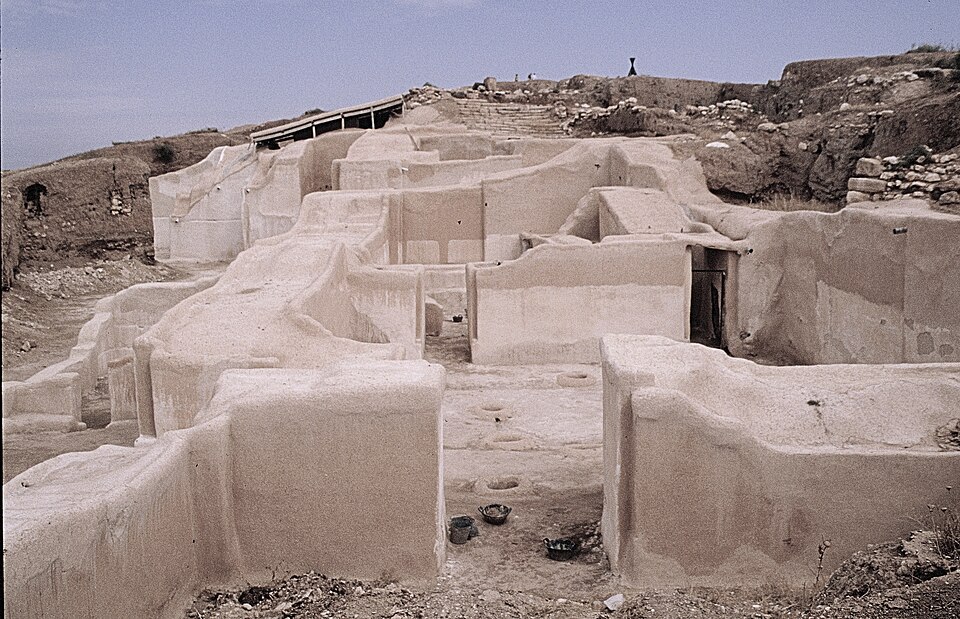
Tell Mardikh is an archaeological mound in northwest Syria, southwest of Aleppo. Paolo Matthiae led the Italian mission that began excavating the site in 1964. Excavations eventually brought to light several phases of the ancient city. The famous archives came from an Early Bronze Age building known as Palace G. Small groups of tablets appeared before the largest discovery. An important deposit in room L.2586 was found in 1974. The main discovery in 1975 included the Great Archive in room L.2769 and a smaller archive nearby. Fieldwork at the palace continued into the next season so the excavators could better understand the building and the finds around it. Matthiae’s report on the excavations and the archive room.
The numbers quoted for the collection depend on what they count. Broken pieces were assigned excavation numbers, and two pieces can sometimes belong together. A total counting fragments across several rooms answers a different question from a count of substantially complete tablets. The most informative numbers give their scope alongside the total. The royal documents generally fall within a part of the third millennium often placed in the twenty-fourth century BC. The lifetime of an individual document was shorter than the span of the city. Fire and collapse at the palace helped seal the deposits that later became available to excavators. Scarpa’s study of the deposits and their discovery.
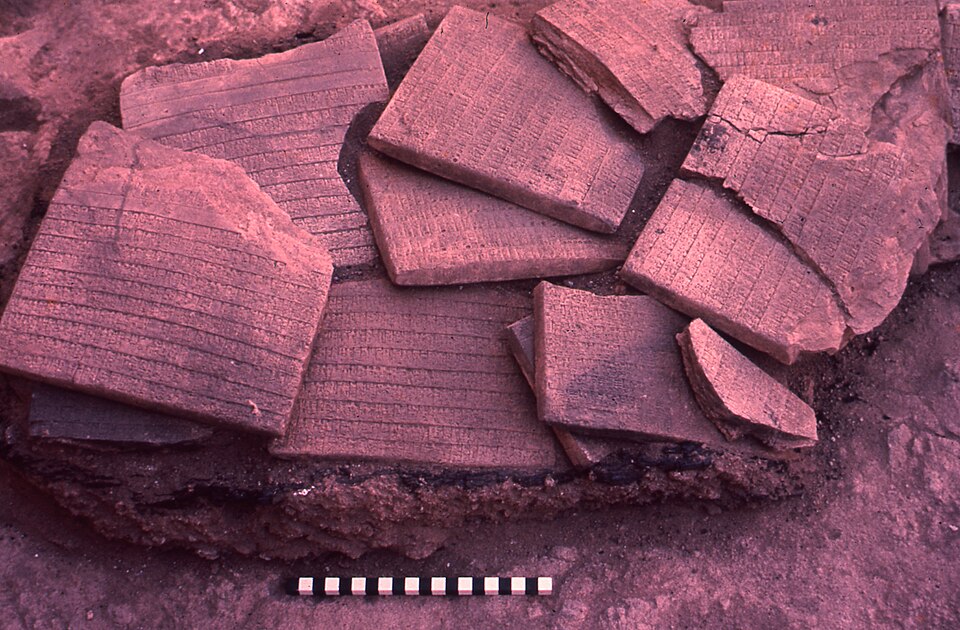
An ancient archive is both a body of documents and the physical place where someone kept them. At Ebla, patterns in the fallen tablets offer evidence for storage. Excavators studied where groups landed and what had remained together. Traces of wood and the placement of similar tablets helped them consider shelves and the location of groups along walls. A shelf has almost no chance of surviving intact under the same conditions as clay. The reconstruction draws on several details that are individually incomplete. That is why a floor plan, the photograph of a group, and the written account of the excavation all matter. Matthiae’s original English report on the royal palace.
A place name can look familiar on a translated page. Its spelling, neighboring places, and role in the original tablet help determine whether that familiarity is evidence.
What the palace wrote down
Tablet format mattered to the scribe as well as to the excavator. The size of a clay surface governs how many entries can fit and what a reader can take in at a glance. Lines and columns let a reader follow entries in a regular order. Certain kinds of records adopted recognizable formats. One image of a tablet can show those divisions before we settle the reading of any particular sign. Archaeologists can then compare its physical format with models from the same room and with documents found elsewhere. Finding such patterns changes a heap of fragments into evidence for a practiced way of managing information.
Some tablets record the movement of goods and the obligations of people who worked for or with the royal household. Others document political and religious activities. Lists of words show how scribes studied and classified the language they used for writing. The institutional digital archive provides links between modern editions and the sign sequences. The documentation of Ebla is therefore available for research at more than one scale. A scholar can ask how a particular word was written or compare the accounts of regular distributions across a larger group. Each task uses a different part of the evidence. Ebla Digital Archives project.
The tablets use cuneiform, a writing system shared with other societies. A scribe could use a sign associated with an entire word or use signs for sounds. In writing a local Semitic language, the people at Ebla adapted conventions developed in Mesopotamia. Lists pairing Sumerian terms with equivalents from Ebla give readers help in identifying the language and its uses. The signs do not always make distinctions a modern editor would like to see. Similar looking spellings can represent different words, and the sign chosen in one document can differ from the way a name is written elsewhere. A technical reading becomes more reliable when it can be tested across many examples. Scuola Normale Superiore’s Eblaite writing guide and object examples.
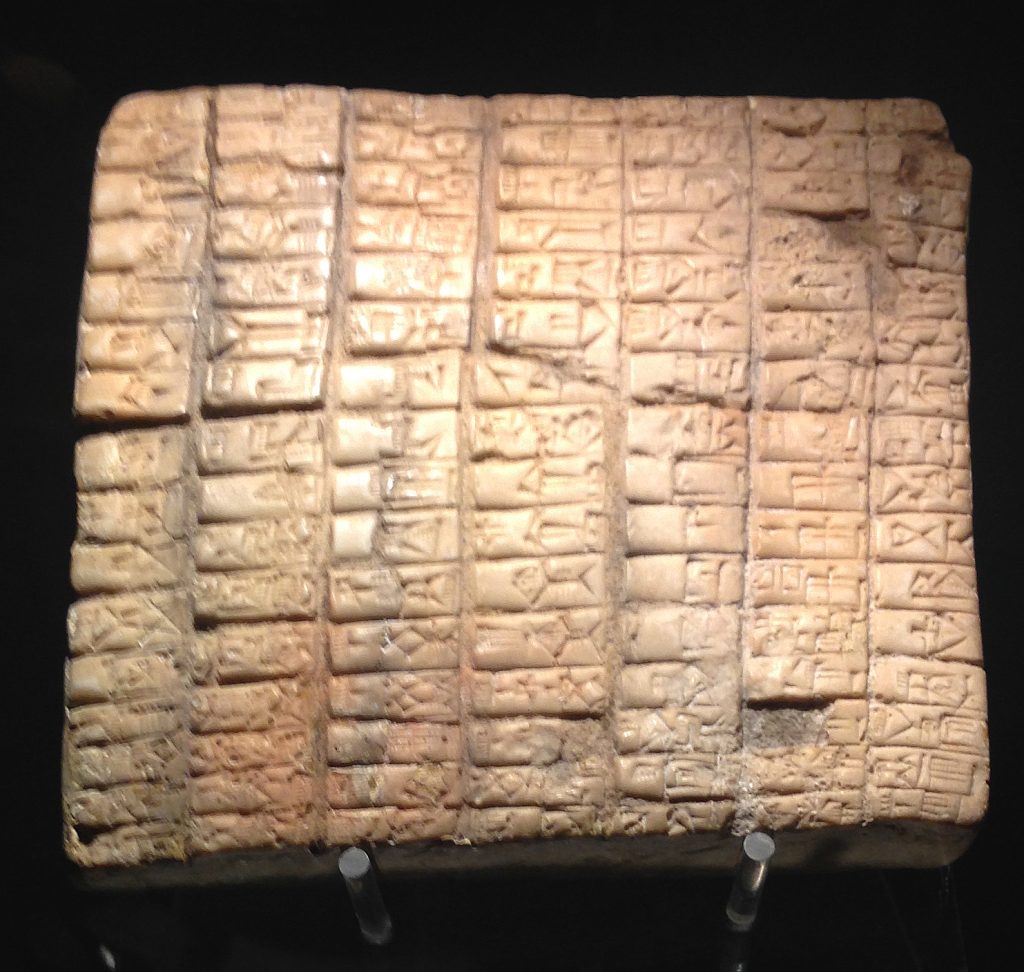
One published example from the Great Archive is the agreement between Ebla and a polity named Abarsal, TM.75.G.2420. Its tablet has a substantial written surface and can be followed in editions by excavation number and publication reference. A treaty has a different purpose from a list of place names or an account of deliveries. An agreement can help locate what political relationships mattered to the court. An account can show where goods or people came from. Matching a place across those kinds of sources gives historians better prospects than matching a single name to one that looks familiar in another language. Photograph and identifier for the treaty in the writing guide.
There is another benefit to looking at room groups alongside the words. Discoveries from several rooms can reflect the working habits of people at a given time. A batch of recent accounts may have been kept accessible, while documents serving other purposes were stored in a different place. The archaeological pattern can therefore help answer what was being used where. It can also help identify which texts were probably together in antiquity even when modern inventory numbers have sent researchers to more than one catalogue. The place where a tablet was found becomes an additional line of evidence beyond the words pressed into the clay.
The Cities of the Plain claim
The argument can be tested by looking at a proposed place name in each of its surviving contexts. Does the name occur in an entry about goods, in a record of an envoy, or in a learning list? Do independently located neighbors occur alongside it? A vocabulary list may offer evidence for spelling while providing little evidence for location.
Genesis 13 introduces the Jordan plain as Lot chooses where to live. Genesis 14 names Sodom, Gomorrah, Admah, Zeboiim, and Bela, also called Zoar, in the account of a regional conflict. When the Ebla material was being deciphered, Giovanni Pettinato proposed connections between some tablet place names and cities familiar from the Bible. The announcement drew wide attention because an early document recognizing the same group of places would have been remarkable. Once more of the corpus was available, the crucial problem was whether the sign readings and the ancient geographical settings actually supported the association. Pettinato’s early presentation of the claims.
Alfonso Archi compared the proposed readings with the contexts in which the names occur and disputed the identification with the biblical cities. The case illustrates why geographical names need more than sound. A place can sometimes be located through a series of journeys, a sequence of deliveries, relationships with already located cities, or repeated combinations in letters. The proposed Ebla names do not produce a secure cluster in the Jordan plain on that evidence. A reader can follow the old debate and ask which claim has been verified by publication. At present, the tablets give no secure discovery of the particular Cities of the Plain named in Genesis. Archi’s primary reassessment of proposed biblical correspondences.
The same procedure applies to a familiar-looking person’s name. Names in related languages can resemble each other because families share patterns of naming. A form on a tablet may teach us how a name could be built or spelled. Identifying a specific person is a further historical claim. It asks whether the person lived in the same place and period, appears with a recognizable family or title, and participates in events for which the evidence can be compared. Without those controls the reasonable conclusion concerns a naming pattern, while the identity of an individual remains open.
Why the discovery matters to a Genesis reader
Genesis often moves between a named household and the wider world of settlements, rulers, roads, and obligations. The Ebla archives reveal how much local administrative and political detail could already be recorded in the third millennium BC. They give substance to the study of a region that readers might otherwise picture only as a string of unfamiliar names. We can learn from a treaty or an accounting tablet even where the details belong entirely to Ebla. Their historical value grows as the relations among the recorded places and people are made clearer.
Christian readers can take the narratives of Genesis seriously while testing a proposed inscription reading the same way we test any historical claim. Genesis directs attention to Lot’s choices, to Abraham’s rescue of him, and later to the Lord’s judgment. The Ebla archives direct attention to the concerns of their own scribes and officials. A careful comparison gives each source time to speak. If a new identification is ever proposed, the first questions remain the same. Which tablet preserves it, which reading can be verified, and what surrounding evidence locates it? For a later collection that follows actual dispatches across the region, see the royal archives at Mari.
Sources and further reading
- Report on the 1976 excavations — Matthiae’s field account of Palace G and the completion of excavation in the Great Archive.
- Preliminary Remarks on the Royal Palace of Ebla — Excavator’s description of the building and archive.
- Study of Ebla find contexts — Scarpa’s synthesis of archaeological and epigraphic records.
- Ebla Digital Archives — Institutional edition of texts and their identifiers.
- Eblaite writing — Institutional writing guide with object examples, including the Abarsal agreement.
- Ebla and the Cities of the Plain — Early published proposal by Giovanni Pettinato.
- The Epigraphic Evidence from Ebla and the Old Testament — Alfonso Archi’s philological reassessment.
- Are the Cities of the Plain Mentioned? — Archi’s parallel published presentation of the geographical dispute.





