
A small sandstone sphinx from Sinai carries two kinds of writing. The Egyptian hieroglyphs are familiar to specialists. Other signs across the object’s base looked pictorial, yet they did not behave like ordinary Egyptian writing. When Alan Gardiner considered whether the marks stood for sounds in a Semitic language, a short group of signs gave him a clue. That reading brought ancient mine workers, visitors, and their writing into a debate over the beginnings of the alphabet. For a Bible reader, the sphinx helps make the ancient uses of writing easier to picture when Exodus describes words being recorded in the wilderness.
What you’ll learn
- What Flinders Petrie’s expedition found near the mines and temple of Serabit el-Khadim in the early twentieth century.
- How Gardiner used the sound at the start of a word to test whether the signs formed an early alphabet.
- How the finds illustrate the world of writing behind Exodus without identifying the writer or script of its original records.
An Egyptian mining district in Sinai
Serabit el-Khadim lies on a rocky plateau in southwestern Sinai. Egyptians sent expeditions to the area for turquoise and left material evidence across the workings. The temple on the plateau was associated with Hathor, honored there as lady of turquoise. Stelae and offerings record royal and expedition activity. Mine openings, rock surfaces, and objects brought to the temple preserve evidence from different kinds of activity. It matters whether a sign was spotted on rock near a mine or on an object that someone chose to place at the temple. Those positions give a modern reader more information than a photograph of an isolated character. Metropolitan Museum study of turquoise and the Egyptian mining districts.
Several unusual inscriptions were brought to wider attention by the expedition of Flinders and Hilda Petrie in the early 1900s. The report appeared in 1906. Petrie distinguished some of the unusual marks from the Egyptian writing at the site. More work added inscriptions to the group. Catalogues assign identifying numbers such as Sinai 345 to the sphinx. The number allows someone to find the right object across a field report, a museum record, a photograph, and a later edition. That is useful because short text and similar-looking marks can make accidental comparisons easy. Petrie’s original illustrated excavation publication.
An expedition could bring people who spoke more than one language into the same district. Egyptian signs were visible on monuments and objects. People who spoke a Semitic language could have had their own reasons to mark a stone, dedicate something, or leave a name. The archaeological setting makes that encounter possible to study. The identity and education of the very first person to use the alphabet remain unknown. One proposal sees the developers in a community associated with the mining expeditions. The location of a surviving inscription gives us the place where somebody used the signs, which is already a substantial historical discovery.
How the sphinx helped make sense of the script
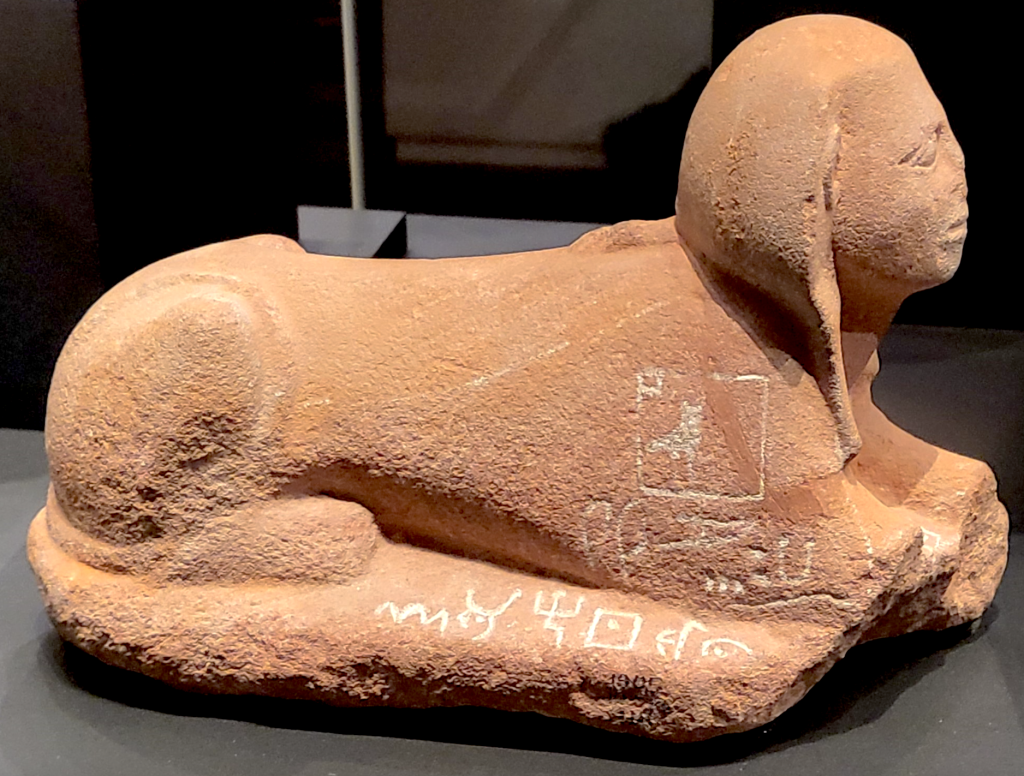
Gardiner’s 1916 analysis considered a pattern of signs read as bʿlt, which can be understood as Lady or Mistress. The sphinx has Egyptian words associated with Hathor and a Semitic expression in the early alphabetic writing. The religious titles can be compared, but the texts do not offer a complete word-for-word bilingual key. The reading gained force because suggested sound values and recurring groups could be checked against multiple objects. An example with two kinds of writing supplied a point of comparison, while the broader collection let an editor see where the proposal worked and where a reading remained uncertain. Gardiner’s original study of the Egyptian origin of the Semitic alphabet.
One way to explain how a sign acquired a sound is acrophony, using the opening sound of the word for what the sign pictures. If a writer uses the picture of a house and the relevant word begins with a sound like b, the sign can be adapted to write that sound. Then the sign can be used in words that have nothing to do with houses. The later Hebrew letter name bet and related Semitic words make the example intelligible. Particular early readings still depend on the shape, direction, and context of the scratches or cuts. The sounds and the modern letter names in an explanation are guides to the principle. Ben Haring’s study of Egyptian writing and the early alphabet.
Once a house sign can represent the sound at the start of the word house, the sign can help write words that have nothing to do with buildings.
Most of the signs have to carry more of a reading than a picture in an illustrated scene would. The relevant sounds are chiefly consonants. A short item written that way can be hard to read when a sign is chipped or its direction is uncertain. Knowing a parallel spelling or a likely religious title may help an editor choose among plausible readings. A picture of the surface is valuable because it lets another reader see how the published drawing treated a line and where the stone is cracked. It also helps identify when an impressive-looking sequence of modern characters says more than the ancient surface supports.
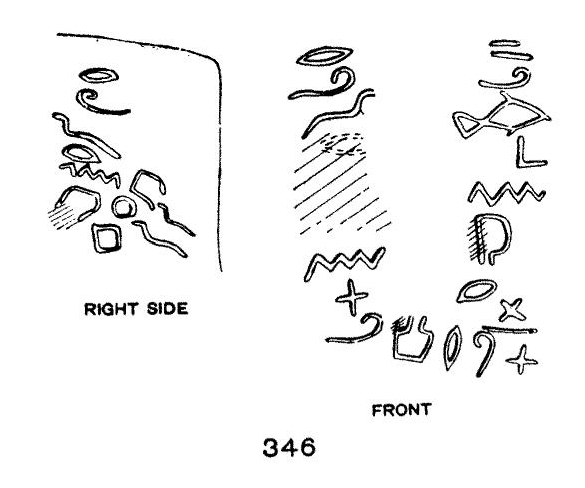
Sinai 346 in the historical plate gives another chance to look at those issues. A close photograph helps distinguish a sign from an accidental scratch, while comparison with the actual object may give a clearer view of the depth and angle of the cuts. Editors follow the inscriptions in lists and plates so a later researcher can return to the same surfaces. It is possible to agree that the inscriptions belong to a consonantal writing tradition while continuing to disagree about the reading of several particular texts. That combination describes the state of the evidence more accurately than treating every sign as settled or every reading as equally uncertain. Scuola Normale Superiore introduction to the script and its corpus.
Dating an early alphabet
The label Proto-Sinaitic brings together writing with related forms, rather than naming a government’s official alphabet. It is particularly helpful to compare the signs where they occur in short, repeatable groups. When a later alphabet preserves a shape that can be related to an earlier one, that resemblance gives the study a clue. A sequence of well-dated finds is needed to trace how people actually learned, passed on, or modified the script over time. The signs on a single object rarely do all this work. That is why a dated potsherd or a short inscription in a separate region can change the historical account even if the artifact is smaller than a palm.
The Egyptian writing remained in use beside the newer forms. A small alphabet could be practical for some purposes without replacing every kind of record.
The mining district was used for long periods. Its securely dated Egyptian inscriptions help archaeologists establish when activity at particular locations took place. An isolated alphabetic mark nearby can be harder to date. The age of a stone, the point at which a mark was cut, and the date of the layer that eventually buried an object are distinct pieces of evidence. The British Museum guide places the little sphinx broadly in the second millennium BC, while specialists have argued for different dates for other parts of the corpus. Many histories of writing place the beginnings of the tradition in the Middle Bronze Age and follow its use and development through the Late Bronze Age. British Museum exhibition guide for the sphinx and its scripts.
Other finds have made the geography and chronology more complicated. The inscriptions in Egypt’s Wadi el-Hol extend the early evidence beyond the Sinai mines. A radiocarbon-dated context for an alphabetic sherd at Lachish gives a point for comparison in the fifteenth century BC, even though the circumstances of writing must be assessed separately. At Umm el-Marra in Syria, a researcher has proposed that third-millennium signs on small cylinders may be alphabetic. Their archaeological date and their classification as writing require separate arguments. Serabit remains a well-known early corpus while the historical question of when and where the development began is open to new discoveries. Höflmayer and colleagues’ excavation and discussion of the Lachish sherd. Schwartz’s published case for the much earlier Syrian marks.
What the evidence contributes to Exodus
In Exodus 17, the Lord tells Moses to record a memorial after the conflict with Amalek. Exodus 24 has Moses write the words of the Lord before the ceremony establishing the covenant. Exodus 34 again calls attention to writing, and Deuteronomy 31 describes the written law being entrusted to others for public reading. These passages show why a written record mattered to Israel. It could preserve words a community was meant to remember together. The content and occasion of each act are clear in the narrative. The passages do not present a sample of the characters used for the first written record.
The Serabit finds show that an early way of writing a Semitic language was in actual use in Sinai. They belong to the study of the wider environment in which biblical writing can be understood. The objects come from a mining and temple setting and carry the marks of their own users. They do not identify Moses, the place where Israel camped, or the script in which his first records were written. A sound comparison respects the specificity on both sides. This alphabet history also gives useful background to later, quite different material, including the alphabetic wish on the Lachish ivory comb and the sequence of letters at Tel Zayit.
For Christian readers, the instruction to write is part of how the Lord gives his people words to remember and obey. Scripture presents that history as true. The small stone objects from Serabit give a reader something physically real to see when asking what the ancient world could put into writing. Their damaged marks also show how much work goes into recovering a short message. The survival of both clear and difficult signs invites patience. It is possible to appreciate what an alphabet made practical without asking a sphinx from an Egyptian sanctuary to tell the history of a different community.
Sources and further reading
- Researches in Sinai — First field publication and photographs from the Petrie expedition.
- The Egyptian Origin of the Semitic Alphabet — Gardiner’s original 1916 proposal.
- Ancient Egypt and the earliest known stages of alphabetic writing — Study of the sphinx and the relation of Egyptian and early alphabetic signs.
- Hieroglyphs: Unlocking Ancient Egypt — British Museum object, period, and interpretive context.
- Turquoise in Ancient Egypt — Met study of the mines and sanctuary.
- Proto-Sinaitic — Institutional account of discovery and decipherment.
- Early alphabetic writing and the Lachish sherd — Primary archaeological study and chronological comparisons.
- Non-cuneiform writing at third-millennium Umm el-Marra — Schwartz’s original publication of a different proposed early alphabetic find.





