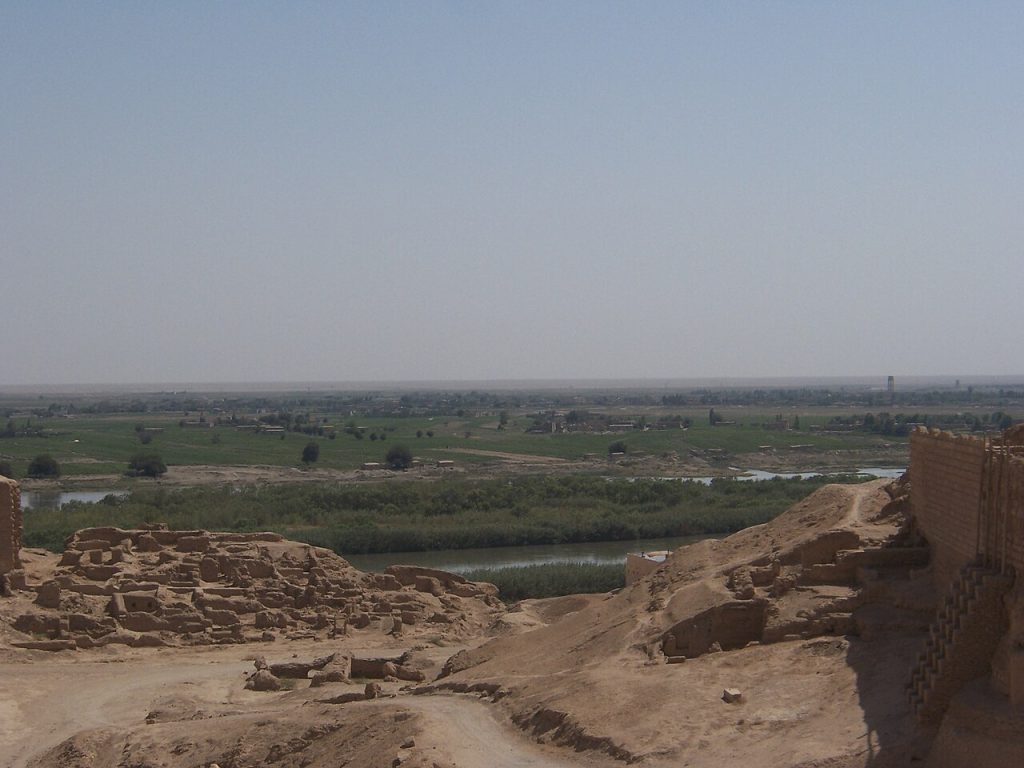
Near the western wall of a city above the Euphrates, excavators found a small room with a built font, the remains of a canopy, and painted scenes on the plaster around it. The better-preserved figures could still be seen in 1932 as the earth came away. A shepherd carried an animal on his shoulders above the basin. On another wall, the figure of a healed man carried his own bed. The paintings belonged to a Christian congregation in third-century Dura-Europos, in what is now eastern Syria. A room that once sheltered the beginning of a life of faith lay under the works built to defend a city in its last years. Yale University Art Gallery’s excavation and conservation record.
Key takeaways
- The siege that ended Roman Dura around AD 256 sealed the Christian building, giving archaeologists an unusually secure latest possible date for its use.
- An enlarged gathering room and a small painted baptistery show how believers adapted space for communal life and initiation.
- Recent studies disagree about how gradually the house was remodeled and how much domestic use it retained.
- The paintings give us evidence for how Christians received biblical stories. Individual identifications still vary with the survival of the image and the details of the text.
Why the building survived
Dura-Europos occupied the edge of a plateau above the Euphrates. The Christian building stood in excavation block M8 beside the western fortifications, close to Tower 17. When a Sasanian assault threatened the city in the mid-third century, its defenders reinforced vulnerable sections of the wall with a massive earthen bank. To create the bank they cut down and buried parts of adjoining buildings. The defensive work broke up the original setting and protected some of the lower walls at the same time. The city fell around AD 256, leaving this particular corner of its religious life beneath the earth. Yale’s site account.
The Yale University and French Academy of Inscriptions and Letters expedition began uncovering parts of the structure in the 1930–31 season. Its position near the tower supplied the field team’s early name for it, the Edifice of Tower 17. The next season exposed the decorated room, and the murals came to light in January and February 1932. Further fieldwork continued into 1933. The sequence matters because “discovery” describes several things here. The team first found walls, then recognized a Christian interior, and finally assembled a record of what stood where. The room plans, excavation photographs, and surviving fragments now form different parts of the same evidence. Camille Leon Angelo and Joshua Silver’s reconstruction of the excavation history.
Was it a house church?
The familiar term “house church” captures the building’s domestic origins. Its courtyard and surrounding rooms belonged to the architectural vocabulary of Dura’s houses. The final excavation report by Carl H. Kraeling treated a dated inscription on plaster as evidence for a house built in AD 232 and understood the Christian alterations as a coordinated conversion a little later. Yale’s educational account puts the conventional conversion around AD 240. This is a helpful outline for orienting yourself, provided that the calendar date written on a wall is distinguished from the dates of underlying construction and later alterations. Yale’s traditional phase sequence.
David K. Pettegrew’s 2024 study revisits the excavation archive and the larger history of Roman construction at Dura. He places the original building in the late second or early third century and proposes that it retained a domestic aspect as it was adapted for Christian use. In a separate 2024 study, Leon Angelo and Silver compare the adapted plan systematically with Dura’s ordinary houses and its other places of worship. They emphasize how the remodeling changed the character of the building as experienced by people moving through it. Reading the two studies together makes clear where the discussion stands. The building has domestic origins and substantial Christian modifications. How sharply and quickly those changes separated the two uses is still a question. Pettegrew’s chronology and phase analysis. Leon Angelo and Silver’s building comparison.
Paul greets the church that meets in the house of Prisca and Aquila in Romans 16:3–5. Acts 2:41–47 depicts the Jerusalem believers receiving baptism, gathering, and breaking bread in homes. We receive those passages as truthful testimony. They help us understand why a house could be bound up with the life of a congregation. Dura belongs to another city and a much later generation. Its plan offers a specific archaeological example of believers making room for the work of the church. Romans and Acts give us their own earlier evidence about how congregations lived. Discussion of the architectural term and its history.
Dura preserves decisions Christians made about space. A widened room and a painted font show that gathering and baptism made claims on the shape of the building.
Read three changes in the rooms
- An enlarged gathering room. The removal of a partition joined two earlier rooms, making a single larger space off the courtyard.
- A concentrated baptismal space. A font and canopy took up part of a relatively small room, and a lowered ceiling brought the decoration closer to people inside.
- Distinct thresholds. The modified baptistery had two doorways. Differences in their width and the elaboration of their surrounds give scholars evidence for a proposed direction of movement.
These changes work together on the plan. A room made larger could accommodate a group. The font room grew smaller in usable floor area as its fittings made room for a particular act. Leon Angelo and Silver point out that the altered baptistery even had a lower ceiling than the room from which worshippers may have entered it. The shift in scale helps us imagine a person leaving an assembly and entering a chamber that drew attention toward a basin beneath a painted canopy. The inscriptions and paintings survive unevenly, and a route through the rooms remains a reconstruction. The spatial differences themselves survive in the archaeological record. The study’s room measurements and analysis of circulation.
The shepherd above the water
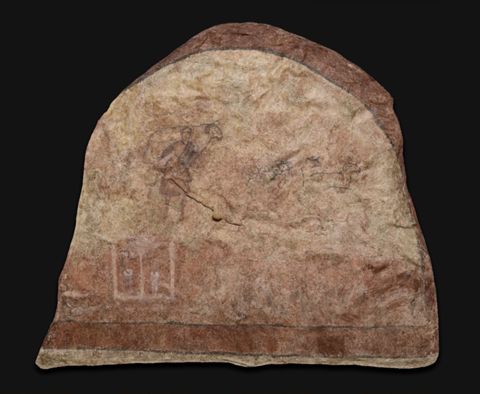
The shepherd stands on the wall at the head of the room, where the canopy and font would have directed a visitor’s attention. John 10:11–18 gives the image a familiar scriptural resonance. Jesus describes the good shepherd laying down his life for the sheep and taking it up again. Luke 15:3–7 offers a second association, with the shepherd carrying home the sheep he found. The image belongs to a broader visual vocabulary of shepherd and flock, and we cannot identify a particular Gospel verse from its lines. What makes it distinctly meaningful here is the chosen setting, among Christian scenes over a basin generally understood as a baptismal font. Yale’s description of the painting in its architectural setting.
In the lower portion of the same composition are the much smaller figures of Adam and Eve. Yale notes that the figures were added after the main shepherd scene, an observation worth bearing in mind when reading the composition as a whole. Christians who know Genesis 3 and John 10 can see why the pictures make sense together in a room devoted to initiation. Scripture gives an account of humanity’s fall that reaches into the life of every person standing by the water. The shepherd image suggests the care of the Savior who gathers his people. The room gives those scriptural associations a particular place in Christian life. The museum’s identification of the added figures.
When a painting could fit more than one passage
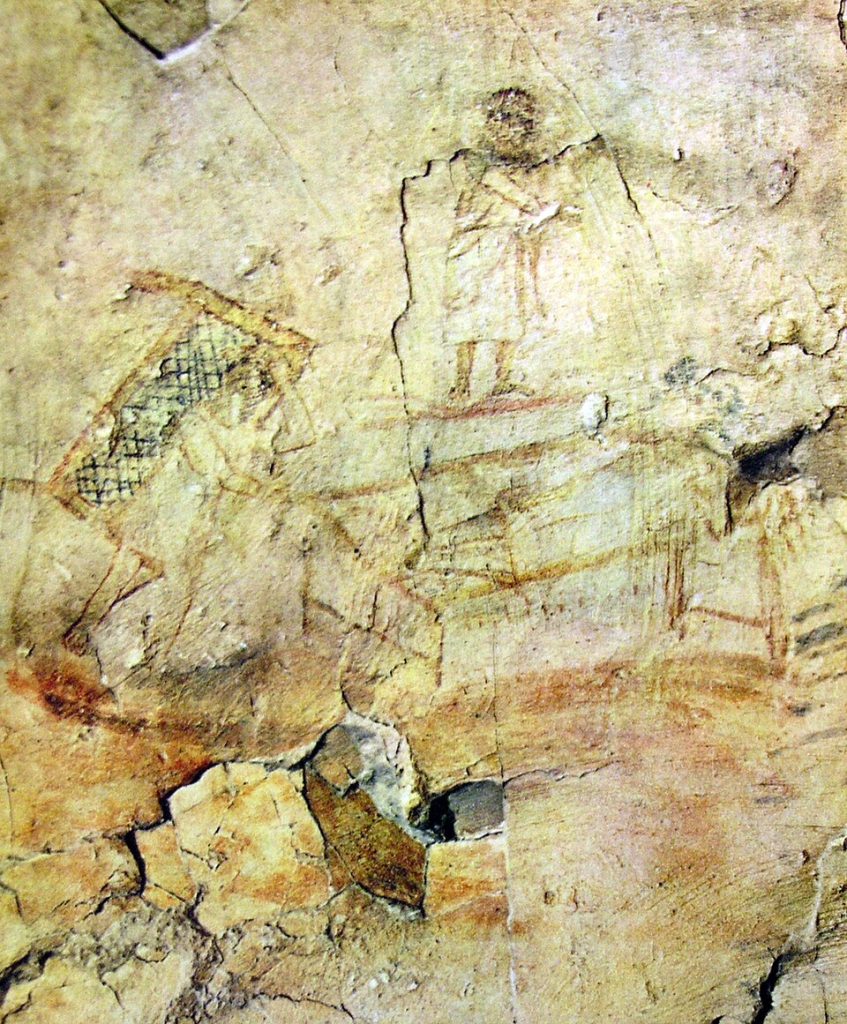
Look closely at the man carrying his bed. In Mark 2:1–12, friends lower a paralyzed man through a roof and Jesus forgives his sins before telling him to rise and carry his bed. In John 5:1–15, Jesus heals a man beside the pool at Bethesda and gives a similar command. That story leads into a conflict over what it means to act on the Sabbath. The moving figure bearing his bed is a clear visual expression of healing. Choosing one narrative as its precise source would depend on evidence beyond the shared action. Even a persuasive identification of the subject can leave a question about which account informed its presentation. The museum’s north-wall images.
The neighboring painting, usually identified as Jesus walking on water, makes another useful comparison. Matthew 14:22–33 describes Peter stepping out and calling to Jesus when he begins to sink. Mark 6:45–52 and John 6:16–21 describe Jesus on the water without that episode. A second figure in the painting makes Matthew a particularly useful passage to read beside it. The story speaks of rescue and recognition, ending in the disciples’ confession of who Jesus is. That emphasis helps explain its appeal in a place for baptism, even though the purpose of placing that specific scene there has to be inferred. Michael Peppard’s studies of the paintings and Christian initiation.
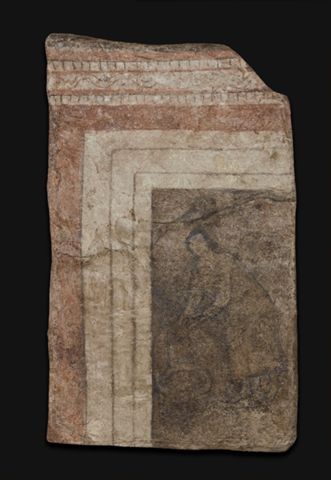
A woman by a well poses a harder question. Yale’s traditional reading connects her with the Samaritan woman in John 4, where Jesus speaks of living water and she brings others to hear him. Peppard proposes Mary, drawing on an early Christian tradition outside the biblical canon that places the beginning of the Annunciation at a water source. Luke’s Gospel relates the angel’s visit to Mary without a well. The procession of women has a similar range of readings. It has been associated with the women coming to Jesus’ tomb and with the bridesmaids awaiting the bridegroom in Matthew 25:1–13. In both cases, comparison with Christian texts clarifies what is at stake even where the surviving plaster leaves room for disagreement. Yale’s conventional identifications. Peppard’s alternative reading of the woman at the well.
What a painted church lets us see
When we read Romans 6:3–4, baptism belongs to Paul’s argument about sharing in Christ’s death and walking in newness of life. The water and the themes of healing and deliverance at Dura make that language especially vivid. Connections of this kind are part of the history of how Scripture was received. The building gives us the remarkable sight of believers spending labor and resources to make stories of Christ visible in a place where people began a life of discipleship. The plaster does not record which passages were read aloud or preserve the words of their prayers. We can still recognize how much Christian faith mattered in the life they shaped together.
It is worth looking at an excavation photograph alongside a conservation photograph. The burial environment deposited salts in the plaster. After excavation, changes in the environment could bring those salts to the surface and dislodge paint, and early treatments added their own difficulties. Yale’s conservators have drawn on photographs, imaging, and study of earlier interventions in their efforts to preserve the fragments. The worn areas are part of the objects’ history. Seeing the pictures alongside the room where they were found takes us closer to the experience of a real congregation, with its own building, neighbors, and choices about how to teach and worship. Yale’s documented conservation history and photographs.
Questions readers ask
Is this the first church in the world?
It is an exceptionally early surviving Christian community building with a secure third-century archaeological context. The New Testament attests to earlier congregations, and the survival of Dura’s building owes much to its burial beneath a fortification bank.
Can we see how the paintings fit together?
Yes. Yale’s plans, elevations, and excavation photographs show how the surviving scenes were arranged around the font. Use those records alongside photographs of individual fragments.
Sources and further reading
- Yale University Art Gallery, Christian Building — Excavation photographs, plans, conventional interpretation, and conservation record.
- Camille Leon Angelo and Joshua Silver, Debating the domus ecclesiae at Dura-Europos — Comparative studies of the architectural evidence, excavation chronology, and the history of interpretation.
- David K. Pettegrew, The Christian Building at Dura-Europos — 2024 reassessment of the building’s phases and dated graffito in the American Journal of Archaeology.
- Michael Peppard, The World’s Oldest Church — Studies in ancient Scripture reception, Christian imagery, and ritual at Dura.
- Michael Peppard, A Woman at a Well — Arguments and evidence for identifying the well figure with Mary.





