An archaeological team clearing a small plot in Nazareth found parts of an old house and, beneath its surface, a succession of pits cut into rock. It was 2009, and the excavation preceded construction at the International Marian Center, beside the Franciscan Church of the Annunciation compound. The walls belonged to an early period in the life of the village. Broken pots and pieces of chalkstone vessels helped turn a few lengths of masonry into evidence for a household in the world of the Gospels.
We receive the Gospel accounts as true and accurate. Luke places Mary in Nazareth when she receives Gabriel’s announcement, tells us that Jesus grew up there, and describes his return to the synagogue. The town mattered to his neighbors because they knew his family and had watched him grow up. Archaeology helps us imagine what it meant to be known in that community. In this excavation, it does that through the evidence of one household and the everyday things it left behind.
What you’ll learn
- Yardenna Alexandre’s 2009 excavation uncovered an Early Roman dwelling and three levels of subterranean pits at the International Marian Center.
- Clay pots, fragments of stone vessels, and the ways the pits were used help us picture life in the Jewish village of the Gospels.
- This is a separate excavation from the house at the Sisters of Nazareth convent. The evidence identifies a household of the period while its occupants remain unnamed.
Where archaeologists found the house
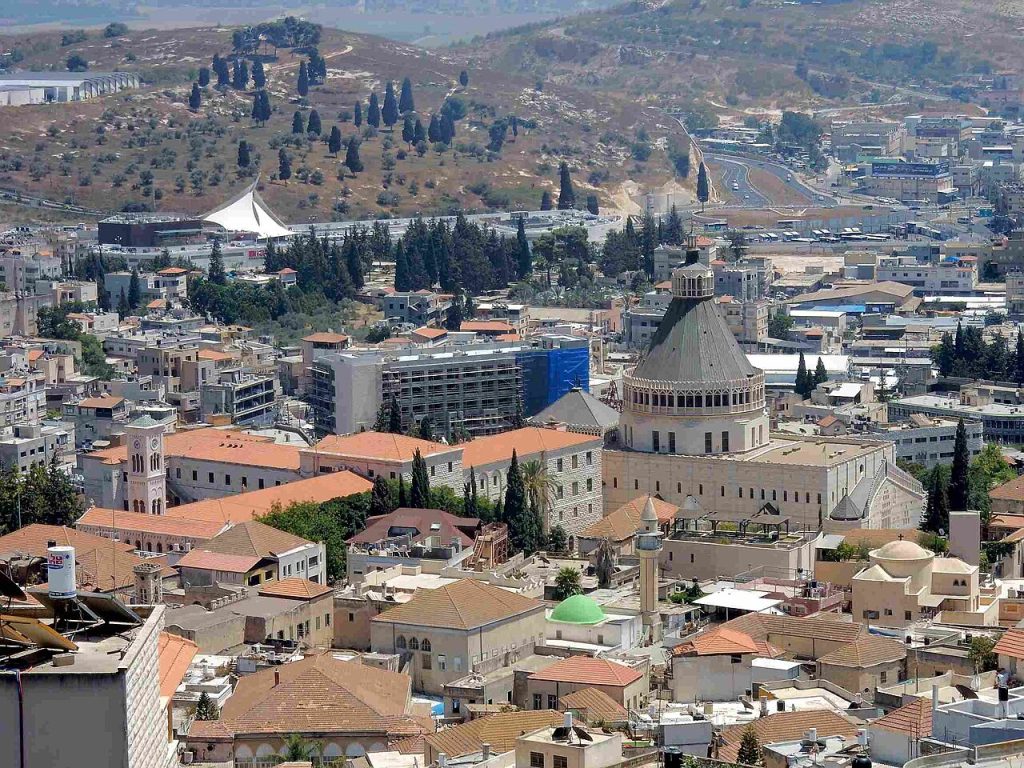
The excavation took place next to the Franciscan compound in central Nazareth. In a rescue excavation, archaeologists investigate ground that new construction will disturb. The scope can be quite small. A building foundation, utility trench, or courtyard may provide the only access to a much older occupation below a modern city. Excavators have to record enough detail about walls, layers, and finds to allow people to analyze the results later. In Nazareth, the narrow opportunity created by construction was enough to identify three distinct phases. Israel Antiquities Authority excavation publication
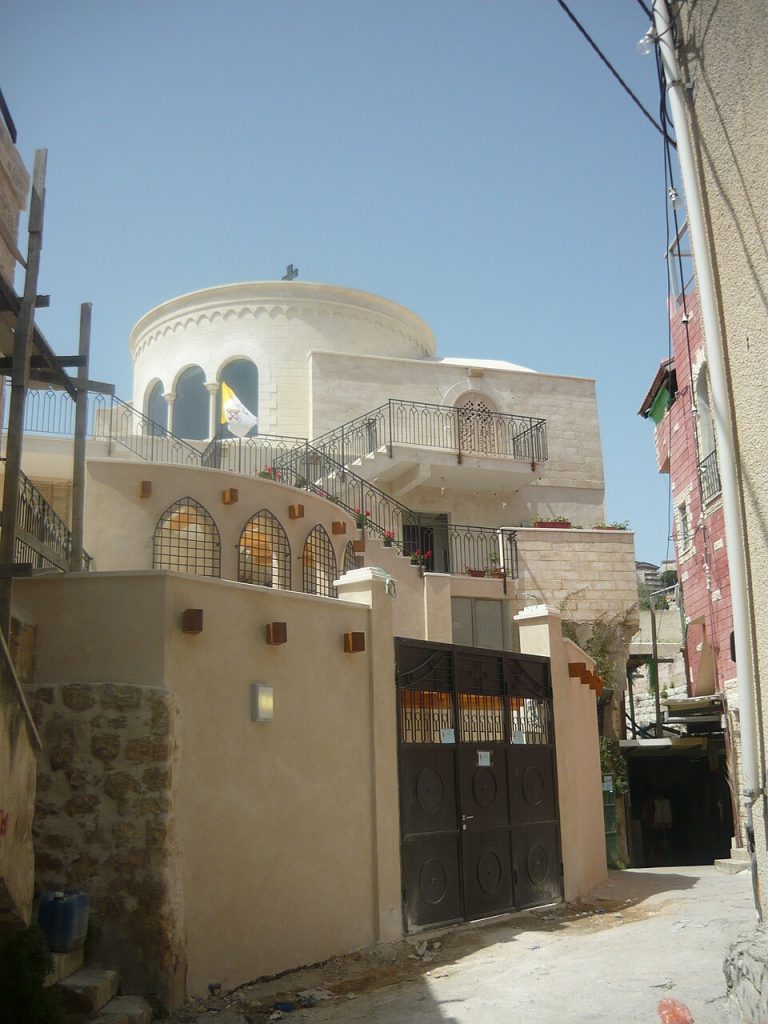
The oldest phase at that spot belonged to the Iron Age, centuries before the time of Jesus. The middle group of deposits and structures spans the late Hellenistic and Early Roman periods. Alexandre’s report describes the house itself as extending from the first century BC into the early second century AD, while the broader phase includes evidence from the late second century BC. The upper phase belongs to the Crusader and Mamluk periods, many centuries later. Having three phases in one area lets archaeologists study change at the same location, while the gaps between them are a reminder that a single trench cannot tell the entire history of Nazareth. Publication and IAA period ranges and Alexandre’s detailed summary
One of the Early Roman arrangements incorporated a wall from the Iron Age beneath it. Think about that change from the builders’ point of view. A standing wall or a serviceable line of masonry might offer a practical footing for a new room. That decision is useful to present-day excavators, who can see an older line of masonry preserved inside a younger building. Its early stones do not date the activities on the later floor. To distinguish those, archaeologists compare the levels on either side and examine pottery from the layers associated with each stage. Report summary on reuse of the Iron Age wall
A household above and below ground
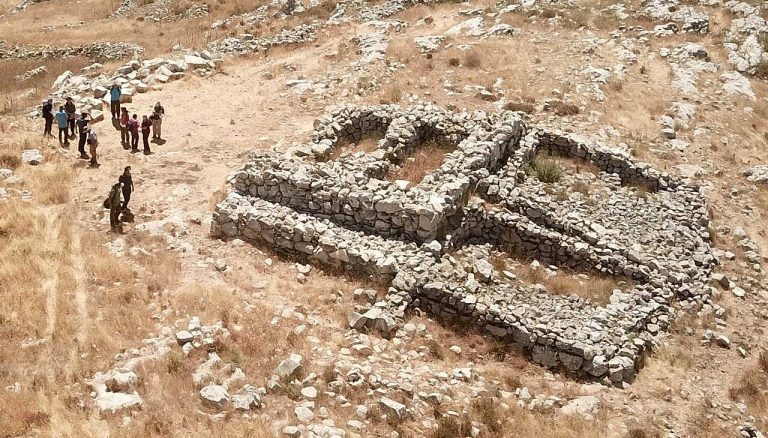
The exposed walls indicate at least two rooms. A courtyard has also been proposed as part of the layout. In a village house, a yard could receive light and provide space to prepare food, mend things, or move between rooms. Storage below ground could free up space for those activities. Surviving walls and features make those uses imaginable, although a partial plan leaves questions about the original extent of the house and details such as its roof. Comparison with excavated dwellings elsewhere in Galilee helps archaeologists consider which arrangement best fits the evidence. Dark’s comparison of dwellings in the Galilee
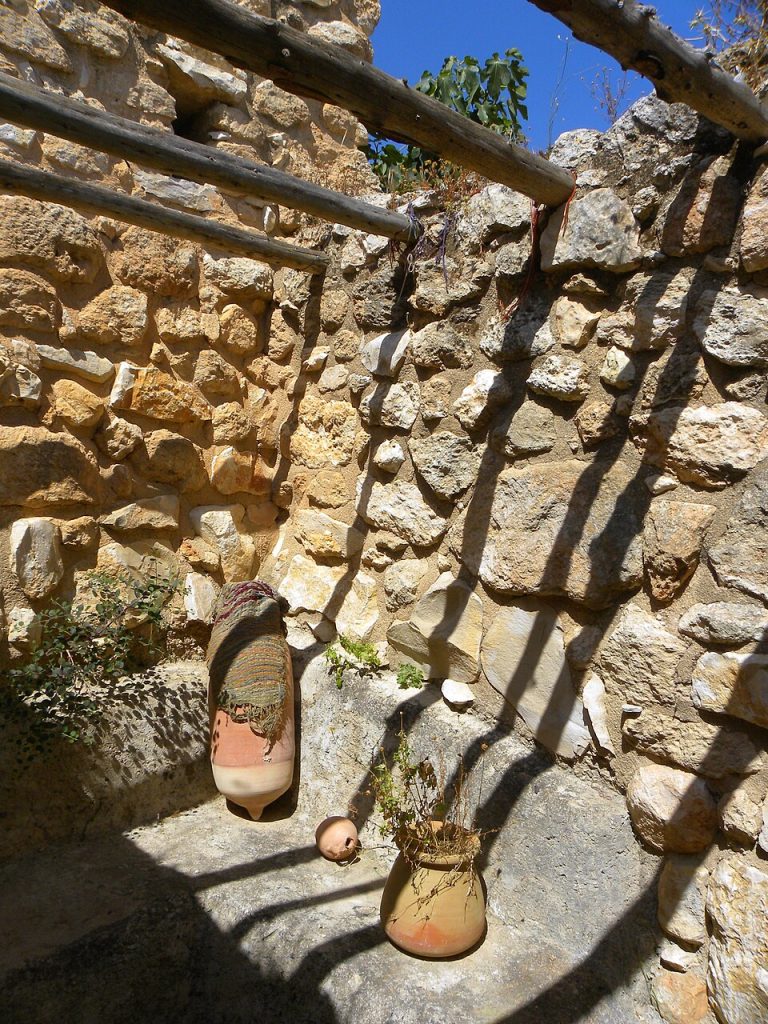
In the excavation report, the underground spaces are a three-level complex of pits or silos. A silo is a place for storing supplies. Alexandre thinks some spaces first served for storage and were subsequently enlarged or made harder to see. She proposes that the later alterations might relate to efforts to prepare hiding places during the First Jewish Revolt. That episode belongs to the late 60s AD, decades after Jesus’ ministry. It illustrates how the same house could serve different needs over generations. The report sees signs of continued use after the revolt and ending in the early second century. Excavation report on the pits and Discussion of phases and the hiding-place hypothesis
Cutting a chamber and filling it with broken vessels leave different traces. The tool marks and the way the cuts meet can suggest a sequence of work in the rock. Pottery in a fill helps date the deposit put there later. Pieces can still have been in use for some time before someone discarded them. Keeping these actions distinct prevents a pot in the lowest chamber from being treated as a precise date for every room above. The research problem is a useful example of why an artifact’s findspot matters.
A few surviving rooms bring the ordinary scale of Nazareth into focus. The people of the Gospels lived among families who cooked, stored provisions, worked stone, and made choices about the vessels they used.
Why the material of a vessel matters
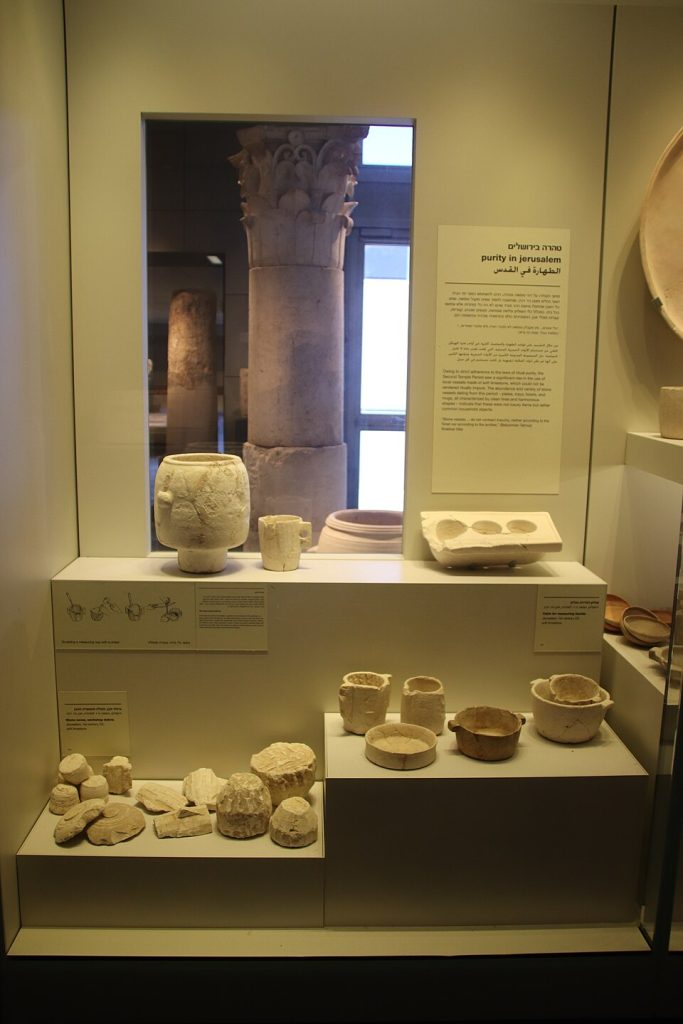
Some of the household’s fragments came from vessels made of soft chalkstone. In the wider region, archaeologists have also recovered tools and debris associated with making that kind of vessel, including cores left behind when vessel interiors were shaped. Chalkstone vessels are often discussed in connection with Jewish practices of ritual purity in the Second Temple period. Leviticus 11:33 specifies breaking an earthenware vessel under certain circumstances. Ancient Jewish purity rules treated stone vessels differently, which helps explain the appeal of owning cups, bowls, or other containers worked from chalk. Comparative Nazareth excavation results and Er-Reina field report on regional stone vessel production
The large amounts of pottery discarded in the house’s pits are a related clue. Alexandre raises the possibility that people broke and discarded some of these vessels when they became ritually impure. A household can break or throw away pots for more than one reason, so the report’s suggestion is best considered alongside the amount and composition of the deposit, the chalkstone fragments, and comparisons with other sites. The archaeology makes a practice from ancient Jewish life more tangible while leaving room for ambiguity about a particular broken pot. Alexandre’s discussion of pottery and purity
John 2:6 puts stone vessels in view at a wedding in Cana and explicitly connects them with Jewish purification. Cana is a different place, and the vessels there are described as large water jars. John’s description is a useful companion to the Nazareth evidence because it shows that the material could matter to a household. The wedding story centers on Christ’s sign and the response of his disciples. The archaeology helps readers notice a detail of Jewish practice that John expected to be meaningful.
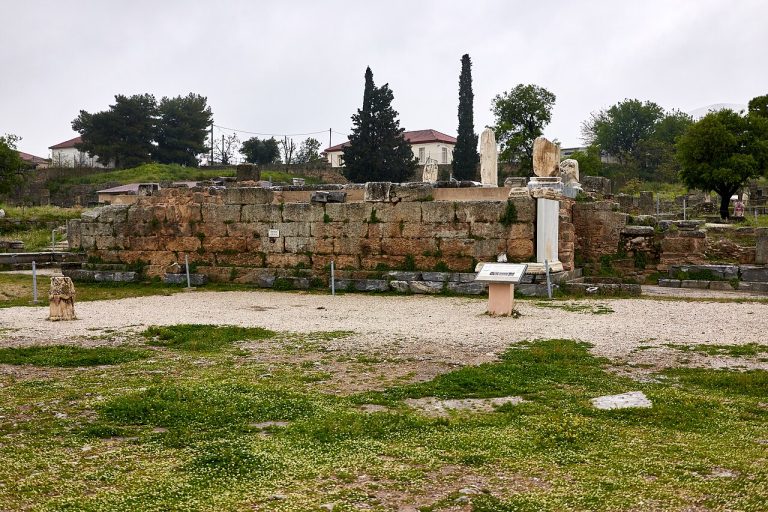
The archaeological distinction between a vessel’s material and its function is worth keeping in mind. A published drawing may record a cup’s rim, handle, or base even when a complete cup cannot be restored. Shape can identify it as a type known elsewhere, while a view of how the fragment was shaped and finished can point to the craft behind it. A finished object from a different site, such as one in the museum display, can help a reader visualize a type. The excavated fragment supplies the link to the particular house under study.
Two houses in central Nazareth
A second archaeological site sometimes appears in news coverage of the 2009 find. At the Sisters of Nazareth convent, archaeologist Ken Dark and his project studied a separate structure partly cut into rock. The evidence there includes later use of the area for burials and later Christian structures. Dark compares the earlier building with courtyard houses in Roman Galilee and notes the parallels with the International Marian Center evidence. They are distinct plots and archaeological sequences. Readers can use the site map in Dark’s report to locate both near the basilica. Dark’s study of the convent site and Open copy with site map
The 2009 report supplies a place, a material culture, and a span of occupation. The Bible names the people whose story we are reading. To identify one archaeological house with a named family would require evidence that singles out those people. In Nazareth we have original walls and household objects substantial enough to show how villagers lived, with no surviving identification of the people who owned the house. The value of these remains is the direct view they give of a Jewish home of the period.
Nazareth’s setting further explains why so much can survive in small patches. People could adapt the soft rock under their feet to make useful spaces, while later buildings could preserve part of an old wall as a foundation and remove another part to make room. Finds from one small excavation therefore tell us most about the individual property and its immediate setting. Adding a second site gives the archaeologist an independent point of comparison for life in the settlement.
Reading the Gospels with the village in view
Luke 2 briefly describes the years between Jesus’ return to Nazareth and his public ministry, giving particular attention to his visit to Jerusalem at the age of twelve and his return with Mary and Joseph. His years of growing up pass with very little description. The excavation supplies some material details a reader might otherwise miss. An ordinary house could have a long history on a single patch of land. Provisions could be stored below living spaces. Clay and stone vessels could be kept together, and the choice of a material could carry religious significance.
Later, in Luke 4, Jesus returns to the synagogue in the town where he grew up. He reads from Isaiah and announces the fulfillment of the Scripture in the hearing of his neighbors. Matthew 13 tells of listeners who recognize his mother, brothers, and sisters. These people knew the network of households to which Jesus belonged. To read the chapters with Nazareth’s walls in mind is to remember the ordinary setting for that extraordinary claim. The Son Christians worship grew up among people who saw him around town and knew his family. The 2009 house gives us a rare, well-recorded glimpse of the kind of place those neighbors called home.
Sources and further reading
- Yardenna Alexandre, The Settlement History of Nazareth in the Iron Age and Early Roman Period (2020) — Israel Antiquities Authority's publication of the International Marian Center rescue excavation, with a summary of the three strata and the Early Roman household.
- Alexandre, complete citation and extended summary — Journal edition on the reused Iron Age wall, occupation and abandonment, and hypotheses about the pits.
- Ken Dark, Early Roman-Period Nazareth and the Sisters of Nazareth Convent (2012) — Primary publication of a separate excavated building and the site's subsequent use for burials.
- Dark, full paper with site map and comparison with the 2009 excavation — Open author copy with diagrams and discussion of the excavation's placement, walls, and ceramic finds.
- Alexandre and colleagues, Er-Reina field report (2012) — Comparative excavation alongside regional evidence for production and use of chalkstone vessels.
- AP Archive, December 2009 Nazareth footage — Original footage of the announcement at the excavation, with an on-site interview and views of exposed walls.