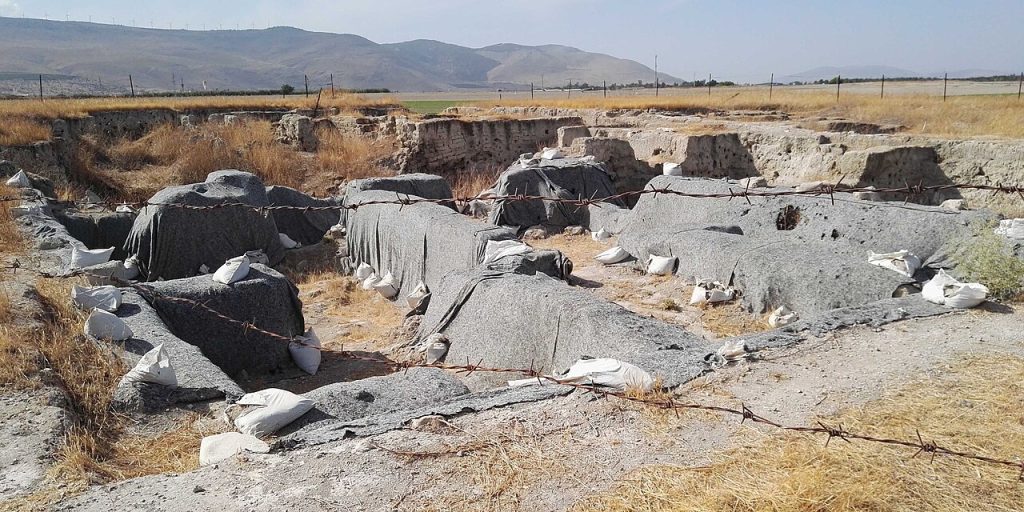
The excavators at Tel Rehov found rows of clay cylinders in the middle of an Iron Age settlement. Each cylinder was roughly the length of a person’s arm. One end had a small hole, while the other could be closed with a removable lid. What settled the question of their use was evidence small enough to be missed by anyone looking only at the walls. The hives contained charred remains of bees and comb. The settlement had an apiary, a place where people kept many colonies together. We can read the Bible’s descriptions of honey knowing that some of the people who lived in this land worked to produce it on a considerable scale. Final excavation report, chapter 14
Key takeaways
- Excavations from 2005 to 2007 uncovered a large apiary from the late tenth to early ninth century BC at Tel Rehov in the Jordan Valley.
- Archaeologists found standardized clay hives, charred honeycomb, and bee remains. The extent of the surviving rows suggests that the complete installation once held many more hives than were excavated.
- Scripture uses honey to describe the land’s goodness and in stories about finding it in the wild. The apiary gives us independent evidence of a third setting, large-scale production within a town.
Rows of hives under collapsed walls
Tel Rehov rose above the Beth-Shean Valley. The settlement lay close to arable land and routes through the Jordan Valley, so its inhabitants were well placed to produce and move goods. The apiary came to light in an excavated area that included buildings from more than one phase of the Iron Age. The remains of the hives belong to a phase called Stratum V in the site report. Archaeologists dated it by comparing buildings and pottery and by testing charred plant material. The dates allow the team to associate the hives with the late tenth and early ninth centuries BC, while the surviving samples do not assign the fire to a single known year. Excavation report and dating table
The hives stood within a built-up area. Excavators traced three rows, with passages between them and evidence of cylinders stacked above the lowest tier. About thirty hives were uncovered, many of them incompletely. By projecting the length of the rows and accounting for upper tiers, the archaeologists estimate that the working installation may have held roughly a hundred to two hundred hives. The exact total depends on which features extended beyond the excavated area and how many upper levels were in use. The remains of rows, passages, and standardized cylinders are enough to show that the installation required planning and upkeep even if its original size remains uncertain. Mazar’s account of the layout and estimates
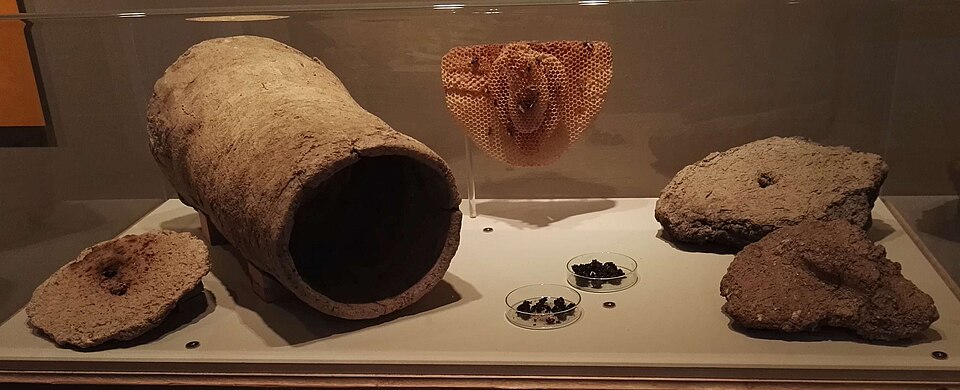
The cylinders were typically about seventy to eighty centimeters long. The workshops or households that made them used clay with organic material such as straw. A small opening allowed the bees to come and go at one end. A handled lid on the other gave a keeper access to the interior. The physical arrangement is part of the evidence. Stacking hives saved space, but workers also needed a way to reach individual lids. The separation of rows made sense in a place with many cylinders to tend. Readers can see details of that arrangement in the site photographs and plans in the excavation monograph. Original photographs of the hive rows and lids
How archaeologists recognized the installation
- The shape and closures show an aperture at one end and a wide opening with a removable lid at the other.
- The placement shows rows with passageways and remains of stacked cylinders.
- The contents include carbonized honeycomb and pieces of bees. The combination identifies the installation as an apiary.
The buildings next to the apiary burned and parts of their walls collapsed onto it. An event destructive to people and their work left unusually rich archaeological evidence. Burned wood and fallen mud brick covered parts of the hives. Some pieces of comb charred and survived instead of breaking down as they normally would. The hives were lost as working equipment. Their contents became possible to study much later. That history is worth remembering when we compare the find with other sites. A lack of preserved hives in comparable towns may reflect the kind of material used, the history of the site, or the limits of where people have excavated. Chapter 14, destruction and surviving organic remains
What the bee remains can tell us
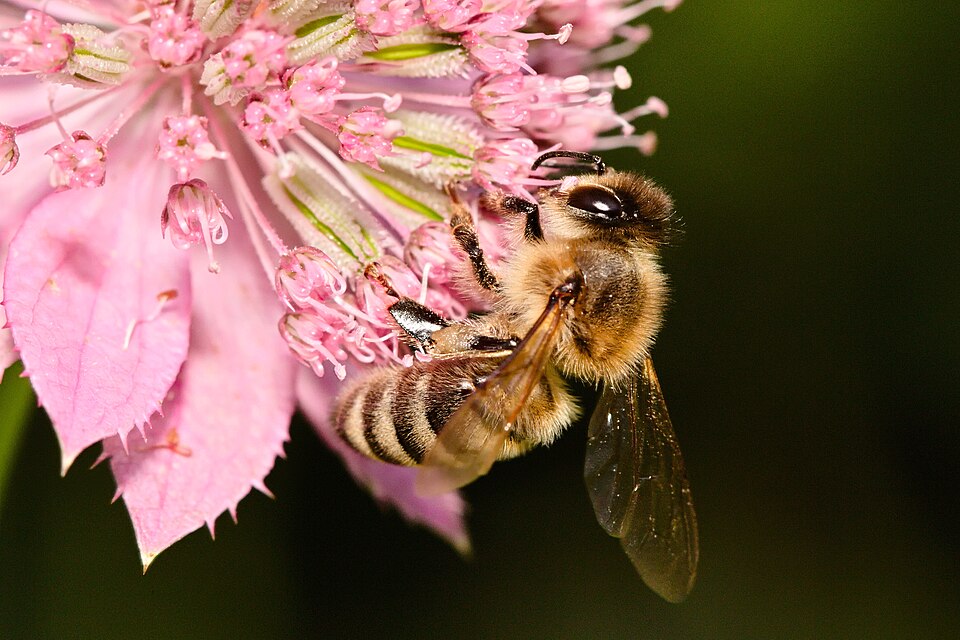
The evidence includes small portions of bee bodies preserved within burnt comb. Using magnified images, the researchers compared anatomical features of wings and a leg with examples from modern honeybee populations. The reported measurements resembled Anatolian honeybees more closely than the Syrian subspecies generally associated with this region today. That raised a historical question. The people who managed these hives could have obtained bees through connections with Anatolia, or the geography of bee populations could have differed in the Iron Age. The authors favor human movement of bees and discuss plausible routes. The remains do not settle when any individual colony arrived or which traders were involved. The excavators’ 2022 update
An apiary provided more than a sweet food. Wax could be collected from the comb and had uses of its own. The excavation team has suggested that beeswax might have supplied crafts such as metal casting, in which a wax model gives the shape that a mold will preserve. The study presents a possible connection between industries. Its value is that it prompts a question about the demand a site of this size could meet. Honey and wax could go to different customers. Even without knowing where each product ended up, it is reasonable to consider the skilled work and exchange needed to maintain such a specialized operation inside a town. Mazar, Panitz-Cohen, and Bloch on possible uses of wax
The regularity of the hives says something about that organization. If one household needed a little honey, it could keep a handful of colonies. The installations in three rows make it more plausible that a much larger group or enterprise depended on the work of keepers. How it was owned or funded is harder to determine. Excavators can record who occupied a building only when an inscription or other unusually precise clue survives. Here the evidence shows a sizable productive installation and some of its equipment. It leaves the names of the people who designed and ran it beyond our reach. The report’s discussion of labor and scale
The Eretz Israel Museum exhibition included a practical study with reproductions that followed the basic shape and dimensions of the ancient hives. The modern makers worked under different conditions and did not copy every material or method. When the occupants of the modern cylinders built comb, they showed that this basic form could function as living equipment, and produced a fresh point of comparison for the preservation of the ancient material. A working model allows observations about how a vessel might be used. The particular shapes of the excavated lids and the organization of the rows still have to be established by evidence from the ground. Chapter 14E, museum experiment
The hives at Tel Rehov let us see the work that stood behind a food the Bible’s readers already knew by taste.
Honey in the world of Scripture
In Exodus 3 the Lord tells Moses that he has seen Israel’s affliction in Egypt and will bring his people into a good and broad land, described as flowing with milk and honey. Deuteronomy 8 names the fruits and grains of the land and sets that abundance beside a warning. When the people have eaten their fill and built good houses, they are to remember the Lord who gave them the ability to prosper. The place promised to Israel was a place of work and harvest. Tel Rehov invites us to picture some of the skill and organization by which people could later enjoy the goods that marked a fertile land. Exodus 3:7–10 and Deuteronomy 8:7–18
The Bible also describes particular occasions when people encountered honey from bees living in the wild. Judges 14 tells how Samson found a swarm and honey in the carcass of a lion. The episode supplies material for his riddle at the wedding feast. In 1 Samuel 14 the army comes across honey in a wooded place while bound by Saul’s oath against eating. Jonathan, who had not heard the oath, tastes it and revives. Each account uses an ordinary thing with recognizable effects in an unusual set of circumstances. The writers locate the honey well enough for us to see that their stories are a different kind of evidence from a fixed installation in a town. Judges 14 and 1 Samuel 14
Bible readers should also look at the particular verse before assuming the source of its honey. Ancient writers could use sweet foods in descriptions of abundance where the source was left unstated. A comb or a swarm gives a more direct clue than the broad phrase used to praise a place. The clay hives put bee honey among the products people demonstrably made in the region. They do not decide what a word refers to in a passage that gives no such physical setting. This is a case in which an excavation enlarges the reader’s understanding of the possibilities without making the Scripture’s language less rich. Mazar and Panitz-Cohen on beekeeping and biblical language
The site also belongs in the history of ordinary agriculture. The Gezer Calendar gives a different view of agricultural work, organizing it by seasons. The Tel Rehov hives give us the equipment from one specialized kind of production. Neither record preserves every choice a worker made. One leaves us a list of work across the year, and the other gives us the passages, cylinders, and traces left behind by people who tended colonies. Together they bring agriculture closer than a general statement about the economy ever could. Old food words in Scripture often depend on the kind of practical knowledge such finds begin to recover.
As Christians, we receive the Bible’s account of God’s provision as true and its call to remember him as a word to us. A well-made clay lid or a buried comb does not carry that message by itself. The remarkable thing about the discovery is how much patient human work becomes visible through such fragments. Keeping colonies, tending the fields around them, and passing the harvest on to others all took skill. The biblical language of a good land can include the taste of honey and the labor by which it comes to a table. At Tel Rehov we have a place where people did that labor together.
Sources and further reading
- Amihai Mazar et al., Tel Reḥov, Volume 2, Chapter 14, The Apiary — Excavation monograph with original field photographs, drawings, material analysis, and scientific studies.
- Mazar and Panitz-Cohen, It Is the Land of Honey — Original archaeological discussion of the installation and its broader significance.
- Mazar, Panitz-Cohen, and Bloch, The Apiary at Tel Reḥov, An Update — Update on the identification of bee remains, and proposed links to trade and metalworking.
- Bloch et al., Industrial apiculture in the Jordan valley during Biblical times with Anatolian honeybees — Primary study of the ancient honeybee remains.
- Amihai Mazar, Discoveries from Tel Rehov, the Early Days of the Israelite Monarchy — Museum exhibition catalog by the excavator, explaining the hive rows and estimates of their scale.
- Exodus 3 and Deuteronomy 8 — The Lord’s rescue and promise of a productive land, and Israel’s response to abundance.
- Judges 14 and 1 Samuel 14 — Biblical scenes in which the context makes clear that the honey comes from bees.





