One of Jerusalem’s smallest ancient inscriptions could fit across two fingers. Its silver was so thin that someone had rolled it into a tiny cylinder. When conservation staff opened the roll, they found lines of Hebrew cut into the metal. Near the end of the writing were words strikingly close to the blessing in Numbers 6. The smaller roll and its larger companion, found at Ketef Hinnom in 1979, are among the earliest surviving objects to preserve words also found in the Bible. Their size makes their survival remarkable. Their findspot and the details of their lettering help us understand who might have carried those words and when. The Israel Museum, object record
What you'll learn
- Where excavators found the two silver rolls and what a burial repository tells us about them.
- How specialists made out lettering on such small, damaged surfaces.
- Which parts of Numbers 6 can be recognized on the silver and what the discovery contributes to the history of the blessing.
A find among the belongings of the dead
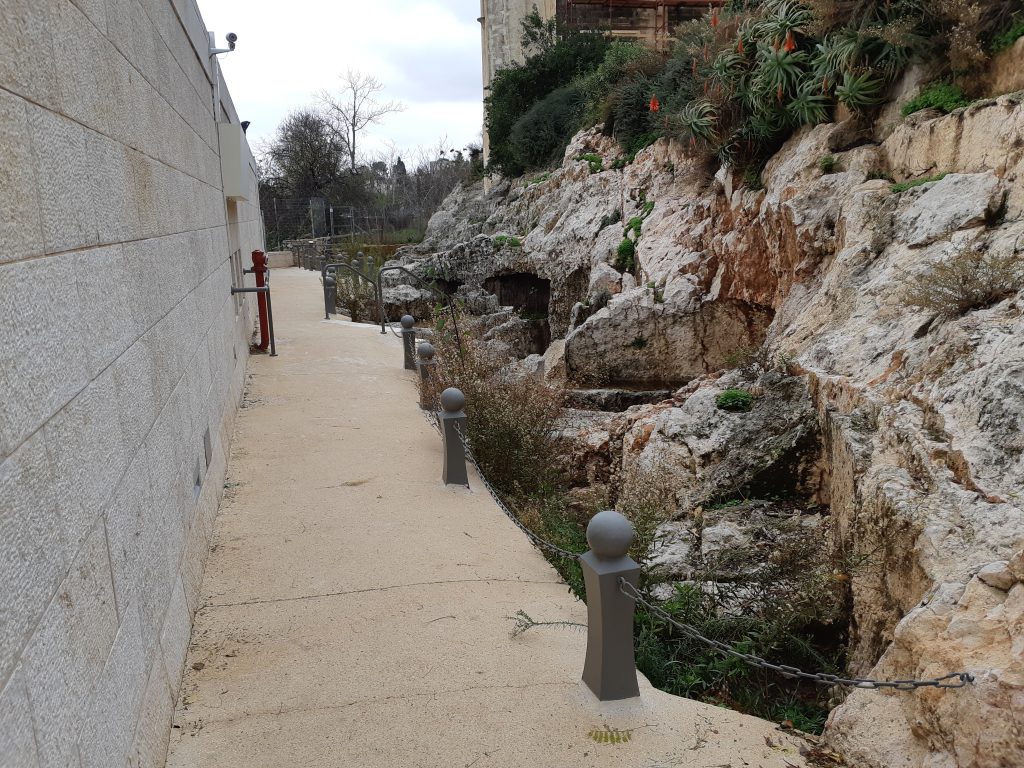
Ketef Hinnom lies on the shoulder of the Hinnom Valley southwest of the Old City of Jerusalem. The rock-cut tombs there held burial chambers with places for bodies and space to put their remains when a family used the chamber again. In 1979 a team led by archaeologist Gabriel Barkay investigated a repository under Chamber 25 in Cave 24. It yielded human remains and many objects connected with the burials. Among them were two small rolls of silver. The stories of their recovery, conservation and reading belong to several stages of work spread across years. Barkay’s excavation and inscription publication Na’aman, pp. 184–187, find context
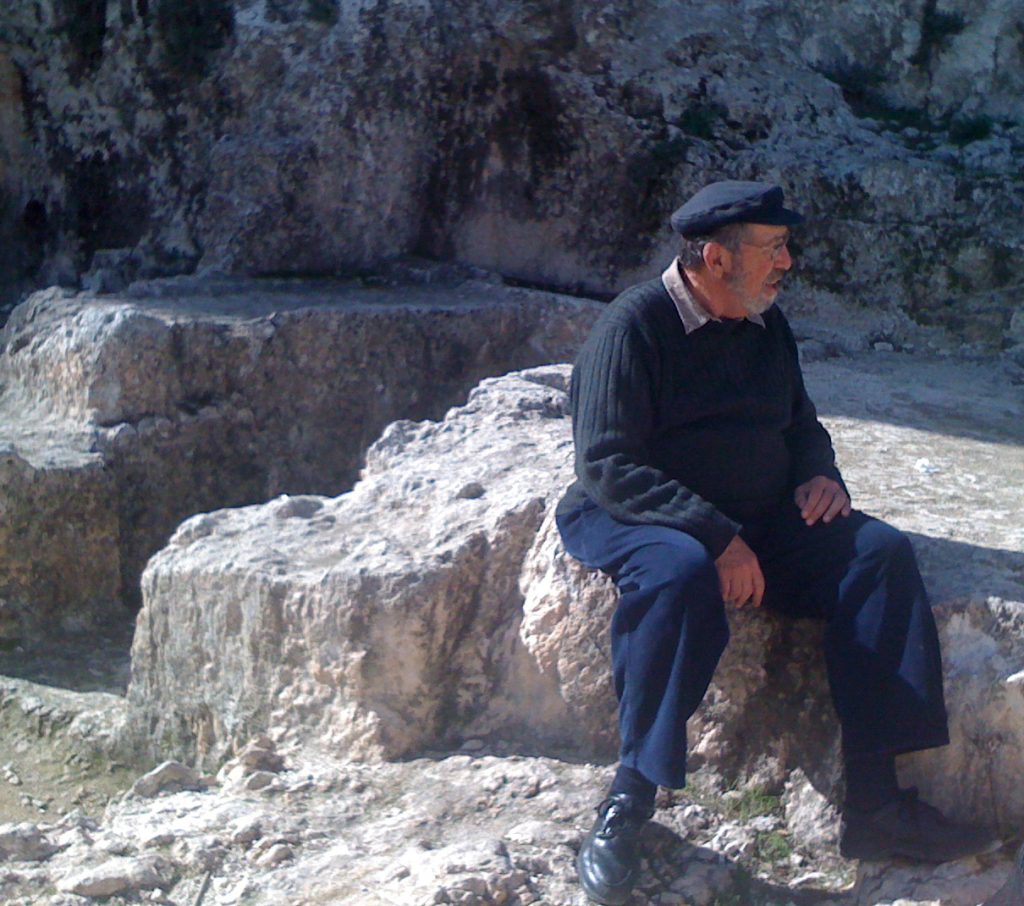
A repository is particularly informative when modern investigators can establish the relationships between the finds and the space where they were kept. It can also pose a difficult dating problem. People used the burial area over a period of time and moved older burials to make space for later ones. Small possessions could accumulate and shift. An object close to the floor may be early in the sequence, but assigning it to a specific decade requires independent support. This is one reason scholars compare the archaeology of the cave with the shapes and spelling of the letters cut into the metal. Each piece of evidence has its own degree of precision. Barkay and colleagues, 2004 edition Na’aman on the accumulating deposit
Once unrolled, the larger plaque, KH1, measures about 9.7 centimeters by 2.7 centimeters. The smaller, KH2, measures about 3.9 centimeters by 1.1 centimeters. Those dimensions describe the surviving metal once opened. The same strips took up much less space when rolled. The form and language have led scholars to describe them as amulets, items people could carry to seek protection. The cave tells us how they came to be preserved. It leaves room for several possibilities about exactly who carried them, whether they were worn in the same way, and when they entered the burial deposit. The Israel Museum, dimensions and material
Reading letters cut into silver
A flat photograph can make the surface look almost featureless. Ancient writing was scratched with a very fine point. Creasing, breaks and corrosion interrupt the lines. The same scar can appear more or less prominent as the angle of the light changes. That matters in a script in which a single stroke can help distinguish letters. Before a scholar proposes a translation, another reader needs to be able to compare how the proposed signs fit the surviving marks. When the object is too small and fragile for casual handling, the photographs are part of the evidence on which the interpretation stands. 2004 edition, high-resolution imaging and revised readings
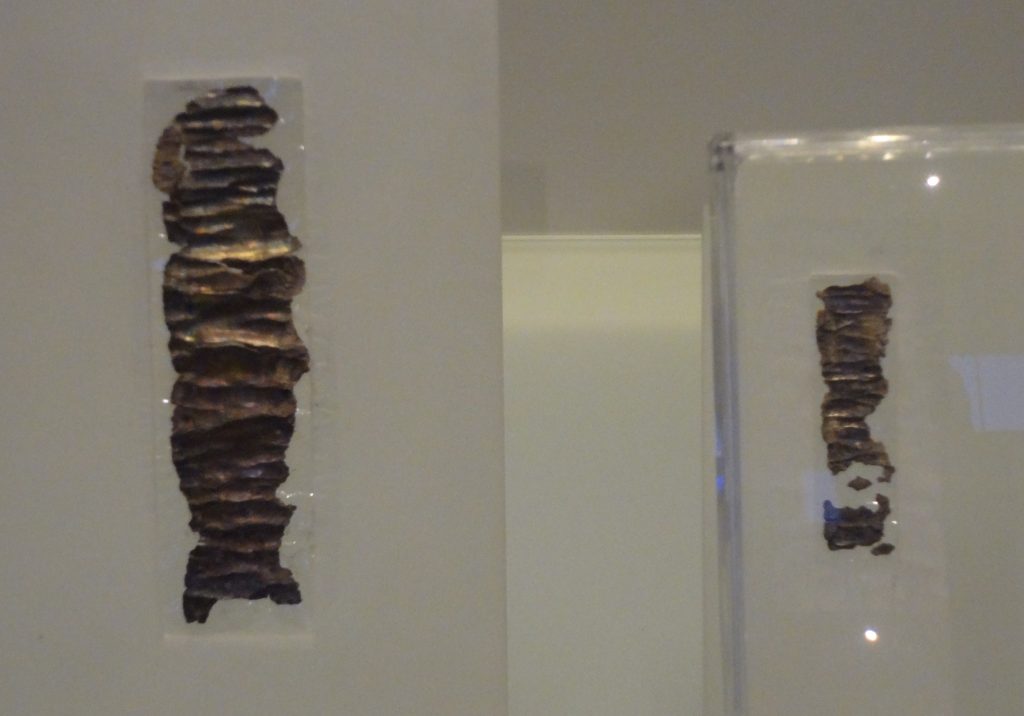
In 2004 Barkay and colleagues published a renewed edition using detailed imaging from West Semitic Research. They identified additional traces and refined readings of difficult marks. The text of KH1 includes broken phrases that the editors relate to covenant loyalty and protection, alongside language of blessing. KH2 is smaller and carries its own version of the blessing. The inscription edition distinguishes letters the researchers can see from words they reconstruct in the space left by a gap. The marks left on silver sometimes support a plausible phrase with less certainty than a whole, clean line of writing would allow. Barkay, Lundberg, Vaughn and Zuckerman, new edition Jerusalem inscription corpus, Amulets 1 and 2
The dating arguments also deserve to stay attached to the surviving letters. The 2004 edition puts the engraving in the late preexilic period. A late seventh- or early sixth-century BC date is a usual way of expressing that window. The Israel Museum labels the objects Iron Age II and sixth century BC. Nadav Na’aman proposed a later date in the late sixth or early fifth century BC, especially on grounds of spelling. Shmuel Aḥituv disputed that later conclusion. The difference matters if we ask whether the rolls were engraved shortly before or after Jerusalem’s fall. Either proposed range makes the rolls much earlier than the Dead Sea Scrolls. 2004 edition, dating argument Na’aman’s alternative Aḥituv’s response
The differences between the metal and the Lachish Letters show why scholars study the medium as well as the letter shapes. At Lachish, someone painted words in ink on a potsherd. At Ketef Hinnom, a fine point cut marks into silver. Both media could carry ancient Hebrew, but pressing an incision into a metal surface calls for a different kind of movement from writing in ink. The number of comparable objects and the reliability of their dates matter too. An argument about the shape of a letter is stronger when it can be set beside several dated instances with reasonably similar forms. Jerusalem corpus and comparisons
What is shared with Numbers 6
In Numbers 6:22–27, God tells Moses to instruct Aaron and his sons how to bless Israel. In three lines the priests ask the Lord to bless and keep his people, to shine his face on them and be gracious, and to turn his face toward them and give them peace. The succeeding verse explains that the priests put God’s name on the people and that he will bless them. The sequence begins and ends with God’s action. Giving the blessing is the priests’ assigned work. The favor and peace they pronounce belong to the Lord who meets his people.
The words at the close of the amulets belong recognizably to that pattern. The shorter one preserves language about the Lord blessing and protecting the addressee, making his face shine and giving peace. It condenses wording that appears across several lines in Numbers. Some of the longer scroll’s relevant language survives in more damaged form. Researchers can compare the pieces with one another and with the biblical wording while they account for the separate content on each. A form of the blessing could be adapted to a small object without losing the core phrases by which we’re able to recognize it. Israel Museum comparison with Numbers 6 Jerusalem inscription corpus
The opening of the longer roll also invites comparison with Deuteronomy 7:9. There Moses calls Israel to recognize the Lord’s faithfulness in keeping covenant and steadfast love with those who love him and keep his commandments. Editors have proposed related words for part of KH1. A reader can appreciate how telling that echo might be and should bear in mind that the silver in that part of the object is broken. The clearest comparisons come when several connected terms and their order are visible. A comparison based on a handful of traces has a different weight even when the suggested words are familiar. Jerusalem corpus, transcription of KH1
This is direct evidence that language preserved in Scripture was in use very early. It is a narrower kind of evidence than an excavated manuscript of the full book of Numbers. The inscriptions contain their own preceding phrases, and we do not know whether their engravers copied a written book, knew a liturgical form of the blessing, or drew on both. They do show how resilient a recognizable pattern of speech could be across settings. An appeal preserved for us in a passage about Israel’s priests also survives on two tiny objects tied to the life and burial of people in Jerusalem. 2004 edition on the biblical parallels
The size of the silver tells us what someone could carry. The words tell us whom that person looked to for blessing and peace.
A blessing in worship and ordinary life
Scripture knows the act of engraving holy words on metal. Exodus 28:36–38 describes a gold plate for the high priest bearing an inscription of holiness to the Lord. That passage concerns Aaron’s appointed worship and a specific item of priestly clothing. The silver from Ketef Hinnom supplies a separate case of the Lord’s name engraved on precious material. The comparison makes the act of cutting words into metal easier to imagine and leaves the meaning of each object connected to its own setting. A fragment found with burials raises different questions about its makers and owners than an instruction about a priestly garment.
Psalm 67 begins by turning language of divine favor and a shining face toward a larger hope. The psalm asks that God’s ways and saving power would become known among the nations. That is a different setting again. It shows how Scripture itself takes the language of blessing into prayer. As Christians we trust what these passages tell us about the Lord. The discovery gives historical weight and intimacy to the line about his face. People once valued words so close to the words we pray that they took the trouble to cut them one stroke at a time into strips of silver.
We can recognize the desire for protection an object like this expresses and let Numbers tell us where protection and peace come from. The metal held the marks long enough for us to read them. The blessing directs the hearer to the Lord. That is why the material evidence has such resonance for Christian readers without making the object itself the center of faith. The prayer was spoken over people who needed grace and peace, and it remains intelligible to people who need the same things now. At Ketef Hinnom the preservation of a few lines lets us come unusually close to that shared dependence.
Sources and further reading
- Gabriel Barkay, The Priestly Benediction on Silver Plaques from Ketef Hinnom in Jerusalem (1992) — First extended English publication from the excavator, with the find context and early readings.
- Gabriel Barkay, Marilyn J. Lundberg, Andrew G. Vaughn and Bruce Zuckerman, The Amulets from Ketef Hinnom (2004) — New edition based on high-resolution imaging, with revised readings and an argument for a late preexilic date.
- The Israel Museum, Priestly Benediction on amulets — Museum record with an original object view, dating, dimensions and provenance.
- A Corpus of Iron Age II Inscriptions from Jerusalem (Jerusalem Journal of Archaeology) — Jerusalem corpus including the texts and dimensions of the two Ketef Hinnom finds.
- Nadav Na’aman, A New Appraisal of the Silver Amulets from Ketef Hinnom (2011) — Alternative dating and a proposed reading of KH1. Compare the discussion on pp. 184–188.
- Shmuel Aḥituv, A Rejoinder to Nadav Naʾaman (2012) — Specialist response to the proposed later date and readings.





