The Gezer Calendar is small enough to fit in a hand, yet it follows a farming year. Someone scratched into the limestone a series of short entries for work such as sowing, harvesting barley and gathering summer fruit. The tablet was recovered in 1908, and researchers commonly date its writing to the tenth century BC. Its entries help us imagine the seasons behind the biblical feasts of harvest and ingathering in Exodus 23. The stone leaves a separate question open. Whoever made the list could have meant it as a practical reminder, an exercise in writing or a familiar way of reciting the year. Macalister, Excavation of Gezer, vol. II, pp. 24–28
What you'll learn
- How seven short lines can describe eight work periods and cover a full farming year.
- Why experts debate the original use, date and language of the limestone tablet.
- How the seasonal work at Gezer helps explain the language of Exodus and the place of labor in the Bible.
What Macalister found
R. A. S. Macalister recovered the tablet while excavating Gezer for the Palestine Exploration Fund. Early reports describe a broken block of limestone just over four inches high, with lines scratched across its face and a shorter entry at the lower left. The surface has marks that make individual letters difficult to distinguish. Some cuts may be incidental. Others are part of the writing. In the first scholarship about the stone, specialists who agreed that it was largely about agriculture proposed different readings of particular signs and different ways of counting the periods. The original is preserved in the Istanbul Archaeological Museums. Palestine Exploration Fund’s early descriptions and readings
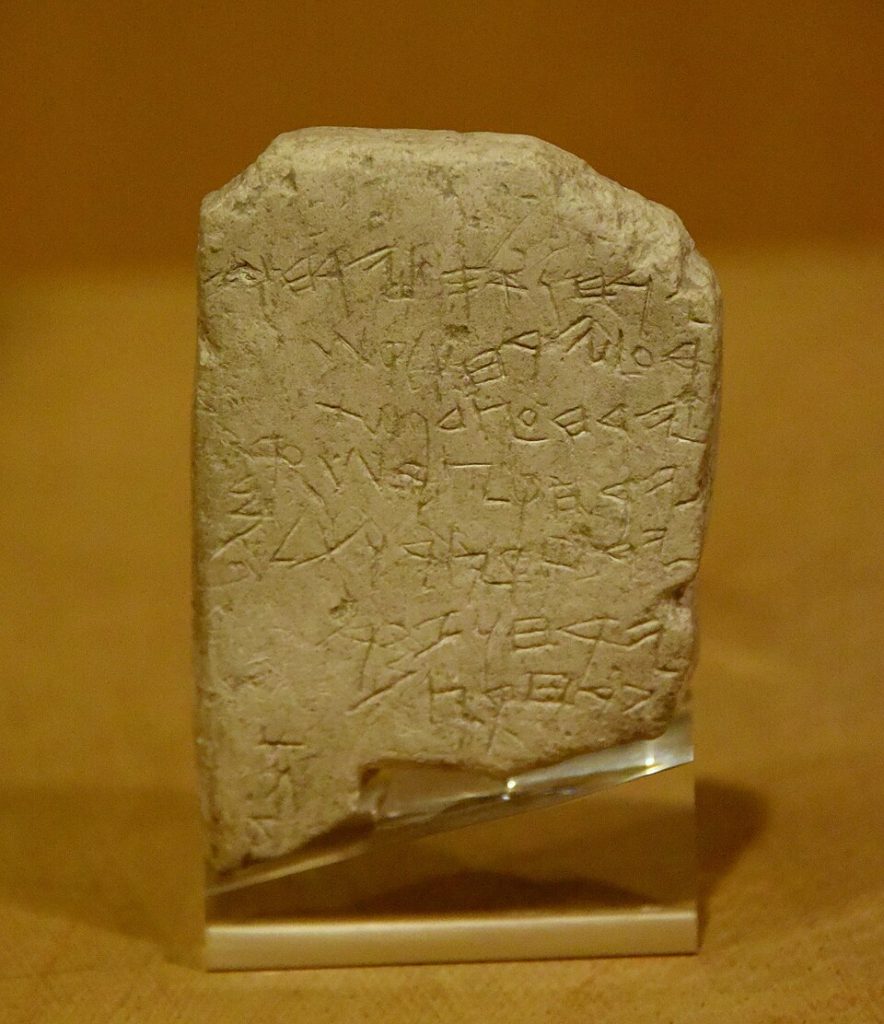
The date you usually see beside the stone is an estimate based largely on the script. The forms can be compared with early alphabetic writing from the region. Macalister’s early twentieth-century excavation records lack the kind of fine stratigraphic associations that would allow a tight independent date from the tablet’s surroundings. Modern excavations can trace occupation and building phases at the site much more closely, with charcoal or seeds measured for radiocarbon in some of those phases. Those measurements date their own samples and contexts. The tablet remains dated through its own evidence, including the old labels historians use when discussing the stage of development its letters represent. Palaeographic comparison Webster and colleagues, excavation history and radiocarbon contexts
Calling the writing early Hebrew is customary. Northwest Semitic languages in the region shared many words and features of writing, and researchers have asked whether this particular short inscription may be classified as Phoenician or another closely related variety. Compare the language question with the question of how old the lettering looks. The small number of words makes some distinctions difficult, even if the broad date seems plausible. For readers interested in what writing could do, the main point survives the debate. Someone in the ancient world of Gezer used an alphabetic inscription to describe work done at recognizable times in a year. Sivan on the Northwest Semitic language Hebrew and Phoenician comparisons
A year counted through work
The name “calendar” can put the wrong object in mind. Think of the order in which fields need attention. In a widely used reading, the writer first gives a longer period for gathering produce. Sowing and later sowing follow. Then come shorter periods associated with flax, barley and another grain harvest, followed by care or gathering in the vineyard and a final period for summer fruit. Many readings count two months for four of those activities and one month each for the others. Seven physical lines can spell out eight successive periods. The short entries take up the space available on stone. Honeyman on eight periods and twelve months
- Gather and sow. The opening moves from ingathering through sowing and a later sowing period.
- Work flax and cut grain. The middle entries name work often associated with flax, followed by barley and another harvest.
- Tend the vines and gather summer fruit. These activities belong near the close of the cycle in common readings.
One virtue of this little list is the attention it gives to crops that keep different schedules. The time for getting seed into the ground depends on the crop and conditions. A household waits for barley and other grain at different times. The work of a vineyard and the handling of summer fruit then fit in wherever local circumstances and the year’s weather allow. The lines make each period memorable through a task. That is an ancient way of speaking about seasons that remains intelligible even if you have always known months by numbered dates and have never grown grain yourself.
Several of the agricultural terms still reward close reading. For the line traditionally associated with flax, the usual reading of an adjacent word has been related to cutting, though flax can be uprooted when harvested for its fibers. Aaron Koller asks whether the specialized vocabulary of northern Hebrew has been identified correctly and proposes a different linguistic route to the word for harvesting. Other editors differ over whether the vineyard entry is about pruning or vintage. The disputed words are worth noticing because small changes can affect your reconstruction of a season. Barley harvest and summer fruit remain good orientation points across those disagreements. Koller on the difficult flax line Early discussion of pruning, vintage and summer fruit
There is a grammatical reason for counting the periods that way. The name for a month appears in two forms, and each form is used four times. Some specialists have understood the longer form as a form for a pair of months. Others have offered a different explanation of its ending. A. M. Honeyman argued that the list fits the ordinary twelve-month year known from neighboring traditions. You can see why the question is worth asking even if you do not know the alphabet. Understanding whether an entry lasted one or two months changes how much of the agricultural year we can follow through the entire list. Honeyman on the two forms
The person who set down the list left no explicit description of how it was to be used. Repetition could serve someone learning to write or recite the farming cycle. A farmer or an administrator could also have found the sequence useful. A few letters written separately near the bottom have been taken as part or all of a name. Even a secure reading of that name would leave the person’s role open. There is no list of payments or plot sizes to decide the question in favor of a tax register. The little stone carries information that could make sense in more than one kind of setting. Macalister’s inscription discussion Palestine Exploration Fund on the separate letters
The stone counts time by the next thing that needs doing. Anyone who waits for a crop to ripen can recognize the year it describes.
A farming town in the world of kings
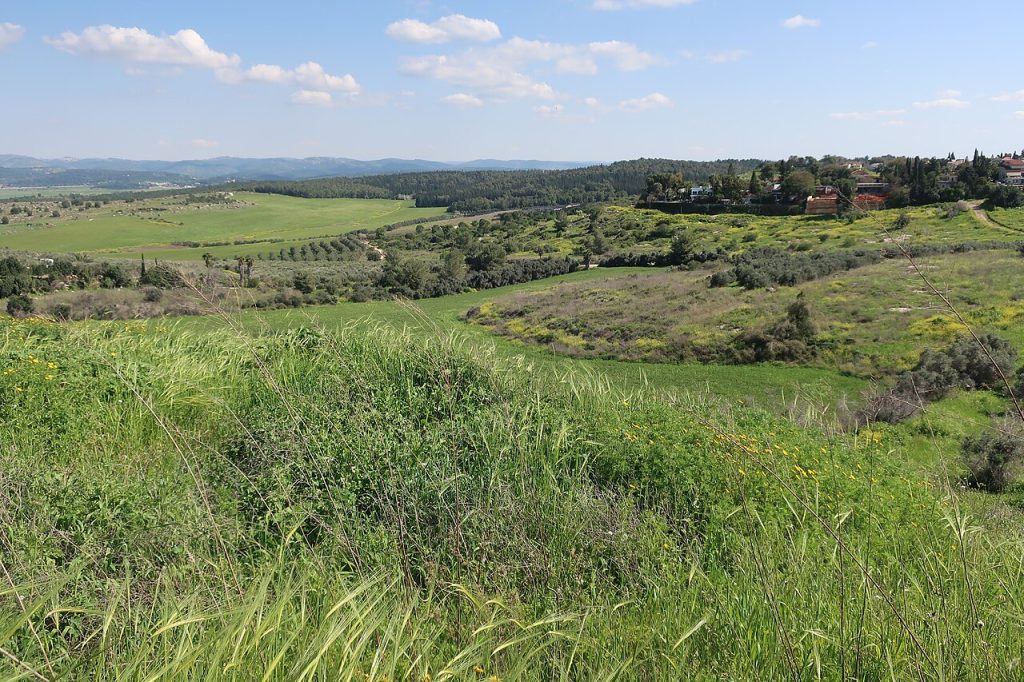
In 1 Kings 9:15–17, Gezer appears among Solomon’s building projects, beside Hazor and Megiddo. The passage also tells how an Egyptian pharaoh had earlier captured Gezer and given it to his daughter, Solomon’s wife. These verses tell us about the political history of a town at an important crossroads. The calendar concerns the kind of work that continued there as rulers and builders came and went. It has no royal name or year of a reign. Its ordinary language is one reason to take interest in it alongside the large buildings usually discussed in connection with Solomon. Webster and colleagues on Gezer and the historical notices
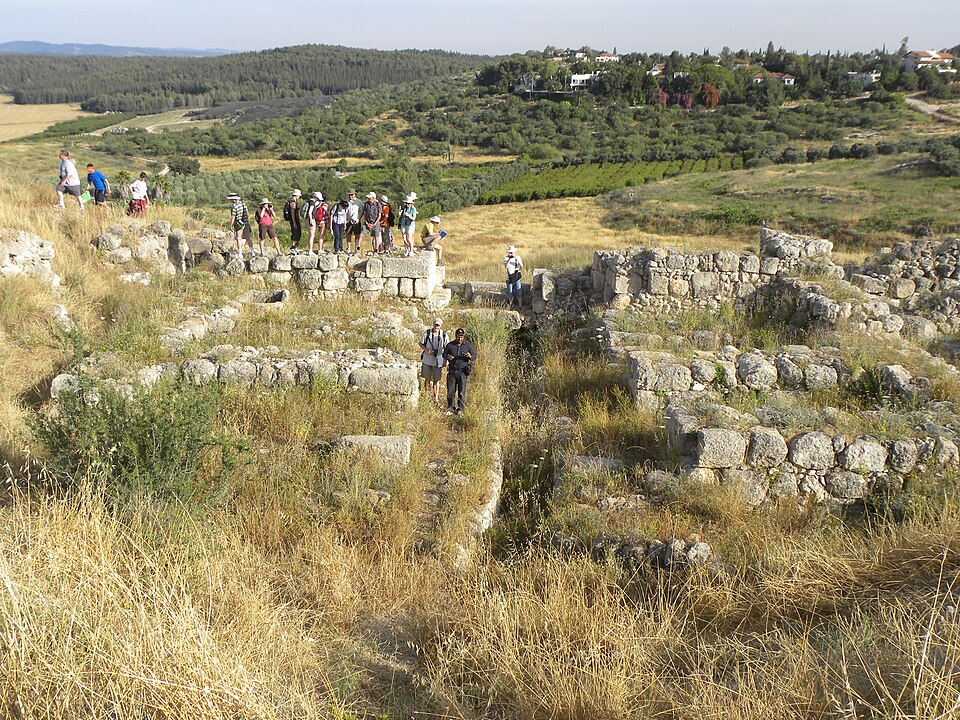
Recent excavators took radiocarbon measurements from the Iron Age sequence at Gezer. Webster and colleagues argue that major fortifications and a large courtyard building associated with Stratum 8 appeared early in the tenth century BC. The result matters because scholars have proposed significantly different dates for the first major Iron Age town. A date compatible with Solomon is meaningful evidence when reading 1 Kings. To name the person responsible for particular masonry takes more than showing that it belonged to the right century. The same applies on a smaller scale to the farmer’s list. A broadly comparable date does not place the tablet in a royal office or tell us who wrote it. Webster and colleagues, Stratum 8 and historical synthesis
Gezer appears in Egyptian records too. The Merneptah Stele, centuries earlier than the likely date of the calendar, names Gezer among places in Canaan that the pharaoh claimed to have overcome. Read the two inscriptions side by side and the difference in scale is immediately apparent. A king in Egypt made a public monument to celebrate a campaign. At Gezer, a person with a much smaller surface recorded the order of work in the fields. A named city can receive the attention of both kinds of writer. Archaeology gives us access to each voice through what its chosen material could preserve.
When the harvest becomes a feast
Exodus 23:14–17 directs Israel to keep three annual festivals. The Feast of Unleavened Bread recalls the departure from Egypt. The Feast of Harvest brings the first fruits of what people sowed in the field. The Feast of Ingathering comes as they gather in the results of their labor at the end of the year. Scripture directs the people to mark these seasons before the Lord. The Gezer list helps us picture obligations that arose from work with seed, vines and grain. It contains no identified feast days and no record of worship at Gezer. Its contribution is to illuminate the work that made the scriptural language immediately recognizable.
In Deuteronomy 24:19–22, a field left after harvest is also a place where Israel can act on its covenant obligations. A forgotten sheaf is to remain for a foreign resident, an orphan or a widow. The instructions also mention olives and grapes. Reading those laws alongside the seasonal entries encourages us to notice how often someone works over the same field or vines, and how the decision to leave a portion would affect real people. The calendar helps us imagine the work at a human pace. Scripture tells us that the person tending the crop is responsible for what happens to its abundance.
We trust the biblical history and the Lord’s words to his people. Gezer’s stone preserves the rhythm of the daily life in which his instruction was heard and obeyed. A household could spend part of the year waiting for fields to yield and then have a short time to bring the yield in. The festival passages put thanksgiving into that busy part of the year. The harvest laws make room for other people at the edges of the work. A small inscription helps us recognize the task at hand when the Bible asks us to pay attention to the giver and the neighbor.
Sources and further reading
- R. A. S. Macalister, The Excavation of Gezer, vol. II (1912) — Volume II, pp. 24–28, gives the excavator's description and early interpretation.
- Palestine Exploration Fund, An Old Hebrew Calendar-Inscription from Gezer (1909) — The newly found tablet, its physical description and contrasting early readings, including G. B. Gray on pp. 30–31.
- A. M. Honeyman, The Syntax of the Gezer Calendar (1953) — Specialist argument for a consecutive eight-season scheme covering a twelve-month year.
- Daniel Sivan, The Gezer Calendar and Northwest Semitic Linguistics (1998) — Analysis of the language, forms and interpretation of the inscription.
- Aaron Koller, Ancient Hebrew and the Gezer Calendar (2013) — Lexical disagreement about the third line and the term often connected with cutting or harvesting flax.
- Lyndelle Webster and colleagues, The Chronology of Gezer (2023) — Modern excavation and radiocarbon study. See the archaeological history and Stratum 8 discussion for dating the city's fortifications independently of the tablet.





