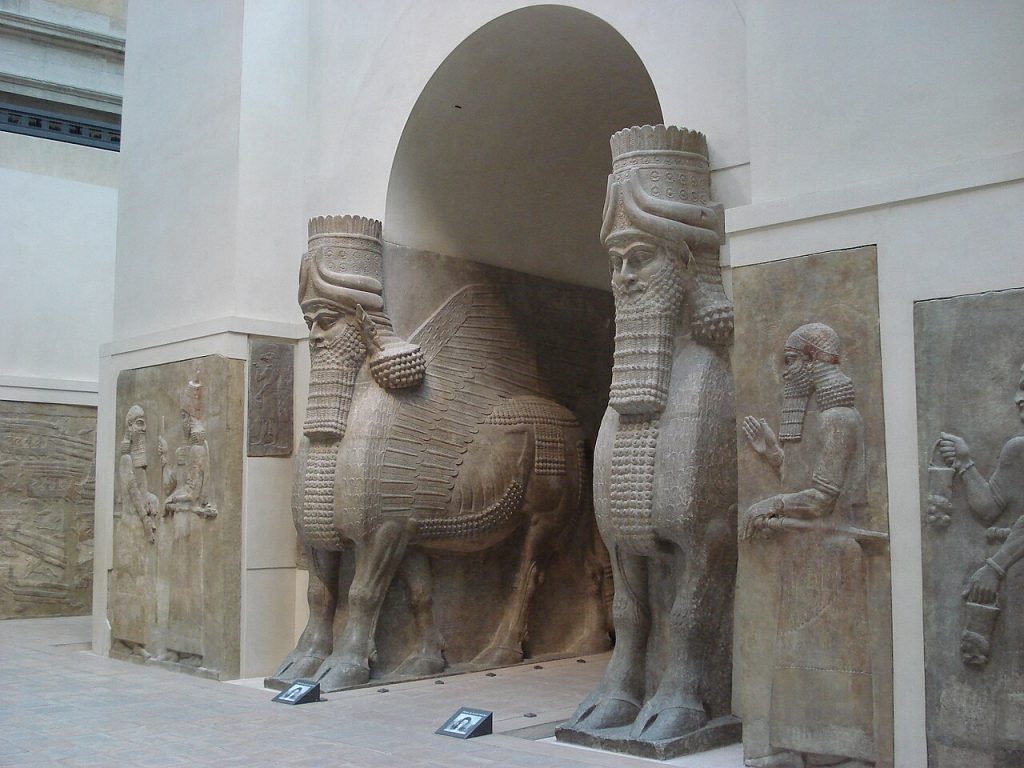
Isaiah 20 begins with a detail that makes the scene unusually easy to place. Sargon, king of Assyria, sent his commander to Ashdod, and the commander fought against the city and captured it. The prophet’s next words concern people who hoped Egypt and Cush would rescue them from Assyria. Centuries later, another kind of record of the same campaign came out of the ground at Khorsabad in northern Iraq. The excavators were uncovering Sargon’s own palace and the carved writing in which he told his version of the events. Christians who trust Isaiah’s account can now read the prophet alongside inscriptions commissioned by the very ruler he names. Isaiah 20 · Khorsabad Annals, text 1
Key takeaways
- At Khorsabad in 1843, Paul-Émile Botta began uncovering the remains of Dur-Sharrukin, the capital Sargon II built in northern Iraq.
- The Assyrian palace inscriptions record Sargon’s intervention at Ashdod, generally dated to 711 BC. Isaiah 20 names the same king, city, and conquest.
- The records also describe Sargon’s actions at Samaria, though historians still debate how to assign the stages of the city’s fall to Sargon and Shalmaneser V.
Uncovering the palace
Botta was the French vice-consul in Mosul, on the Tigris. When he moved his excavations to Khorsabad in 1843, digging revealed rows of stone carved with scenes, figures, and bands of writing. The walls indicated the scale of the buildings even where their upper parts were gone. Botta and the artist Eugène Flandin published the plans, sculpture, and inscriptions in their Monuments de Ninive. Its title reflects the early attempt to identify the remains. As the cuneiform was read, the inscriptions supplied a more precise answer. The excavators had found Dur-Sharrukin, the city and royal residence built by Sargon II. Louvre history of the site · Nineteenth-century excavation plan
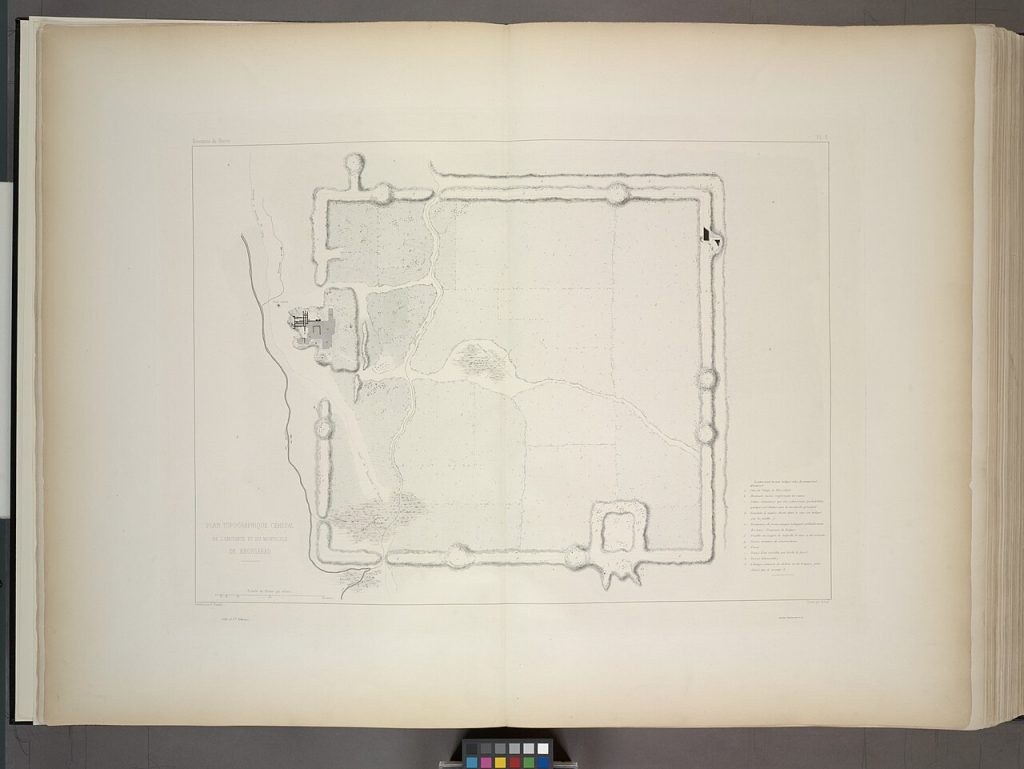
The scale of the enclosure helps explain how much the first campaign left to discover. Victor Place returned in the 1850s and investigated more of the city, its gates, and the citadel. The early expedition reports and drawings also document material that no longer survives in museums or at the site. Some of the objects gathered for shipment were lost in transit. Later work by the University of Chicago’s expedition from 1929 to 1935 uncovered and mapped additional parts of the palace and the city. Its publications let readers relate the individual sculptures on museum walls to the doors and rooms that once gave them their setting. Victor Place’s excavation · Chicago excavation report
Place’s expedition also used calotypes by the engineer Gabriel Tranchand to document the excavation. The early photographs and measured drawings preserve different kinds of detail. Flandin’s survey explains the relation of architectural features spread across the site, while a photograph captures the condition of a particular excavation surface or stone. Gordon Loud’s later report again records architectural relationships, including temple spaces and the route to the throne room. The plans let us picture visitors walking through the site and give museum collections a way to reconnect artifacts that traveled to different places. The French expedition and its field photographs
The guardians at the gates
The winged bulls show what it meant to approach a palace doorway. Look at a guardian from the front and it seems to stand its ground. Viewed from the side, the placement of the legs makes it look as though it is striding forward. A sculptor achieved both views by carving five legs. Visitors walking around the stone were part of the effect. The same gates, halls, and courts offered room for carved scenes and for the king’s accounts of the empire. Sargon died in battle in 705 BC, and his successor Sennacherib made Nineveh his capital. The brief life of Sargon’s new seat of power makes its surviving art all the more striking. Louvre on the palace guardians
The palace sculpture also looked different in antiquity. Reliefs lined the bases of brick walls, and traces of color still survive on some stones. The Louvre points to pigment on the image of the king himself. Treat those traces as evidence about a specific object. They give us good grounds for imagining brighter surfaces, while the full pattern of colors in a given room is harder to recover. The architecture also determines what was visible and from where. Some carvings that visitors now see under a museum roof originally faced open air and changing light. Louvre on the carved and painted walls
What the inscriptions say about Ashdod
A royal annal narrates events of a reign in a sequence that makes sense from the court’s point of view. Sargon’s scribes mention rebellions, political changes, and transfers of people and wealth. The Khorsabad Annals assign the Ashdod campaign to Sargon’s eleventh regnal year, commonly placed in 711 BC. One of the display inscriptions also gives an account of the events. Both draw on the language of royal success, expressed in Sargon’s voice. Grant Frame’s edition distinguishes the individual texts and uses their surviving copies to show what each one contributes. Readers can compare accounts from the same palace instead of assuming each wall bore exactly the same wording. Frame, texts 1 and 7
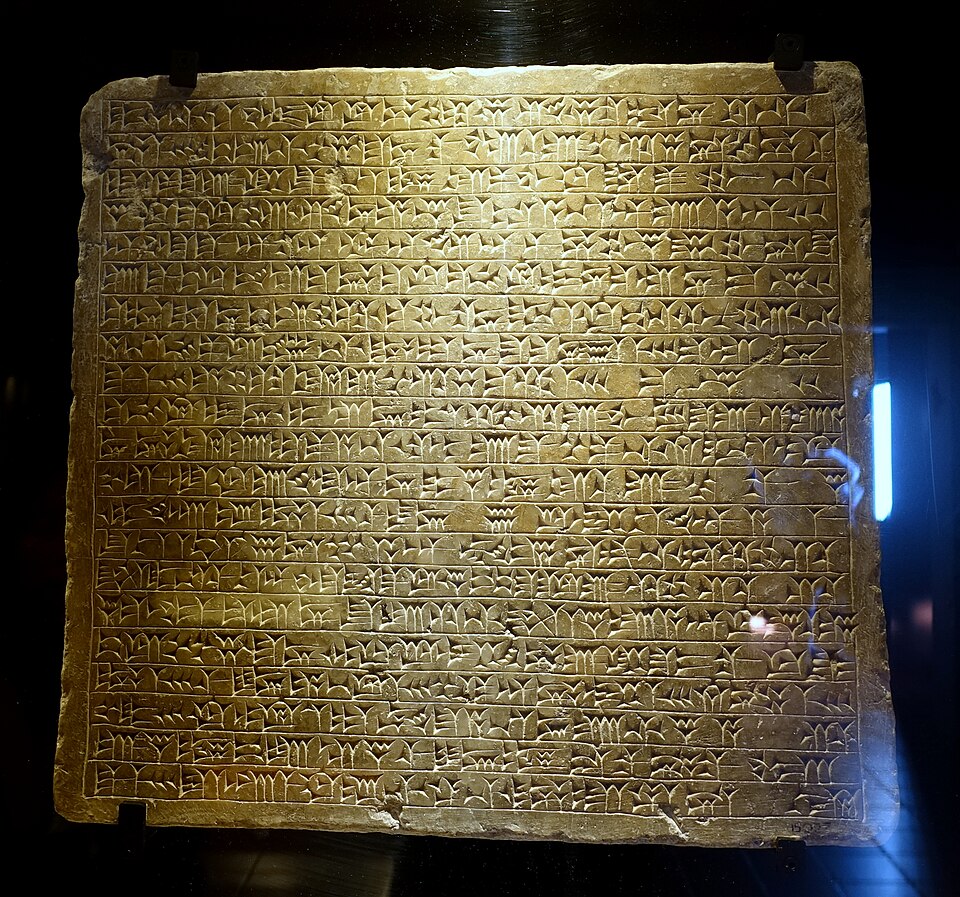
Ashdod was a Philistine city in the coastal plain, positioned within reach of Egyptian power and the routes coming down from Syria and the Levant. According to the Assyrian accounts, Azuri of Ashdod resisted tribute and was replaced on Sargon’s orders by his brother. The people rejected the replacement and elevated Yamani. He fled in the face of the Assyrian advance. The inscriptions name the capture of Ashdod and also report action against nearby centers. Pieces of an Assyrian royal stele found at Ashdod give archaeologists evidence from the city that the Assyrians claimed to have taken. The story thus has physical witnesses at opposite ends of the campaign. Khorsabad Annals, lines 249b–262a · Aster on archaeology at Ashdod
The evidence at Ashdod helps tie royal language to a place where people lived with its consequences. A fragment of a victory stele in a settlement is a different kind of witness from a complete paragraph in a palace account. A stone is heavier than a traveler’s report, but it can still be moved from its original spot or broken and reused. Excavation context and the surviving text both matter. Here a series of fragments and other evidence from the settlement can be compared with the palace narrative to ask what Assyrian control meant on the ground. Aster’s treatment of the Ashdod finds
Isaiah’s phrasing is worth reading closely. He gives the Assyrian king’s name and says Sargon sent a commander, whose title is rendered Tartan in some older translations and commander in chief in others. The Assyrian record tells the story in Sargon’s own voice and claims the victory as his achievement. Both ways of writing make sense of a state that acted through commanders under royal authority. They leave room for discussion about Sargon’s personal movements. The historical overlap is the conquest of the same city under the same ruler. Isaiah uses that event to orient the reader before describing a prophetic sign. Isaiah 20:1
The warning behind the date
The Lord told Isaiah to remove the sackcloth from his waist and the sandals from his feet. The prophet’s appearance would serve as a sign of the humiliation awaiting Egypt and Cush, the powers to which threatened people were looking. Isaiah closes by giving voice to those on the coast who realize that their expected protectors cannot even save themselves. The fall of Ashdod makes that question urgent. A city that had defied Assyria was within living memory of the people hearing the prophet. We read Isaiah as Scripture that tells the truth about these events and about the folly of making a powerful people the last object of our trust. Isaiah 20:2–6
From Assyria’s palace, Ashdod’s fall displayed the reach of Sargon’s rule. In Isaiah, it gave force to a question about where people could turn for rescue.
What about the fall of Samaria?
The palace inscriptions reach backward to events that had affected the northern kingdom of Israel. One of Sargon’s versions claims that he conquered Samaria, deported a large number of its people, took some of its chariotry into his service, and reorganized the territory. Exact figures vary between copies of the royal text. Second Kings 18:9 identifies Shalmaneser as the king who laid siege to Samaria. The following verses describe the capture and deportations. Second Kings 17 gives a parallel account of Hoshea and the siege, then presents a long explanation of why Israel went into exile. The people who fled or were forcibly moved become more than numbers in the history Scripture tells. Khorsabad Annals, lines 12b–17a, and Display Inscription · 2 Kings 17 and 18
The transition between Shalmaneser V and Sargon is where the puzzle lies. One reconstruction places the initial conquest under Shalmaneser around 722 BC and a renewed suppression and deportation under Sargon, often associated with the revolt of 720 BC. Another emphasizes how a successor could take credit for earlier conquests or fold more than one episode into a single account. The source editions themselves note differences between reports and uncertainties about the assignment of individual actions. Reading the passage alongside the inscriptions gives us an empire that laid siege to Samaria and took real people into exile. The rulers’ separate roles are a question historians continue to refine. Frame’s notes and historical introduction · Yamada’s comparison of the inscriptions
The earlier account of Menahem’s tribute to Tiglath-Pileser III puts this later history in perspective. When Menahem paid to retain Assyrian support, the northern kingdom still had a throne that he could keep. The generations of Israelite kings after him faced more direct Assyrian control and eventually lost that throne. Specific events such as a payment, a siege, or a deportation belong in their own historical setting. Taken together they show what the books of Kings record across several reigns. Israel lived beside rulers whose demands could shape life within its cities and who ultimately decided who would live in them. 2 Kings 15 and 17
How to follow the evidence
- The palace plan gives the stone figures and texts their original architectural context.
- The Ashdod accounts name the same Assyrian campaign that provides the opening date in Isaiah 20.
- The Samaria accounts preserve claims about a city, people, and political transition that need to be read alongside the biblical sequence.
It is easy to remember the Assyrians for the size of a winged bull or the sweep of a city wall. The objects also preserve a relationship between distant places. Orders issued in Assyria had consequences in Ashdod, and the fate of that city mattered to people looking south to Egypt. Isaiah takes those places and decisions seriously. The biblical history names a ruler whose palace we can study, and the prophet asks a question that the king’s commemorative art is in no position to answer. Knowing more about Sargon helps us imagine what it cost to hear and heed the Lord’s warning in his day.
Sources and further reading
- Isaiah 20 — Names Sargon in the account of Ashdod and explains Isaiah’s sign against Egypt and Cush.
- Grant Frame, The Royal Inscriptions of Sargon II — Primary edition of the Khorsabad Annals (text 1, especially lines 12b–17a and 249b–262a) and Great Display Inscription (text 7).
- Cuneiform Digital Library Initiative, Sargon II inscriptions — Catalog of transliterated texts and individual objects from Frame’s corpus.
- Louvre, The Palace of Sargon II — The palace, winged bulls, and Botta’s 1843 excavation.
- French Ministry of Culture, Victor Place’s excavations — The nineteenth-century phase after Botta, with its broader excavation and documentation.
- Gordon Loud, Khorsabad, Part 1 — Excavation report from the University of Chicago’s work at the palace and a city gate.
- Shawn Zelig Aster, Ashdod in the Assyrian Period — Primary analysis of written and archaeological evidence for the campaign and its aftermath.
- Shigeo Yamada, Samaria, Hamath, and Assyria’s Conquests in the Levant — The author’s copy of a close comparison of Sargon’s versions of the events at Samaria.





