A city gate at Tell Balata survives as a passage between courses of massive stones. Nearby, the foundations of a monumental building are broad enough to make an excavator ask what once stood above them. Both features belong to ancient Shechem, a city where the Bible places an assembly led by Joshua and, later, the violent rise and fall of Abimelech. The ruins are fascinating partly because the city lasted long enough for people to change the buildings and repurpose the ground beneath them. A wall that began in one century could still shape what happened there generations later.
We receive Scripture as true and accurate. At Shechem, that conviction invites readers to open the biblical chapters and consider their physical setting in detail. The city’s fortifications and temple precinct make Judges 9 easier to picture. They also raise questions archaeologists can pursue on the ground, including when the temple was built, how long it stood, and which parts of the mound preserve evidence of the city’s last years before a break in settlement.
What you’ll learn
- Tell Balata, at the eastern edge of modern Nablus, preserves the remains of ancient Shechem, including monumental gates and a fortress temple with Middle Bronze Age foundations.
- Excavators recorded several rebuilding and destruction phases. A destruction near 1100 BC is one proposed candidate for the events in Judges 9.
- The surviving foundations and a standing stone help readers understand the world of Judges and Joshua. Identifications with individual buildings or objects in those books remain proposals.
Why the city mattered where it stood
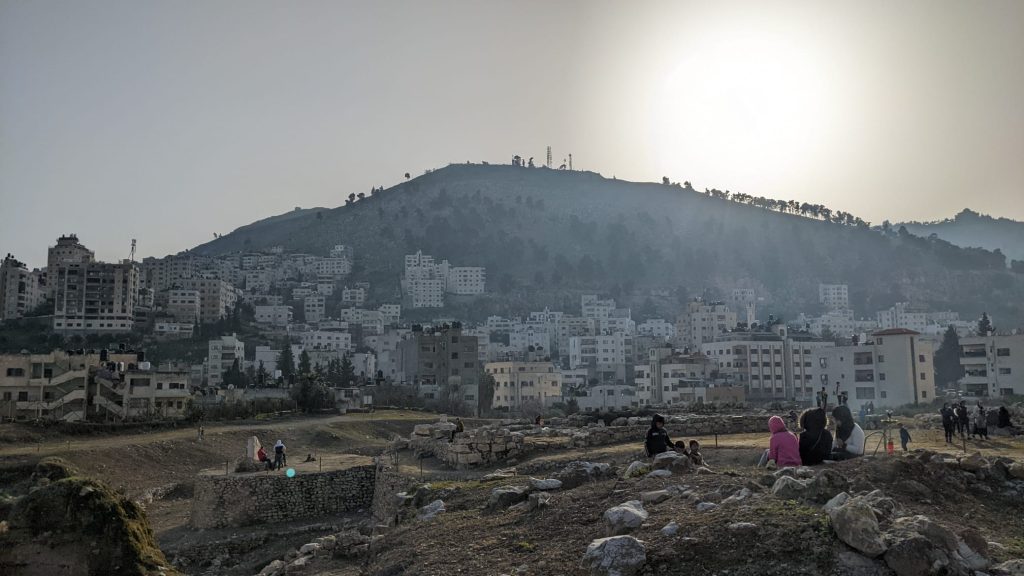
Shechem occupies the eastern entrance to the valley between Mount Gerizim to the south and Mount Ebal to the north. The heights give a distinct shape to the landscape, and the valley offers a natural passage. A town on the low mound could watch people come in from the east and still have access to land suitable for cultivation. A modern photograph shows how the buildings of Nablus now stretch along the slopes. The relationship between the hills, valley, and mound is still easy to recognize. Tell Balata Archaeological Park project report
Systematic archaeological work began in 1913 under Ernst Sellin. His expedition returned in later seasons, and a joint American expedition associated with Drew University and McCormick Theological Seminary worked at the site beginning in 1956. Much later, a team of Palestinian and international partners conserved visible remains and developed the archaeological park. Edward F. Campbell’s final report on the stratigraphy and architecture of the Joint Expedition lets readers compare work at the gates, the temple, and several residential or public areas. Shechem III excavation report
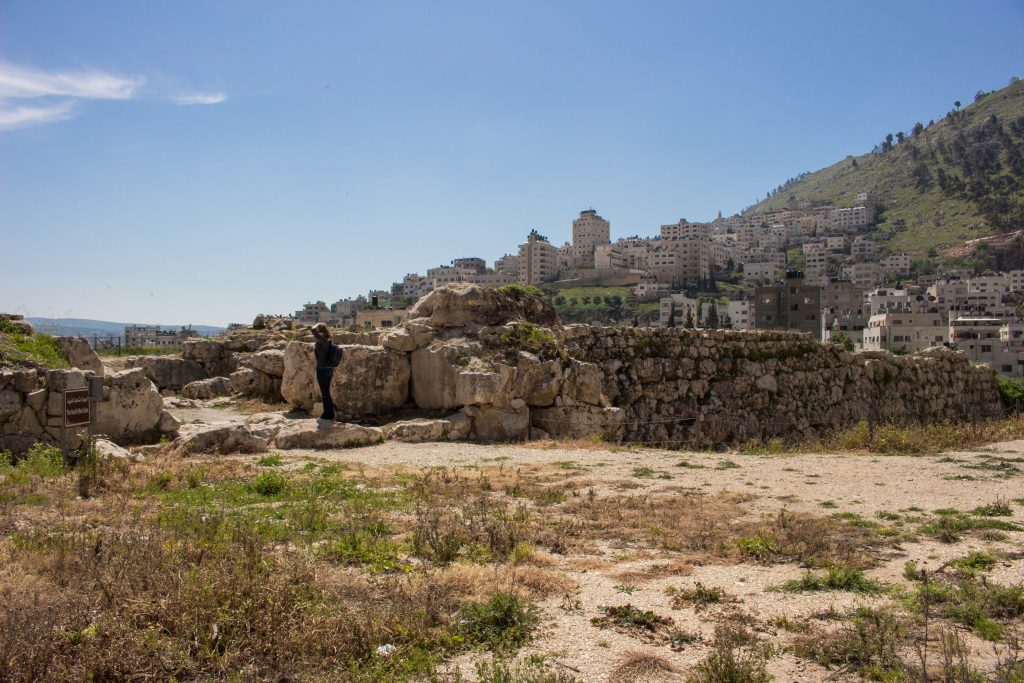
At a tell, walking across the surface brings you past walls that may have survived different numbers of building campaigns. In the Middle Bronze Age, Shechem’s builders used large stones in substantial fortifications. Archaeologists sometimes call this style cyclopean masonry because of the size of the stones. The subsequent city could keep or repair a part of that line of defense. To find out when an entrance was used, an excavation team investigates the material laid down against walls and beneath its successive passage surfaces. A construction date and the latest date of use can be centuries apart. McKinny and Tavger on Shechem’s defensive sequence
The city gate in Genesis and Judges
Genesis 34 places a discussion about marriage, property, and the relations between two communities at Shechem’s gate. Hamor and Shechem argue their case before the men of the city there. The episode is part of a grave story about Dinah, Shechem’s assault on her, and the vengeance taken by her brothers. Reading it in the context of a fortified town makes the gathering intelligible. The entrance served as a public place through which people and goods moved. An agreement made there could affect everyone within the city’s defenses.
In Judges 9:35–40, Gaal stands at a gate while Abimelech’s men come into view. Gaal sees figures approaching and Zebul initially tells him that he is mistaking the shadows of the hills for men. The scene depends on geography. As the sun rises, an observer at a gate sees nearby elevations, lower routes into town, and figures coming into the open. The excavated gates help readers picture how that scene could work without requiring that we identify the exact stones under Gaal’s feet. Judges itself records the action with enough spatial detail to invite readers to picture the view.
A temple with defensive architecture
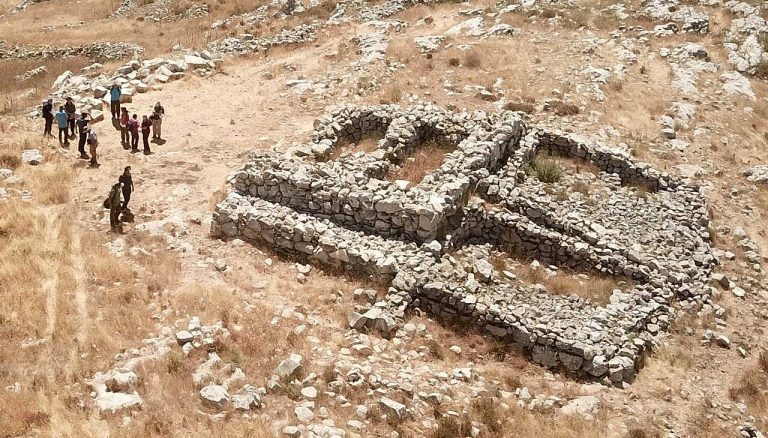
On the western part of the mound, excavation exposed the foundations of a monumental building commonly called the fortress temple. Its overall footprint was approximately 26 by 21 meters. In places its foundations were about five meters thick. The plan includes heavy projections by the entrance, often described as towers. The building’s weight and scale are visible even when the upper walls are gone. Its great entrance and interior also tell us something about how a public structure might have served a fortified city. Dimensions and discussion of the fortress temple
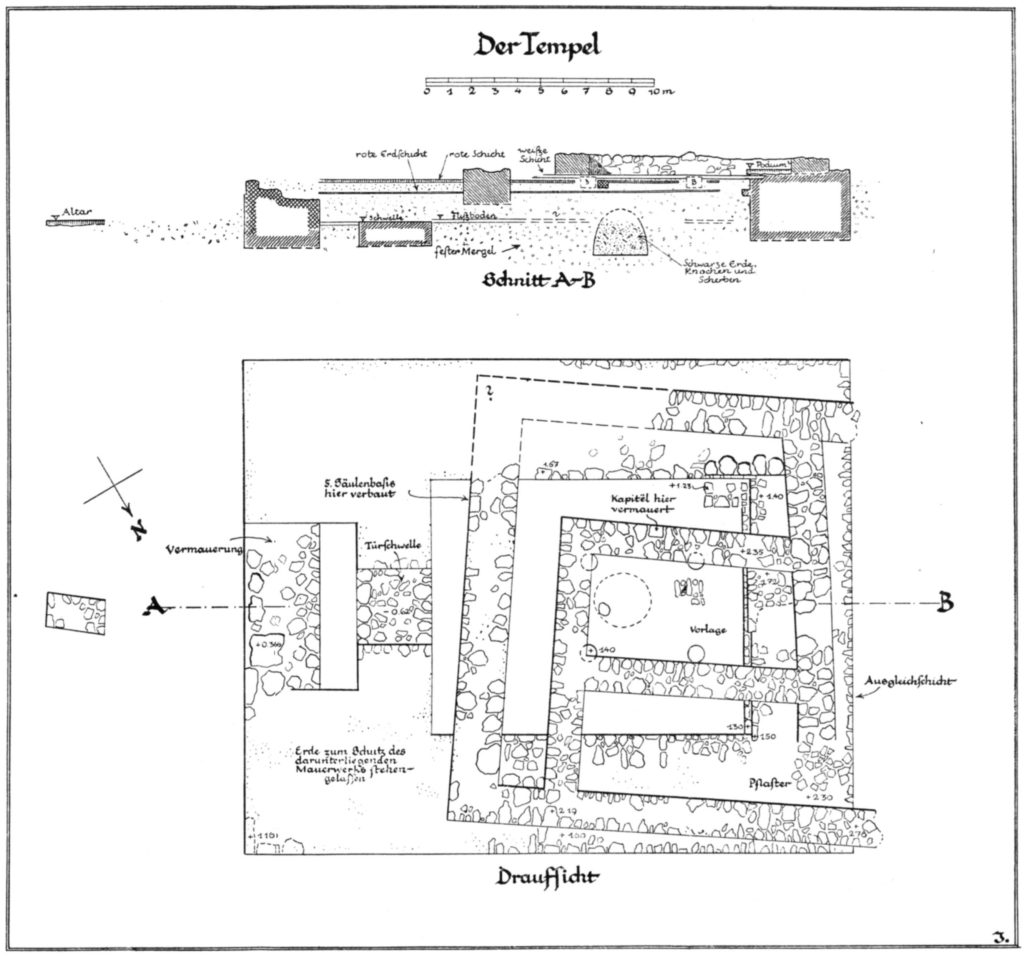
The foundations have a Middle Bronze Age date, but archaeologists disagree over what the site looked like by the opening of the Iron Age. Campbell’s Joint Expedition report distinguishes the massive earlier temple from later temple phases in its analysis of the precinct. Lawrence Stager made the case that the earlier fortress temple or its architectural form stayed in service into the period associated with Judges. The difference matters. A securely dated foundation can help reconstruct the earliest building, while assigning the same layout to the later city depends on how walls and floor fragments from that period relate to it. Campbell’s excavation sequence and Stager’s case
In Judges 9:4, Abimelech receives silver from the house of Baal-berith and uses it to hire men. Later, the leaders associated with the tower of Shechem take refuge in the stronghold of the house of El-berith (9:46). Abimelech and his men bring branches and use fire against the people inside (9:47–49). Stager argued that a building of the fortress temple’s size and design fits the text’s combination of cultic activity, storage of resources, and shelter during danger. A strong fortress could offer temporary shelter to many people without protecting them from fire. Questions remain about how the several place names in the chapter relate to the excavated features. Stager’s identification and McKinny and Tavger’s geographical study
The excavation history explains why new readings are possible even after the visible rooms have been cleared. An early drawing can preserve a wall face subsequently covered, while a later trench may show its footing or reveal that a floor was laid up against it. Those records can be compared without pulling the entire precinct apart again. An ancient structure can be firmly identified as monumental and its layout reconstructed with care while the end of its use continues to be discussed.
Judges 9 gives the names and choices of the people who brought Shechem to ruin. The excavations show how a city in that valley was built and changed.
What a destruction layer can establish
Tell Balata preserves destruction evidence from more than one period. The Joint Expedition labeled one important late sequence Stratum XI, with its last phase, XIA, ending in destruction. The end falls around 1100 BC in the team’s broad periodization. Other published accounts place the destruction somewhat earlier within the transition between the Late Bronze Age and Iron Age. In the Joint Expedition’s reconstruction, there was a substantial break in occupation after that event. The pattern makes it possible to discuss a serious disruption at Shechem in the general period relevant to Judges. Campbell on the Late Bronze to Early Iron levels and Archaeological Park project chronology
Matching the layer to Abimelech asks the evidence to do something more specific. Pottery and debris can put the destruction in a window of time. The tell’s phase sequence can show how many parts of the settlement were occupied before and after it. Naming the agent depends on a different sort of evidence, such as a contemporary text or a particularly secure correlation with written history. At Shechem there is a reasonable historical proposal linking the destruction and the biblical event, and a genuine debate over how particular buildings and deposits correlate. Nearby Tel Shiloh illustrates a related problem. Excavators can trace a major fire across rooms and date its debris more securely than they can identify the people who started it.
Joshua's stone and Abimelech's bramble
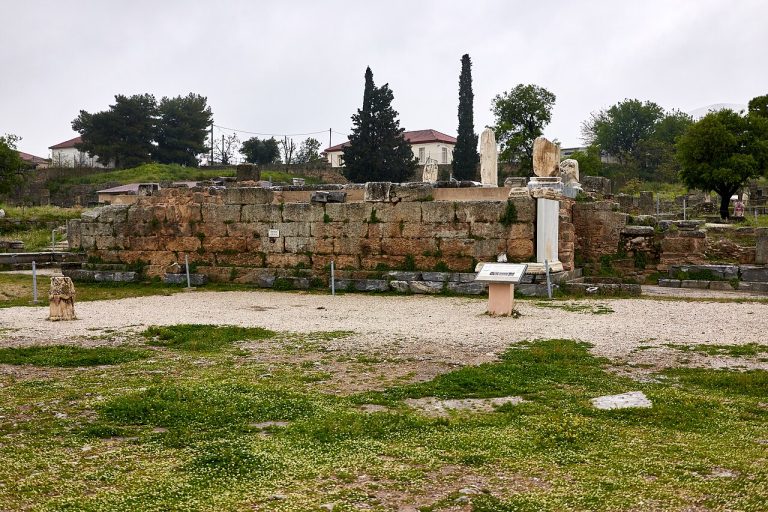
The covenant in Joshua 24 explains another reason for the importance of Shechem. Joshua assembles the tribes, recalls what God did from Abraham through the exodus and entry into the land, and calls the people to serve the Lord faithfully. He sets up a large stone under an oak near the Lord’s sanctuary, treating the stone as a witness to their public promises. The excavation of a standing stone in the temple precinct supplies a useful local example of a monument that people set in place in antiquity. The stone’s presence cannot establish its dedication, and the chapter’s sanctuary and tree cannot be matched securely to the surviving structure. Understanding why a community would erect such a monument is an archaeological connection in its own right. Early scholarly discussion of the temple and the standing stone
Judges 9 brings the reader back to one of the same hills. Jotham, the surviving son of Gideon, calls to the people from Mount Gerizim and tells a story in which several productive trees decline kingship and a bramble accepts it. The offer of shade comes with the threat of fire. When the leaders of Shechem and Abimelech turn on each other, the threat takes on a grim reality. The separate remains of a later Samaritan sanctuary on Mount Gerizim belong to another period. The enduring shape of the valley is what allows readers to follow the landscape through both histories.
Read Joshua 24 and Judges 9 together and watch what the leaders ask the people of the city to do. At the covenant assembly, Joshua calls on Israel to answer the God who has already acted for them. In Judges, Abimelech appeals to kinship and makes his bid for power with money from a local sanctuary. The gate and precinct help us see the scale and organization of the city in which such choices had consequences. The story asks us to reckon with the difference between publicly confessing allegiance and faithfully living by it.
Sources and further reading
- Edward F. Campbell, Shechem III (2002) — Final Joint Expedition report on the site's excavated architecture and stratigraphy.
- Campbell, The Late Bronze Age to Early Iron I — The report's chapter on successive deposits relevant to the city and its destruction.
- Ernst Sellin, Die Ausgrabung von Sichem (1927) — Publication from the early excavation, with drawings by Heinz Johannes.
- Lawrence E. Stager, The Shechem Temple (2003) — The author's case for a longer use of the monumental temple and its identification with the sanctuary in Judges 9.
- Chris McKinny and Aharon Tavger, Flames from the Bramble — Academic study of Judges 9, local topography, and competing identifications of the city's structures.
- Hamdallah Taha and colleagues, Community Archaeology at Tell Balata — Archaeological park team on geography, research history, and the occupational sequence.
- E. D. Stockton, The Fortress Temple of Shechem and Joshua’s Covenant — Scholarly discussion of the excavation and its standing stone. The proposed link to Joshua remains unconfirmed.