Six large clay jars stood against a wall at Shiloh when a fire swept through the building. The jars stayed where they fell or broke, in an ash deposit that Danish archaeologists began to expose in 1929. Half a century later, another team traced additional rooms on the western slope, with fragments of big storage jars and deposits of burned mudbrick. Anyone who has read about Hannah, Samuel, or the capture of the Ark will immediately think of 1 Samuel. The archaeology gives us a way to begin with the jars and work out what that comparison can tell us.
We receive Scripture as true and accurate. That makes the history of Shiloh worth careful attention, including the details we can see in broken pottery and the parts of the story we know from the biblical account. The excavation reveals that substantial buildings served an Iron Age community here and that a major fire ended their use. Scripture explains why the name Shiloh mattered for generations after that loss.
What you’ll learn
- Danish excavators found a group of large storage jars in ash in 1929. Renewed excavations from 1981 to 1984 exposed more of the building complex.
- The early Iron Age storehouses burned. Later radiocarbon work places the destruction in the second half of the eleventh century BC.
- The excavations illuminate the place described in Joshua, 1 Samuel, and Jeremiah. The shrine’s exact footprint and the cause of the Iron Age fire remain unresolved.
A hill with more than one history
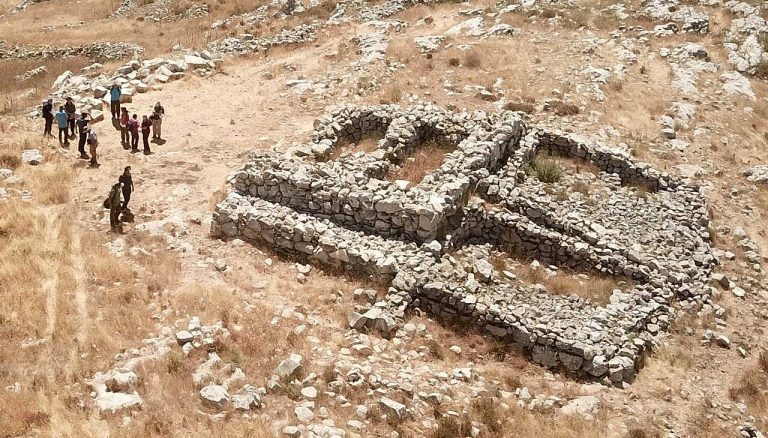
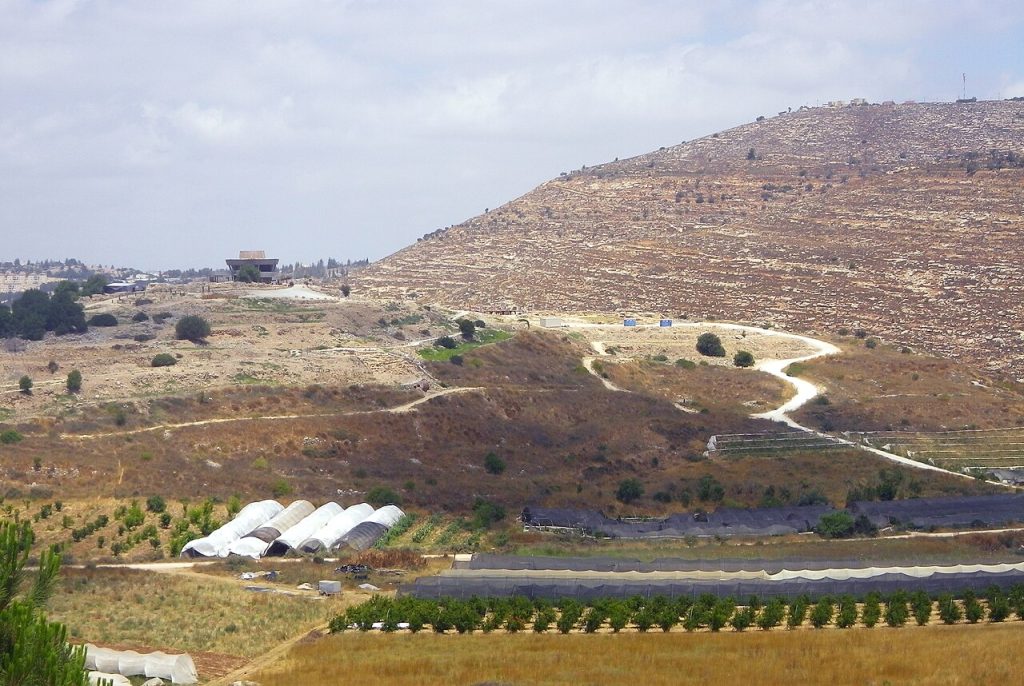
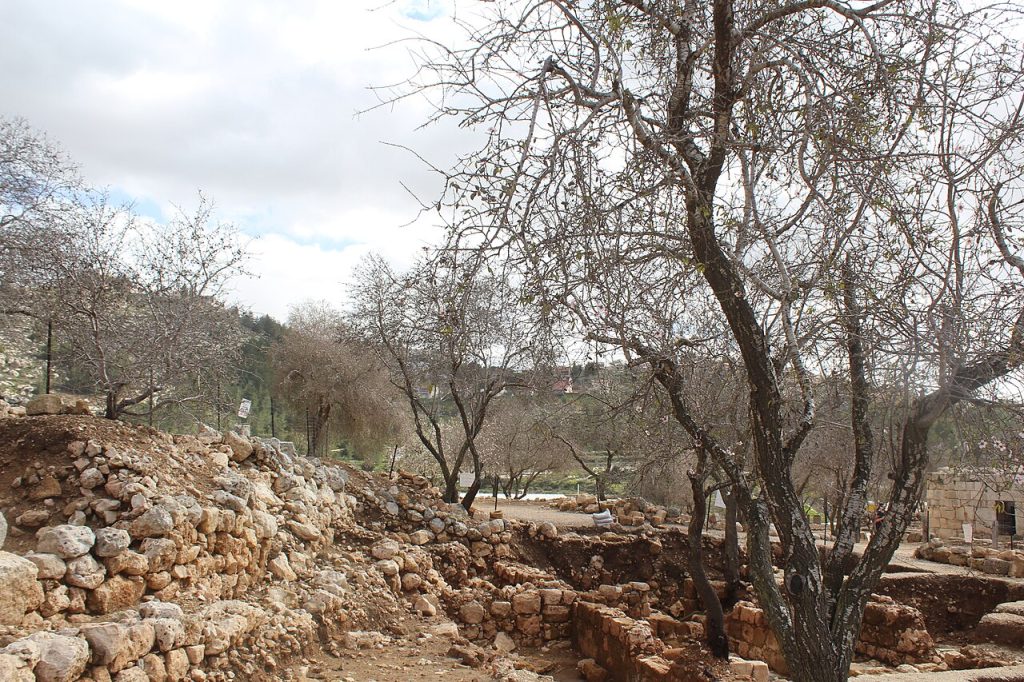
Tel Shiloh, also known as Khirbet Seilun or Tell Sailun, lies in the central highlands of the West Bank, north of Bethel. Its slopes preserve evidence from different ages, including impressive Middle Bronze Age construction, Iron Age storage buildings, and remains from much later periods. A person standing on the ground can see stones from several building campaigns without knowing which construction came first. Archaeologists sort those campaigns out using the joins in the stonework and the layers of soil, debris, and activity around each wall.
The Danish expedition worked here in 1926, 1929, 1932, and 1963. The 1929 discoveries on the western slope gave scholars a group of storage jars with a documented archaeological setting. Drawing on those results, Israel Finkelstein’s team returned to the slope during the 1981–1984 seasons. They called it Area C. Its location mattered because an excavator could follow the visible walls into adjoining rooms, compare measurements from the old trench, and work out how the same deposit continued beyond the first expedition’s reach. 1985 preliminary excavation report
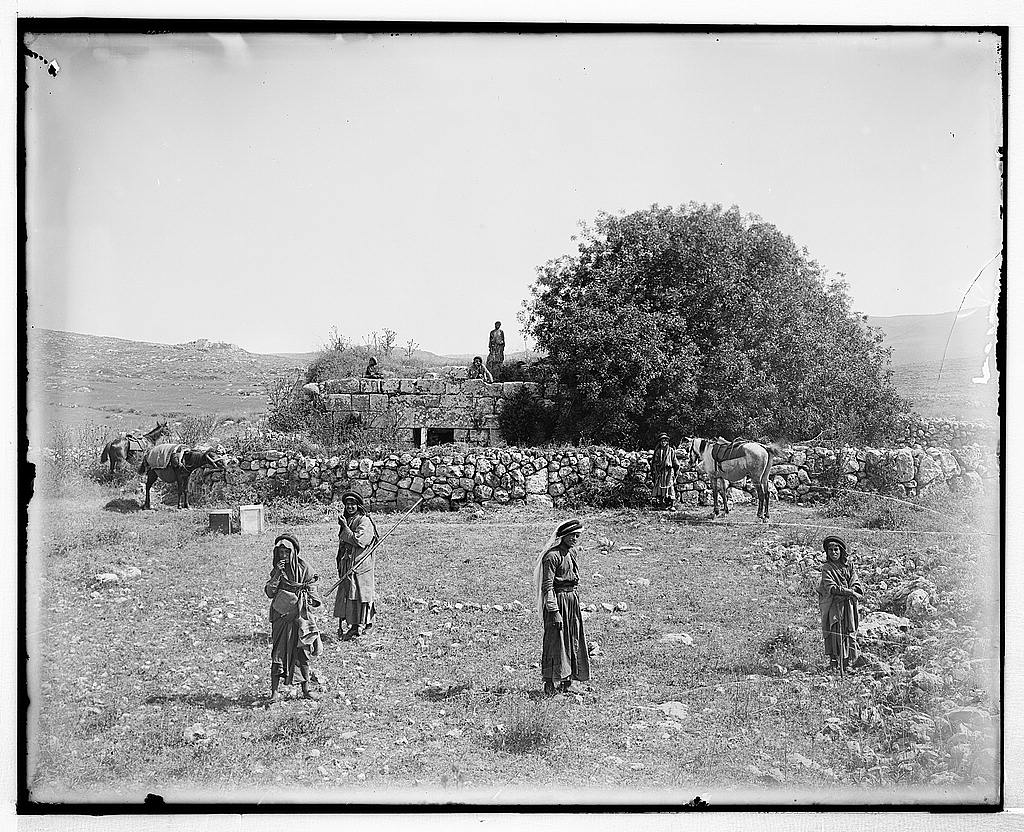
An architectural detail makes the hill’s long use especially tangible. The Iron Age builders set some rooms into an older defensive slope, called a glacis. The earlier construction shaped the ground on which people later planned their storage rooms. It was practical to cut into the slope and support parts of the buildings on terraces. This sequence is why a site report can mention an imposing Bronze Age fortification and an Iron Age room in the same excavation area without dating them together. Final Area C report
What the jars can tell us
A large clay storage jar is also called a pithos. Many of the examples recovered at Shiloh have a collar, a raised band around the upper part of the vessel. Archaeologists compare details such as the shape of the neck, the band, and the body with jars from other sites. The complete profile is especially helpful because a single little rim fragment can share features with vessels made in more than one generation. When excavators recover several profiles with other datable pottery in a floor deposit, they can compare a whole group of vessels that were in use together.
The position of the six jars in the earlier trench supplied another sort of evidence. The report placed them along a wall in the northern room of the building the Danes called House A. Pillared rooms nearby exposed in the later excavation held additional large jars. Rows of pillars helped support these buildings and divided the interior space. In several rooms the report records jar bases or substantial pieces where storage vessels had stood. The pattern is easier to explain as repeated use of these rooms for storage than as a handful of broken pots deposited at random. Area C buildings and vessels
Shiloh also yielded a pile of carbonized raisins along with smaller vessels and implements in a room of Structure 335. The grapes give the report a detail of ordinary life alongside the scale of the storage complex. A burnt fruit deposit tells us that people had brought and processed or stored produce here. Connecting a particular food to a particular jar would require evidence from inside or directly associated with that vessel. In this case the excavators distinguished the fruit found in the room from the contents of the large jars. Structure 335 description
Stone-lined pits interpreted as silos elsewhere on the hill add to the picture of storing provisions. Different forms of storage can serve different needs, especially in a community that has to collect food when it is available and keep it through a dry season. At Shiloh, the amount of storage architecture and the careful layout of the pillared rooms led excavators to think beyond a family’s inventory. They considered whether the rooms served a public institution, perhaps with a religious function. Finkelstein and Römer on the Iron Age site
The jars put us inside the working life of Shiloh. To see why families came to the hill, read Hannah’s story.
Evidence for the fire
In the later excavation, the debris over the floor of Structure 312 included ash and burned mudbrick. The geographical spread matters. One burnt object could be debris carried in from another area. Burnt building material directly over a floor, with crushed vessels below or within the collapse, tells us that fire reached the building while its rooms still held equipment. Similar deposits across multiple structures support the excavators’ description of a major conflagration. The published plan and the descriptions of the rooms allow readers to see where those observations were made. Excavation observations on Structure 312
Dating the fire requires another step. The early reports could compare the storehouse pottery with other Iron Age I groups. Later researchers drew on radiocarbon measurements from short-lived material associated with the destruction. Finkelstein and Thomas Römer summarize those measurements as pointing to the second half of the eleventh century BC. The botanical material dates the growth of the plants, and its security in the debris connects that result to the end of the building. These measurements provide a window rather than a named year. Our guide to how archaeologists date a site explains how those lines of evidence come together. Radiocarbon synthesis and references
Some early interpreters saw the fire as the work of the Philistines after the battle described in 1 Samuel 4. That is an intelligible historical proposal. The Philistines took the Ark, and they were in a position to threaten Israelite settlements. The excavated debris, however, supplies no inscription from an attacker or other direct evidence of who caused the fire. The biblical chapter reports a defeat, the deaths of Eli’s sons, and the seizure of the Ark. The messenger comes to Shiloh to tell Eli what happened at the battlefield. He gives no account of the town burning. Discussion of the earlier interpretation
The sanctuary in Joshua and Samuel
In Joshua 18:1, the Israelites assemble at Shiloh and set up the tent of meeting. The passage moves between worship and the practical work of allocating the land that remained to be divided. Survey parties set out and bring their descriptions back to Joshua. Lots are then cast at Shiloh before the Lord. In the earliest biblical account of the place, the sanctuary is a setting in which the tribes deal with questions that affect every household.
The opening of 1 Samuel narrows the view to a single family. Elkanah travels to Shiloh repeatedly to worship and sacrifice. Hannah prays in distress, Eli speaks to her there, and she later brings Samuel to serve the Lord. In chapter 3, the boy hears God call him and receives a word of judgment about Eli’s household. In chapter 4, Israel’s elders send for the Ark when they suffer defeat and hope that its presence will deliver them. The narrative puts God’s living word to Samuel alongside the elders’ attempt to secure victory by moving the sacred object. The loss of the Ark makes the difference unmistakable.
Could one point to the ground where Hannah prayed? The field evidence leaves that question open. Archaeologists have observed the well-built storage rooms and the ways parts of the summit were eroded or occupied by later buildings. Some researchers infer that a sanctuary stood above the storehouses. Others have considered the flat area north of the mound. There is a meaningful distinction between identifying Shiloh and knowing the ancient location or layout of a specific sanctuary within it. A portable tent and any installations around it would also leave different traces from the thick walls and foundations of a later stone building. Sanctuary proposals and preservation at the summit
Why Jeremiah sends his audience to Shiloh
Centuries later, Jeremiah stands at the gate of the Lord’s house and tells his hearers to mend their ways. They have confidence in the Temple, while Jeremiah names injustice, bloodshed, and idolatry in their midst. He asks them to look at what God did to Shiloh, the place where his name had dwelt (Jeremiah 7:12–14). The listeners were supposed to learn from a place they already knew or could go and see. The prophet applies that history to Jerusalem with a warning that no worshiper or institution is beyond God’s judgment.
A reader can trace the emphasis through Psalm 78 as well. The psalm remembers the abandonment of the dwelling at Shiloh and uses the loss of the Ark to recount a broader history of Israel’s unfaithfulness and the Lord’s acts. These passages explain the significance the biblical writers attach to Shiloh’s loss. The burned rooms and the dated debris give the town’s archaeological history a vivid point of contact with that memory. No surviving inscription has joined the two by naming the cause or circumstances of the fire.
Read Joshua 18, 1 Samuel 1–4, and Jeremiah 7 in order and pay attention to who comes to Shiloh and what each believes God will do. Joshua shows the people assembling as tribes. Samuel introduces a woman in distress, a child who listens, and leaders who carry the Ark to battle. Jeremiah asks Jerusalem to remember their history before putting its faith in a building. The storehouses let us picture a real place built to serve many people. The biblical account tells us why its story was still being told long after those rooms went quiet.
Sources and further reading
- Finkelstein and colleagues, Excavations at Shiloh 1981–1984 (1985) — Preliminary excavation report with the site plan, Area C storage rooms, Danish find context, and discussion of destruction.
- Buhl and Holm-Nielsen, Shiloh: The Pre-Hellenistic Remains (1969) — Bibliographic record of the original Danish excavation report for the 1926, 1929, 1932, and 1963 seasons.
- Finkelstein, ed., Shiloh: The Archaeology of a Biblical Site (1993) — Final Tel Aviv University field publication, including pottery, architecture, and occupation history.
- Finkelstein and colleagues, Area C (1993) — Final report chapter devoted to the Iron Age I pillared buildings and other Area C phases.
- Finkelstein and Römer, The Historical and Archaeological Background behind the Old Israelite Ark Narrative (2020) — Field director’s later review, including the radiocarbon assessment of the Iron Age I fire and the inferred sanctuary location.