On one side of a tall papyrus leaf, Luke’s account ends with the disciples returning to Jerusalem and praising God in the temple. A title names the Gospel just finished. A little farther down, another title announces John, and the copyist begins with the Word who was with God in the beginning. There is still room for John’s first lines on the same page. That turn from one Gospel to the next is among the best ways to understand P75. It shows an ancient copyist putting two distinct writings within reach of the same reader. The names the copyist gave them are still visible on the damaged papyrus. The Gospel transition in the Vatican Library facsimile.
Key takeaways
- P75 is a Greek papyrus codex containing substantial parts of Luke and John. The Vatican Library calls its main portion Hanna Papyrus 1.
- The manuscript reached the Bodmer collection from Egypt around the middle of the twentieth century and was published in 1961. Its exact ancient findspot is uncertain.
- The copyist ended Luke and began John on the same page, labeling both Gospels in Greek.
- A date around AD 200 was long usual. A later assessment makes a case for the fourth century, with implications for how P75 is compared with Codex Vaticanus.
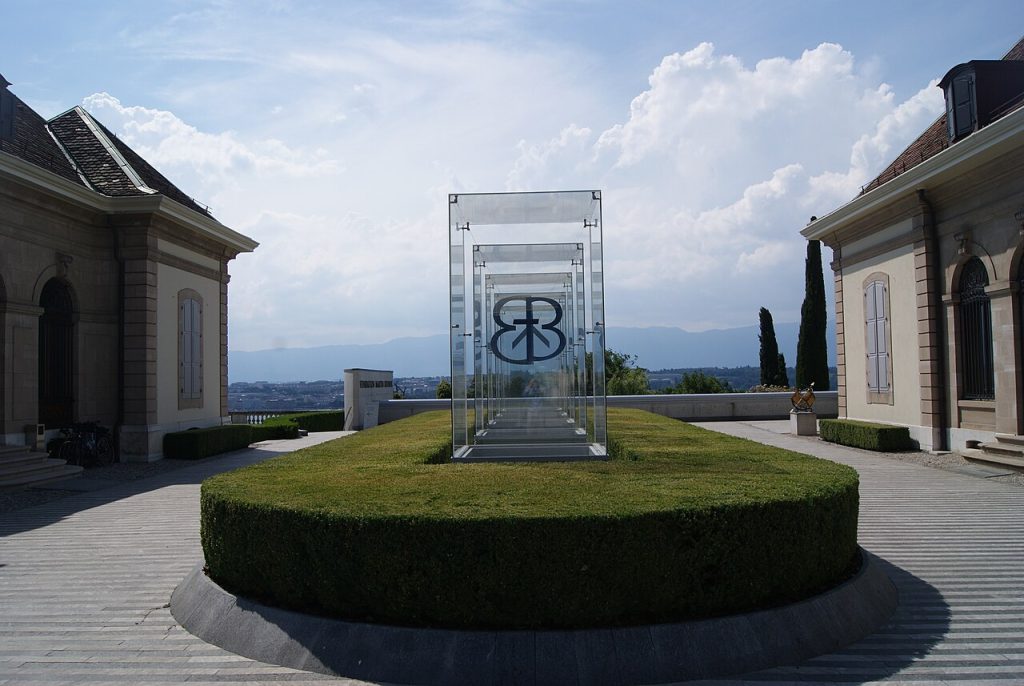
Egypt, Geneva and the Vatican Library
The main part of P75 entered the collection built by Martin Bodmer in Geneva. Its history before reaching the collection is less clear. Scholars generally associate it and a group of other manuscripts acquired through the Egyptian antiquities trade with Upper Egypt. Specific proposals exist for where the manuscripts were found, including an area near Dishna. A findspot established by a documented excavation would let us relate an object to the deposits around it. Here the precise location and circumstances remain uncertain. The strongest story begins with surviving associations among the manuscripts and their documented history after entering collections. Nongbri’s review of the Bodmer papyri and their provenance.
Victor Martin and Rodolphe Kasser published the manuscript in two parts in 1961, one for Luke and the other for John, with photographs of much of the surviving text. That is the source of the catalogue names Bodmer XIV and XV. The editors estimated that the book had once contained 144 pages and that more than one hundred survived. Those two numbers convey the unusual character of the find. There is enough left to follow long stretches of each Gospel and to examine the copyist’s habits. The lost pages still affect how precisely scholars can discuss the original book and its contents. Publication and physical description of the codex.
One complication is that a book can be repaired and reused during its lifetime. Martin and Kasser described a leather cover with layers of papyrus fragments adhering to it. Some pieces in those layers have been identified as parts of P75. The original editors wondered whether damaged outer leaves had been reused to stiffen a later cover. Scholars draw a careful distinction between the first act of writing the text and any later use of pieces from that book, because a cover and what it contains can have different histories. A fragment recovered from the binding can preserve a line absent from the main stack of leaves. Study of the binding and fragments, section IV.
The main manuscript was acquired from the Bodmer collection in 2006 and donated to the Vatican Library. It is catalogued there as Hanna Papyrus 1 (Mater Verbi). Search instead for P75 if you are consulting the Gregory–Aland register that numbers Greek New Testament papyri. Even the modern history of the surviving pieces has a few turns. In 2020 Brent Nongbri and Daniel B. Sharp published four further fragments they identified at the Fondation Martin Bodmer. The publication illustrates why a count of pages or pieces should be tied to a particular study. Books in institutional collections can still yield new joins and identifications. Nongbri and Sharp’s report on four further fragments.
A close look at the shared Gospel page
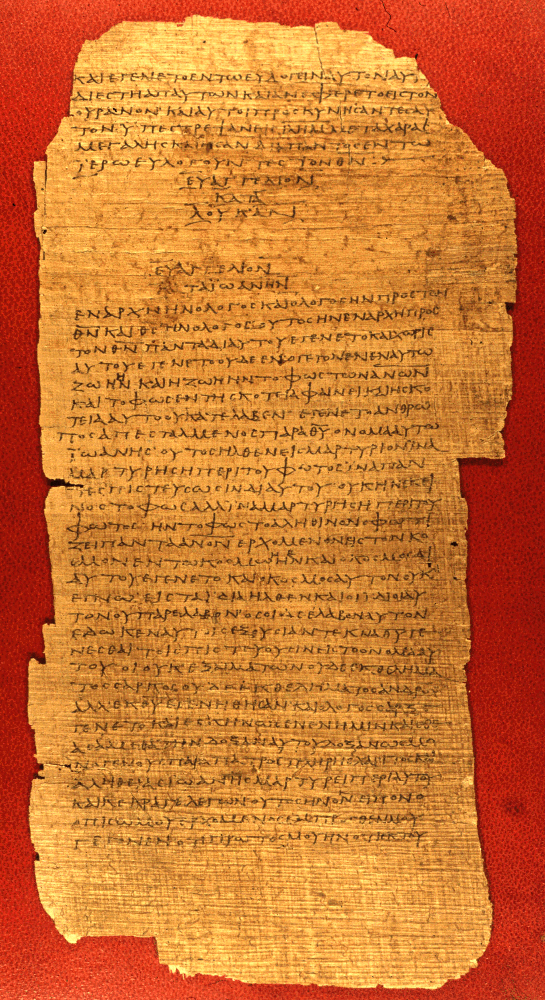
The change of book is easy to spot even for a reader unfamiliar with Greek. The first title is the short form commonly translated Gospel according to Luke. It sits after the closing text of Luke rather than at the head of this page. A title in that position is called a subscription. A few blank lines help set the next title apart. It names John, and the Gospel begins directly below. The two titles differ slightly in visual arrangement. Each gives its own Gospel a name. Both belong to a continuous production in which the copyist could begin another literary work without waiting for a new leaf. Study of the title placements and wording in New Testament papyri.
- At the top find the last lines of Luke and the closing title.
- In the small gap look for the change in spacing between the two titles.
- Below the gap find the shorter title naming John and the first lines of his Gospel.
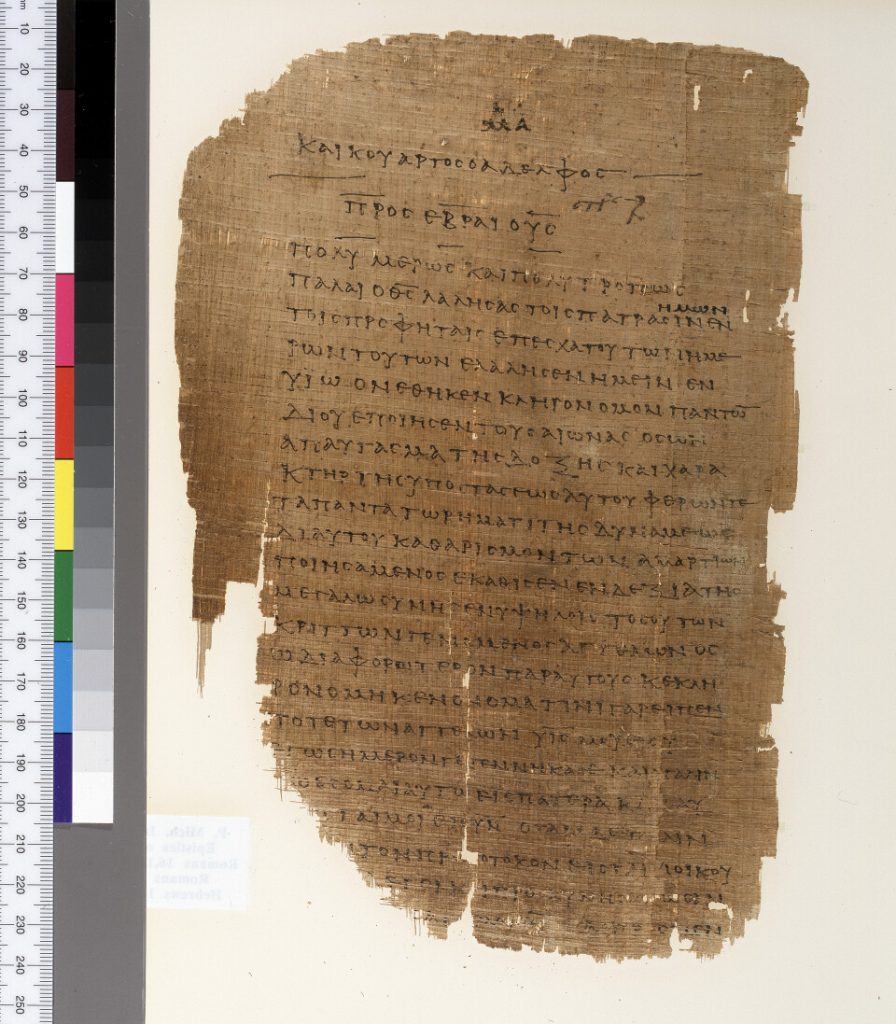
The same physical strategy shows up elsewhere in early books. A page of the papyrus codex P46 moves immediately from the end of Romans into the opening of Hebrews. That is a separate collection with a different purpose. It helps explain what readers see in the gap between Luke and John. A title could announce a new book on a page that still belonged physically to its neighbor. Before modern chapter divisions, page headers and a table of contents made navigation routine, decisions about spacing and the position of a title helped readers know how far they had traveled. University of Michigan record for the shared Romans and Hebrews page.
The context of the two P75 excerpts matters. Luke has just described how the risen Jesus opened his disciples’ understanding of the Scriptures and led them out toward Bethany before they returned to Jerusalem. John begins well before the lives of those disciples. He names the Word who was with God, says the Word was God and then proceeds to announce that the Word became flesh. The copyist’s page lets us hold the difference together. Luke ends at the threshold of the disciples’ witness. John starts with the identity of the one to whom they bear witness. Christians receive both as true Scripture, and the juxtaposition gives us a glimpse of how early readers could move between them. Luke 24:44–53; John 1:1–18.
For the reader of this ancient codex, the distance from Jerusalem at the end of Luke to the beginning of creation in John was a few lines of papyrus.
How a date changes the reading of a manuscript
P75 has often been dated to the late second or early third century, with around AD 200 used as a shorthand for some estimates. The range reflects the attempt to date a manuscript by its letter forms. A comparison can find that two hands share a style. Their resemblance will have a little more force as chronological evidence if the writing sample to which we compare the codex has a date secured by something beyond handwriting. Surviving examples with clear outside dates are limited. Estimates based on a comparison with other undated writing may inherit the uncertainty of the other manuscripts. Paleographic evidence and the traditional date.
In a 2016 study Brent Nongbri reassessed the style of the handwriting alongside what is known of the codex’s construction and the books associated with its discovery. He argued that the fourth century fits all of those lines of evidence. That is a serious challenge to the narrow earlier date. It leaves the precise age open and provides a different way to understand P75’s remarkable affinity with Codex Vaticanus, a fourth-century Greek Bible. Copyists separated by a long interval could have kept a form of the text with close agreement, while scribes working within a nearer period also could have copied related texts. The amount of textual agreement does not settle the calendar. Nongbri’s argument for a fourth-century setting.
A different set of marks records the book’s life after copying. James R. Royse counted more than one hundred corrections in P75 and attributed most of them to the original copyist, although he identified a small number likely made by later hands. Some writing in the margins appears to have a separate purpose from correcting the Gospel. These marks allow a researcher to ask whether the codex continued to be read after it had been written. They also show why the date of a word added in a margin is a separate matter from the age of the main hand. Discussion of the corrections and later marginal marks.
The comparison is worth more than a general impression that the pages resemble each other. Textual scholars compare one reading at a time in the places where witnesses differ. In a group of such passages, P75 and Vaticanus regularly align in Luke and the beginning of John. They also have individual readings. The standing of a particular reading therefore depends on the pattern of evidence around that place as well as the age and character of the copies that carry it. For a reader who has met a footnote in a Bible, this explains why a single manuscript name is often only the beginning of the editor’s answer. Comparison of P75 with Vaticanus, discussion and test passages.
The last line of John’s prologue is one example of what a variant looks like. At John 1:18 P75 contains the Greek words monogenēs theos, with the word for God abbreviated in the manuscript. Some other witnesses read a form with “Son” where this one has “God.” Bibles that print a translation of one form may include the other in a footnote. Compare the Vatican Library’s transcription with the biblical context. The prologue has already spoken of the Word’s divinity, the Word becoming flesh and his relationship to the Father. Those themes help the reader understand why the choice of this particular wording matters within the passage. Vatican Library transcription of John 1:18.
Read a familiar prayer in this copy
Luke supplies a good place to try the method. In Luke 11 a disciple asks Jesus to teach the group to pray. Jesus gives them words for asking that God’s name be honored and his kingdom come, for bread and forgiveness, and for help in the face of temptation. P75 preserves the passage in Luke. Its wording is shorter than the form many Christians know from Matthew 6. The Vatican Library’s study prints the Greek and sets the two Gospel settings in view. Read both passages in context and then locate the lines of the prayer in the manuscript. The form preserved by a scribe gives us a way to ask how actual readers encountered the prayer in one Gospel. Vatican Library study of the Lord’s Prayer and John’s prologue in P75.
Both Gospel writers treat prayer as an ordinary act of dependence on God. Matthew sets Jesus’ teaching amid the Sermon on the Mount. Luke brings that same dependence into a conversation prompted by a disciple who has watched Jesus pray. For Christians the Lord’s Prayer belongs in the life of the church as well as on the page. A surviving copy gives that life a material dimension. Here were words the copyist put down in ink that other people could have read aloud and learned. That human labor is one part of the history of how the true words of Jesus have reached us. Luke 11:1–4; Matthew 6:5–15.
Frequently asked questions
Did P75 once contain all four Gospels?
The portions that survive preserve Luke and John. The reconstruction of the lost leaves depends on the physical evidence. The shared page gives particularly strong evidence for the order of the two works that remain. Physical description and reconstruction.
What does a later dating mean for the Gospel stories?
A date for P75 is an estimate of when this copy was written. Earlier witnesses and other historical evidence address the age of the Gospel texts themselves. In this case the biggest change concerns the interval between P75 and closely related copies such as Vaticanus. Study of that chronological question.
Where can I see the prayers and Gospel titles?
The Vatican Library provides the full digitized manuscript. Open the frame with the two Gospel titles or the frame with the prayer and use the viewer to enlarge the writing. The transition into John. The Lord’s Prayer in Luke.
Sources and further reading
- Vatican Library, Hanna Papyrus 1 (Mater Verbi) — Primary holding catalogue and full digitized manuscript. Published Vatican scans remain displayed at their source.
- Brent Nongbri, Reconsidering the Place of Papyrus Bodmer XIV–XV — Study of handwriting, physical construction, acquisition, and relationship with Codex Vaticanus.
- Vatican Library, the Lord’s Prayer and John’s prologue — Study and transcriptions of two significant passages.
- Brent Nongbri and Daniel B. Sharp, Four Newly Identified Fragments of P.Bodmer 14–15 — 2020 report from the scholars who identified the four pieces in the Bodmer holdings.
- Titles in the New Testament Papyri — Comparative study, section 10, with the exact placement and transcription of P75’s titles.
- Center for the Study of New Testament Manuscripts, P75 — Catalogued photographs and page references.




