Near the end of an excavation season at Tel Zayit in July 2005, the field team discovered faint marks on a limestone block set into a wall. Light directed across the surface made the marks easier to see. They were letters. Across two lines, the stone preserves the sequence of twenty-two signs used for a local form of the early alphabet. Archaeologists call this kind of inscription an abecedary. The object takes us to a part of the ancient world in which even a small settlement could leave evidence of writing. It also opens a question about how early people there knew the alphabet, and what they did with it. Primary publication by the excavation team · Contemporary account of the discovery
Key takeaways
- The Zeitah Excavations found the stone in a building wall at Tel Zayit in 2005. Its two inscribed lines preserve an early twenty-two-letter alphabet.
- The excavation team dates the context to the tenth century BC, while a published reanalysis argues for the later ninth century and a closer relationship to Gath.
- The find is evidence that someone in the region knew the alphabet. It helps set biblical references to scribes and record keeping in context, while leaving the original purpose of the stone open.
A heavy stone in a small settlement
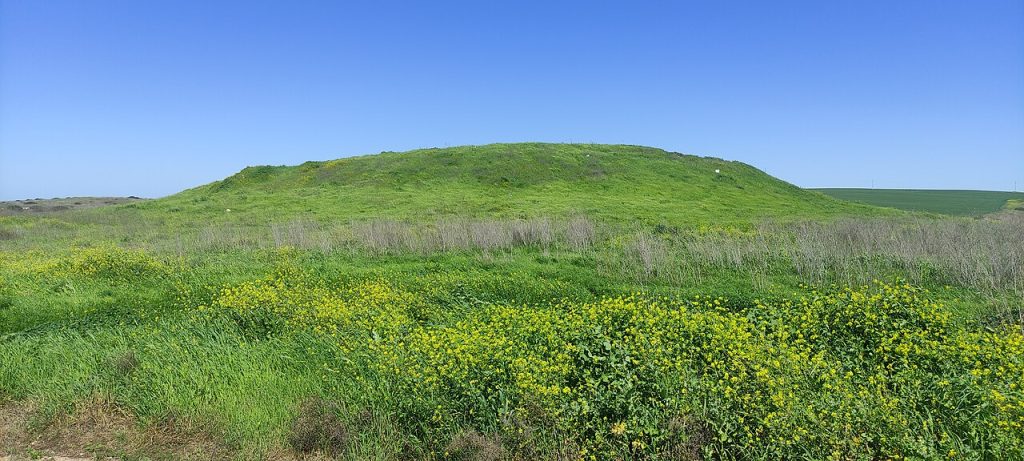
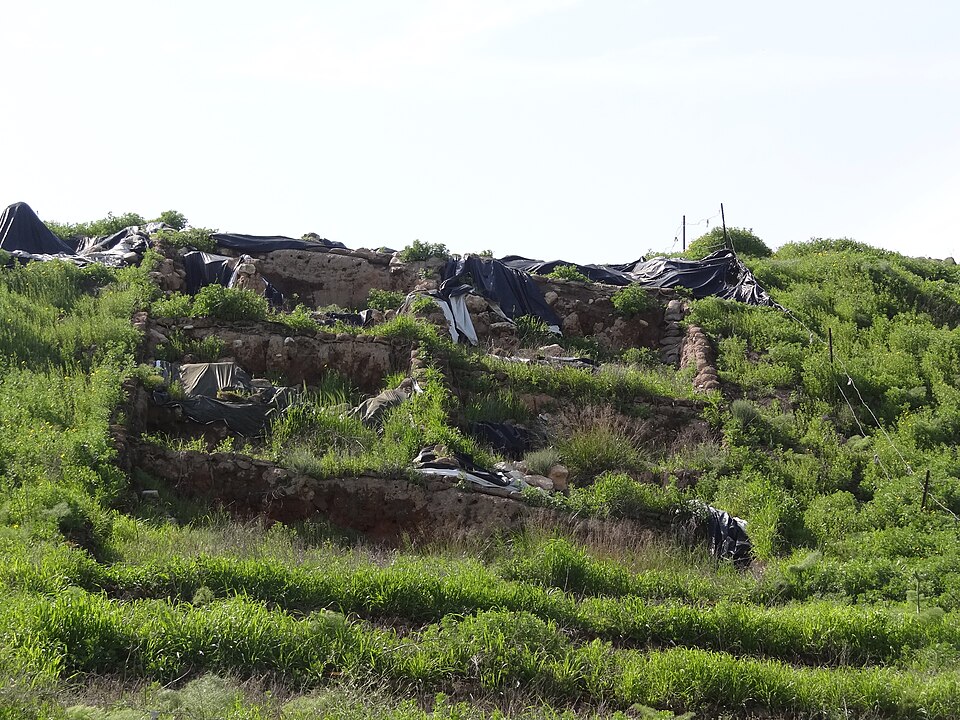
Tel Zayit lies in the Shephelah, the lowlands and foothills between the coastal plain and the central hills. The expedition describes it as a settlement near routes in the Beth Guvrin Valley, between the areas of Lachish and Gath. Its location gives archaeologists reason to study connections in more than one direction. A small mound can retain traces of trade, construction, and reading practices even without the size of a royal capital. The team has suggested that the site might correspond to the biblical town of Libnah, though the inscription gives no place name. It is best to begin with the location that was actually excavated. The expedition’s account of the site
The block is limestone and weighed about seventeen kilograms, or thirty-seven pounds. One side has a shallow bowl-like hollow. Writing appears on the other. Those two features are reasons to ask about the object’s history before it was placed in the wall. A stone prepared for use in one activity could later offer a surface for writing. It could end its working life as masonry. The excavators recovered the block from a known structure, which is a major advantage in dating it. The find still leaves open the order of all earlier uses, and the identity of the person who first made its hollow or letters. Description of the object in the research volume
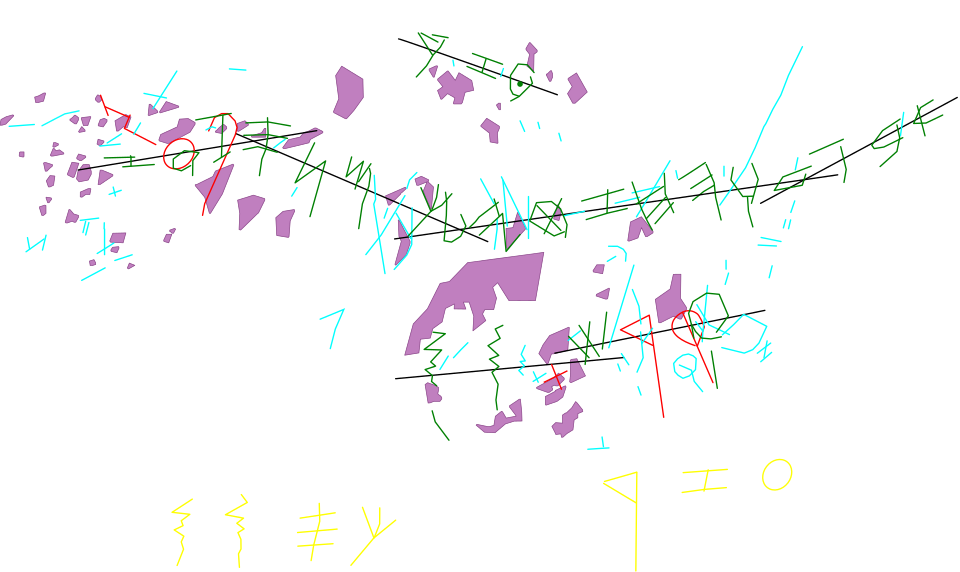
The way in which the marks emerged is part of the discovery. A shallow incision catches the light differently when a lamp shines along the surface instead of straight down onto it. The specialists who documented the stone could see details that were hard to make out at first. To understand what they read, it helps to look back and forth between a photograph of the stone and a drawing of the letters. A drawn line records someone’s judgment that a mark is part of the inscription. The original surface shows the breaks and rough areas through which the cutter had to work. The Johns Hopkins account of the angled light · Project photograph of the original
What the lines say
An abecedary gives a set of signs in sequence. The text can be valuable even when it contains no sentence and names no person. At Tel Zayit there are features that archaeologists compare with letters used by Phoenician and other communities in the region. Tappy and his colleagues describe the script as transitional, in a writing tradition that they see as developing toward the later Hebrew script. The precise classification matters. We can recognize shapes and a general order that later readers would know, while the alphabet alone gives no ordinary words by which to identify the writer’s spoken language. Tappy and colleagues on the alphabet
There are variations from the order printed in a modern Hebrew alphabet. Tel Zayit is particularly interesting because the inscription gives us a sequence, and we can ask whether its order reflects how one writer learned, an established local practice, or the choices of someone copying an example. To ask whether a script was taught is to ask a slightly different question from whether a person could write. Someone could have learned the sequence through practice or instruction, and the ability seems to have been present in the region. A stone with letters on it leaves us unable to locate a classroom or count its pupils. The collected discussion of early writing and instruction
The physical scale also matters. A person could carry a small piece of broken pottery from room to room, whereas this limestone block was a substantial object. That makes portable use less likely and makes the return to a wall as building material easier to imagine. The letters could have been written in someone’s place of work or on a surface already integrated into the building. The carving itself cannot settle why someone wanted the alphabet in that spot. A suggested writing exercise is plausible because the signs are given in order, while alternative purposes for having an alphabet on a durable surface remain open. Study of the text and find context
The stone gives us evidence of someone who knew the alphabet, in a place whose written life would otherwise be hard to see.
Why the date remains a subject of debate
The Zeitah team dates the structure holding the stone to the tenth century BC, with the original publication arguing for a date by the middle of that century. It draws evidence from the pottery and building sequence and gives a detailed account of the shapes of the letters. The thought that writing already reached a provincial settlement in the period commonly associated with Solomon has made the find particularly important to biblical readers. Its date is the outcome of comparing physical evidence. The association with Solomon’s era follows if the excavators’ chronology holds. The inscription itself supplies no regnal year or royal name. The excavation team’s dating argument
Israel Finkelstein, Benjamin Sass, and Lily Singer-Avitz have published a later dating. They question how parts of the site’s pottery and sequence should be assigned and argue that the letters and ceramic material are better compared with the later ninth century BC and the area of Gath. Their proposal affects the political setting they give the town as well as the calendar date. The evidence in dispute concerns comparisons at neighboring sites and the assignments of particular floors, deposits, and letter forms. In either reconstruction the stone preserves early alphabetic writing in a small settlement of the region. The narrower claim that it belongs in the tenth century has to stand or fall on the dating argument. The published ninth-century reanalysis
The excavation is also a reminder to readers that an alphabet can travel with a person. One writer trained at another town could have brought the sequence to Tel Zayit. A teacher, a young learner or someone preparing a record could have had excellent reasons to carry familiar letter shapes across the Shephelah. The stone itself would have required no great journey. Its weight and reused position make local engraving plausible, while the development of the letters belongs to a much wider network. The two scales can be studied together. A regional tradition explains similarities and a particular person’s practice may explain some of the differences.
Pottery offers another way to test the relationships among settlements. Archaeologists compare the shapes of rims, handles and vessels with pieces found in other sealed layers. Similar forms may reflect trade, shared customs or neighboring communities making vessels to meet similar needs. Specialists can agree that two assemblages look related while disagreeing about where to put them on the calendar. That is why the study of the wall and the study of the letters both matter to this find.
Three times to keep in view
- The letters were cut. Scholars compare the shapes and order of the signs with other early inscriptions.
- The block went into a wall. The structure and the associated pottery can constrain the date of that use.
- The wall was excavated. The team could record where the stone was found and make the context available for others to study.
Scribes in the world of David and Solomon
Second Samuel 8 names a recorder and a secretary in the list of David’s officials. First Kings 4 gives another list for Solomon, including two secretaries and a recorder, along with officers responsible for provisions. The passages describe tasks and responsibilities at a court. A list of letters from a small settlement shows a different scale of activity. It illustrates one basic skill on which courts and other institutions depended, the ability to recognize and order written signs. We would need much more evidence to connect the Tel Zayit writer to a particular office in Jerusalem, or to estimate how common the skill was. Biblical lists of David’s and Solomon’s officials
A different use of the alphabet is visible when readers open Psalm 119. The poem’s Hebrew sections follow the alphabet and repeat the initial letter through a group of lines. The technique belongs to literary composition, while the Tel Zayit stone preserves the sequence without the text of a poem. Together they make it easier to see why an ordered alphabet was something a writer could learn for many purposes. A poet could invite readers to remember a long meditation on God’s word, and a recorder at court could organize practical information. The stones and manuscripts we study are physical remains of acts that required people to learn the underlying signs. Psalm 119
Other artifacts show what people did with writing after they learned it. The Gezer Calendar organizes months by agricultural work. The Gath ostracon shows how a local script could be used for personal names that may come from other linguistic traditions. Those finds were made at different sites and carry different dates and questions of their own. Putting them together gives us more than a list of the oldest possible inscriptions. It shows how the same broad family of letters could be used for practice, to record names, or to remember a sequence of work across the year.
Christians trust the Bible’s history and the God whose words it preserves. That conviction gives us reason to care about the actual work of reading and recording in the world of ancient Israel. The carved alphabet does not contain a verse of Scripture. It preserves an ordinary act on which much written work depends. Its recovery from a building wall shows how much can survive of a person whose name we may never have. In that small part of the archaeological record, we can see an alphabet take on the local shapes known to those who used it.
Sources and further reading
- Ron E. Tappy, P. Kyle McCarter, Marilyn J. Lundberg, and Bruce Zuckerman, An Abecedary of the Mid-Tenth Century B.C.E. — Primary publication of the discovery, stratigraphy, and comparative analysis of the letters.
- Zeitah Excavations, Pittsburgh Theological Seminary — The excavation team’s project page, photograph of the alphabet stone, and account of its discovery.
- Johns Hopkins Gazette, Alphabet on Stone Holds Clues to 10th-Century B.C.E. — Contemporary account featuring the expedition epigraphist, photography, and details of the discovery.
- Tappy and McCarter, Literate Culture and Tenth-Century Canaan — Collected research placing the abecedary in context and describing the stone.
- Finkelstein, Sass, and Singer-Avitz, Writing in Iron IIA Philistia — Authors’ research reexamining the strata, pottery, letter shapes, and possible ninth-century date.
- 2 Samuel 8 and 1 Kings 4 — Scripture’s descriptions of officials, secretaries, and record keepers under David and Solomon.





