One of the smallest finds from Masada bears two words. They can be read as Ben Ya’ir, or “son of Ya’ir.” Yigael Yadin’s excavation recovered the inscribed potsherd with a group of others near the storerooms. Yadin thought they could be lots used in the final hours of the siege described by Josephus. Elsewhere on the plateau, fragments of the Bible turned up, including pieces of Deuteronomy and Ezekiel under the floor of a building used as a synagogue. The two kinds of writing bring us unusually close to the people who lived on Masada and leave us with different kinds of historical questions.
We receive Scripture as true and accurate. Masada gives readers a look at people in the world of the New Testament who copied and preserved books familiar to us as the Old Testament. Its potsherds open a different window on their lives. Some may have helped them keep track of names or supplies. Reading the finds together helps put the history of a community beside the story of its end.
What you’ll learn
- Yadin’s principal excavations in 1963–1965 recovered inscribed sherds, coins, and biblical manuscripts from different rooms and deposits at Masada.
- A sherd reading Ben Ya’ir may relate to Josephus’s named commander. Its proposed function as a lot for the final events remains debated.
- The synagogue yielded parts of Deuteronomy and Ezekiel, and fragments of Psalms survived elsewhere on the plateau. The surviving wording gives direct evidence for early Hebrew transmission.
A palace becomes a refuge
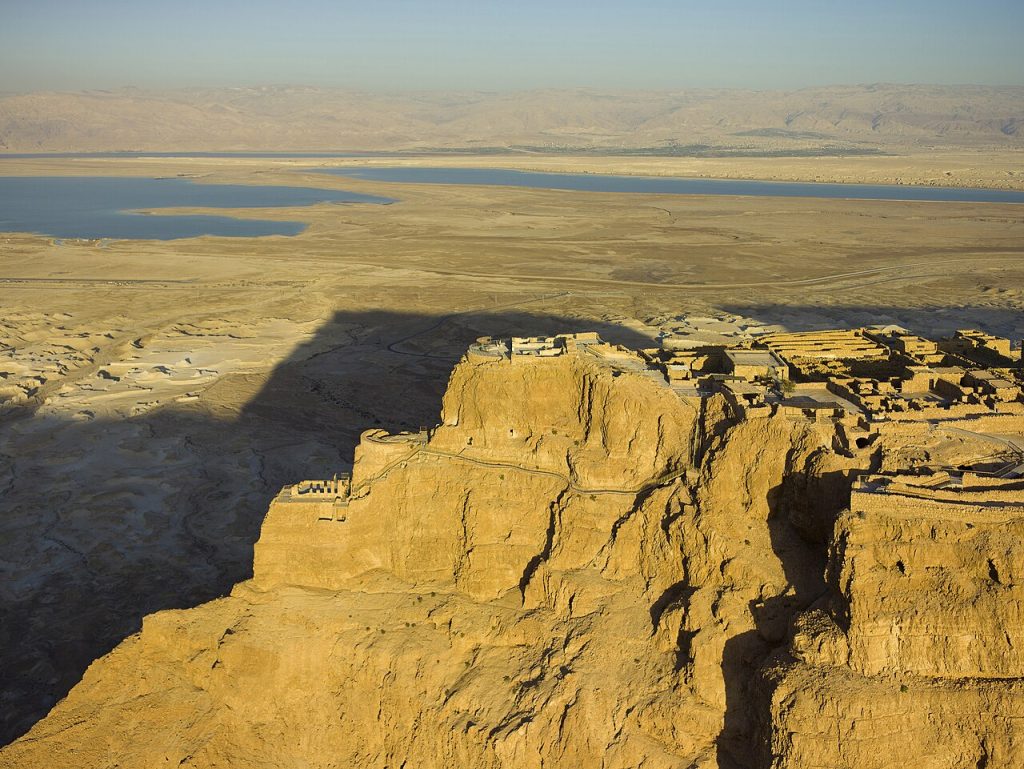
Masada rises above the western side of the Dead Sea on an isolated plateau in the Judean Desert. Herod the Great’s builders made use of the steep setting. The Northern Palace occupies separate terraces cut into the rocky promontory. The site also contained baths, storerooms, and a system for keeping water. The scale is easiest to recognize from the air, where roads on the distant ground are dwarfed by the descent from the top of the rock. This is the same Herod named in Matthew 2. Masada is part of the material record of his kingship, decades before the revolt that gave the fortress its best-known story. UNESCO description of Masada and its palaces
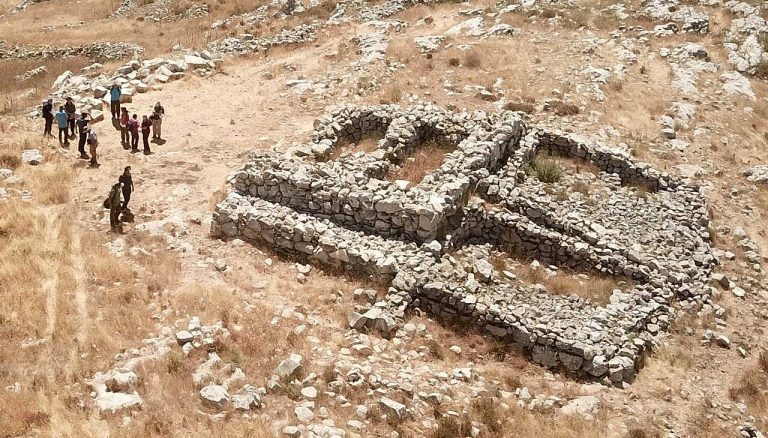
Generations later, during the First Jewish Revolt, Jewish fighters and their families occupied the old sites. Josephus calls the group that held Masada the Sicarii. The occupants used and modified buildings developed under previous regimes. The Romans besieged the fortress after the destruction of Jerusalem in AD 70, with the fall generally dated to AD 73 or 74. Excavators recognize the conflict most readily in what remains on the ground around the plateau. The structures on the summit tell a longer story that includes Herod’s royal household, the people who lived there during the revolt, and activity after Rome took it. Josephus, Jewish War 7.8–9 and Masada nomination dossier
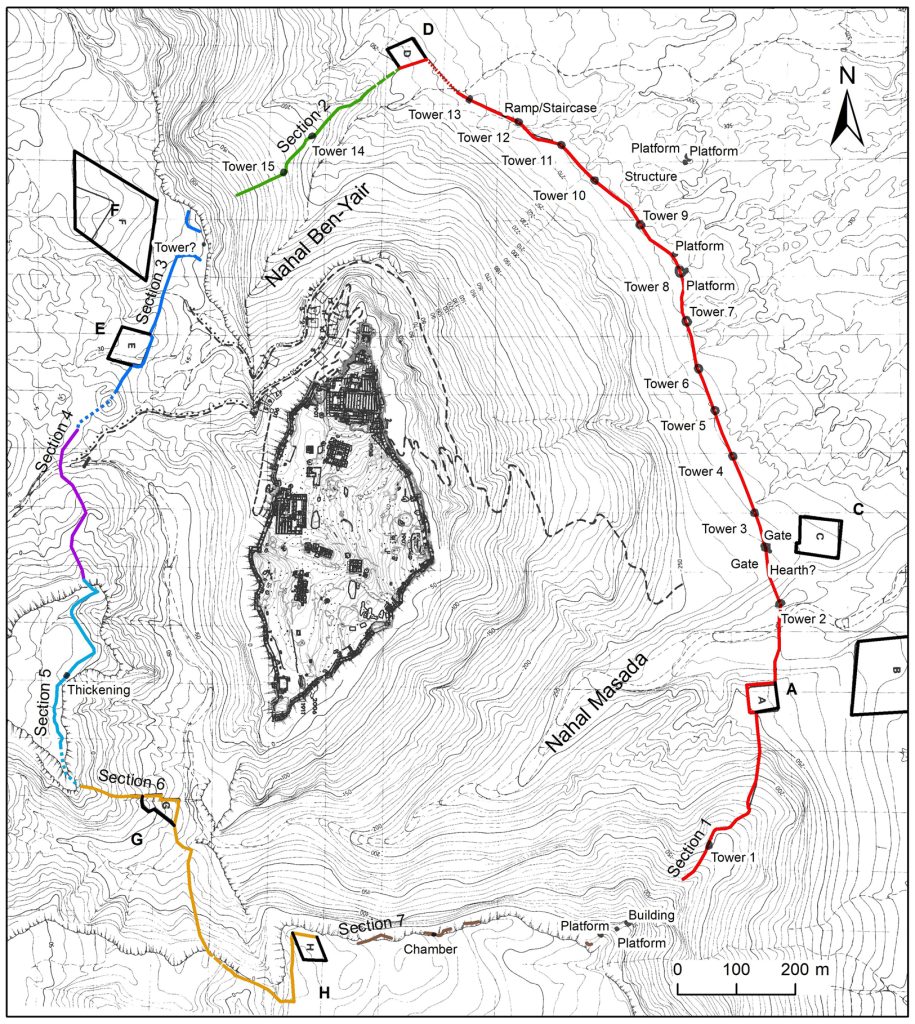
A modern study led by Hai Ashkenazi combined ground measurements and three-dimensional modeling based on photographs. The researchers traced the wall and the camps the Romans left in the surrounding landscape. They estimated that this infrastructure could have been built in about two weeks and argued that the result supports a siege lasting several weeks. The estimate depends on assumptions about construction and labor. It is a way of testing one part of the history against the material record, while leaving the reported events on the summit to be investigated by other means. 2024 survey and modeling study
Twelve pieces of pottery and Josephus’s ten lots
A potsherd with writing is called an ostracon. If you have a broken jar and need a label or a brief note, a piece of its side offers a surface you can use. Masada yielded hundreds of pieces of pottery with writing, including fragments of labels written on containers, names, and shorter markings. Some could have helped distribute provisions or identify property. The range of usage matters when an individual sherd is offered as evidence for a moment in a written account. Final edition of the ostraca and jar inscriptions and Examples in the Masada nomination dossier
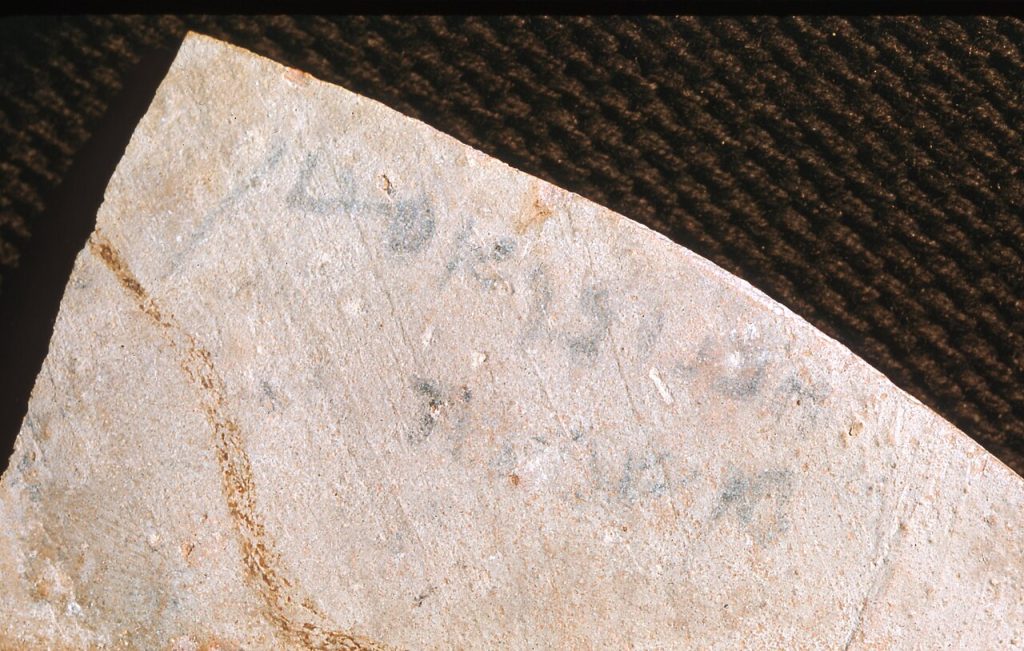
The group Yadin associated with the siege’s final hours came from an area beside the inner gate near the storerooms, designated locus 113. The similar handwriting and the short personal names made the pieces interesting as a group. One bears Ben Ya’ir, also part of the name of the commander Eleazar ben Ya’ir in Josephus. There are eleven inscribed pieces in some descriptions and a twelfth item that Yadin considered incomplete. Josephus reports that the defenders used lots in the final killings and that ten men were initially chosen. Yadin suggested how the extra sherd could fit the account. Joseph Naveh, who published the material, questioned whether the objects’ purpose could be established that way. Magness on Yadin and Naveh’s interpretations
Could the sherds have served as allotment tokens? Other inscribed pieces close to the storehouses show that names and short marks were used throughout the site. Provisions and people had to be accounted for, especially when access to the fortress was restricted. The place where the group was found and the way the writing matches across pieces give reasons to consider them together. The pieces themselves specify no occasion or purpose. Finding a name familiar from Josephus makes the connection worth testing, but a name by itself can leave the identity uncertain. Our guide to reading broken inscriptions explains how the reading of the letters and the identification of a person require different evidence. Discussion of the group and provisioning alternatives
Josephus gives our fullest ancient account of Masada’s end. He tells of the deaths of the defenders and their families, and reports that two women and five children survived by hiding. Archaeology supplies ample evidence for the siege and destruction, but the sequence of actions inside and the words he attributes to Eleazar are matters historians evaluate from the written account and the limited surviving material. The archaeological debate over the sherds is worth following with that distinction in mind. Both source types matter, and they supply different kinds of detail. Josephus’s account and speeches and Historical and archaeological discussion of the last hours
Names on pieces of pottery show people keeping records. The manuscripts from Masada show what they took care to preserve.
The biblical record does not narrate the siege of Masada. It does describe the Roman authorities and Jewish institutions that preceded the revolt, and it gives a vivid sense of the Temple’s importance in the lives of Jewish families. The discussion of Masada belongs to the later history of the same region. The family of Jesus made its way to the Jerusalem Temple for Passover in Luke 2. By the years in which the siege took place, the Temple had been destroyed. Places where people still kept the Scriptures help us see one thread of continuity across that rupture.
The scroll fragments under the floor
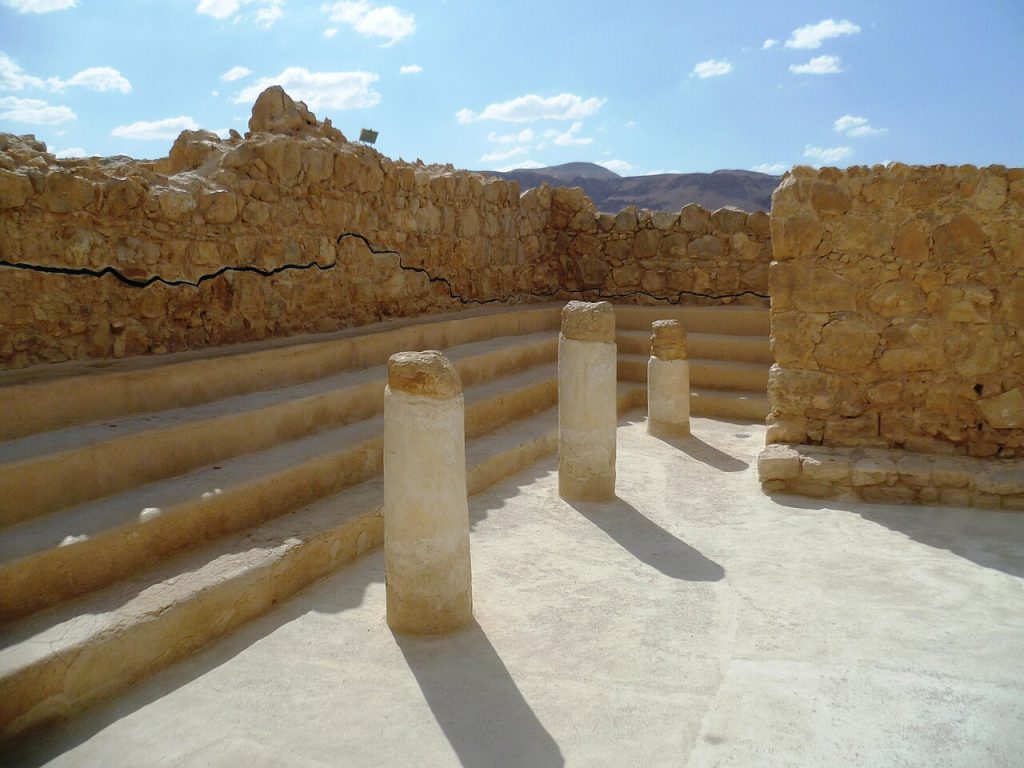
At the synagogue, excavators found parts of two manuscripts in separate pits under the floor. One preserved some of the concluding passages of Deuteronomy, including portions of Moses’ blessing and the account of his death. The other preserved parts of several chapters in Ezekiel, including material from chapter 37. The setting provides a physical link between the scrolls and a building used by the community. The excavated deposits help date when the books must already have existed. The handwriting and preparation of the scrolls indicate the period when they were copied, which can be earlier than the date at which the scrolls were put into the pits. Field inventory and descriptions of the manuscripts and Tov on the two manuscripts’ dates and handwriting
Ezekiel 37 records God giving the prophet a vision of dry bones receiving breath. In the chapter, God calls the bones the house of Israel and answers a people who say their hope is gone. It is moving to encounter parts of that text in a place connected with another time of catastrophe for Jewish families. We do not know what the people who put the scroll under the floor were thinking. What we can say is that the promises Ezekiel addressed to an exiled people had been copied faithfully enough for their words to be recognized by readers many centuries later.
Researchers can examine what faithful copying looks like at the level of a letter. Emanuel Tov notes that the surviving words of the Masada Deuteronomy manuscript agree closely with the text in the much later Leningrad Codex, down to a division between sections. He identifies a spelling difference. Ezekiel shows close agreement with some differences in spelling and minor details. Such agreements and differences allow comparison: the same passages were recognized and preserved through many generations, and individual scribes did their work by hand. The surviving fragments preserve portions of the books and provide evidence about the wording within those portions. Textual comparisons with the medieval Hebrew tradition
Some specialists describe the pits as places used to put away worn sacred writings. Such a practice offers a plausible explanation of the deposits, and the particular condition of the parchments when they went beneath the floor cannot be reconstructed fully. A closed deposit gives scholars a location and an archaeological relationship they can compare with other evidence. It preserves far less about the intentions of the people who made it.
Scripture preserved in more than one place
Other rooms on the plateau yielded remnants of Genesis, two manuscripts of Leviticus, and two of Psalms. One Psalms manuscript contains parts of Psalms 81–85. Another preserves much of Psalm 150. The latter’s remaining blank space helps scholars judge that it stood at the end of its scroll, as it does in the familiar Hebrew order. The Psalms were part of the worship and memory of the Jewish people, and this collection was preserved in pieces alongside works such as Ben Sira and Songs of the Sabbath Sacrifice. A copy of the latter work also turned up at Qumran. These are different sites, and the appearance of a text in two places is evidence for circulation without assuming the same community deposited both copies. IAA collection summary and Descriptions of the Psalms fragments and their find locations
These finds suggest a way to approach Masada that begins with the things people used. The potsherds show how quickly a small piece of ordinary pottery could become part of keeping a community supplied. The scrolls remind readers how much work went into copying a long text, protecting it, and handing it to another generation. Take time to read the end of Deuteronomy, Ezekiel’s vision, or the praise at the end of Psalm 150. Even a fragment can bring to mind people who knew the full passage and cared enough to make and keep a copy.
Sources and further reading
- Josephus, The Jewish War, book 7, chapters 8–9 — Ancient literary account of the siege, Eleazar ben Ya’ir, and the reported deaths. English translation hosted by the University of Chicago.
- Yadin and Naveh, Masada I: The Aramaic and Hebrew Ostraca and Jar Inscriptions (1989) — Primary edition, especially the discussion of the possible lots and plate 25. See pp. 28–31.
- Talmon and Yadin, Masada VI: Hebrew Fragments and Ben Sira (1999) — National Library of Israel record of the Masada final reports, including the volume on Hebrew scroll fragments and their findspots.
- Masada World Heritage nomination dossier — Site chronology, the ostraca in locus 113, the synagogue, and the detailed survey of the manuscripts.
- Jodi Magness, Masada: A Heroic Last Stand Against Rome? — The archaeologist’s discussion of competing readings of the ostraca and the evidence for Josephus’s account.
- Ashkenazi and colleagues, The Roman Siege System of Masada (2024) — Ground survey and photogrammetry of the Roman camps and wall, including the construction estimate and its limits.
- Israel Antiquities Authority, Discovery Sites of the Dead Sea Scrolls — Collection summary of seven scriptural manuscripts and other ancient writings found at Masada.
- Emanuel Tov, The Socio-Religious Setting of the (Proto-)Masoretic Text (2018) — Author’s textual comparison of the Masada Deuteronomy and Ezekiel manuscripts with later Hebrew witnesses.