At the northwestern edge of the Dead Sea, a strip of dry ground separates a line of desert cliffs from the shore. On a terrace stand the remains of Khirbet Qumran. Among nearby cliffs and eroded slopes are the caves that preserved the manuscripts commonly called the Dead Sea Scrolls. The ruins and caves belong to the same landscape. The question that shaped excavation was how closely they belonged to the same community. A visit to the site brings the question into focus. You can follow a channel into a pool, look down on a cluster of rooms and then see the openings of Cave 4 nearby. Each gives a different kind of evidence. Hebrew University, virtual archaeology tour.
What you’ll learn
- How the first scroll cave was located and how Cave 4 changed the investigation.
- What the water system and other structures can tell us about the settlement.
- Why manuscript findspots, dates and interpretations need to be kept distinct.
Three parts of the landscape
The ancient settlement is on a terrace above the plain at the western side of the Dead Sea, in the present-day West Bank. Wadi Qumran is a channel cut by water that comes down from higher ground. Standing water is scarce on the open terrace, yet the wadi can carry a dangerous surge when rain falls in its catchment. The archaeology of the settlement begins with that contrast. People who could direct a portion of the surge toward storage could make use of water after the flow was gone. The cliffs and soft marl around the site also made very different kinds of shelter possible, from existing caves in harder rock to places dug into the slopes. Virtual Qumran Tour, site and water system · Magen and Peleg, excavation and water installations.
Early in 1949 the team working under the antiquities authorities of Jordan excavated Cave 1, where Bedouin had made the first manuscript discoveries conventionally dated to 1947. Gerald Lankester Harding and Roland de Vaux helped direct the archaeological investigation. That work recovered fragments, pottery and other traces that could establish the archaeological setting of the cave. Initial manuscript purchases and the later excavation belong to distinct stages of the discovery. Artifacts found in recorded positions are useful for reconstructing an ancient deposit. A manuscript bought after an unrecorded discovery must be connected to its findspot by other evidence, such as matching fragments and the circumstances of its recovery. Israel Antiquities Authority, Cave 1 and discovery sequence · John J. Collins, The Dead Sea Scrolls: A Biography, ch. 1.
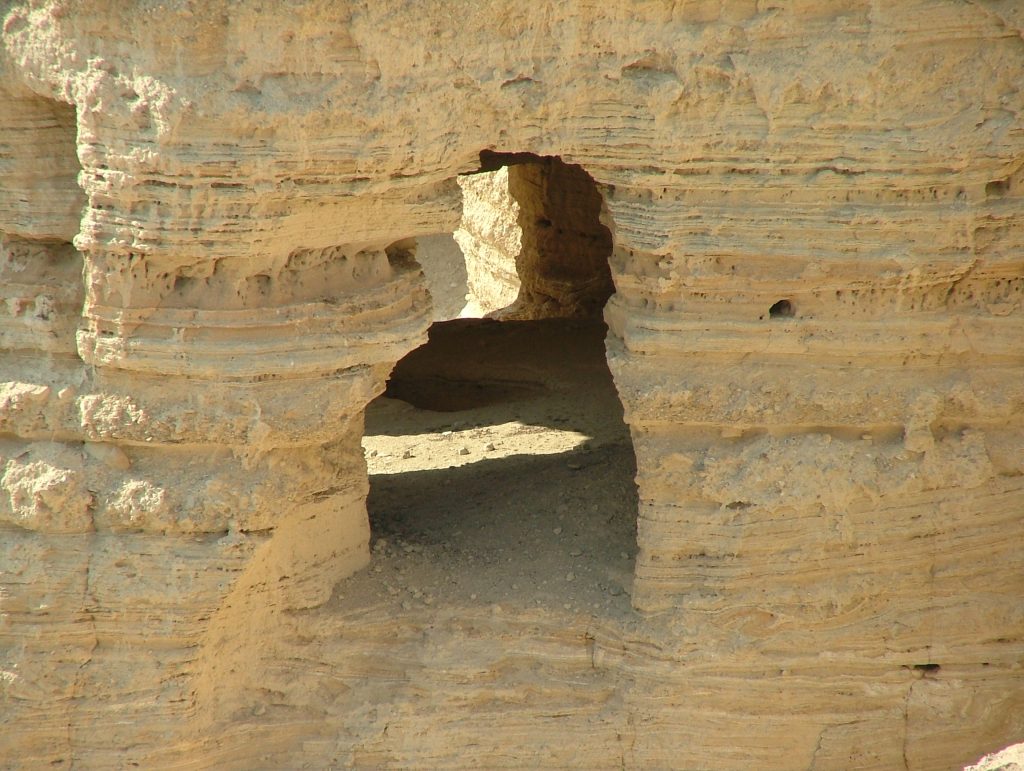
The search accelerated between 1951 and 1956. Cave 4, first found by Bedouin in 1952, lies very close to the ruins in the softer marl. It yielded fragments from hundreds of manuscripts. Cave 1 lies farther away and preserved some exceptionally intact scrolls. Cave 3 yielded the unusual Copper Scroll, and Cave 11 produced material including the Temple Scroll. Their finds make it misleading to imagine all the manuscripts sealed intact in rows of jars in one cavern. Deposits differed, as did the character of the caves and the condition in which their contents survived. Letters and administrative records recovered at other desert sites belong to other contexts, even if catalogues include them under the wider label Dead Sea Scrolls. Israel Antiquities Authority, cave records and other desert sites.
Where a manuscript was found is the beginning of its archaeological story. Where it was copied and who last owned it are further questions.
How a desert settlement held water
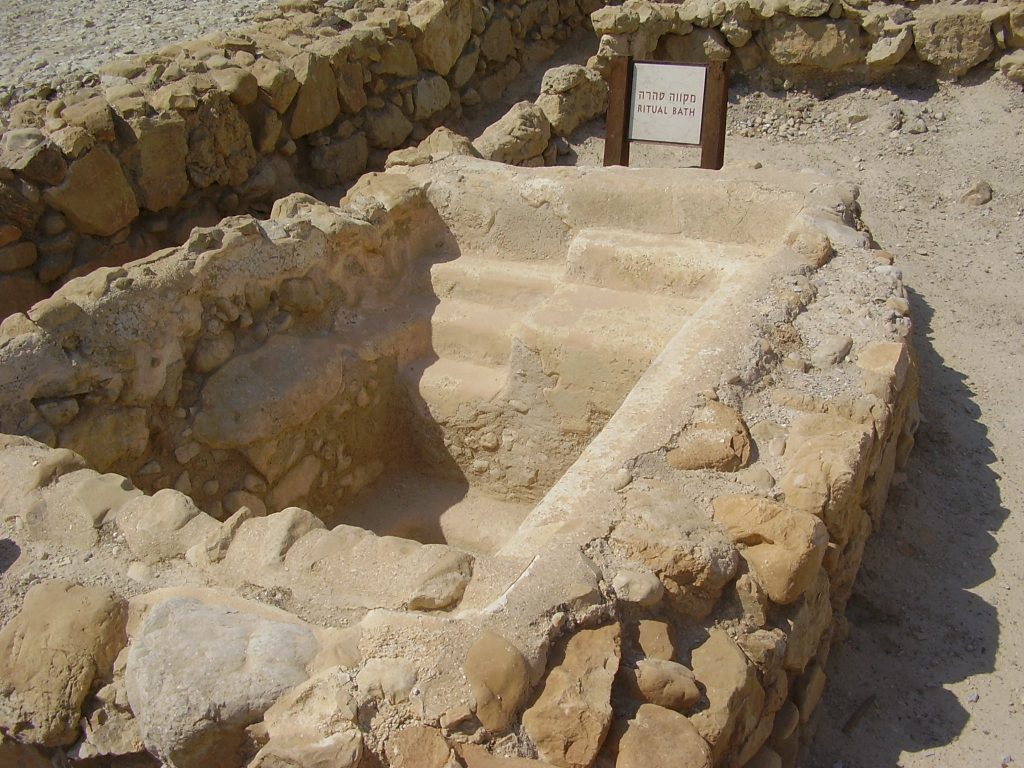
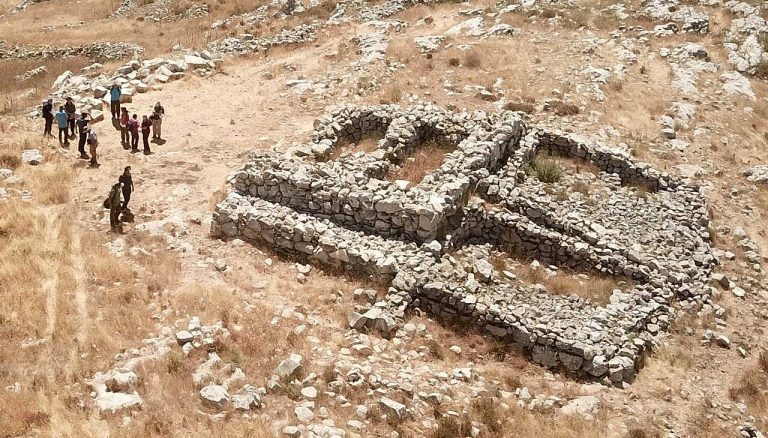
Excavations at Khirbet Qumran uncovered channels, reservoirs and stepped pools. Some installations could catch, hold and distribute water. The variety of shapes and connections suggests that the system developed through more than one stage. Look at a set of steps and ask what it allows a person to do. It can give access to stored water at a lower level. In a pool built and arranged for immersion, it can allow descent into water and return to the surface. To interpret a particular pool, archaeologists look beyond the stairs. Its dimensions, partitions, circulation and the places it supplied can strengthen one interpretation over another. Virtual Qumran Tour, water system and excavated features · Magness, reassessment of the water system and stepped pools.
One consequence of the water system is visible in the way the settlement could be rebuilt or expanded. A room constructed for one generation could find a different use when people changed the channel or added storage. Debris from a reservoir can show that it fell out of use or received sediment, depending on its position and composition. Those observations constrain the order in which the structures functioned. To argue that a particular group used a pool for repeated ritual immersion, one has to consider how the pool was filled, maintained and entered in the phase under discussion. At Qumran the details of a single staircase belong within a broader history of works on the terrace. Magness, development of the water system.
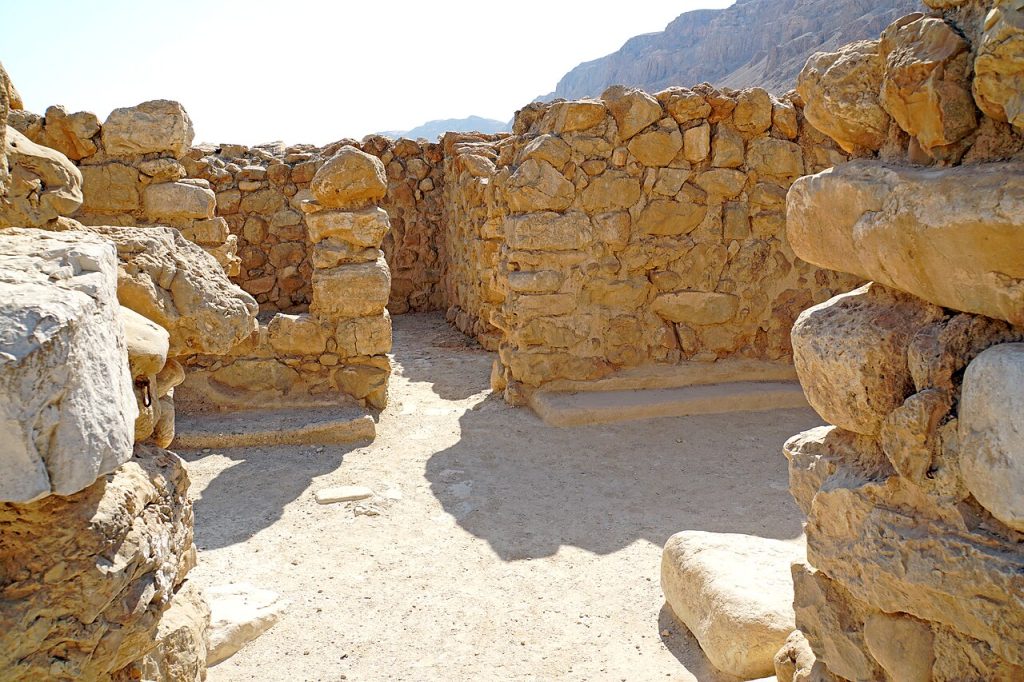
A room can raise the same problem. De Vaux’s team found inkwells and plastered objects interpreted as furniture in the debris of a building. The finds are why the word scriptorium often appears beside a room on site plans. Inkwells show that writing equipment was present. The fall of objects from above, the original arrangement of the plastered features and the range of activities in the room require interpretation. Whatever function the room served, an inkwell cannot identify a manuscript on its own. Its value grows when its context is compared with the pottery, buildings and manuscript deposits elsewhere at Qumran. Hebrew University, excavated settlement features · Magness, excavations and interpretation.
What was the settlement for?
De Vaux’s excavation of the settlement in the 1950s produced the principal sequence against which subsequent work has been measured. His interpretation connected the remains with a Jewish sect and attributed the burial of manuscripts in the caves to people associated with the settlement. The layout, stepped pools, nearby cave finds and parallels between community texts and ancient accounts of the Essenes made this a compelling explanation to many scholars. On this reading the settlement was occupied in its major phases in the first centuries BC and AD, ending around the time of the Roman campaign in the area in AD 68. The occupational sequence and exact interpretation of individual features have been revised and discussed many times. Magness, settlement phases and Essene interpretation.
Another interpretation comes from Yitzhak Magen and Yuval Peleg, who excavated at the site from 1993 to 2004. They published evidence for production and proposed that pottery manufacture was an important later use of installations at Qumran. Their broader account is that the settlement and manuscripts need not have been connected in the way de Vaux suggested. They proposed that people fleeing the Roman conquest could have carried scrolls from elsewhere to the caves. Other scholars have questioned what the kilns and pools establish and to what extent such an explanation accounts for the material works as a whole. The report and the response are worth reading together because both use physical details about the site to make their arguments. Magen and Peleg, final excavation report and interpretation · Magness, comments on the final reports.
These proposals can be compared without expecting every cave to have the same history. If texts were brought to the site from different places at different times, the manuscript dating and the history of occupation will only partially overlap. If people at Qumran copied manuscripts, it would still be quite possible for them to acquire other manuscripts by exchange or inheritance. Similar pottery from caves and settlement, the location of some caves and the overlaps among writings make comparison worthwhile. Any further identification requires checking individual objects and deposits, as well as the scope of the parallels with classical authors. Cave records and manuscript contexts · Magness, evidentiary argument.
What a cave number can tell you
Catalog numbers often embed where a scroll was found. The 1Q in a label points to Cave 1 at Qumran, and 4Q points to Cave 4. The number tells a reader where to begin looking for the archaeological context in a catalogue. To learn the age of a copy, investigators look at other evidence such as handwriting, sometimes radiocarbon measurements, and a manuscript’s relationship to any datable finds. Watch for three dates when reading an introduction. A text was composed, a particular copy was made and it was eventually deposited. Centuries can separate the first of those events from the last. The Great Isaiah Scroll offers an example of how a manuscript can be studied in its own right. Israel Antiquities Authority, cave names and individual manuscripts.
Fragmentary manuscripts add one further distinction. Numerous fragments in a cave can belong to the same scroll, and one manuscript can preserve more than one composition. Scholars group fragments using the character of the writing, page layout, material, wording and direct joins. So the number of pieces found in an excavation and the number of manuscripts represented by them answer different questions. The fragments give a sense of the archaeological work of recovery. Manuscript identities help readers compare what was copied and how many copies of a work survive. Catalogue guide, Cave 4 and the range of its finds.
Why Qumran matters to Bible readers
Qumran is one place where we can glimpse the effort Jewish communities put into copying, reading and interpreting Scripture before and around the time of Jesus. Its manuscripts include copies of biblical books alongside prayers, interpretations and rules of communal life. Those writings make it possible to ask how different readers set about living by texts we encounter today. Deuteronomy 6 calls God’s people to keep His words close and teach them to their children. The tiny written texts from the caves associated with tefillin and mezuzot give a material example of ancient practices readers can compare with that passage. Israel Antiquities Authority, types of Cave 4 material.
Mark opens his Gospel with words from the prophets and with John out in the wilderness. Christians read that account as true and as part of the history of God preparing His people to receive Jesus. The desert communities and scrolls help us picture how alive a passage such as Isaiah 40 was in the wider Jewish world. They give no secure ground for assigning John the Baptist to the settlement. The enduring interest of the place lies in what can be seen. People invested time in managing water on a dry terrace, and carefully written texts ended up in caves nearby. Both kinds of evidence let us see the labor that stood behind lives of prayer, work and study in the Judean Desert.
Sources and further reading
- Israel Antiquities Authority, The Dead Sea Scrolls Discovery Sites — Official catalogue guide to Qumran caves and other Judean Desert sites, with findspot and discovery histories.
- The Orion Center, Virtual Qumran Tour — Hebrew University site guide with Jodi Magness, including settlement, caves and water system.
- Jodi Magness, Archaeology of Qumran and the Dead Sea Scrolls — Overview of excavation, settlement sequence and the case for association between ruins and manuscript caves.
- Yitzhak Magen and Yuval Peleg, Back to Qumran — Final excavation report for 1993–2004 and an alternative interpretation of the settlement.
- Jodi Magness, Remarks on the Archaeology of Qumran in Light of Two Recent Final Reports — Response on water system, pottery production and the use of structures.
- John J. Collins, The Dead Sea Scrolls: A Biography — Narrative chronology of the first discoveries and archaeological investigation.