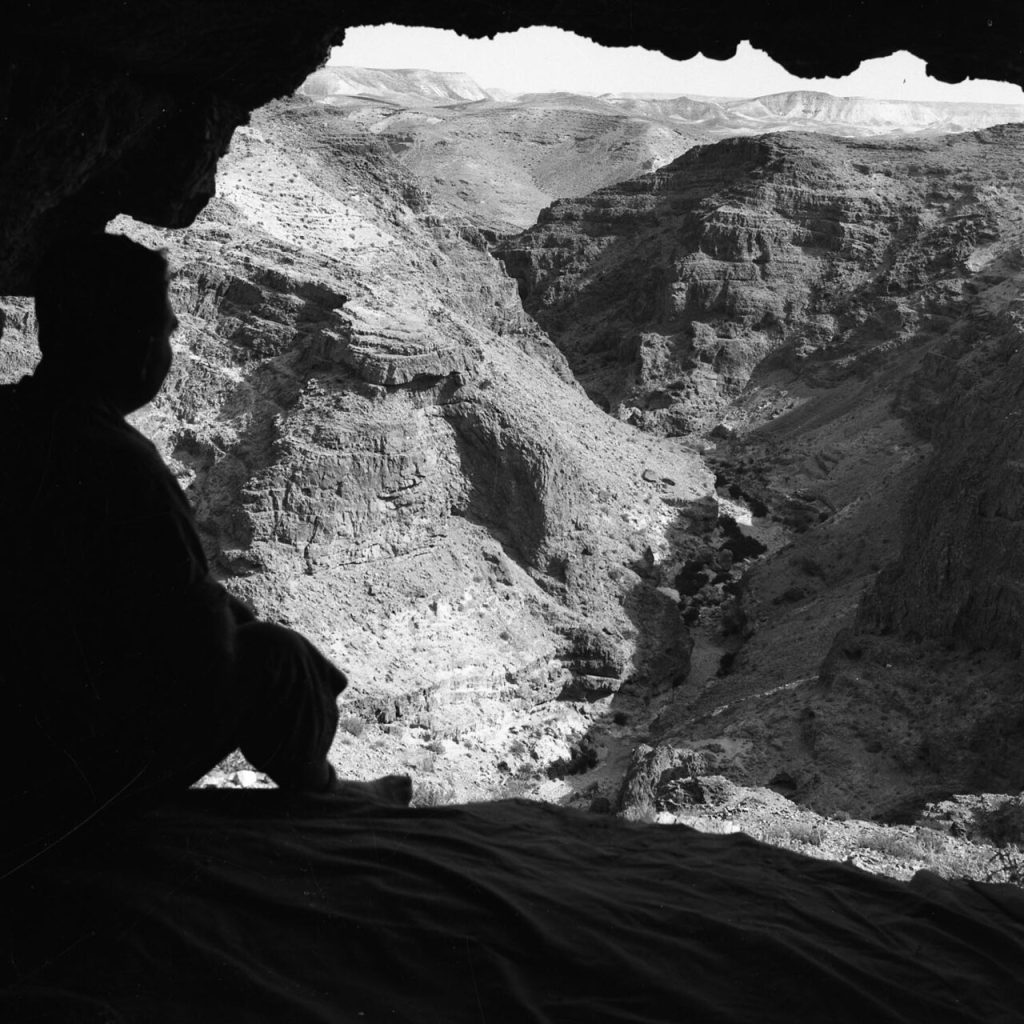
During the Jewish revolt against Rome in the AD 130s, a man named Shimon sent word that he needed palm branches and citrons. There were two donkeys for some of the work. He also wanted myrtle and willow brought in from another place. The orders sound ordinary enough until you notice what occasion is approaching and under what conditions the letter was written. The sender was the rebel leader we know as Bar Kokhba. The four kinds of plants were needed for Sukkot, the biblical Feast of Booths. The message survives because it was among the ancient papers a team recovered from a cave above a ravine near the Dead Sea. Photograph and first excavator’s reading of the Aramaic letter.
Key takeaways
- In 1960, Yigael Yadin’s expedition recovered a bundle of letters from the Cave of Letters at Naḥal Ḥever. Further excavation followed in 1961.
- The correspondence is mostly from or connected with Shimon son of Kosiba and dates to the Jewish revolt against Rome in the AD 130s.
- An Aramaic message gives instructions for collecting four kinds of plants associated with Sukkot. A Greek message makes a related request, though the identity of its sender is disputed.
- The letters show a later practice of the festival commanded in Leviticus and observed in the Gospel of John.
The search in the Judean Desert
Naḥal Ḥever runs through a steep part of the Judean Desert between En Gedi and Masada. Manuscript fragments from caves in that district began appearing through purchases in the 1950s. The Israel Antiquities Authority distinguishes that earlier history from the full-scale survey and excavation of the canyon’s caves in 1960 and 1961. Yadin led one of the teams. The cave designated 5/6Ḥev became known as the Cave of Letters. Its name makes sense in light of the discoveries, but the same canyon has more than one cave with ancient manuscripts. Readers who know the names of two famous finds can easily place them in the same cave by mistake. Israel Antiquities Authority guide to the discovery sites.
On the slopes and in the ravines, finding a document in place in a cave offers a kind of evidence that a single fragment bought from a seller cannot give. Excavators can report how pieces were grouped and what objects surrounded them. In this case the team found a leather waterskin holding fifteen letters in Hebrew, Aramaic and Greek. The authority’s catalogue attributes most of those letters to Shimon son of Kosiba, the leader of the revolt. Some are messages to officers around En Gedi. Their discovery location is evidence of where the bundle ended up. The letters themselves help identify who sent or received particular papers and to what places their requests refer. Yadin’s report on his 1960 excavation.
The same cave yielded separate archives. A leather purse held a wrapped collection of thirty-five documents belonging to Babatha, a Jewish woman whose family, land and legal affairs become visible in the papers. A third group of documents belonged to a man named Eleazar from En Gedi. These records have their own histories and dates. A legal record could be older than the revolt and still have value to its owner during it. The documents therefore give a view of the people who came into the ravine with possessions they had reasons to protect, alongside a view of the administration of the rebellion. Descriptions of the three archives from Cave 5/6.
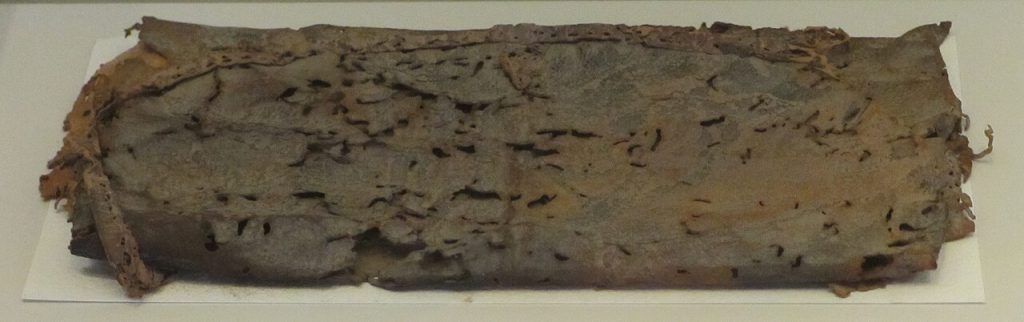
The neighboring Cave of Horror, catalogue number 8Ḥev, preserves a different part of the story. Its best-known manuscript is a Greek copy of the Twelve Minor Prophets. It also contained the human remains that gave the cave its modern name. Our article on the Greek Minor Prophets scroll from Naḥal Ḥever follows that manuscript and the history of its recovery. This article follows the administrative letters from Cave 5/6. The canyon connects both histories. Their cave numbers and contents show the value of tracing each discovery back to its particular location. Catalogue entries for the different refuge caves.
Some letters from Shimon’s administration were recovered from Wadi Murabba’at, another group of refuge caves farther north in the Judean Desert. That is one reason the phrase Bar Kokhba letters can designate slightly different selections in a book or exhibition. A label beginning 5/6Ḥev points back to the Cave of Letters, while the Murabba’at archive has its own site designation. Treating the location as part of the record helps us answer questions that a translated letter alone leaves open. In this case it tells us which correspondence traveled with the waterskin, which papers belonged to civilians in the same cave, and which messages were recovered elsewhere. Discovery-site records for Naḥal Ḥever and Wadi Murabba’at.
Read the request for Sukkot plants
The Aramaic letter is only a few lines long. In Yadin’s reading it addresses Yehudah son of Menashe at Qiryat ‘Aravaya and sends him donkeys so two men can go to Yehonathan son of Be’ayan and Masabala. Those two men were associated with En Gedi. The orders call for palm branches and citrons to be packed, with myrtles and willows to come from elsewhere. Yadin understood a further instruction about setting the produce in order as a direction to tithe it. The small papyrus records the steps in a task that required recipients to coordinate the work of people in more than one place. Translation of the Sukkot request.
- Palm branches and citrons were to be gathered with help from the men associated with En Gedi.
- Myrtles and willows required another group of people to go out from Yehudah’s location.
- The transport was part of the instruction, with animals and people assigned to bring the plants to the camp.
Another message asks for palm branches and citrons in Greek. Its writer gives his name as Soumaios and explains the use of Greek. Hayim Lapin studied both letters together and questioned an earlier suggestion that Soumaios was Shimon himself. The names and instructions overlap enough to place them in the same administrative setting. They leave room for an official other than Shimon to send the second message. The Greek letter also makes the multilingual character of the dossier concrete. An official had to choose a language in actual circumstances. A modern reader can see that choice in the document without assuming which language everyone in the sender’s circle normally spoke. Hayim Lapin’s study of the two letters and the identity of Soumaios.
A request for palm branches and fruit shows how carefully people kept a biblical festival amid a war.
The festival in Leviticus, Nehemiah and John
Leviticus 23 sets out an autumn festival of seven days beginning on the fifteenth day of the seventh month, followed by a solemn assembly on the eighth day. The people are told to rejoice before the Lord with fruit and branches. Living in booths commemorates how the Lord brought Israel out of Egypt. The command associates food, plants, shelter and memory with Israel’s worship. In the letter those things become tangible. We meet people who had to make arrangements to observe the festival when familiar routines of travel and gathering were disrupted. The Aramaic lists four recognized kinds of plants within a Jewish practice of the biblical command. Leviticus 23:33–43.
Nehemiah offers another moment in the history of the feast. After the people hear the law, they go out and gather branches to construct booths and assemble to hear Scripture read. The branch list in Nehemiah 8 has its own purpose in the account. Returning to the particular tasks in each work keeps the comparison clear. Leviticus gives instructions for worship and remembrance. Nehemiah shows the people building booths upon hearing the law. The letter shows how a later community secured the plants it sought during a war. Reading all three brings the work of keeping a feast into view beside its theological meaning. Nehemiah 8:13–18.
John 7 takes the reader to the feast in Jerusalem during Jesus’ earthly ministry, roughly a century before Bar Kokhba’s revolt. The approach of the feast sets the scene for Jesus going up to the city and teaching in the temple. On the last and great day, he invites the thirsty to come to him and drink. John explains those words with reference to the Spirit. Christians receive Jesus’ words here as true and understand the Jewish feast as an essential part of their setting. The later correspondence gives us an independent look at the concrete preparations that a Jewish community made to keep the same celebration. John 7:1–39.
A revolt after the Second Temple’s destruction
The revolt began in AD 132 under Emperor Hadrian, more than sixty years after Rome destroyed the Second Temple in AD 70. Its leader identifies himself in documents as Shimon son of Kosiba. Later accounts use a name rendered Bar Kokhba, meaning son of the star. Readers have connected that name with the star from Jacob in Balaam’s oracle in Numbers 24, and messianic traditions became associated with the leader. The correspondence is especially valuable here because it lets us hear the forms of the name and the character of the orders people actually received. Later reports speak in their own voices and may emphasize different things. Eusebius’s account of the revolt and the name.
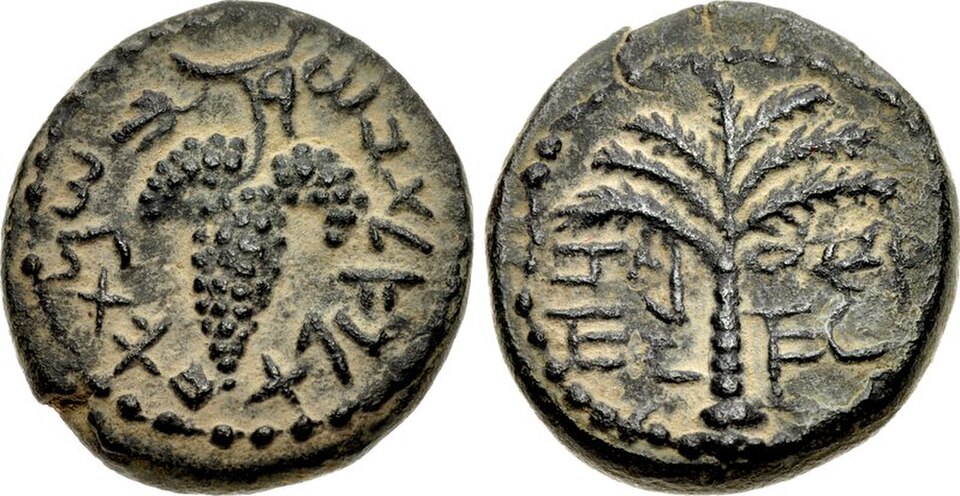
Coins also give access to how the revolt presented itself. A bronze issue from its first year used Hebrew lettering and a formula about the redemption of Israel. That is a public claim carried on money. A working letter gives a different kind of evidence, closer to the immediate needs of an encampment. The two objects help us see that the revolt involved claims about Israel, an administrative system, and people who meant to maintain their observances. The survival of records for all three is unusual. Few other documents bring a revolt’s leaders and ordinary problems into the same frame so directly. Walters Art Museum catalogue for a first-year coin of the same type.
Much of what historians would like to know is beyond the scale of these materials. The documents show subordinate officers moving supplies and paying attention to the calendar. Coin legends show public expressions of sovereignty and redemption. Broad accounts of how the war started, which settlements changed hands and what happened when Roman forces regained control require other evidence. This is a good example of why a modest written order can be important on its own terms. The exact request that a superior made on one day can survive at a place where the larger political story remains difficult to reconstruct. Historical analysis of the revolt and its sources.
The second-century Christian writer Justin Martyr reports in his First Apology that Bar Kokhba threatened Christians who refused to deny Jesus. Justin gives an early Christian account with a different purpose from the letters. He is explaining Christian allegiance in an appeal addressed to Roman authority. The surviving Sukkot messages address their own immediate work and give no account of Christians. Reading the sources together helps keep the people and evidence in view. As Christians we confess Jesus as the Messiah and can also take the time to hear these Jewish documents as testimony to the lives and worship of their own community. Justin’s First Apology, chapter 31.
Frequently asked questions
Were the letters found at Qumran?
They were found south of Qumran at Naḥal Ḥever, in the cave numbered 5/6Ḥev. The wider Dead Sea Scrolls discovery area includes several Judean Desert sites with different contents. Regional site list.
Did Bar Kokhba write the letters himself?
Several identify him as sender. A sender could dictate a message or use an administrative scribe. The sender of the Greek Sukkot request identifies himself as Soumaios, whose identification with Bar Kosiba is debated. Comparison of the Aramaic and Greek request.
Can I see an original letter?
The Sukkot letter is photographed by Ardon Bar Hama on the Center for Online Judaic Studies page. The University of Michigan also provides a photograph of a letter from the Cave of Letters. Photograph of the Aramaic Sukkot letter. University of Michigan image catalogue.
Sources and further reading
- Israel Antiquities Authority, Dead Sea Scrolls Discovery Sites — Identifies the cave, its contents and the distinction between different Naḥal Ḥever manuscript finds.
- Yigael Yadin, Expedition D — Primary excavation report on the 1960 season.
- Yigael Yadin, Expedition D, The Cave of the Letters — Primary excavation report on the 1961 season and finds.
- Hayim Lapin, Palm Fronds and Citrons — Study and translations of the two letters about Sukkot, with discussion of language and identity.
- Center for Online Judaic Studies, Bar Kokhba Letter — Photograph by Ardon Bar Hama with a published account by the excavator, Yigael Yadin.
- The Walters Art Museum, Coin of Judaea — Catalogue, translation and images of a first-year issue matching the coin type pictured.
- Justin Martyr, First Apology, chapter 31 — Ancient Christian account of the conflict in a surviving appeal to Roman authorities.
- The Cambridge History of Judaism, The Bar Kochba Revolt, 132–135 — Historical synthesis of the revolt and open questions.





