The small books at the end of many English Old Testaments once traveled together in rolls. In the Judean Desert, fragments of one such roll preserve Greek text from the Twelve Prophets. Among lines of regularly spaced Greek letters, the name of God appears in a visibly different script. Several pieces of the manuscript became known in the 1950s, more were excavated in the 1960s, and a renewed excavation recovered pieces of Nahum and Zechariah late in 2019. The story gives us an unusual chance to see how a Greek translation was copied, how it could be revised, and how archaeologists can reconnect pieces of the same book across decades. The primary edition of the Greek Minor Prophets Scroll. Publication of the newly found Zechariah fragment.
Key takeaways
- The Greek Minor Prophets Scroll, 8ḤevXIIgr, comes from Cave 8 at Naḥal Ḥever, a different place from the Qumran caves.
- Peter J. Parsons placed the handwriting toward the end of the first century BC. A different early assessment put it later. The ancient copy predates its use in a refuge cave.
- The scroll preserves a Greek revision that, in many places, brings the translation closer to a Hebrew form of the text.
- The newest pieces of Zechariah and Nahum were found in a controlled excavation late in 2019 and publicly announced in 2021.
How archaeologists traced the fragments to Cave 8
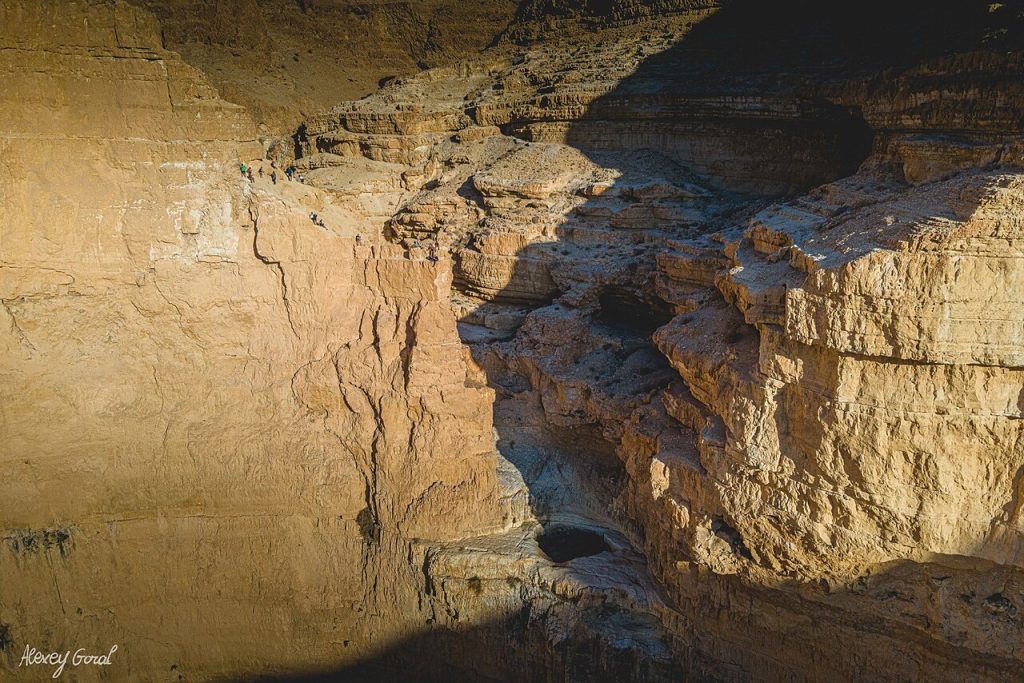
Naḥal Ḥever is a deep ravine near the Dead Sea. The site associated with this manuscript is known in publications as Cave 8 or the Cave of Horror. The latter name comes from the discovery of human remains. Jewish refugees sheltered there during the Bar Kokhba revolt against Rome in the second century AD. The papers and other belongings people carried into caves can include objects considerably older than the moment they were deposited. The archaeological setting gives us a place to ask what people could have valued and saved in a very difficult period. It also helps us separate the age of the writing from the age of the refugee occupation. Yohanan Aharoni’s report on the cave expedition.
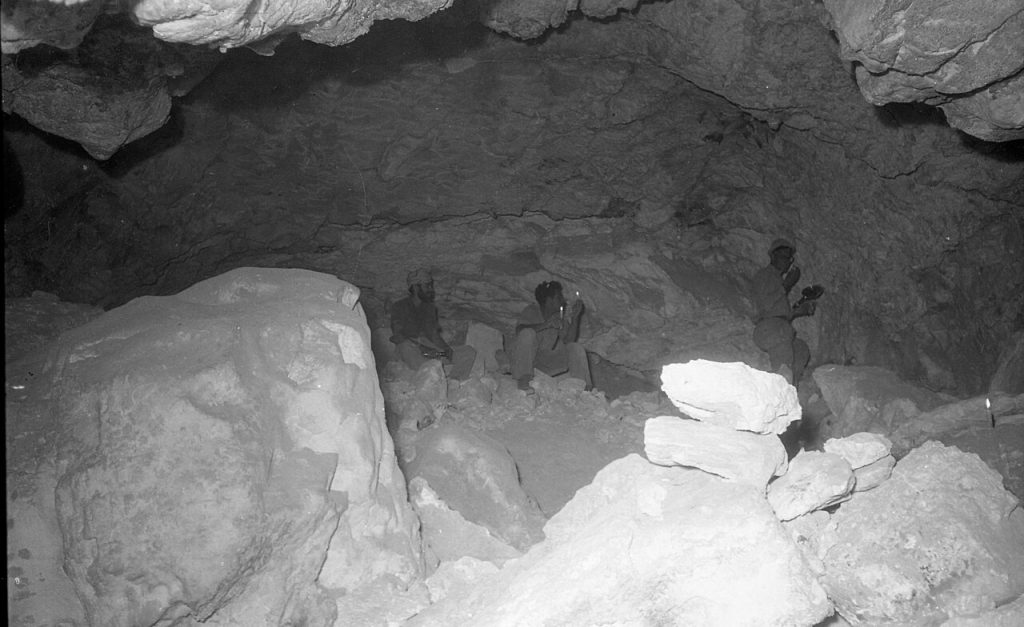
The earliest fragments reached researchers through antiquities purchases in the early 1950s, when the place of discovery was still uncertain. Aharoni’s team recovered further pieces in its 1961 excavation. Comparing their writing and content with the pieces already known helped connect this manuscript with the cave. Baruch Lifshitz published the excavated Greek material in the same issue of the Israel Exploration Journal as the field report. In 1990 Emanuel Tov, with Robert A. Kraft and Peter J. Parsons, published a reconstruction, transcription, and study of the scroll. The history shows how a manuscript can become more firmly situated in the archaeological record even after some of its pieces have been dispersed. Aharoni’s field report. Lifshitz’s publication of the Greek documents. The 1990 scholarly edition.
The name 8ḤevXIIgr is a compact way to keep track of the evidence. It identifies Naḥal Ḥever Cave 8, the Twelve, and the Greek language. The modern label “Minor Prophets” refers to the brevity of the individual writings. These prophets confront the nations, call Israel and Judah to account, and speak of restoration with a range of imagery and emphases. Treating the twelve writings as a group had practical implications. A reader could move from one prophetic work to another within a roll. The recovered pieces supply physical evidence for this form of collecting and transmitting the books. Much of the original roll is lost, so modern editions identify the passages that are actually preserved. Israel Antiquities Authority, Featured Scrolls.
The surviving portions also preserve distinctions between two Greek hands. In the 1990 edition the different hands are treated alongside the placement and contents of the pieces. This is part of why manuscript reconstruction takes more than arranging fragments by the order of the biblical books. A change of hand can be relevant to the history of one roll. It may also raise questions about how confidently a group of fragments is placed with another group. The scholars had to compare the writing, the layout of the surviving columns, and which sections of the Greek Twelve could be read from each piece. Parsons and the editors’ assessment of the two hands.
The letter forms help place the copying of the surviving manuscript. Peter J. Parsons’s contribution to the primary edition favors the end of the first century BC. Dominique Barthélemy’s earlier study had assigned a date around the middle of the first century AD. The difference is a reminder that dating by handwriting involves a comparison among surviving examples. The Israel Antiquities Authority’s current featured catalog places the shown piece in the second half of the first century BC. The interpretation of the occupation of the cave belongs to yet another question. Its date tells us about the refuge where the scroll survived. Palaeography concerns the earlier time at which a scribe laid out and wrote the Greek text. Emanuel Tov’s summary of the dates proposed by Barthélemy and Parsons. Israel Antiquities Authority date and manuscript description.
A Greek translation that was being revised
The Septuagint is a name used for the ancient Greek translations of Jewish Scripture and the tradition of transmitting those texts. If an ancient Greek copy differs from another Greek copy, scholars can ask whether the difference arose in ordinary copying, in the Hebrew text behind the Greek, or in a deliberate effort to revise the translation. Naḥal Ḥever gives us a particularly useful case. Its wording often moves toward a form of Hebrew close to the one preserved in the later Masoretic tradition. Scholars use the term kaige for the type of revision represented in this scroll. They compare specific recurring matches between Hebrew and Greek, alongside passages in which the revisor retained earlier renderings. The primary edition and commentary on its translation technique. Study of the newer fragments and translation standardization.
The underlying Hebrew and the ancient Greek work can be compared without assuming that all manuscripts of either language followed a single pattern. A Greek copy might preserve a familiar choice across several lines and use a different word in the next. Sometimes a revisor wanted to represent features of the Hebrew more closely. In other cases the chosen Greek expression could carry echoes of Greek wording elsewhere in Scripture. The restored letters in a published edition can affect this kind of argument, especially on a tiny fragment. It is therefore helpful to look at the two things an edition offers together, a record of the surviving strokes and a proposed account of their sense. Beatriz Riestra’s close comparison of ancient versions of Nahum 1:5.
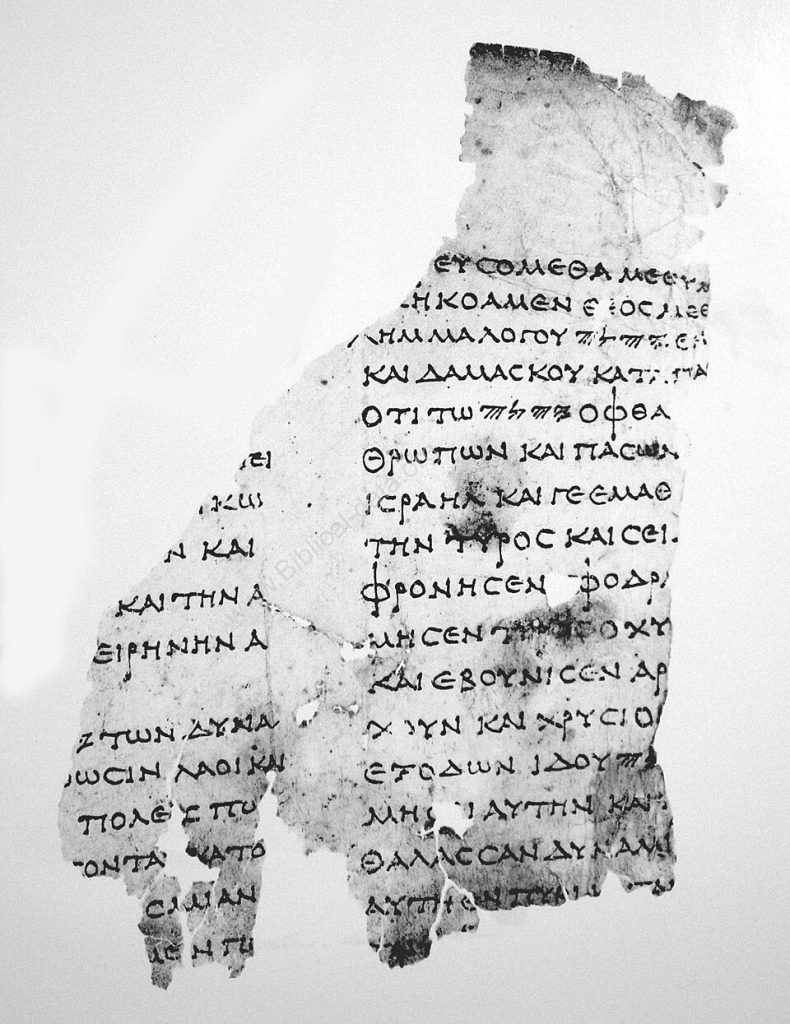
One remarkable detail can be recognized even without reading a full sentence. In this roll, the divine name appears in archaic Hebrew script within surrounding Greek. Scholars often call the four-letter name the Tetragrammaton. Different Greek biblical witnesses had different ways of representing it. Here the script itself sets the name off visibly. That feature adds evidence for decisions a copyist made about representing the Hebrew base text in a Greek book. It leaves open how an individual reader pronounced the name. The manuscript’s contribution is the direct evidence that this visual convention was used in an ancient Greek copy of the prophets. Tov on the divine name in the Greek Minor Prophets Scroll.
A few surviving letters show two things at once. Ancient readers passed the prophets on in Greek, and they cared about how that Greek represented the Hebrew.
The illustrated fragment gives one example of how to orient yourself. Its section begins after the verses from Zechariah that the renewed excavation recovered. In chapter 8, the restored life of Jerusalem draws people from other cities to seek the Lord, and the scroll preserves pieces of the text in that part of the chapter and into the next. Read the biblical passage as a whole before trying to fit the part of the Greek column to it. The caption gives a range because the recovered skin has gaps and because successive columns can preserve only parts of the verses they once held. The arrangement within the Hebrew or English book will make those small Greek pieces easier to contextualize.
What the new Zechariah and Nahum pieces add
Renewed work by the Israel Antiquities Authority recovered more tiny fragments in Cave 8 late in 2019. The results were announced publicly in 2021. Later publications explain how researchers identified particular verses. In one piece, Beatriz Riestra, Oren Ableman, Tatiana Bitler, and Ofer Sion recognized writing from Zechariah 8:16–17. In a 2025 study, Riestra presented a close reading of Nahum 1:5 from another of the recent fragments. The finds add material to a manuscript already known to scholars. They also add recorded contexts for those pieces and new points of comparison between ancient forms of the same prophetic passages. Preliminary edition of the new Zechariah fragment. Riestra’s subsequent study of Nahum 1:5.
Start with Zechariah’s whole paragraph. In 8:14–19, a promise of good for Jerusalem and Judah is followed by instructions about truth, just judgments, and peace. The newly published piece preserves portions of the instructions. Nahum is concerned with God’s judgment and describes the earth’s response to his presence with striking language. A reader can see why the scope of a Greek term or the choice of a preposition at Nahum 1:5 can matter to an ancient passage about the Lord’s coming. Riestra studies both how a revision represents the Hebrew and how its Greek phrasing can recall other biblical passages. Zechariah fragment edition. The Greek wording of Nahum 1:5 and its biblical resonances.
Micah, Bethlehem, and the Gospel of Matthew
The Israel Antiquities Authority highlights a previously known piece for another reason. The fragment preserves part of Micah’s prophecy connected with the emergence of a ruler from Bethlehem. Look at Micah 5:2–5 in context. The town’s smallness, the figure who will rule, and the image of a shepherd belong to a prophecy of hope for Israel in a troubled world. Matthew 2:1–6 brings the promise into its account of Herod and the arrival of the visitors looking for the one born king of the Jews. The ancient Greek scroll gives us evidence of the Jewish transmission of Micah. Matthew tells how the passage was invoked in the story of Jesus’ birth. Israel Antiquities Authority, original digital image of the Micah fragment. Curatorial identification of the Bethlehem passage.
Christians receive these Scriptures as true and accurate. We believe that the promises Matthew cites find their fulfillment in Jesus. Studying an ancient Jewish manuscript of Micah leads us to pay closer attention to the form and setting in which the prophet’s words were handed down. It also keeps the history of transmission visible when we turn to Matthew. The two texts can be read generously in relation to each other. The surviving scroll tells part of the story of how the prophets were copied and read in Greek, and the Gospel gives its Christian witness to the ruler Matthew identifies.
This discovery complements other scroll evidence from the Judean Desert. If you are following the Temple Scroll, you have seen a Hebrew work that takes up laws from the Torah and arranges them in a distinctive form. Naḥal Ḥever supplies a different case of working closely with Scripture, in which a translator or revisor sought particular Greek ways to express a Hebrew prophetic text. Those activities leave different kinds of traces. Remembering where each manuscript was found and how it was identified makes the comparison clearer. Both still ask the same basic thing of the reader, to look at the ancient words in the shape that survives.
Questions readers ask
Is this one of the scrolls from Qumran?
It is part of the wider Dead Sea Scrolls discoveries from the Judean Desert, and its archaeological setting is Naḥal Ḥever Cave 8.
Was the scroll written during the Bar Kokhba revolt?
The revolt supplies the setting of the refuge in which it survived. The handwriting of the Greek scroll is usually placed considerably earlier.
Sources and further reading
- Emanuel Tov, Robert A. Kraft, and Peter J. Parsons, The Greek Minor Prophets Scroll from Nahal Hever — The principal 1990 edition with manuscript reconstruction, palaeography, and textual commentary.
- Yohanan Aharoni, Expedition B — The Cave of Horror — The 1962 publication of the expedition’s cave and find context.
- Baruch Lifshitz, The Greek Documents from the Cave of Horror — Early edition of the fragments excavated by Aharoni’s expedition.
- Israel Antiquities Authority, The Twelve Minor Prophets — Custodian’s manuscript identification, dating, and Micah description.
- Beatriz Riestra and colleagues, These Are the Things You Are to Do — First scholarly edition of a newly recovered piece of Zechariah 8:16–17.
- Beatriz Riestra, The Text of Nahum 1:5 in the Greek Minor Prophets Scroll — 2025 study examining the Greek translation and scriptural echoes.





