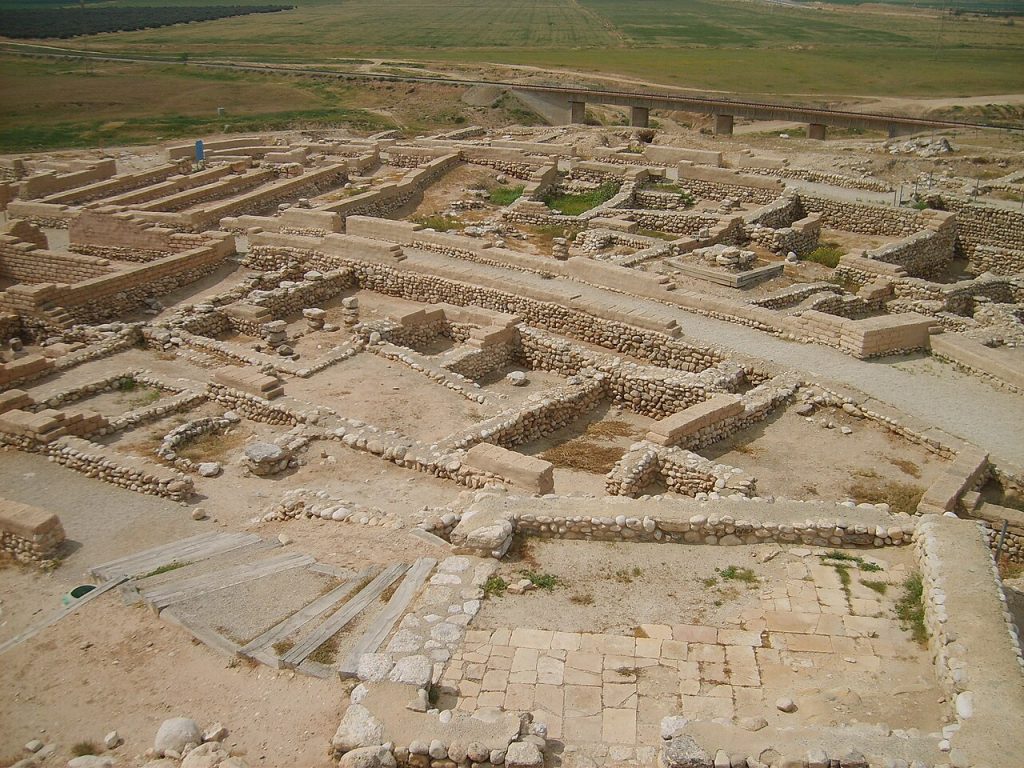
At Tel Beersheba, the most recognizable part of an Iron Age altar turned up in a wall built for another purpose. Yohanan Aharoni’s team was excavating a storage complex in 1973 when it found unusually well-cut sandstone blocks. Three of the rounded corner projections had survived intact. Another stone showed where the top of a fourth had been knocked off. Once the excavators saw what was in the wall, it became clear that part of the town’s religious history had been recycled as building material. Aharoni’s excavation publication.
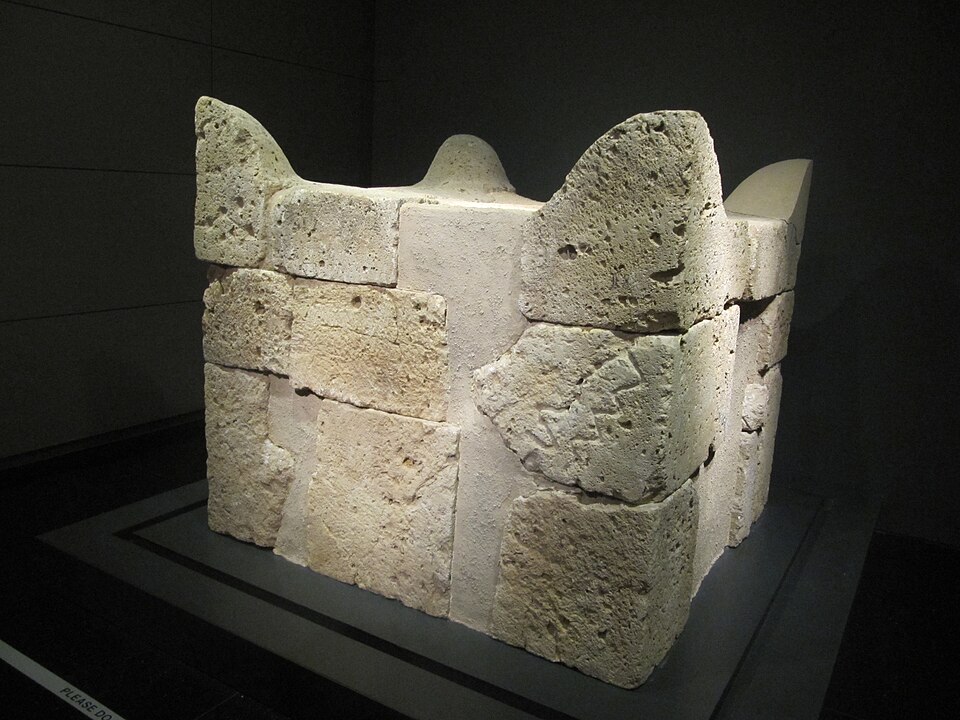
The object is a large stone altar made for burnt offerings. Its four horns make it especially interesting alongside the descriptions of altars in the Bible. Its dismantling has led to a different question. Could the stones have been put into the wall during one of the reforms described in Kings? As Christians, we read the history of Judah in Scripture as true and accurate. The altar gives us a specific place where those questions can be tested against walls, reused blocks, and the order in which the town was rebuilt. The archaeological evidence gives an unusually clear view of what happened to the altar, with more room for debate over why.
Key takeaways
- Excavators found the horned stones in reused masonry at Tel Beersheba in 1973. More blocks associated with the altar were identified in the town’s fortifications.
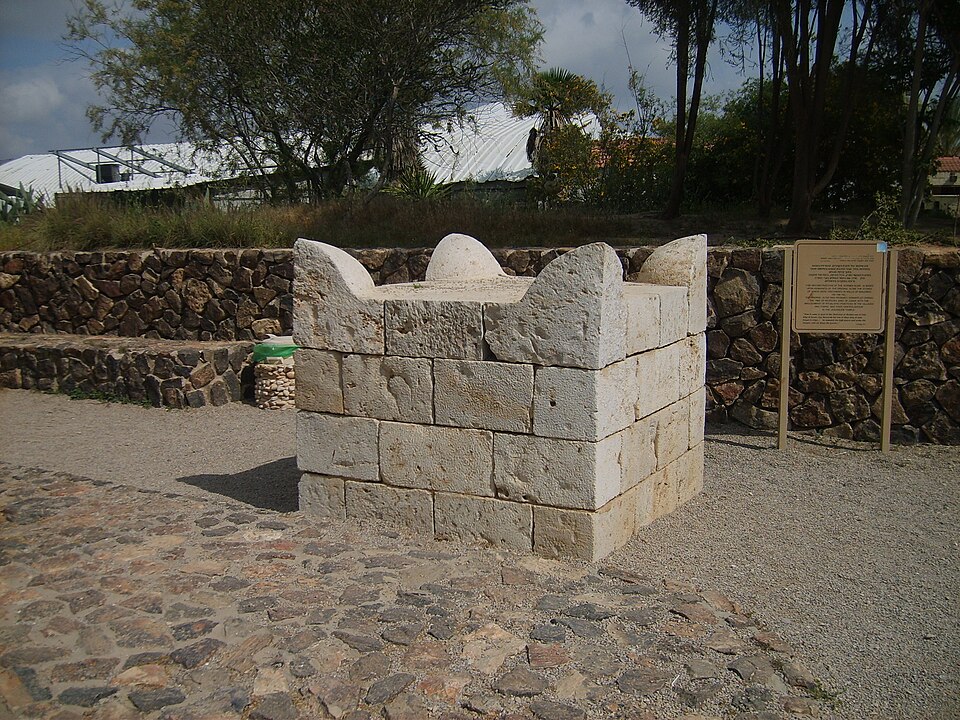
- The reconstructed altar stands about 1.57 meters high. The Israel Museum displays it with ancient blocks, and the national park has a replica.
- Amos names Beersheba as a destination in his warnings about worship. Exodus describes four horns on the tabernacle altar while specifying different construction materials.
- Stratum II is the context in which the altar blocks were reused. The altar itself is earlier, and its original location and the reason for dismantling remain debated.
Reading the stones in two settings
Tel Beersheba sits at the edge of the northern Negev, near the junction of two streams. The excavated town presents a tightly organized plan with houses, defenses, and large storage buildings. Its remains are particularly well suited to following changes from one building phase to another. Aharoni recognized that the smooth blocks in the storehouse wall were visibly different from the ordinary masonry. Their individually worked shapes made sense together as parts of a single object. Additional blocks of the same kind were identified in the embankment of the fortifications, strengthening the case that material from the dismantled altar had been reused in several building operations. The archaeological site and park. A study of the find contexts.
An archaeologist would call these secondary contexts. They show where the pieces came to rest after the altar had been dismantled. The earlier context would be the place where it actually stood, ideally with a surface still connected to its base. Such a setting could help determine who had access to it, what structures surrounded it, and when it was last in use. A wall that uses its horns still provides an important answer about sequence. The design had been broken up by the time the blocks were set into the newer wall. Keeping those two settings in mind helps a visitor read the photographs and understand why it matters that the altar was reconstructed.
Taking the altar apart and setting its stones into new masonry saved material that would otherwise have had to be quarried and cut. It also removed the shape that made the earlier object recognizable. An observer using the storehouse could have walked past the wall without understanding where the stones came from. The ancient builders may have known more than they chose to show. The same process has a consequence for present-day archaeology. Someone excavating the remains of temples alone might miss the best evidence for an altar. The finds at Beersheba came from following the history of ordinary-looking construction and asking why stones worked for a different purpose turned up within it. That makes the city’s storage buildings part of the history of its worship.
At its highest point, the reassembled altar reaches about 1.57 meters. Most visitors first notice the horns. Look also at the rows of rectangular blocks in the body. Some of the original pieces are missing, so the reconstruction includes replacement blocks and the exact footprint is less secure than the reported height. One reason an actual artifact and a modern replica are worth seeing side by side is that their surfaces make different details visible. The museum grouping helps a reader see what remains of the ancient work. The model at the park entrance makes the overall silhouette and scale easy to picture before walking through the site. The 1974 description of the reconstruction.
What the four horns tell us
In Exodus 27:1–8, the altar for the tabernacle is to have four horns, one at each corner, which are built as part of the altar. That instruction makes the Beersheba corners immediately recognizable as a form familiar from Scripture. Look further into the description and the construction is quite different. The biblical sanctuary’s portable altar is framed in acacia wood and overlaid with bronze. Beersheba’s altar was assembled from dressed stone and belonged to a settled town. Exodus 20:24–26 also describes altars of earth or stone and specifies that stones used in that setting should be unworked. The Beersheba examples were carefully cut. The comparison helps us read several biblical descriptions with attention to their particular forms and purposes.
The four horns are evidence of a shared design idea, and the altar’s size suggests provision for public or institutional worship. An open court and a sanctuary complex are both possible original environments for something of its scale. Aharoni took the altar as evidence for a lost temple and proposed an area later occupied by a building. Later researchers have questioned whether a temple was required to explain the altar or whether its original position can be recovered from the changes in that part of the town. The walls that hold the reused stones can tell us when the earlier structure was already gone but cannot restore the missing ground plan. Comparing the excavated temple and courtyard of Tel Moẓa shows how much more can be said when an altar or ritual objects survive close to where people used them. Discussion of the proposed sanctuary.
From the patriarchs to Amos
The name Beersheba takes the reader to more than one moment in biblical history. In Genesis 21, Abraham settles a dispute over a well and calls on the name of the Lord. In Genesis 26, Isaac builds an altar, calls on the Lord and has his servants dig a well. Both passages explain why water, settlement, worship, and the name of this place belong close together in the memory preserved by Scripture. The horned stones belong to the Iron Age town, far later than the patriarchal narratives. Its archaeology helps readers understand the importance of a settlement with reliable water on the Negev fringe. The altar Genesis attributes to Isaac belongs to its own story and period.
Amos 5:4–6 names Beersheba with Bethel and Gilgal in a warning against seeking security through visits to celebrated places of worship. His appeal is to seek the Lord and live. Amos 8:14 again names Beersheba in a warning about oaths associated with places of worship. Both passages give a good biblical reason to take the town’s religious role seriously. The archaeological evidence shows capable builders providing for communal worship on a substantial scale. Amos shows why the number of people attracted to such a place was no measure of their faithfulness. For a Christian reader that is one of the most searching parts of the story. Familiar rites and impressive surroundings can coexist with a failure to heed the One whom worship is meant to honor.
The altar was once a place where people brought offerings. Its stones in a storehouse wall invite us to ask why that worship ended.
Hezekiah, Josiah, and the sequence in the ground
The case for Hezekiah proceeds in stages. The altar pieces entered the masonry of Stratum II. Archaeologists commonly put this fortified town in the eighth century BC and associate its destruction with Sennacherib’s campaign in 701 BC. If that association is right, the altar’s dismantling had already happened by 701, while Hezekiah was king. Scripture explicitly says he took away high places, broke pillars, and removed religious objects in 2 Kings 18:3–5. The Assyrian envoy in verse 22 even invokes the changes in worship when trying to undermine confidence in the king. This gives a plausible historical setting for dismantling an altar before the invasion, without producing a record of who gave the order in Beersheba. The eighth-century interpretation.
Yigael Yadin made the case for a later attribution, linking the remains to Josiah’s reform. Second Kings 23:8 describes Josiah’s actions against high places between Geba and Beersheba and gives the southern town a particular place in the account. As historical evidence for Josiah’s reign, that verse deserves attention. To transfer its date to these particular blocks requires a matching sequence at the tell. Yadin proposed a substantially different reading of the town’s strata and buildings. If the stones were already in a wall destroyed in 701 BC, Josiah’s later action could have concerned another installation or surviving practice in the area. The older debate illustrates that a biblical place name and an excavated feature can be related without forcing a one-to-one identification. Yadin’s 1976 proposal.
Other explanations start from the rebuilding itself. The blocks suited masonry. The city’s leaders may have taken down an earlier religious installation when changing how the town was laid out, and policies about worship could have formed one part of a broader program. If builders move a group of special stones close to the time of major public construction, we can ask whether the demolition was deliberate. Pinning down the motive requires a different kind of evidence, such as a series of comparable closures securely dated to the same period. Beersheba belongs in that comparison alongside Judah’s other sites. Claims for a single command behind different building changes depend on how well the dates and local circumstances align. Na’aman on interpreting abandoned worship sites.
What to look for on a second reading
- In Exodus: Notice the four horns, then read the material and construction instructions.
- In Amos: Track where the prophet names Beersheba and what he asks the people to seek.
- In Kings: Compare the accounts of Hezekiah and Josiah. Each passage belongs to a distinct reign.
- In the site photographs: Compare the shape of the corners and placement of the blocks. The original location of the altar within the settlement remains open.
Where can I see the altar today?
The Israel Museum in Jerusalem displays a reconstruction incorporating the surviving ancient blocks. The replica at Tel Beer Sheva National Park stands near the entrance to the excavation site.
Sources and further reading
- Yohanan Aharoni, “The Horned Altar of Beer-sheba” (1974) — Initial publication by the excavator. Describes the blocks, dimensions, reconstruction and original interpretation.
- Israel Nature and Parks Authority, Tel Beer Sheva National Park — Site features, the altar stones in the Israel Museum, and the on-site reconstruction.
- Yigael Yadin, “Beer-sheba: The High Place Destroyed by King Josiah” (1976) — Alternative stratigraphic interpretation and case for a later royal reform.
- Israel Finkelstein and Neil Asher Silberman, “Temple and Dynasty” (2006) — Discusses the altar’s stratigraphy, proposed earlier sanctuary and the case for connecting its dismantling with eighth-century reforms.
- David Rafael Moulis, “Hezekiah’s Cultic Reforms according to the Archaeological Evidence” (2019) — An archaeological assessment of the altar, its find context, and reform hypotheses.
- Nadav Na’aman, “The Abandonment of Cult Places in the Kingdoms of Israel and Judah as Acts of Cult Reform” (2002) — Tests explanations for changed use of worship sites, including whether cultic reform can be inferred from a building phase.





