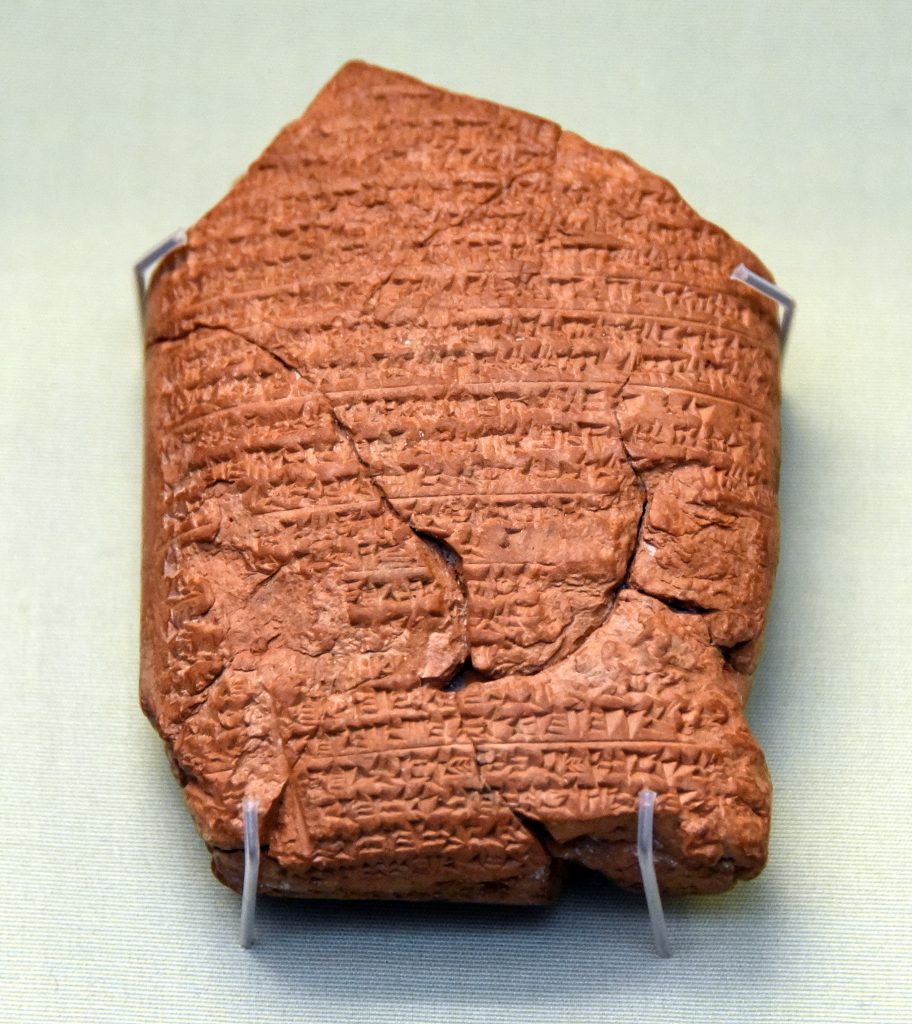
Jerusalem had a new king for barely three months when the Babylonian army came. Second Kings 24 names him Jehoiachin and describes him going out to Nebuchadnezzar with his mother, royal staff, officers and officials. A Babylonian scribe reduced the change of government to a few lines on clay. The army took the city on the second day of Adar, seized its king and put another king in his place. The Bible supplies the names of both Judean men, and the Babylonian entry supplies a date in 597 BC. Set the two sources side by side and you can watch a moment in Scripture come into unusually sharp historical focus. Read the reverse, lines 11–13
What you’ll learn
- Why scholars connect this tablet to Jerusalem’s capture in 597 BC and date the later destruction separately.
- How a Babylonian seventh year can match the eighth year in 2 Kings.
- What this terse military record contributes to the biblical history of exile.
What the British Museum acquired in 1896
BM 21946 is a clay tablet impressed with wedge-shaped signs. Cuneiform is the writing system, and Akkadian is the language. The obverse opens with the closing year of Nebuchadnezzar’s father, Nabopolassar. The reverse continues through Nebuchadnezzar’s early reign. Modern readers call it the Jerusalem Chronicle because of one entry, though the tablet ranges from the Egyptian campaign at Carchemish to an uprising in Babylonia itself. It covers events from 605 BC through the Babylonian year that began in 595 and ended in 594 BC. British Museum collection record · Wiseman, text 5, pp. 66–75
The museum acquired the tablet in 1896. That firm date belongs to a modern collection register and says little about a precise excavation layer or the person who first brought it out of the ground. In 1956 Donald J. Wiseman published it as part of an edition of the Neo-Babylonian chronicles. Editions present the signs in a format scholars can check against the object and translate line by line. The sixty years between acquisition and publication help explain how a familiar episode of biblical history gained such a specific parallel long after museum staff assigned the tablet its registration number. Wiseman’s 1956 edition
The tablet records historical years within a Babylonian scribal tradition. The date on an entry identifies the year being described. The surviving piece of clay could have been written or copied later. Treating it as a dated battlefield dispatch would add a story about its manufacture and use that the record cannot supply. Its concise format is important in its own right. A chronicle organizes selected events by year and commonly notes campaigns, royal movements and political changes. Its choices of what to put on a line and what to leave out reflect the interests of Babylonian scribes. Wiseman, introduction and text 5 · Caroline Waerzeggers, ‘The Babylonian Chronicles’
From Carchemish to Judah
The opening entry starts at Carchemish, on the Euphrates near today’s Türkiye–Syria border, while Nebuchadnezzar was still crown prince. With his father in Babylonia, he led the army against Egyptian forces and drove the survivors toward Hamath. After Nabopolassar died the prince returned and took the throne. Jeremiah 46:2 locates its oracle against Egypt at that same defeat at Carchemish, in the fourth year of Jehoiakim of Judah. Reaching the Jerusalem entry by way of Carchemish lets us see why a decision made in Judah could become one episode in a contest that stretched across the region. Obverse, lines 1–13
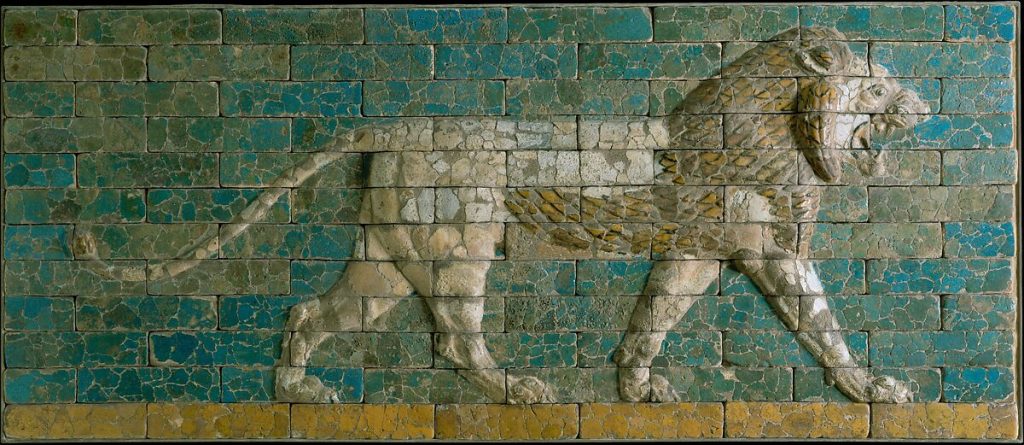
The chronicle turns next to campaigns in the West. In Nebuchadnezzar’s first numbered year, he took Ashkelon and carried off plunder. A later clash with Egypt took a toll on both armies. The entry for the following year says the king stayed in his own land and gathered horses and chariots. Read together, these entries let us see the costs and interruptions of conquest. They also give context to 2 Kings 24:7, where the narrator says Babylon had taken the territory from the Wadi of Egypt to the Euphrates that had belonged to the Egyptian king. Judah lay between rival powers with the armies and resources to make local decisions costly. Obverse, lines 15–20 and reverse, lines 5–10
Three lines about a city and two kings
Under Nebuchadnezzar’s seventh year, the chronicle describes a western campaign beginning in Kislev. The Babylonian army encamped against a place rendered the city of Judah. On the second day of Addaru, the Babylonian month known as Adar, it took the city and captured its king. Nebuchadnezzar selected a replacement and sent substantial tribute to Babylon. Because the tablet names the place by its association with Judah, its kings remain anonymous in the entry. The sequence matches the particulars of 2 Kings 24:8–17 closely enough to identify the city as Jerusalem and the defeated king as Jehoiachin. Reverse, lines 11–13
- Captured ruler. The tablet reports the capture of a king. Second Kings describes Jehoiachin surrendering with the queen mother and court leaders.
- Appointed ruler. The tablet credits Nebuchadnezzar with choosing a new king. Second Kings identifies Mattaniah, Jehoiachin’s uncle, and reports that Nebuchadnezzar renamed him Zedekiah.
- Cost of surrender. The tablet notes heavy tribute. Second Kings describes treasure taken from the temple and royal palace and a large deportation that included officials, military personnel and craftsmen.
The strongest comparison is the shared sequence. A siege alone would fit more than one attack. A seizure of the city, the removal of its ruler, the transfer of wealth and the installation of a replacement line up at a particular moment in Judah’s history. We learn the captives’ identities and the consequences for their community from Scripture. Additional Babylonian palace texts name Jehoiachin in exile and record oil allocations to him and his sons. They are a different kind of evidence, written for the administration of the royal household years after the surrender. Tero Alstola, pp. 58–77 · See Jehoiachin’s ration tablets
A few lines can fix the date of a conquest. It takes the biblical account to show what the removal of a king meant for the people who went with him.
How the seventh and eighth years fit
Second Kings 24:12 places the capture in Nebuchadnezzar’s eighth year, and Jeremiah 52:28 places a deportation in his seventh. Babylonian scribes called the part of the year between a new king’s enthronement and the next New Year his accession year. They began year one at the next New Year, in Nisan. When a writer counts that initial partial year as year one, every subsequent year in the comparison is numbered one higher. On this explanation, the Babylonian seventh year and the eighth year of Kings refer to the same calendar span. The handover of the capital and the appointment of a successor give us historical reason to make the comparison before we turn to the numbering. Wiseman, introduction and text 5
How do historians reach 597 BC? The tablet uses a lunar month and a year numbered within a reign. The reconstructed Babylonian regnal sequence places Nebuchadnezzar’s seventh year across 598 and 597 BC. Because Adar fell near the end of that year, the surrender falls in early 597, commonly given as March. The useful distinction is between the exact day in the ancient record and a modern equivalent calculated from a reconstructed calendar. An unfamiliar year number is an invitation to ask how a writer counted the opening months of a reign. Seventh-year entry and calendar note
There is a useful safeguard when reading the two passages at once. Keep the narrator’s calendar with the narrator’s statement. The scribe’s seventh year is Babylon’s label for a season in Nebuchadnezzar’s reign. The eighth year phrase in Kings also counts that ruler’s reign, but the label belongs to the narrator’s calculation. Jehoiachin’s three months form a third clock, specific to his time on the throne in Judah. These are three measures of the same setting, and each has a different starting point. The story becomes easier to follow when we write the name of the monarch next to each number. The capture of Jerusalem anchors the point at which Jehoiachin’s brief reign ended and his long exile began.
The second catastrophe came later
After Jehoiachin’s surrender, Zedekiah ruled for about eleven years. His rebellion led to another Babylonian siege. Second Kings 25 then describes the breach of the walls, the destruction of the temple and palace, and further deportations. The destruction is usually dated 587 or 586 BC. BM 21946 ends in Nebuchadnezzar’s tenth year, well before the second siege. The distinction matters for readers of Ezekiel. Ezekiel 1:1–3 places the prophet among exiles by the Chebar canal and dates his opening vision to Jehoiachin’s fifth year in exile. An exile community already existed overseas while Zedekiah still governed in Jerusalem. Wiseman, table of preserved and missing years
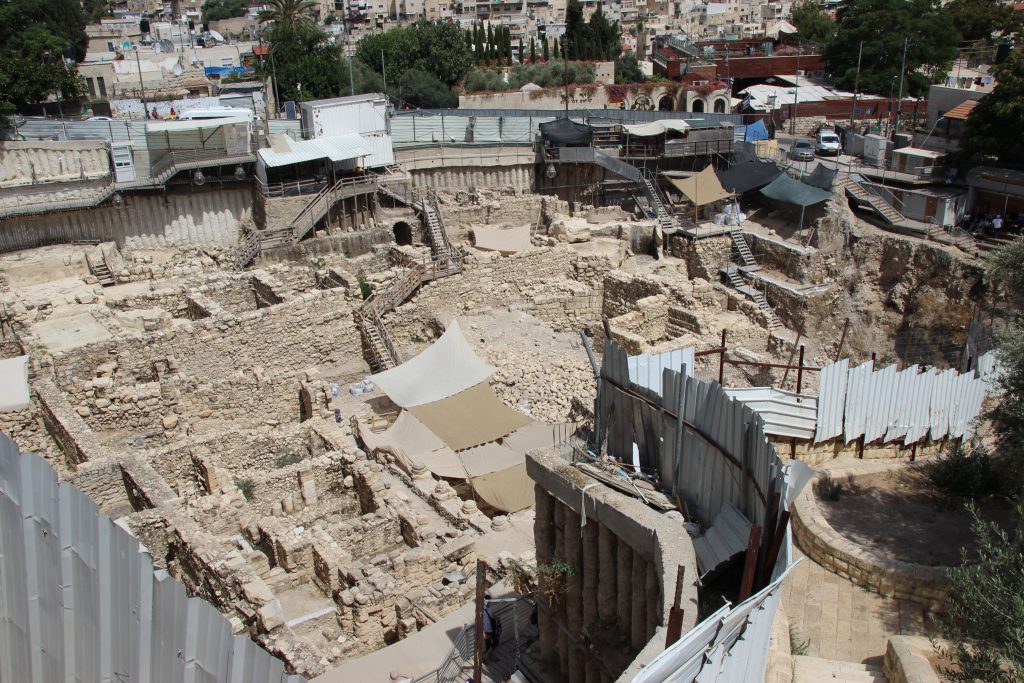
The soil of Jerusalem gives archaeologists a different line of evidence for that later event. At the Giv’ati Parking Lot excavation, a large Iron Age building on the western slope of the City of David ridge contained collapsed debris and materials altered by fire. A study examined fragments of a floor that fell from an upper story. The researchers used the magnetic signature of heated material to reconstruct the local field during the burning. Their work uses the historical attribution of the collapse to the final Babylonian destruction as a reference for dating other finds. The case is a good exercise in evidence. The destruction layer supplies a physical record of severe fire and collapse. Its historical dating comes from linking that layer, the associated objects and the documentary chronology. Vaknin et al., archaeological setting and Fig. 1
Reading the history as Christians
We read Kings and Jeremiah with confidence that Scripture tells the truth. The campaign record makes the historical scene tangible, from the year of the siege to a change of ruler that reshaped a community. Scripture asks us to attend to a further question. What does God say to people who have lost the city they associate with His promises? In Jeremiah 24, the prophet’s vision of two baskets of figs comes after Jehoiachin and a group of Judeans have been carried to Babylon. God promises to watch over the exiles for their good and give them a heart to know Him.
That promise gives the account a direction beyond Babylon’s success. The people driven from Jerusalem had to live out their faith in a place they had never chosen. Ezekiel begins with God making Himself known there. Read 2 Kings 24 again after seeing the tablet, then read Jeremiah 24 and the opening of Ezekiel. The capture belongs to the history of empires, and the people taken in it belong to the history of God’s faithfulness. The next chapters of that story can be followed through the evidence for Jehoiachin’s household in Babylon and the later Persian rule behind Cyrus and the return to Jerusalem.
Sources and further reading
- British Museum, BM 21946 — Object identity and acquisition record.
- D. J. Wiseman, Chronicles of Chaldaean Kings — First edition of the tablet, text 5, pp. 66–75 and plates XIV–XVI.
- Jerusalem Chronicle, ABC 5 — Numbered translation, especially obverse 1–13 and reverse 11–13.
- Tero Alstola, Judeans in Babylonia — Palace archive and comparison with the biblical texts, pp. 58–77.
- Vaknin et al., archaeomagnetic study of Jerusalem — Archaeological setting, Figure 1 and attribution of the burn layer to the final destruction.




