An official named Natan-Melech appears once in the Bible. In the account of King Josiah’s reforms, the writer mentions his quarters near an entrance to the house of the Lord. There is no further introduction. An ancient audience may have known exactly where those quarters stood and who the official was. An excavation in Jerusalem has given modern readers a second place to encounter the same name. A clay seal impression announced in 2019 bears the name Natan-Melech and identifies its owner as servant of the king. The object is about a centimeter across. In that small space are enough letters to bring part of the world of Josiah’s court into focus. Primary publication of the bulla · 2 Kings 23
Key takeaways
- Excavators recovered the bulla in the burned remains of a large building on Jerusalem’s City of David ridge. They announced and published the find in 2019.
- The clay preserves the impression of a stamp bearing the name Natan-Melech and the title servant of the king.
- The rare name, royal connection, and date make Josiah’s official a plausible identification. The biblical verse and the bulla each supply details the other leaves out.
The small object in the ruins
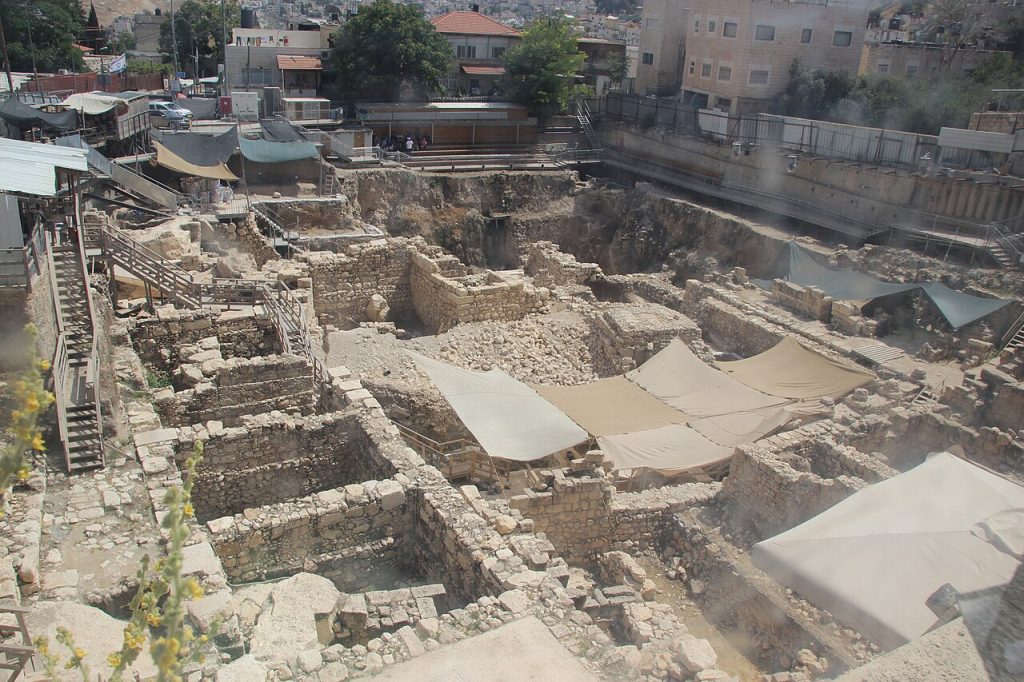
The bulla came from the Givati Parking Lot excavation on the western slope of the ancient ridge south of the Temple Mount. The modern name refers to the excavation’s location. The ancient building under investigation was a substantial structure with evidence of more than one story. Excavators found heavily burned material associated with its collapse. Yiftah Shalev and Yuval Gadot’s team dated the destruction to the last stage of the kingdom of Judah, following the evidence of the other objects within the deposit. The name on the seal impression was a surprise among the debris. It survived where the rest of the document or parcel once associated with it had decayed. The excavators’ announcement · Study of the building and its destruction
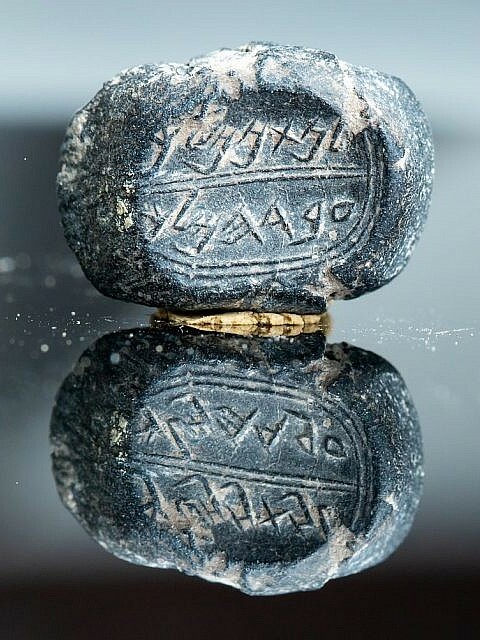
The object is a bulla, the impression a stamp left when pressed into clay. To make one, a person could roll or fold a document, bind it, place a small lump of clay over the fastening, and press an engraved seal into the clay. This could identify the person whose authority the document represented. Interference with the fastening would affect the clay seal. For an archaeologist there are two different artifacts to distinguish. A stamp might survive in a room where it was used or stored. A bulla could travel with a document to another building or town. Finding it does not tell us that the named person stood over the spot where it lay. The excavation team on administrative sealing
The other small find published alongside this bulla illustrates the distinction. It is an engraved stamp with another name and a patronymic, the name of the owner’s father. The excavation team reads the latter name as Matanyahu. Here, the engraved object itself survived in the destruction debris. With the Natan-Melech bulla we see the writing carried away from a stamp in the opposite form, as a positive impression. Both artifacts speak to administrative practices in Jerusalem, but their individual histories could have been different. Each item adds information that even a well-preserved wall could never supply on its own. Primary publication of both artifacts
The excavation also gives the find something a name alone could never supply. The team could record its position in the debris, compare the surrounding pottery, and trace which parts of the building had fallen from above. A small object can remain in use for years or move across a city. A dated layer gives one part of that object’s history, the circumstances in which it came to rest, and a limit on when it could have been made. Those are distinct from the question of who owned the stamp. The case here depends on all of them, which makes the archaeological context especially valuable.
What the lettering tells us
Anat Mendel-Geberovich and her colleagues published a reading that can be rendered “Belonging to Natan-Melech, servant of the king.” The initial element marks ownership. The words that follow give the name and the office or status under which the person used the stamp. The investigators dated the objects on paleographic grounds, meaning the characteristics of their letter shapes, and by where they were found. Their primary publication places them in the late seventh century BC. The king served by this official is left unnamed. A short seal text could do its work in a circle of people who already knew which king was meant. Mendel-Geberovich and colleagues on the reading and date
Titles can be easy to misread when we bring modern usage to them. Service to a king could indicate an office with access or delegated authority. It does not tell us by itself what the person did each day. Readers will sometimes see Nathan-Melech or Netanmelek instead of Natan-Melech. These are ways of representing the same name in English. The really distinctive point is the occurrence of that compound name together with royal service. A title by itself would leave a great many candidates. The combination gives the comparison with Kings more force. We can still ask what independent evidence would confirm the exact identity behind the name. Excavators on the title and biblical reference
Three claims to keep in view
- The inscription identifies the owner as Natan-Melech and includes the title servant of the king.
- The excavation context places the clay in the remains of a Judahite building destroyed decades after Josiah’s reform.
- The biblical verse names an official near the Lord’s house. A match between the two people is a historical inference.
Josiah’s reform and the court official
The biblical mention makes sense when we begin with 2 Kings 22. Repair work at the temple led to the discovery of the Book of the Law. Josiah heard its words, recognized the seriousness of Judah’s departure from the covenant, and sought the Lord’s word through the prophetess Huldah. In chapter 23 the king read the book to people gathered from Judah and Jerusalem and led a renewal of the covenant. The rest of the chapter gives a material description of the changes. Vessels were carried out, facilities used in other forms of worship were removed, and sites where people had sacrificed were desecrated. 2 Kings 22–23
Verse 11 identifies the quarters of a court official named Nathan-Melech in describing the removal of horses dedicated to the sun. Josiah also burned the chariots associated with them. A passing point of reference as precise as the location of someone’s quarters is characteristic of the detail that makes this narrative worth close reading. It also sets a limit. The text gives the official’s name and position near the events. It does not describe his particular part in the reform or his attitude toward it. The bulla gives us a small administrative record whose owner fits that wider situation. 2 Kings 23:11–12
There is a further distinction between the writer’s words and our translation of a job. Some Bible versions call Nathan-Melech an officer, while older versions may call him a chamberlain. The court term can convey a position of service without giving us an organizational chart or a complete biography. One official might carry different titles depending on who described him and why. At the same time, a broad title like royal servant can fit a range of positions. It is the overlap of the name, the courtly setting, and the period that makes this case stronger than the title alone. Compare English renderings of the title
The case for the identification rests on several things coming together. Both sources use a rare name, both have a connection to the Judean court, and the find’s date fits the time in which the official in Kings could have served. The seal’s formula differs from the designation for the official in Scripture, even though the roles can fit together. The small clay object does not name Josiah or name the building beside the temple. If another individual used the same name and title during the period, we would need more evidence to differentiate the two. The plausible connection is worth making in those terms. The excavation article · 2 Kings 23
The courtier in Kings appears because his quarters locate a moment in Josiah’s reform. The man on the clay appears because someone needed to authenticate a document.
A document from a city later burned
The destruction at Givati has its own place in Jerusalem’s story. The archaeologists found building material mixed with signs of intense burning and with pottery that fits Judah’s last years. Modern study of the collapsed floor examines magnetic traces in heated fragments to learn about their history and how they came to rest. This evidence belongs to the building’s destruction. The seal impression may have been made years before those events. Together the finds let us place an object from the world of late Judah within a building that survived until that world came to a violent end. Vaknin and colleagues on Structure 100 and the destruction
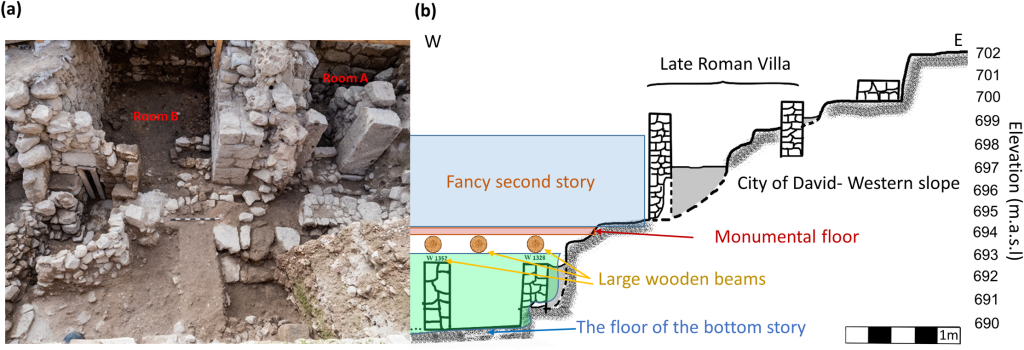
The excavation team relates the fire to the Babylonian destruction of Jerusalem in 586 BC. Second Kings 25 describes the Babylonian commander Nebuzaradan burning the temple, royal buildings, and houses. The book of Kings describes a widespread event, and the debris of Structure 100 lets us see signs of destruction in one part of the city. The study of burned materials can explain what happened to a building and why some types of objects survived. It also helps us picture the sequence by which fragments from an upper story came to lie among material on the lower floor. 2 Kings 25:8–10
We can see a closely related kind of work in Scripture’s account of Jeremiah buying a field while Jerusalem was under siege. Jeremiah describes signing and sealing the deed and arranging for it to be put in an earthenware vessel so that it would last. The deed’s transaction gives a human setting for the work that seal impressions preserve only indirectly. The act of buying that field declared that people would again buy houses, fields, and vineyards in the land. We can follow how a genuine administrative custom serves that promise in Jeremiah while the surviving clay brings us a genuinely different document from the same capital. Jeremiah 32:6–15
As Christians, we trust the Bible’s history of Judah and take seriously its account of why the people needed reform. Josiah’s encounter with God’s word led to changes in concrete places, around actual buildings, among people who had positions of responsibility. The discovery at Givati gives us a name and a durable record of the authority someone once exercised. It matters in part because a court official named by an ancient historian can be compared so closely with someone independently named on clay. The more we learn about those offices and places, the more clearly we can see that covenant obedience meant acting within the institutions and habits of daily life.
Sources and further reading
- Anat Mendel-Geberovich et al., A Newly Discovered Personal Seal and Bulla — Primary publication, Israel Exploration Journal 69 (2019), pp. 154–174, with the inscription, paleography, and excavation context.
- City of David, Who Was Natan-Melech? — Excavators’ announcement, with the photographs, inscription, and explanation of the context.
- Yoav Vaknin et al., The Earth’s magnetic field in Jerusalem during the Babylonian destruction — Primary study of the destruction deposit and collapsed floor at Structure 100, with a photo and cross-section.
- 2 Kings 23 — Biblical account of Josiah’s reforms and the mention of Nathan-Melech in verse 11.
- 2 Kings 25 and Jeremiah 32 — Biblical accounts of Jerusalem’s destruction and the signing and sealing of a deed in late Judah.




