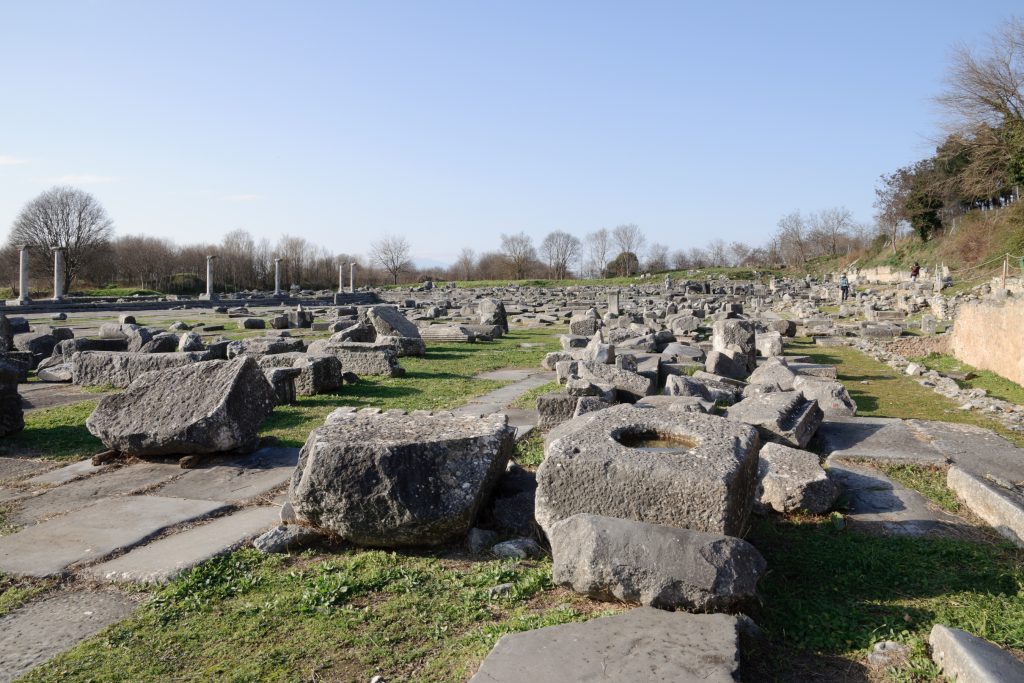
When Paul and Silas are brought to the authorities at Philippi, their accusers appeal to a local identity. They say the men are promoting customs that people who are Romans should refuse. After the authorities have had them beaten and imprisoned, Paul lays claim to the same identity. He and Silas are Roman citizens, he says. Why does the claim have such force here? Philippi was a Roman colony in Macedonia. The excavated forum shows the kind of civic space that gave public expression to that status, while Acts shows how people used Roman identity in a dispute. Acts 16:19–24, 35–39.
We receive Scripture as true and accurate. The work at Philippi helps us read Acts with a better sense of the particular city where these encounters took place. Lydia hears the message at a place of prayer outside a gate. The accusations pass into a public space. The jailer hears the word of the Lord after a night when the prisoners’ doors open. It is a story told through movement from one part of town to another. The archaeological remains let us see parts of the city, at different dates, that help explain why those movements matter. French School at Athens, history and archaeology of Philippi.
What you’ll learn
- How Philippi became a Roman colony and what its roads and civic buildings tell us about it.
- Which parts of the visible forum came after Paul’s visit and what lies beneath them.
- How the accusation and citizenship claim in Acts 16 belong to Philippi’s civic life.
Arrive on the road into Macedonia
Acts 16:11–12 follows the travelers by sea to Samothrace and then to Neapolis before they reach Philippi inland. Ancient Neapolis was the port at modern Kavala. The larger setting is the Via Egnatia, a Roman route across the southern Balkans that linked the Adriatic side with the east. Philippi lay along it. This made the city part of a corridor for trade, officials, travelers, and communications. You can walk beside ancient paving at the site today. The street is a physical reminder of how a traveler could arrive from the coast and encounter a town already connected to a wider Roman world. Greek Ministry of Culture, Philippi on the Via Egnatia.
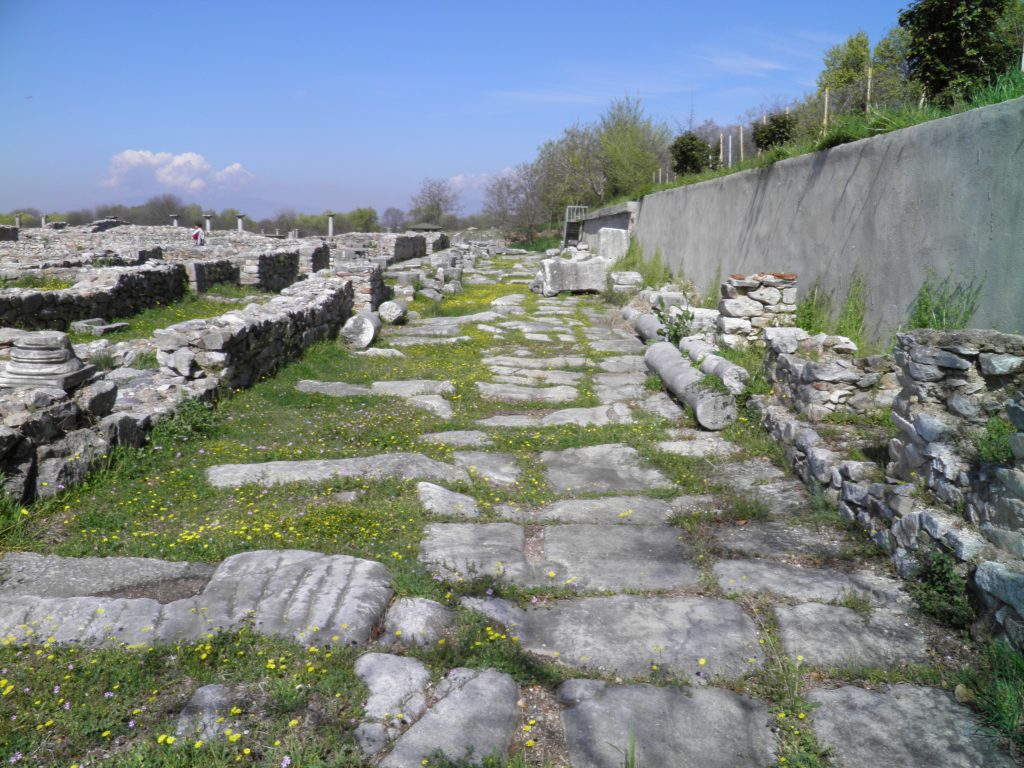
The Roman road and the city were older than many of the stones visitors see. Paving can be replaced after wear. Civic buildings can be enlarged on the same ground. Scripture names the stops on the voyage and the inland destination, while the archaeological evidence lets us place that itinerary in a network. The line through Philippi matters even without the ability to assign every surviving paving slab to Paul’s day. Standing near the excavated route, you can see why a successful colony here could communicate with other cities to the west and keep in touch with its port to the east. UNESCO, Archaeological Site of Philippi.
What changed when Philippi became a colony
The city was already old by the time Roman veterans came there. Philip II of Macedon had refounded it in the fourth century BC in a place where the Thasians had established a settlement. After the battle of Philippi in 42 BC, Mark Antony settled veterans and other Roman colonists there. Following the battle of Actium, Octavian reorganized the colony and brought more settlers from Italy. Public monuments and inscriptions allow archaeologists to study how Roman institutions made themselves visible here. The term “colony” in Acts matters because it is a specific civic description in a part of the world with a long Greek history. Greek Ministry of Culture on the Roman colony.
The status had effects beyond a title. Settling veterans meant introducing people whose claims to land and ties to Rome shaped the place. Roman patterns of public building could be used alongside older features of the town. Inscriptions give us the language and titles people put on display, sometimes in ways that differ from language they might use in their homes or streets. Philippi is useful to study precisely because change there left visible layers. It can be described as a Roman colony and a city where forms of settlement, trade, and worship continued to develop across many centuries. Philippi nomination dossier on the colony and its public inscriptions.
Put the forum’s buildings in their own time
The French School at Athens began systematic inquiry at Philippi with a study expedition in 1914. Excavations during the interwar years brought much of the monumental center to light. The forum is the broad open space at the heart of that center, with public buildings arranged around it. Such a place gave people room to meet, conduct business, and encounter civic authorities. At Philippi it also stood within sight of structures important to the city’s public religious life. The excavation helps recover how an ancient citizen would have moved among these several parts of the town. French School at Athens, history of work and field plans.
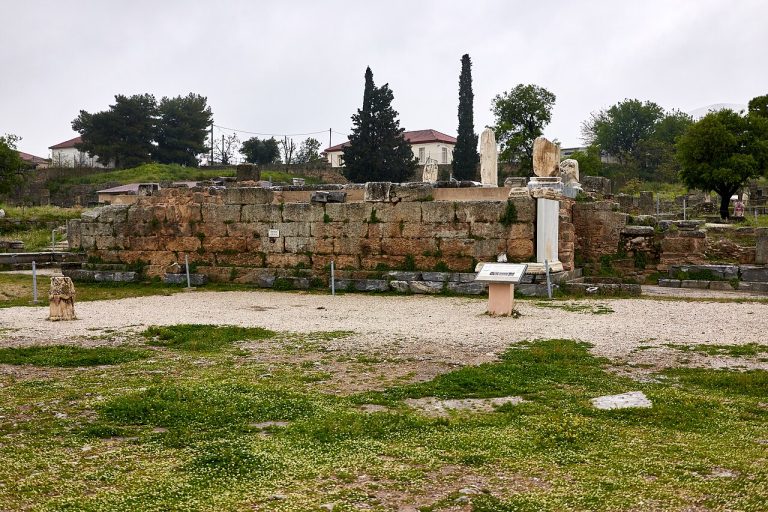
Much of the forum visible in a photograph now belongs to rebuilding in the second century AD, in the age of the Antonine emperors. Investigators also identify an earlier Roman phase beneath the later buildings, from the general period of Paul’s visit. The early and later arrangements can be studied together because the same place continued to serve civic purposes. Reading the photograph for its broad public layout is useful. Picking a particular surviving stair or platform as the spot where the magistrates acted would require more evidence. The published ground plan of the second-century forum gives a firm starting point for understanding the structures we see. Nomination dossier, section 2 and figure 18.
There is a corresponding question about the prison. Visitors can see a structure traditionally called the prison of Paul. The site dossier identifies that structure as a Roman cistern that probably belonged to the system supplying the city with water. Its later name records how people remembered the biblical events. Acts gives the sequence inside a jail and tells us about the jailer. We can have a firm reason for taking the story seriously and still identify what a particular building has yielded to excavation. At Philippi, the tradition attached to the cistern and the archaeological record of water storage both deserve to be described accurately. Nomination dossier, water system and traditional prison, figure 29.
The later forum shows how civic life occupied the center of Philippi. Acts takes us into an earlier dispute over who could claim its protections.
The complaint and the counterclaim
The first scene in the city’s story in Acts 16 is away from the civic center. On the Sabbath the travelers find a place of prayer by water outside the gate. Lydia, a dealer in purple goods from Thyatira, listens, and the Lord opens her heart to attend to what Paul says. She is baptized with her household and receives the travelers into her home. The sequence allows us to picture Philippi as a place of households, commerce, and connections with people from elsewhere. A later location associated with Lydia’s baptism can tell us about how people remember her. Luke supplies the location only in the more general terms of a river and a place of prayer. Acts 16:13–15.
The next encounter brings money and power into view. The owners of an enslaved girl lose income after Paul commands the spirit that afflicts her to come out. They seize Paul and Silas and bring them to the marketplace before the authorities. Their accusation is about customs and public disorder, expressed against the men as Jews and in the name of Roman practice. It is worth noticing how far the complaint has moved from its initial cause. The income belonged to the owners. The accusation asks other Roman residents and the officials to regard the issue as their own. Acts 16:16–24.
When the officials send word to release the prisoners, Paul tells them that they have had Roman citizens beaten publicly without judgment. Now it is the magistrates who become afraid when they hear the claim. They come in person and ask the men to leave the city. The order of Luke’s narrative gives the exchange its force. Roman identity first appears as a way to present the missionaries as outsiders. It becomes part of the reason that the authorities have to address a public wrong. Between the two speeches, the jailer and his household hear the Christian message, and the jailer washes wounds inflicted in the public beating. Acts 16:25–40.
An earlier Roman court speech helps explain why the appeal could have such force. In prosecuting Verres, Cicero tells of a man in Sicily who claimed Roman citizenship as officials had him beaten. Cicero treats the disregard of that status as a grave abuse of power. His speech comes from a different place and period, and it uses the rhetoric of a prosecution. It nevertheless shows the expectation a claim of citizenship could raise when someone faced corporal punishment. In Acts, Paul joins that claim to the fact that they were beaten in public without judgment. His objection concerns both what happened and how the officials had gone about it. Cicero, Against Verres 2.5.160–170.
Look for the community that outlasted the dispute
The letter to the Philippians opens with Paul and Timothy greeting the believers in Philippi, along with their overseers and deacons. The city that Acts first visits from the road later contains a church with responsibilities and partners in the gospel. In Philippians 3:20, Paul describes believers as having their citizenship in heaven. The language is worth reading in a letter sent to Philippi because citizenship mattered in the city’s public life. The letter turns readers toward their expectation of Christ and a different source of belonging. The local history gives us a sense of a word’s resonance. The letter tells us how Paul uses it. Philippians 1:1–5 and 3:17–21.
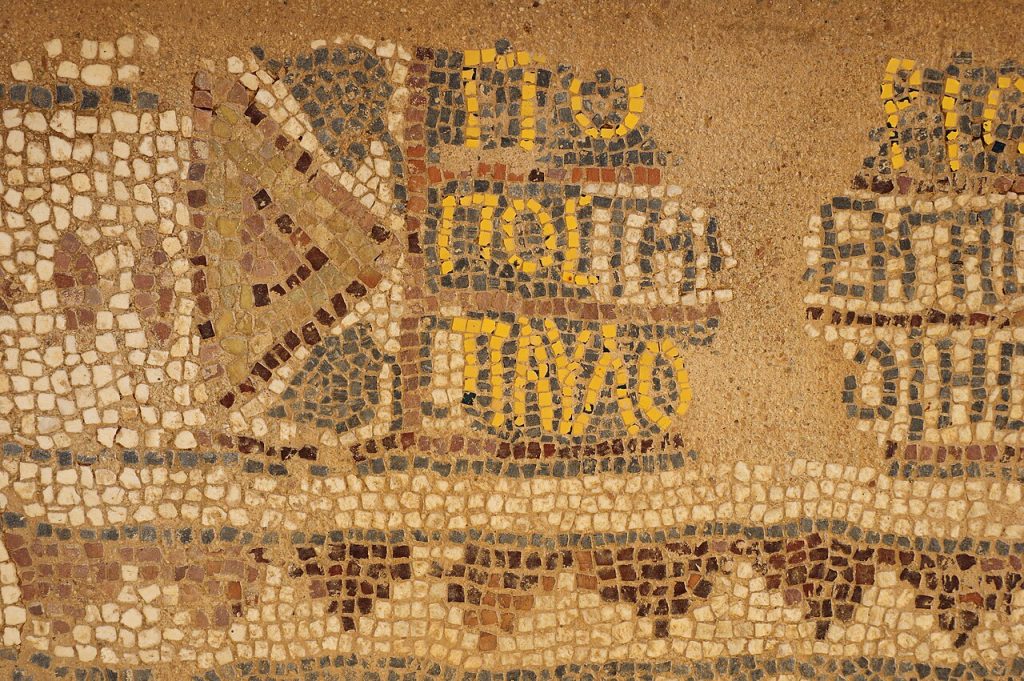
A mosaic belongs to another, later chapter of that community’s history. In a church predating the main Octagon complex, an inscription names Bishop Porphyrios and the basilica of Paul. It is evidence for a fourth-century Christian building, many generations after the visit in Acts. There were once prominent public buildings in the neighborhood that had expressed the Roman colony’s civic life. The mosaic now shows a Christian community using words and a paved floor to identify the purpose and memory of a building of its own. The physical relationship of these later buildings to earlier Philippi is part of what researchers can study in the excavated city. University of Oxford research record on Philippi’s church complex.
Keep the dates handy when you look at the photographs. The road explains the city’s connected setting, the rebuilt forum shows the continuing civic importance of its center, and the mosaic records later worship. Acts follows the first-century travelers into a town where a public accusation and their response mattered to the magistrates. Compare the crowd at the theatre of Ephesus or Paul’s appearance before Gallio at Corinth. In each city, the gospel reaches people who live within particular institutions. At Philippi, it reaches Lydia and her household and then a man charged with holding prisoners. Watch for both households as you read once more from the road into the town.
Sources and further reading
- French School at Athens, Philippi — Field project, modern research history, 1914 expedition, and site plans.
- Greek Ministry of Culture, Philippi on the Via Egnatia — Ancient route, the battle of 42 BC, and the colony reorganized under Octavian.
- Philippi World Heritage nomination dossier, Greece — Section 2 records the earlier forum, Antonine rebuilding, ancient street, Roman cistern, and early Christian building phases.
- University of Oxford, Cult of Saints in Late Antiquity, E00013 — Research record for the basilica dedication and later Octagon, including the Porphyrios mosaic.
- Acts 16:11–40 and Philippians 3:17–21 — The foundation story in Acts and citizenship language in Paul’s letter.