A dark stone from Beth Shean records how an Egyptian pharaoh responded when fighting flared near a crucial town in Canaan. Several familiar places appear as participants or targets. Another, more damaged stone from the same mound seems to describe a separate disturbance, or a different part of a campaign. These are the stelae attributed to Seti I. They preserve an Egyptian view of relationships among towns along and across the Jordan. For readers of Joshua, Judges, and Samuel, they are an opportunity to see how long the area around Beth Shean mattered to people trying to hold the valley.
What you’ll learn
- When the two Egyptian stelae came to light and why the First and Second Stela labels can be confusing.
- Which towns and groups the inscriptions name, and where their details remain disputed.
- What Beth Shean’s position contributes to the episodes in Joshua, Judges, and 1 Samuel.
Two monuments from one archaeological mound
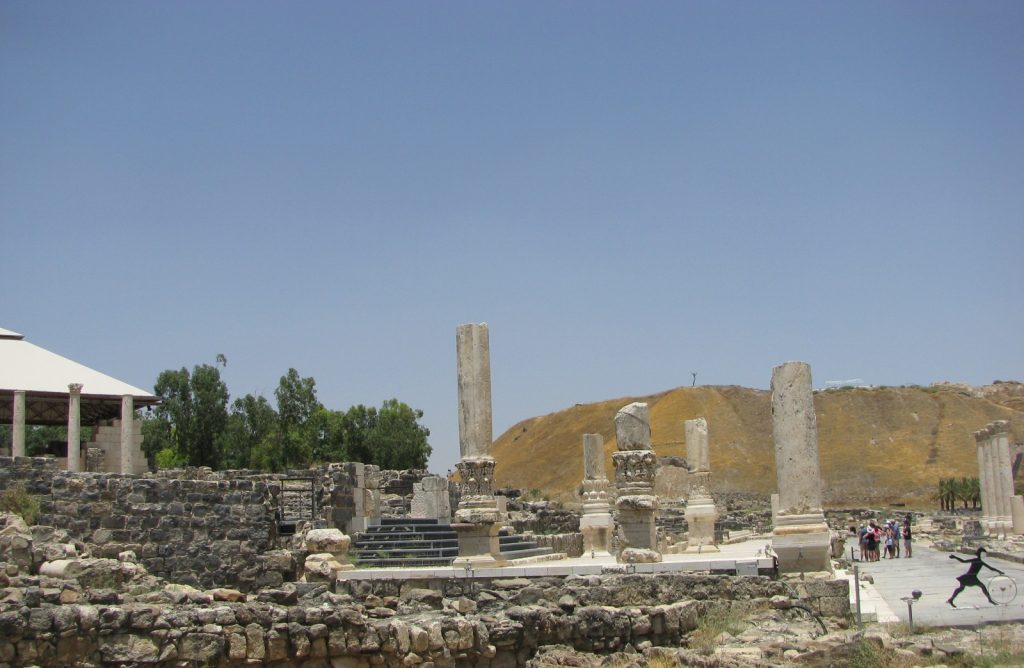
Beth Shean lies south of the Sea of Galilee at a junction between the eastern end of the Jezreel Valley system and the Jordan Valley. The route west reaches the interior of the country. Routes east approach crossing places over the Jordan. Older remains lie in the mound above much of the Roman and Byzantine city seen by modern visitors. The University of Pennsylvania Museum investigated the site from 1921 to 1933. The expedition’s records give readers a way to follow the excavation separately from the ancient dates written on royal monuments. Penn Museum excavation archive for Beth Shean.
The smaller, more damaged monument is associated with the early work in 1921. The larger monument now called the First Stela of Seti I was found in 1923. Alan Rowe reported that missing fragments belonging to it were recovered in 1925. The numbers First and Second are modern labels for discussing the texts. A site can yield several monuments over several seasons, and the labels do not tell us which object the excavators reached first. Beth Shean also yielded stelae and other material associated with other Egyptian kings, including a substantial monument for Ramesses II. A reference to an Egyptian stela found at the site needs an object number, inscription, or clear description to make the identification useful. Alan Rowe’s early publication of the larger Seti monument and its fragments.
The stones may have moved before archaeologists found them. The first was recovered among monuments in an area whose phases have been reassessed since the Penn work. Later excavation literature describes the smaller stela as found in secondary use, in a Byzantine level. The written date and the stone’s reuse answer different questions. A builder can reuse a slab many centuries after its first public display. The reuse cannot date the original Egyptian inscription, and the inscription cannot date the wall or surface into which someone later fitted it. Published report on later excavations and reassessment of the finds.
What Seti’s first stela records
The scale of the monuments makes their survival remarkable. A person facing the larger stela could see the scene and the organization of the writing even without being able to read Egyptian hieroglyphs. In that setting, the image and the formal description of the king could communicate royal authority to audiences with different skills. For a reader today, the line divisions are practical as well. They help locate observations in the text. A place name in the lower lines can be treated as a historical point to investigate. Its appearance below the royal titles is part of the relationship between local events and the monument’s public purpose.
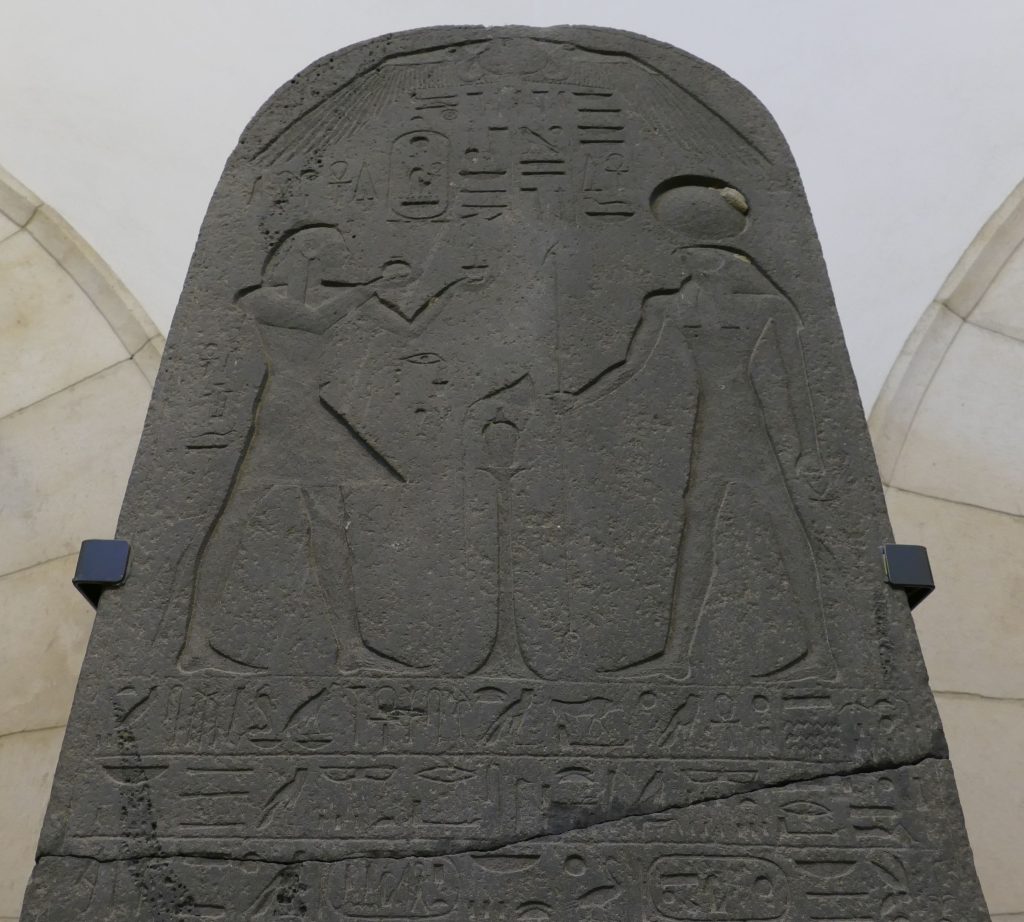
The upper scene depicts the king offering to a deity, with a winged disk above. The horizontal writing names Seti with royal titles and places the event in his first regnal year, early in the thirteenth century BC. An exact modern year can vary with the chronology used, while the relative date in his reign remains clear. The text goes on to praise his military virtues before it reaches the crisis near Beth Shean. A reader can learn more by noticing the shift. Praise tells us how the court wanted Seti to be seen. The named towns help historians reconstruct the local circumstances on which the account draws. Published edition and translation by Daniel Werning.
In the Israel Museum’s reading, the ruler of Hammath attacked and took Beth Shean. Pella joined him to contain the chief of Rehob in his town. Seti says he directed three divisions to Hammath, Beth Shean, and Yenoam. Pella lay east of the Jordan. Rehob is conventionally identified with Tel Rehov to the south of Beth Shean. The exact location of Yenoam has been debated. These details make clear that the fight pulled in settlements across the area. Seti’s claim that the troops accomplished their task in one day belongs to the account as well. Whether the time is literal and how the operation took shape on the ground are questions a royal boast cannot answer by itself. Israel Museum catalogue of the two Seti stelae and the towns involved.
The names of towns help reconstruct a local conflict. The words praising the pharaoh show how he wanted people to remember it.
The local stone shows a further dimension of the discovery. Egyptian officials or artisans could arrange for a royal memorial to be cut in Canaan. The language, the image of the king, and the religious symbols place it firmly within Egyptian traditions of royal display. Its presence away from Egypt shows that a foreign court could bring its forms of commemoration to an important place where allegiance was being contested. That evidence has a life beyond the battle. The monument remained useful to later users of the site, whether as a visible object of memory or, in the case of the smaller specimen, as a piece of stone that somebody could use again.
The second stela and the ʿApiru
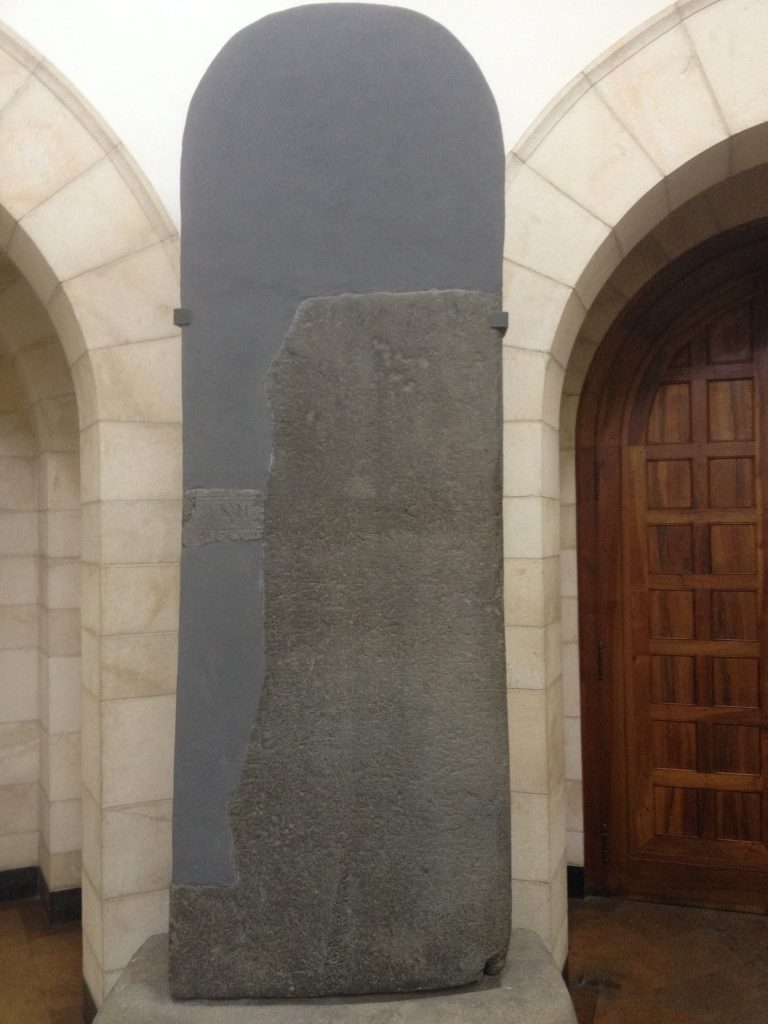
The smaller monument is incomplete and heavily worn. Its surviving wording is commonly understood to describe trouble involving people called the ʿApiru and forces associated with local places. Proposed identifications of towns and the exact connection with Seti’s first-year campaign depend on damaged writing and comparison with other records. The two monuments plainly belong to a setting in which the Egyptian court was trying to maintain authority in the region. The stronger claim that the stelae describe exactly the same operation is more difficult to establish. We can honor what survives of the second inscription by leaving its damaged passages open where specialists continue to differ. Peter Brand’s study of Seti’s monuments and campaigns.
The term ʿApiru or Habiru appears in cuneiform and Egyptian sources across parts of the ancient Near East. It can describe people operating outside established systems of local authority or groups serving in a range of social and military roles. Because it sounds somewhat like the word Hebrew, the forms have been compared for a long time. That similarity is insufficient to make the group on the stela the Israelites of a particular biblical episode. To establish an identification, historians would need evidence tying the people in this inscription to the community and events in question. The value of the stela is the name and local circumstances that it actually preserves.
Beth Shean in the Bible
Start with a map that shows the highland edge, the valley floor, the Jordan, and the approach from the west. These features remain useful even where the exact identification of an ancient name is disputed. A defined town on the west bank and a proposed identification far to the north should be shown with different degrees of certainty. Elevation and distance then help a reader see why an inscription could report actions in several places and why a biblical account could follow people moving from a hill to a town and onward across the river. The map helps explain the geography shared by the records. It does not turn those journeys into a single event.
The better comparison follows the same location through successive uses. Egyptian records show the settlement’s place within a network of client towns and garrisons. The biblical passages highlight other local rulers and political relationships. A town’s advantages can outlast its rulers and its walls.
In Joshua 17, Beth Shean is listed among the places associated with the inheritance of Manasseh. The same chapter describes the problem of Canaanites in the valley and their chariots, and Judges 1 says that Manasseh did not drive out the inhabitants of Beth Shean and its villages. This fits a narrative concerned with actual control of settlements alongside the allotment of land. The monument shows why a strong center controlling routes could matter to people competing for the valley long before or apart from a given scene in Israel’s story. The Egyptian stelae and these passages speak from different political and historical settings.
In 1 Samuel 31, the surviving Israelites flee after Saul and his sons die in battle on Mount Gilboa. The Philistines fasten Saul’s body to the wall of Beth Shean, and men of Jabesh-gilead go to retrieve it. The chapter gains force when the reader sees how close the valley town and the battlefield are and remembers that a community across the Jordan was involved. The stelae cannot identify the wall in that chapter. They do give much earlier evidence that actions around the same hill could bring settlements on both sides of the river into one story.
For Christian readers, the episodes in Scripture deserve attention for more than the strategic value of a town. Judges records the difficulties of Israel’s possession of the land. Samuel tells of Saul’s death and the courage of people who showed loyalty after the defeat. The Egyptian inscription tells us how another ruler wanted success remembered. The long record of a real place deepens our reading of each account and helps us distinguish a ruler’s public claim from the experiences of people who lived along the routes he sought to control. For one of the towns named on the larger monument, see the excavation of the later apiary at Tel Rehov.
Sources and further reading
- Beth Shean expedition records — University of Pennsylvania Museum field archive and history of the excavation.
- The Two Royal Stelæ of Beth-Shan — Rowe’s early account of the large monument’s recovery and inscription.
- Penn Museum Journal early expedition reports — Early report on the smaller find from the first expedition season.
- Israel Museum Seti catalogue — Object descriptions and interpretation of Egyptian operations near Beth Shean.
- Seti’s Beth Shean Stela — Edition and contextual discussion of the larger monument.
- Excavations at Tel Beth-Shean, volume III — Published field reassessment of the archaeological contexts.
- The Monuments of Seti I — Epigraphic and historical analysis of Seti’s monuments.





