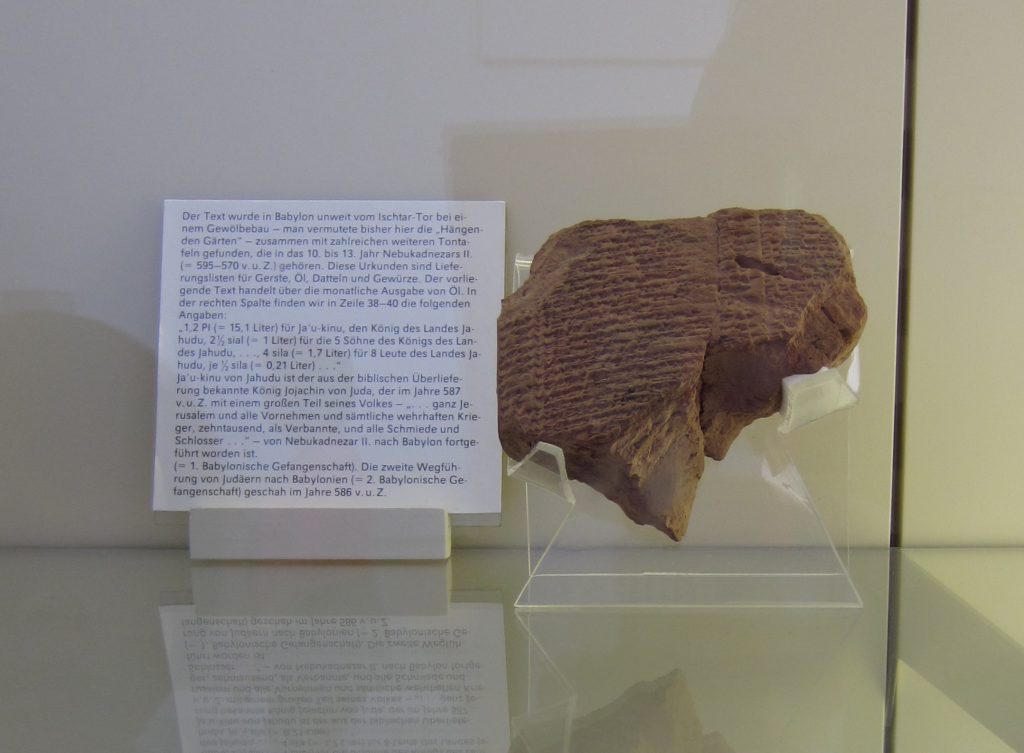
Somewhere in Babylon, a palace official needed to know how much oil to issue and who should receive it. A scribe pressed the allocations into clay. Among the names that survived is Jehoiachin, the Judean king taken from Jerusalem in 597 BC. The list shows his household receiving provision from the empire that had removed him from his throne. Its language is as matter-of-fact as a storeroom inventory. That ordinary purpose makes the record especially valuable. We are looking at the bookkeeping of the people who had to support and supervise a royal captive, years before the release described at the end of 2 Kings. Berlin museum collection record · Alstola, pp. 62–69
What you’ll learn
- What the oil lists say about Jehoiachin, five Judean princes and the Babylonian palace.
- Why you may see different quantities in translations of the same entry.
- How the earlier rations relate to the later royal pardon in 2 Kings.
Where the tablets were found
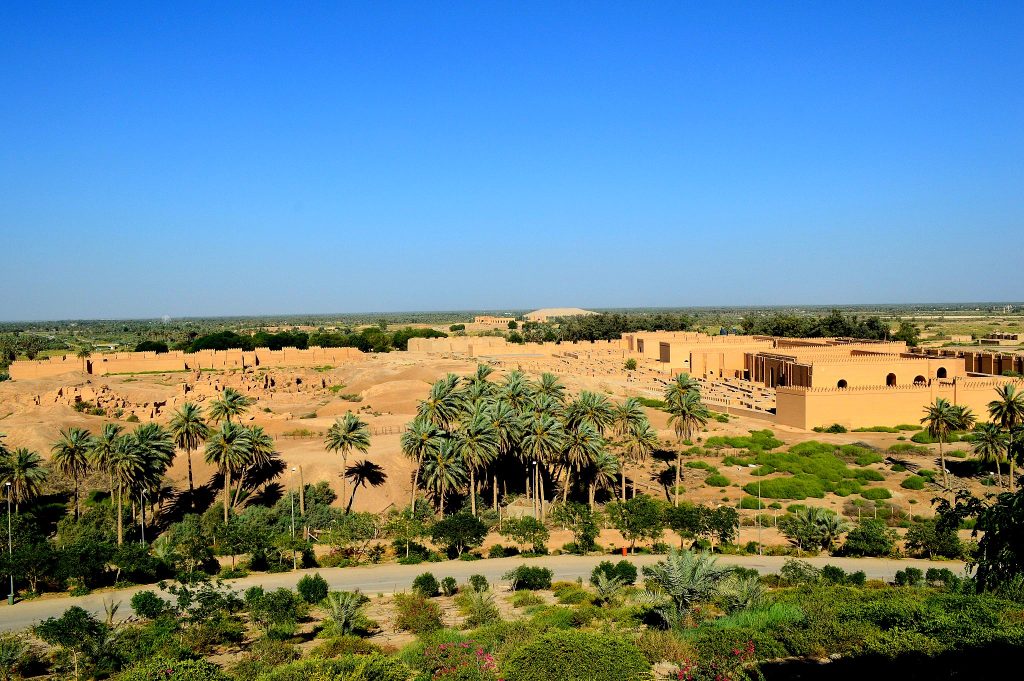
From 1899 to 1917 a German expedition led by Robert Koldewey excavated Babylon, in what is now Iraq. Near the Euphrates, the team uncovered the layout of Nebuchadnezzar II’s South Palace, a complex of courtyards, an audience area, a throne room, administrative premises and residential quarters. Among the finds was a group of roughly three hundred clay tablets near a vaulted structure in the administrative wing. Additional groups survive from the vicinity of the palace and the Ishtar Gate. Keeping those groups distinct matters. They were recovered from different contexts and represent only a fraction of the records that once passed through Babylon’s royal administration. Alstola, pp. 58–62 · UNESCO, Babylon
Ernst F. Weidner partially published four of the oil ration lists in 1939. That publication is why scholars sometimes call them the Weidner tablets. The excavation brought them out of the ground during the early twentieth century. The publication made the relevant readings available for other scholars to check. The dates written on the clay, where preserved, identify an entirely different historical period. The one list in this group with a securely preserved date belongs to Nebuchadnezzar’s thirteenth year, which spanned 592–591 BC. Its date falls late in that Babylonian year, in 591 BC. The other relevant lists belong to the same broad palace context, and the preserved date should be attached to that specific tablet. Record of Weidner’s 1939 publication · Alstola, p. 62 and note 369
The findspot tells us where the administration kept or discarded its paperwork. It rarely tells us where the people in that paperwork slept. Clay tablets can move through a building while active, and collapse or disposal can move them again. The largest group near the vaults may have fallen from an upper floor. A ration officer might write down allotments for boatbuilders who worked well away from the storeroom. The groups thus trace the reach of the palace’s administration across the city. They cannot point us to a particular room in which Jehoiachin spent a night. Alstola, pp. 60–61 and 70–71
A Judean name in Akkadian
Cuneiform signs render Jehoiachin’s name in several spellings. In one entry it appears close to Ia-ʾu-gin. Another writes it with more syllables spelled out. A scribe working in Akkadian represented the sounds and elements of a Judean name using the signs and conventions available to him. The title beside the name makes the connection to Scripture particularly strong. The regular form identifies him as king of Judah. During the years recorded, his uncle Zedekiah occupied the throne in Jerusalem. A title preserved in palace records could acknowledge a captive’s rank even after the Babylonians had given political authority at home to someone else. Alstola, pp. 68–69, entries A–D
One line calls him the son of the king of Judah. Weidner considered whether a scribe wrote that because Babylon recognized Zedekiah as the reigning king. Tero Alstola points out that the other attestations in the ration lists favor the title king and interprets the exceptional form as a scribal error. The name, country and neighboring entries give us more to work with than a title taken in isolation. The variant is worth seeing in an edition because it shows how an identification rests on several linked details, including their pattern across multiple records. Alstola, pp. 68–69 and note 426
- Tablet B. Bab 28178 and a joining fragment record an oil allocation to Jehoiachin and one for the sons of the king of Judah. This is the securely dated list.
- Tablet C. Bab 28186 has the variant identifying Jehoiachin as the king’s son and records five Judean princes.
- The princes. Their individual names are absent from these entries. Their placement immediately after Jehoiachin makes his sons the most natural identification.
What a ration meant
The commodity in these lines is sesame oil. An allocation supported people who worked for the court or depended on it. Small allotments went to many individuals. A larger one could reflect rank and could also be divided among other members of a household. Other records in the palace group concern deliveries and redistribution of products such as barley and dates, which puts the oil lists in the context of a wider provisioning system. Entries for people associated with places such as Ashkelon, Tyre, Egypt and Elam show what a varied population that system served. Officials were keeping track of workers and households whose status and degree of freedom could vary considerably. Alstola, pp. 61–66, 70–71
Some frequently reproduced translations give Jehoiachin ten sila of oil. Alstola’s discussion follows a revised reading of the capacity sign, one sūtu, equivalent in this material to six qû. The five princes together received two and a half qû in the standard entry, or half a unit each. The discrepancy between ten and six illustrates a basic feature of working with tablets. Translators first have to read the sign, then decide what system of measures the administration used. Alstola tests the revised reading against a nearby entry that allocates oil per person and specifies what was still due. The revised total also leaves Jehoiachin well above the typical allocation of about one qû in this archive. Older reading, Pritchard, p. 308 · Alstola, pp. 62–63 and 68–69, note 423
The entry has another feature that makes the accounting intelligible. The name Qanā-Yāma appears with the record of oil for the princes. The formula identifies him as the intermediary through whose hand their oil was delivered. A man connected with the Judean household could receive an allocation without being its final beneficiary. When a name appears beside a quantity, the grammar and arrangement of the entry show whether that person is meant to keep it, hand it over or account for it. That difference matters for reconstructing daily life. It gives us one glimpse of how a captive family obtained supplies while leaving the man’s precise duties and legal status open. Alstola, pp. 68–69, entry C reverse ii:18
The oil lists make exile visible at the level of a household. The royal family had lost its kingdom and now depended on a Babylonian office for provisions.
Did the tablets record Jehoiachin’s release?
Second Kings 25:27–30 says that, in the thirty-seventh year of Jehoiachin’s exile, the incoming Babylonian king Evil-merodach released him from prison. The Babylonian form of the king’s name is Amēl-Marduk. In Kings, Jehoiachin changes out of his prison clothes, takes a place above other kings at the court and receives a regular daily provision for the rest of his life. Jeremiah 52:31–34 gives a parallel account. The securely dated oil list is about thirty years earlier, during Nebuchadnezzar’s reign. Its allotment is earlier evidence for royal maintenance of the household, distinct from the later pardon and the provision described in Scripture. Alstola, pp. 70–77
Did he live behind bars through all those earlier years? The text in Kings establishes that he was released from confinement. It gives no day-by-day record of his captivity. The tablets establish that he and the princes received provisions. They give no full account of his residence, freedom to travel or access to the court. A captured monarch could remain under tight supervision while a palace supported his household. Conditions could also change over decades. The documents are compatible with multiple stages in his confinement, and the evidence gives us a clear early point and a later change of status rather than a continuous biography. Alstola, pp. 70–76
Ezekiel supplies a further check on how the Judeans carried Jehoiachin’s status into exile. The opening of the book dates a vision by the fifth year of King Jehoiachin’s exile, even though Zedekiah was then ruling in Jerusalem. For the people who had gone out with Jehoiachin, his departure gave them a reference point. A Babylonian storekeeper and an Israelite prophet used the same royal identity for entirely different purposes. One identified a person entitled to an allotment. The other put a message from God within the remembered time of a displaced people.
The royal household and the wider exile
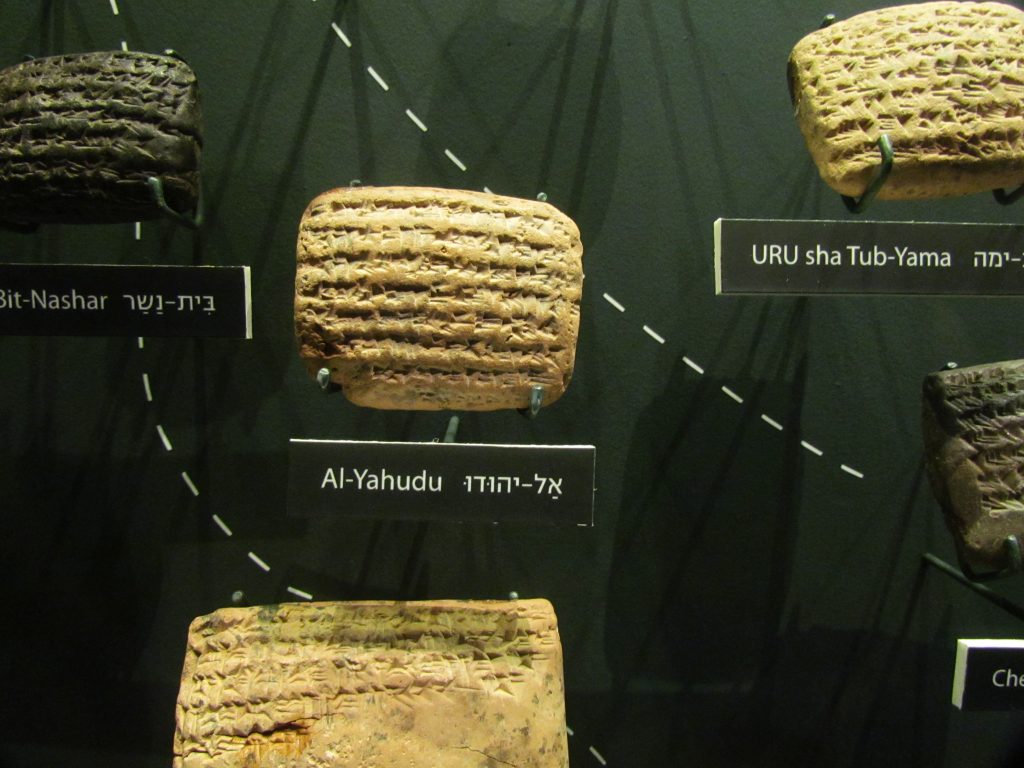
Jeremiah 29 addresses exiles who left Jerusalem after Jehoiachin, the queen mother and groups of officials and craftsmen went out. The prophet calls the community to build houses, plant gardens, raise families and seek the welfare of the place where they are living. The world of that letter extends beyond the payroll of the court. A different set of cuneiform documents associated with Al-Yahudu, a Babylonian settlement whose name means the town of Judah, shows Judeans and their neighbors conducting transactions in the countryside. Its texts belong to other archives and describe other people. Put those records next to the palace lists and a wide range of circumstances comes into view, from a royal household under imperial control to families involved in land and business over several generations. Alstola, ch. 4
We read these passages as true history in Scripture. The book of Kings ends with a conquered family still alive, following the earlier chapters through the destruction of the city and temple. The ending leaves us with the king in exile and with a household that has endured. When Matthew opens his Gospel, the exile is one of the great divisions in the genealogy of Jesus. Jeconiah, another biblical form of Jehoiachin’s name, stands at that crossing point. Matthew remembers the displacement as part of the history through which God carried His promises forward. The clay lists let us see the everyday means of survival in a generation whose king had few choices about where his children would grow up.
Two other finds help mark the bookends of the family’s displacement. The Babylonian Chronicle records the taking of Jerusalem and the replacement of its king. The Cyrus Cylinder comes from a later imperial change, when Persia took Babylon and Ezra records permission for the Judeans to return. These oil tablets belong between them. Read them at that point in the story, and they put a precise name and a human scale on the time between surrender and restoration.
Sources and further reading
- Vorderasiatisches Museum, Jehoiachin ration tablet — Object catalog and a description of the oil-ration fragment.
- Ernst F. Weidner, Jojachin, König von Juda, in babylonischen Keilschrifttexten — Bibliographic record of the first partial edition, 1939, pp. 923–935.
- James B. Pritchard, Ancient Near Eastern Texts Relating to the Old Testament — Translation of selected entries at p. 308, illustrating the older reading of the capacity sign.
- Tero Alstola, Judeans in Babylonia — Chapter 2 for excavations and the ration archive, especially pp. 58–77. Chapter 4 covers Al-Yahudu and related cuneiform records.
- UNESCO World Heritage Centre, Babylon — Location, archaeological site and palace context.





